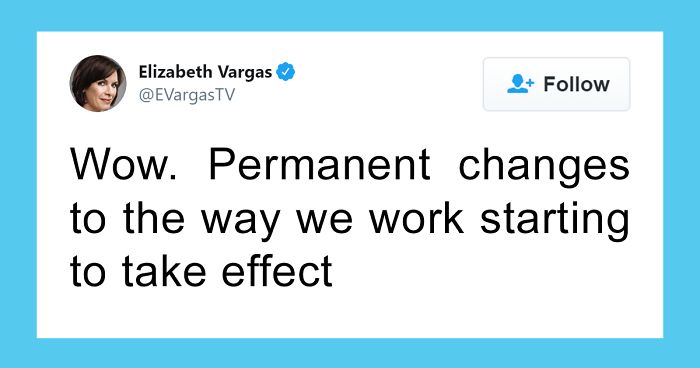
In early 2020, companies around the world launched the largest unplanned work-from-home experiment in modern history. Offices emptied, kitchen tables became corporate headquarters, and millions of employees discovered that their new commute involved walking past the refrigerator.
Twitter was among the first major technology companies to act. On March 11, 2020, it instructed employees worldwide to work from home as the COVID-19 crisis intensified. Then, on May 12roughly two months laterthe company announced something much more significant: employees whose roles could be performed remotely would be allowed to work from home permanently.
The announcement was immediately summarized as “work from home forever.” It sounded dramatic, but Twitter’s message was really about employee choice. Workers who could do their jobs effectively from home would not be required to return simply because an office building had reopened. Those who preferred an office could still use one when it became safe.
At the time, this was a radical departure from traditional corporate thinking. Remote work had long been treated as a special privilege, usually reserved for trusted senior employees, independent contractors, or people with a heroic ability to convince human resources that their internet connection was reliable.
Twitter’s decision helped turn remote work from an emergency response into a serious long-term business strategy.
Twitter’s Two-Month Remote-Work Experiment
Twitter began strongly encouraging employees to work from home on March 2, 2020. Nine days later, the company made remote work mandatory for its global workforce, with limited exceptions for responsibilities that required a physical presence.
By May, Twitter said the experiment had demonstrated that a distributed workforce could function successfully. Its teams were still writing code, managing advertising systems, enforcing platform rules, developing products, serving users, and responding to a global news cycle that appeared to consume seventeen years of events every afternoon.
The company concluded that physical attendance was not automatically necessary for every role. If an employee’s job and personal circumstances supported remote work, and that employee wanted to continue working from home, Twitter said it would make the arrangement possible.
Twitter also made clear that reopening an office and requiring employees to return were two different decisions. The company would determine when buildings were safe to reopen, but eligible employees would decide whether they wanted to go back.
Not Every Twitter Job Could Be Remote
The word “forever” made excellent headlines, but the policy was not unlimited. It applied only to employees whose roles and situations enabled them to work effectively from home.
Some jobs require access to secure facilities, specialized equipment, physical infrastructure, or on-site operations. An engineer maintaining office hardware, for example, cannot repair a server by sending it encouraging messages through a video call.
The policy was therefore based on eligibility rather than a universal promise. It gave qualifying employees flexibility without pretending that every responsibility could be completed from a spare bedroom.
Twitter Had Been Moving Toward Distributed Work Before COVID-19
Although the pandemic accelerated the decision, Twitter had already been reconsidering its dependence on traditional office culture.
Jack Dorsey, Twitter’s co-founder and chief executive at the time, had previously expressed concern that too much of the company’s workforce was concentrated in San Francisco. Twitter had experimented with flexible schedules, employee relocations, virtual meetings, and distributed teams before COVID-19 made remote collaboration unavoidable.
According to later reporting, the company had been testing remote-friendly practices for several years. Employees sometimes joined virtual meetings from separate rooms even when they were in the same building. The goal was to prevent remote participants from becoming tiny digital spectators while everyone physically present conducted the real meeting.
That preparation mattered. Companies cannot create an effective distributed workplace simply by handing employees laptops and announcing that everybody now lives inside a messaging app. Remote work requires documentation, communication standards, reliable technology, clear goals, security procedures, and managers who can evaluate results instead of counting visible heads.
Why Twitter’s Work-From-Home Decision Was So Important
Twitter was not the largest technology company in 2020, but its announcement carried enormous symbolic weight. Reuters described it as the first major technology company to offer permanent remote work to eligible employees during the pandemic.
Other companies had extended temporary work-from-home periods. Twitter went further by saying flexibility could remain after the immediate health emergency ended.
That distinction changed the conversation. Businesses were no longer asking only, “How do we survive until the office reopens?” They were beginning to ask, “Do all of these people actually need to return?”
Remote Work Became a Recruiting Advantage
A permanent remote-work policy could expand Twitter’s recruiting territory far beyond expensive technology hubs. The company could potentially hire talented candidates who lived in smaller cities, had family responsibilities, faced mobility limitations, or simply had no desire to pay premium rent for an apartment with a kitchen roughly the size of a carry-on suitcase.
Geographic flexibility also made it easier to retain employees who wanted to relocate. Before widespread remote work, moving away from a company’s headquarters often meant resigning. A distributed workforce allowed the employment relationship to continue even when someone moved closer to family or sought a lower cost of living.
For employees, location independence could reduce commuting expenses, return hours to the day, and create greater control over daily routines. For employers, it could enlarge the talent pool and reduce turnover.
The Policy Put Pressure on Other Employers
Once a recognizable technology company offered permanent remote work, competing employers had to respond. A candidate comparing two similar jobs might naturally favor the one that did not require spending ten hours each week studying the brake lights of strangers.
Within days, Square, another company led by Dorsey at the time, announced a similar permanent remote-work option. Facebook later said it expected a substantial portion of its workforce to operate remotely over the following decade. Google, Microsoft, Slack, and other technology companies also expanded or extended flexible-work arrangements.
Not all of those policies remained permanent, but Twitter’s announcement helped establish employee location as a major part of compensation, recruiting, and workplace strategy.
The Business Benefits of Permanent Remote Work
Lower Dependence on Expensive Offices
Large offices in San Francisco, New York, and other major cities are expensive to lease, furnish, secure, heat, cool, and fill with surprisingly complicated collections of flavored sparkling water.
A distributed workforce can reduce the amount of real estate a company needs. The savings may be redirected toward technology, employee support, smaller collaboration spaces, or home-office allowances.
However, office savings are not always immediate. Long leases, redesign costs, and unused space can remain on a company’s balance sheet for years. Remote work changes real-estate strategy, but it does not make existing buildings disappear in a puff of accounting smoke.
Greater Employee Autonomy
Permanent remote work signals trust. Instead of equating productivity with physical visibility, managers must evaluate whether employees complete valuable work, meet deadlines, communicate clearly, and support their teams.
That shift can improve morale among workers who perform best with greater control over their environment. Some people focus better in quiet home offices than in open-plan spaces where every phone call, snack wrapper, and aggressive keyboard creates an unofficial soundtrack.
More Inclusive Hiring Opportunities
Remote work can improve access for people who may find daily commuting or conventional office environments difficult. Parents, caregivers, workers with disabilities, military spouses, and people living far from major employment centers may all benefit from location flexibility.
Companies can also recruit from communities that historically received fewer technology investments. A job no longer needs to be located within driving distance of headquarters if the work itself can be delivered securely online.
The Challenges Twitter Still Had to Solve
Working from home is not automatically easier, more productive, or more humane. A successful remote-work policy depends heavily on management quality and an employee’s personal circumstances.
Isolation and Weak Social Connections
Offices create informal interactions that are difficult to schedule. Colleagues meet while getting coffee, walking between rooms, or attempting to understand why the printer has developed personal grievances.
Remote teams can lose these spontaneous connections. Employees may communicate only when they need information, making relationships feel transactional. New hires are especially vulnerable because they have fewer opportunities to observe how experienced colleagues work.
Twitter experimented with virtual social activities, remote events, team rituals, and informal conversations. Still, no collection of digital games can perfectly reproduce natural human connection. Requiring employees to attend a mandatory online party can also transform “fun” into a meeting wearing a novelty hat.
Communication Can Become Exhausting
Distributed work demands more deliberate communication. Decisions that once happened through brief office conversations must be documented so everyone can access them.
Without clear standards, employees may spend the day switching among email, chat messages, video calls, project-management tools, shared documents, and notifications announcing that another notification has arrived.
Strong remote organizations reduce unnecessary meetings, document decisions, define response expectations, and protect blocks of focused time. They also recognize that a green status indicator is not a scientifically validated measurement of productivity.
Home Offices Are Not Equal
Some employees have private offices, ergonomic chairs, fast internet, and quiet surroundings. Others work beside roommates, children, construction noise, or a cat who believes keyboards were invented as heated furniture.
A fair remote-work policy may require equipment allowances, internet support, flexible schedules, mental-health resources, and access to an office for employees who need one. Otherwise, the company merely transfers workplace costs from the employer to the employee.
The Risk of an Always-On Culture
When the workplace is also the home, it can become difficult to leave. Employees may respond to messages earlier, continue working later, and feel guilty whenever they are not visibly online.
Healthy remote companies establish boundaries around working hours, vacations, communication, and availability. Flexibility should not mean that the workday expands until it occupies every room in the house.
What Research Says About Remote-Work Productivity
Research has never supported one universal conclusion about remote work. Productivity depends on the job, employee, home environment, management system, and number of household members currently requesting snacks.
Stanford economist Nicholas Bloom’s well-known research on home-based call-center employees found a meaningful productivity increase during a controlled remote-work experiment. The workers handled more calls, took fewer breaks, and experienced lower turnover. However, some participants eventually chose to return to the office because they felt isolated.
Pandemic-era studies found similarly mixed results. Remote work could increase concentration and eliminate commuting, but it could also weaken collaboration, mentorship, social connection, and communication across teams.
Pew Research Center later found that many teleworkers believed working from home improved work-life balance and made it easier to complete tasks. At the same time, substantial numbers said they felt less connected to their colleagues. This tension explains why hybrid work eventually became more common than an absolute choice between five office days and permanent isolation beside a houseplant.
The Wider Economic Impact
Twitter’s policy had implications far beyond its direct employees. Major technology offices support restaurants, public transportation, cleaning services, security workers, food-service teams, landlords, and neighborhood retailers.
If thousands of well-paid employees stop commuting downtown, spending shifts away from central business districts and toward residential communities. Coffee is still purchased, but perhaps from a neighborhood shop rather than the café under a corporate tower.
Remote work can also influence housing markets. Employees who are no longer tied to headquarters may relocate to less expensive cities or suburbs, increasing demand in those areas while reducing some of the pressure on traditional technology hubs.
The benefits are not evenly distributed. Many service, manufacturing, health-care, logistics, retail, and construction jobs cannot be performed remotely. Permanent work-from-home policies therefore highlight an economic divide between workers whose duties can travel through the internet and those whose physical presence remains essential.
“Forever” Did Not Literally Last Forever
There is an important historical update to Twitter’s announcement. The permanent remote-work option belonged to the company’s 2020 leadership and workplace strategy; it was not an unchangeable promise carved into corporate stone.
After Elon Musk acquired Twitter in October 2022, the company reversed the policy. In November 2022, employees were informed that remote work would generally no longer be allowed and that they were expected to spend at least 40 hours per week in the office, with exceptions requiring approval.
This reversal demonstrated an essential truth about corporate policies: “forever” usually means “for as long as current leadership, business conditions, and legal agreements continue to support it.” Employment policies can change after acquisitions, executive transitions, financial pressure, or strategic restructuring.
Even so, the reversal does not erase the influence of Twitter’s original decision. The 2020 announcement helped normalize remote work, expanded employee expectations, and forced organizations to examine whether office attendance was a genuine business requirement or simply an inherited habit.
Experiences and Lessons From the Remote-Work Shift
The first two months of pandemic remote work were not a normal test. Employees were not calmly choosing a flexible arrangement after comparing office chairs. They were adapting during a public-health emergency while schools closed, routines disappeared, and grocery shopping briefly became an expedition requiring strategic planning.
Still, several practical experiences from that period explain why Twitter became confident enough to announce a permanent option.
Experience One: Most Knowledge Work Continued
One of the biggest surprises was how quickly teams adapted. Product managers organized projects online, engineers reviewed code remotely, designers shared prototypes, recruiters interviewed candidates by video, and executives discovered that a conference room was not technically required to schedule another conference.
The transition was messy, but essential work continued. That experience weakened the assumption that employees had to sit in the same building to collaborate effectively.
Teams also began documenting more of their work. Instead of relying on information exchanged privately in hallways, employees wrote decisions in shared documents and project channels. This made knowledge easier to search and allowed colleagues in different time zones to contribute asynchronously.
Experience Two: Commuting Time Became Personal Time
Employees who previously spent an hour or more traveling each day suddenly recovered that time. Some used it for sleep, exercise, breakfast with family, or focused work completed before the first meeting.
The benefit was easy to underestimate. Eliminating a 45-minute commute each way returns approximately seven and a half hours per week. That is nearly a full working day rescued from traffic, crowded trains, parking searches, and listening to the same podcast host explain meal-delivery discounts.
However, employees sometimes converted every saved commuting minute into additional work. The healthier lesson was not that remote employees should work longer, but that flexibility could make employment fit more naturally into a person’s life.
Experience Three: Productivity Became More Visible
Remote work challenged managers who relied on physical observation. In an office, an employee sitting at a desk can appear busy without producing meaningful results. At home, managers have fewer visual signals and must focus on completed work.
Effective teams responded by defining goals, responsibilities, deadlines, and measurable outcomes. This approach often revealed organizational problems that had previously been hidden by office activity. A calendar filled with meetings could no longer be mistaken for a strategy.
The transition also showed that trust must operate in both directions. Employers needed to trust workers to manage their time, while employees needed confidence that remote status would not reduce access to promotions, important projects, or leadership opportunities.
Experience Four: Flexibility Works Better Than Uniformity
Remote work was wonderful for some employees and miserable for others. An experienced worker with a quiet office might complete difficult tasks faster at home. A new graduate sharing a small apartment might struggle without mentorship, social contact, or adequate space.
The strongest lesson was that one arrangement rarely suits everyone. Twitter’s original policy recognized this by preserving offices while allowing eligible employees to remain remote. The goal was not to declare the office obsolete; it was to stop treating it as the only legitimate place where work could happen.
This employee-choice model remains appealing because it acknowledges differences in personality, job design, housing, family obligations, and collaboration needs. It also creates management challenges. A flexible company must prevent office-based employees from receiving better information and opportunities simply because leaders see them more often.
Experience Five: Remote Work Requires Intentional Culture
Company culture does not automatically travel through a laptop. Remote teams must create structured onboarding, accessible documentation, inclusive meetings, mentoring systems, and opportunities for informal connection.
Leaders must communicate transparently and avoid making important decisions during private office conversations that exclude remote colleagues. Meetings should give every participant an equal voice, whether that person is sitting at headquarters or joining from a desk between a laundry basket and an extremely judgmental dog.
These practices require effort, but they can improve the workplace for everyone. Clear documentation helps office employees too. Inclusive meetings reduce confusion. Better management remains useful even when nobody is wearing pajama pants below the camera frame.
Conclusion
Twitter’s May 2020 announcement marked a defining moment in the history of remote work. After approximately two months of operating remotely, the company concluded that many employees could remain productive without returning to a traditional office.
The policy offered greater autonomy, expanded recruiting opportunities, challenged office-centered management, and encouraged other companies to reconsider where work needed to happen. It also exposed real difficulties involving isolation, communication, mentorship, fairness, home-office conditions, and work-life boundaries.
Twitter’s later reversal proved that no corporate workplace policy is truly permanent. Nevertheless, its original “work from home forever” announcement changed employee expectations and helped move remote work into the mainstream.
The most durable lesson is not that every employee should always work from home. It is that productive work should be designed around results, collaboration, trust, and human needsnot around the assumption that everyone must occupy the same building from nine to five.