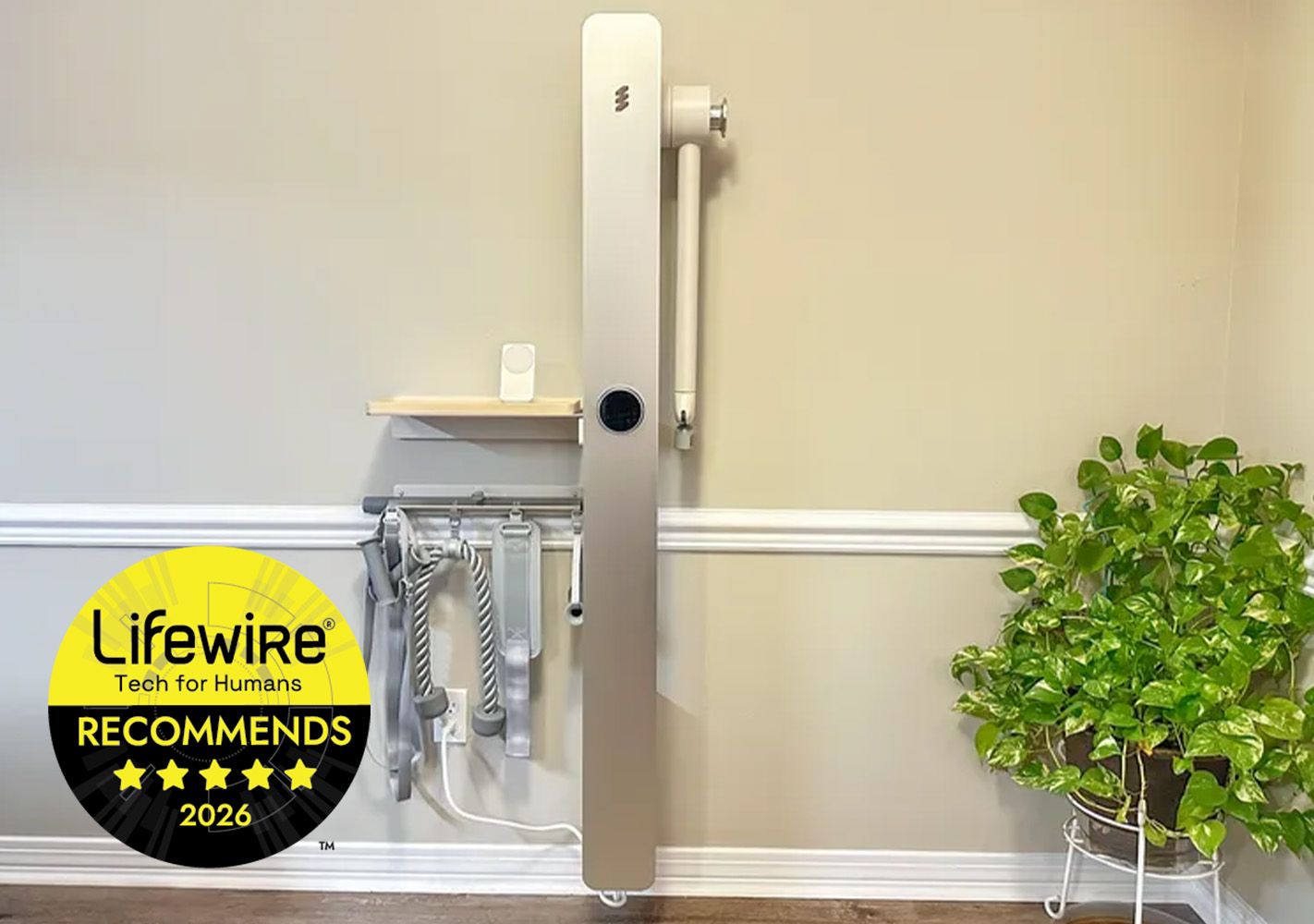
If your dream home gym involves less “garage full of metal” and more “sleek gadget that doesn’t bully your living room,” the Amp Fitness machine is probably already on your radar. It is one of the more interesting entries in the smart home gym category because it promises a lot of things busy people love: guided strength training, automatic resistance adjustments, a smaller footprint, and fewer excuses. That last feature may be the most powerful one of all.
In a market where connected fitness gear can get bulky, loud, or weirdly complicated, Amp takes a cleaner approach. It is a wall-mounted digital resistance machine designed to deliver strength workouts in a compact footprint, with app-based coaching and smart resistance modes that try to make every rep feel more intentional. In plain English: it wants to be the machine that helps you train hard without taking over your home or your calendar.
So, does it actually deliver? Mostly, yes. But like every shiny fitness machine that looks smart enough to file your taxes, Amp comes with strengths, limitations, and a clear type of buyer who will love it more than everybody else.
What Is the Amp Fitness Machine?
The Amp Fitness machine is a wall-mounted smart strength trainer that uses digital resistance instead of traditional weight plates. Rather than giving you a giant rack, bench, and enough iron to recreate a small high school weight room, Amp gives you a slim vertical unit with an adjustable arm, a cable, several attachments, and an app that guides your workouts.
Its pitch is simple: smarter strength training in less space. That means personalized programming, automatic weight adjustments, multiple resistance modes, and a design that feels far more apartment-friendly than many traditional home gym systems.
It also tries to split the difference between a personal trainer, a cable machine, and a connected fitness app. That is a bold promise. Fortunately, Amp does not feel like a gimmick. It feels like a serious attempt to make strength training more approachable, more polished, and easier to repeat consistently.
Design and Footprint: The Big Selling Point
Let’s start with the obvious win: space. Amp’s biggest advantage is that it does not look like it escaped from a commercial gym. The machine itself is slim and vertically oriented, which makes it much easier to place in a bedroom, office, flex room, or corner of a living area than a traditional multi-station gym. It has a modern, minimalist look that reviewers repeatedly describe as clean, sculptural, and surprisingly easy to live with.
That matters more than fitness snobs like to admit. A home workout machine you don’t hate looking at has a better chance of being used. A machine you walk past every day is also easier to turn into a habit than a giant setup hidden in a cold garage next to Halloween decorations and that one broken folding chair.
Still, do not confuse “compact” with “tiny.” Amp saves wall space, but you still need room around it to move safely. Squats, rows, presses, lunges, and core work all require a real exercise zone. So yes, it is much more space-efficient than many competitors, but no, you are not installing it between a bookshelf and a houseplant and suddenly becoming Chris Hemsworth.
How the Workout Experience Feels
This is where Amp starts to separate itself from simpler cable trainers. The machine uses digital resistance and offers different modes that change how the load behaves throughout a movement. In practice, this makes the workouts feel more dynamic than standard “pick a weight and go” training.
1. Fixed mode keeps things familiar
Fixed mode is the easiest to understand. It gives you steady resistance across the movement, which is closest to a traditional cable-machine feel. If you want predictable loading for presses, rows, curls, and similar lifts, this is the comfortable on-ramp.
2. Band mode adds tension as you move
Band mode mimics the feel of resistance bands, where tension increases as you extend farther into the rep. This can make common movements feel more athletic and more deliberate, especially for pressing, hinging, and glute-focused work.
3. Eccentric mode raises the challenge
Eccentric mode adds more resistance during the lowering portion of the rep. Translation: your muscles do not get to coast on the way back. For users chasing strength gains, control, or a little extra “why do my muscles suddenly hate me?” intensity, this is one of the machine’s most interesting features.
Together, these modes give Amp a more sophisticated feel than a basic resistance setup. They also help the machine feel fresh longer, because the same movement can feel meaningfully different depending on how resistance is programmed.
Smart Coaching, App Guidance, and AI Features
Amp is not just selling hardware. It is selling a guided training experience. That means the app matters a lot. By most recent accounts, the app is one of the machine’s strongest selling points. It walks users through setup, strength assessment, workout selection, progress tracking, and adaptive programming. The broad promise is that the system learns from your performance and adjusts resistance or session structure accordingly.
For beginners and intermediate users, that is a huge deal. One of the biggest barriers to strength training is not effort. It is uncertainty. People do not always know what to do, how much weight to use, how long to rest, or whether their random mashup of curls and lunges counts as a “program.” Amp reduces that mental clutter.
The platform also includes trainer-led or guided sessions, personalized workout suggestions, and enough variety to make the system feel more like a living fitness platform than a static machine. Some coverage also highlights gamified features, which may sound silly until you realize that “silly” becomes “surprisingly motivating” around minute 17 of a workout.
The only caution here is platform dependence. Amp is best when fully paired with its app ecosystem. That is normal for smart fitness equipment, but it still matters. If you hate subscriptions, dislike app-driven training, or want a forever machine with no digital strings attached, Amp may feel less like freedom and more like another thing that wants your login.
Strengths That Make Amp Worth a Serious Look
It lowers the friction to work out
This may be Amp’s most underrated superpower. It removes several excuses at once: no commute, no waiting for machines, no plate changes, and far less guesswork. When the barrier to training is lower, consistency tends to rise. And consistency is still the least glamorous, most effective fitness hack on Earth.
It works well for small-space living
People in apartments, condos, townhouses, or multifunction rooms will likely appreciate Amp far more than people with giant finished basements. It is built for homes where every square foot needs to earn its keep.
It feels more polished than “DIY home gym” setups
Adjustable dumbbells and resistance bands are useful, but they can also feel random, cluttered, and incomplete. Amp offers a more integrated system, which can be especially appealing for users who want structure and convenience without designing an entire home gym from scratch.
It is beginner-friendly without feeling too basic
The machine is approachable for people new to strength training, yet still engaging enough for more experienced users who want efficient accessory work, volume training, or convenient at-home sessions on busy days.
Where Amp Falls Short
The resistance ceiling will not impress advanced heavy lifters
This is the most important tradeoff. If you are a strong, experienced lifter who wants your home setup to replace heavy barbells, racks, and high-load lower-body work, Amp may not be enough. Its max resistance is likely fine for many users, especially for controlled cable-style movements, but it is not trying to be a powerlifting cave.
That does not make Amp weak. It makes it specialized. It is excellent for smart, space-conscious, efficient strength work. It is not the obvious choice for someone who thinks “leg day” should involve enough load to register on local seismographs.
The single-cable format limits certain exercise possibilities
Compared with dual-arm systems or fully built-out cable stations, Amp’s single-cable configuration can reduce exercise variety in some scenarios. The included attachments help a lot, and the machine still supports hundreds of guided movements, but advanced lifters may notice the difference when trying to recreate a full commercial-gym menu.
Subscription fatigue is real
Amp’s monthly membership cost is lower than some competitors, which is good news. But “lower than some competitors” is still not the same thing as “free.” Buyers should factor long-term subscription costs into the real ownership price, because smart fitness machines have a funny habit of looking affordable right up until month 19.
Phone-first control is convenient for some, annoying for others
Some users love the streamlined no-screen design. Others may miss having a larger built-in display. If you prefer following workouts on a full touchscreen instead of glancing at your phone, this could be a minor irritation. Also, some recent reviews noted platform limitations at the time, so buyers should verify current device compatibility before purchasing.
Who Should Buy the Amp Fitness Machine?
Amp makes the most sense for people who want guided strength training at home without sacrificing a whole room. It is especially appealing if you are:
Someone with limited space, a busy schedule, and a serious desire to train more consistently. Someone who wants structure but does not want to build workout plans from scratch. Someone who likes sleek tech and values design as much as function. Or someone who wants one high-end machine that can cover a lot of fitness ground without turning the home into a suburban sports complex.
It is less ideal if your main goal is maximal heavy lifting, if you dislike subscriptions on principle, or if you want a simple analog system with no app-based ecosystem.
Amp vs. Traditional Home Gym Equipment
Compared with dumbbells and resistance bands, Amp is smarter, cleaner, and easier to follow. Compared with large all-in-one home gym stations, it is dramatically more space-conscious. Compared with premium digital competitors, it stands out by offering a lower-clutter design and a lower entry cost while still delivering adaptive resistance and guided programming.
Its biggest competitive edge is not that it does everything. It is that it does enough in a footprint real people can live with. That is an important distinction. Many home gym systems fail not because they are bad, but because they ask too much space, too much money, or too much patience. Amp feels built around the idea that the best workout machine is often the one you will actually use four times a week.
Final Verdict: Is Amp Fitness Worth It?
Yes, for the right buyer. Amp is one of the most compelling smart home gym machines for people who want efficient, guided strength training in a compact setup. It looks good, trains well, and meaningfully lowers the friction of working out at home. Its resistance modes add genuine training value, and its app-driven personalization makes it more approachable than old-school equipment for many users.
That said, it is not magic, and it is not universal. Advanced lifters may outgrow the resistance ceiling. Budget shoppers may balk at the total cost of ownership. Anti-subscription purists may break out in hives at the very idea of paying monthly to keep their workout machine feeling “smart.”
But if your priorities are convenience, coaching, compact design, and better consistency, Amp is easy to recommend. It does not just save space. It saves friction. And in home fitness, friction is often the real enemy.
Real-World Experiences: What Living With Amp Actually Feels Like
One of the clearest themes across recent reviews and user impressions is that Amp changes the rhythm of training at home more than it changes the science of training. In other words, people do not just like it because it is sleek. They like it because it makes exercise easier to start. That sounds small, but it is huge in real life.
Imagine finishing work, walking past the machine, and deciding to do a 20-minute session instead of negotiating with yourself for an hour about whether changing clothes counts as cardio. That is the sort of experience reviewers keep circling back to. Amp sits there, ready to go, without demanding a complicated setup. You are not swapping plates, dragging out accessories from three different drawers, or wondering what to train. The app gives you a plan, the machine adjusts, and suddenly you are halfway through a session before your inner procrastinator has even found its shoes.
That convenience seems especially valuable for households where fitness has to fit around children, work calls, errands, and all the tiny chaotic plot twists that happen between 6 a.m. and bedtime. Several reviewers described the machine as easy to live with because it does not visually dominate a room. That matters psychologically. A giant machine can feel like a commitment. A slim, attractive one feels more like an invitation.
Another common thread is confidence. Newer or less experienced strength trainees often seem to appreciate that Amp reduces uncertainty. They do not have to guess the weight, guess the tempo, or guess whether their workout was balanced. The guided setup and adaptive coaching create a smoother path into strength training, which is important for people who have always felt more comfortable with cardio, yoga, or simply avoiding the free-weight area like it is guarded by dragons.
More experienced users appear to enjoy it for different reasons. They tend to like the efficiency, the smooth resistance feel, and the ability to add quality accessory work without going to a gym. For them, Amp is less “my entire training identity” and more “a very smart piece of equipment that helps me get solid work done at home.” That is a healthy lane for the product.
There are also real annoyances, and ignoring them would be lazy reviewing. Some users have mentioned that certain attachments or setup details are not perfect for every body type. Others note that a phone-based interface is fine until you are mid-workout and would rather not squint at a smaller screen. And, of course, stronger athletes may hit the point where the machine feels more supportive than sufficient.
Still, the overall lived experience sounds strikingly positive: easier workouts, better consistency, less clutter, more structure, and fewer barriers to starting. In home fitness, those are not small perks. They are often the difference between equipment that becomes part of your routine and equipment that becomes a very expensive coat rack with strong opinions.