Index funds used to be the quiet kid in the investing cafeteria: low-cost, sensible, and usually found minding their own business with a peanut butter sandwich. Today, they are more like the cafeteria itself. Trillions of dollars flow through index mutual funds and exchange-traded funds, giving everyday investors simple access to the S&P 500, total U.S. stock market funds, global equity indexes, bond indexes, sector ETFs, and nearly every financial flavor imaginable.
That growth has sparked a big question: Are index funds propping up the stock market? In other words, are passive investing vehicles pushing stock prices higher simply because money keeps flowing into them, regardless of whether the underlying companies deserve those valuations?
The honest answer is: partly, sometimes, at the marginsbut not in the cartoon-villain way people imagine. Index funds are not a secret committee sitting in a volcano lair pressing the “make stocks go up” button. But they can affect market structure, investor behavior, stock correlations, liquidity, and the dominance of mega-cap companies. The bigger passive investing becomes, the more reasonable it is to ask whether the tail is wagging the Wall Street dog.
What Index Funds Actually Do
An index fund is designed to track a benchmark rather than beat it. A fund tracking the S&P 500 generally buys the companies in that index according to their market value. A total stock market fund owns thousands of companies. A Nasdaq-100 ETF tracks a more concentrated basket of large, mostly growth-oriented companies. The appeal is obvious: broad exposure, low fees, tax efficiency, simplicity, and no need to guess which fund manager had the perfect espresso that morning.
Most index funds use a market-cap-weighted system. That means the biggest companies receive the largest allocations. If Apple, Microsoft, Nvidia, Amazon, or Alphabet grows in market value, its weight in the index rises. When investors buy an S&P 500 index fund, more money is directed toward the biggest companies because those companies dominate the benchmark.
The Snowball Effect
This creates what critics call a snowball effect. Strong-performing large companies become bigger parts of the index. New money flowing into the index buys more of those same companies. Their prices can rise further, making them even larger in the index. The snowball keeps rolling until somethingearnings disappointment, higher interest rates, valuation pressure, regulation, recession fears, or plain old investor boredomslows it down.
That does not mean index funds blindly inflate every stock forever. Index funds also sell when investors redeem shares. They rebalance. They follow rules. They do not rescue weak businesses out of kindness. But when passive inflows are strong, they can add steady demand to the companies with the heaviest index weights.
Why People Think Index Funds Are Propping Up the Market
The concern comes from three major trends: the massive shift from active to passive investing, the rise of ETFs, and the increasing concentration of major stock indexes in a small number of giant companies.
1. Passive Investing Has Become Enormous
For decades, investors paid active managers to pick stocks. Many of those managers charged higher fees and still failed to beat their benchmarks after costs. Over time, investors noticed. Money moved into index funds and ETFs because they were cheaper, easier, and often more effective over long periods.
That shift changed the market. Passive funds are no longer a niche product for finance nerds who enjoy expense-ratio trivia. They are central to retirement plans, brokerage accounts, robo-advisors, target-date funds, and institutional portfolios. When millions of workers automatically contribute to 401(k) plans every two weeks, a meaningful portion of that money often ends up in index-based strategies.
2. ETF Flows Can Move Fast
Traditional mutual funds usually trade once per day. ETFs trade throughout the day like stocks. That makes them convenient, but it also means investor sentiment can rush through ETF markets quickly. In calm markets, this liquidity is useful. In stressed markets, ETF trading can amplify short-term moves, especially in less liquid asset classes or highly concentrated themes.
Broad U.S. equity ETFs are usually very liquid, but sector ETFs, thematic funds, leveraged products, and narrow indexes can behave differently. A clean little “passive investing” label can hide a surprisingly spicy jalapeño underneath.
3. Market Concentration Is Hard to Ignore
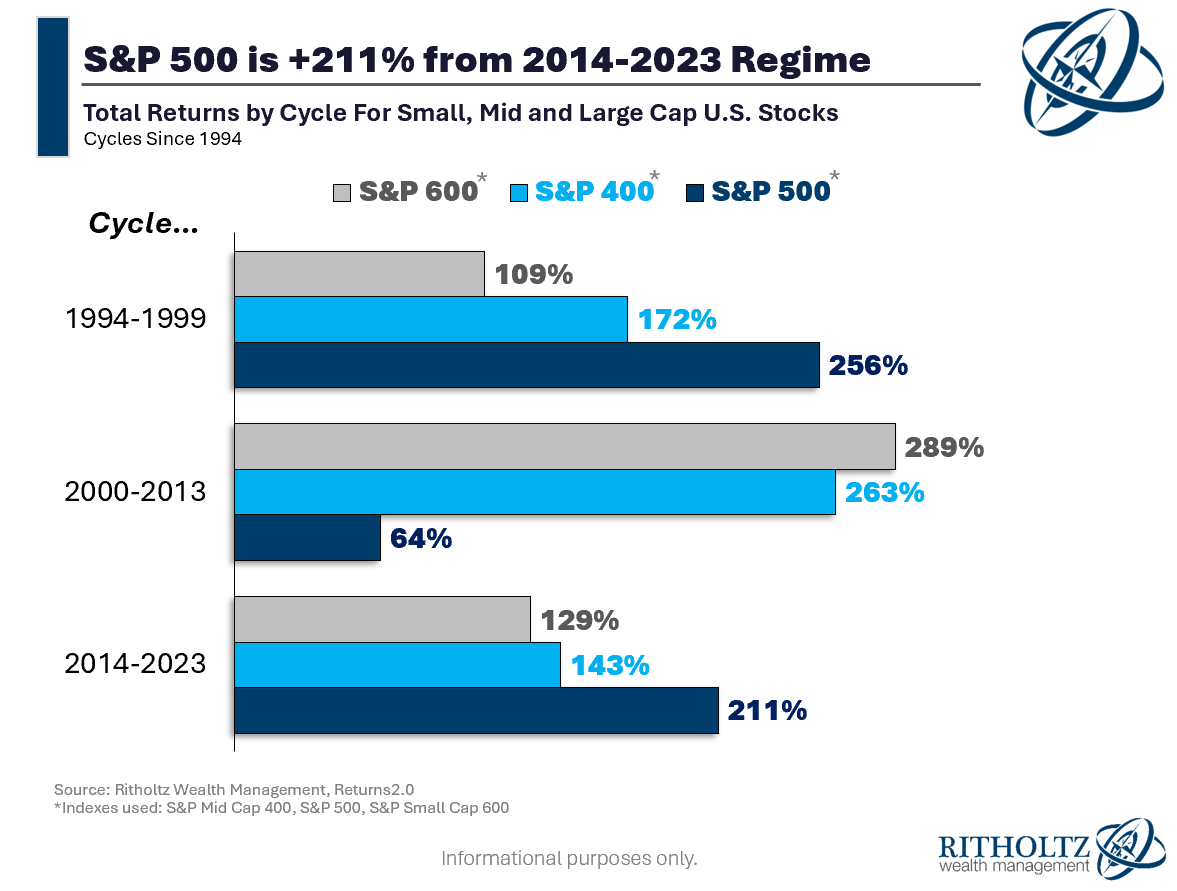
One of the strongest arguments behind the “index funds are propping up stocks” idea is market concentration. In recent years, a small group of mega-cap technology and growth companies has made up a large share of the S&P 500’s total market value. When the top 10 companies represent roughly a third of the index, a broad S&P 500 fund becomes less diversified than many investors assume.
Yes, owning 500 companies sounds like showing up to a buffet with unlimited options. But if one-third of your plate is the same five or ten mega-cap stocks, your “balanced meal” is starting to look suspiciously like a tech-sector casserole.
How Index Funds Can Support Stock Prices
Index funds can support the market in several realistic ways. None of them require conspiracy theories, secret handshakes, or a banker whispering into a golden telephone.
Automatic Buying Creates Persistent Demand
Retirement contributions, dollar-cost averaging, pension allocations, and model portfolios create recurring demand for index funds. When investors keep buying broad-market funds, fund providers must maintain exposure to the underlying stocks. That steady demand can soften the impact of normal selling pressure, especially for heavily weighted index members.
Market-Cap Weighting Favors Winners
Because market-cap-weighted funds buy more of the largest companies, they naturally reinforce the dominance of winners. A rising company receives a bigger index weight. More passive money follows. That does not guarantee endless gains, but it can make leadership trends last longer than fundamentals alone might suggest.
Index Inclusion Matters
When a company is added to a major index, funds tracking that benchmark may need to buy it. That creates demand around index inclusion events. The effect is usually studied as a short-term market-structure issue, but it shows that index rules can influence stock prices. Being included in a popular benchmark is a little like getting moved from a side street to a highway with constant traffic.
Price Discovery May Shift to Fewer Active Traders
Index funds do not usually analyze whether a company’s margins are improving, whether management is brilliant, or whether the balance sheet looks like it was assembled during a power outage. They buy according to index rules. That means active investors, hedge funds, analysts, short sellers, market makers, and company insiders still do much of the price discovery.
If passive investing grows too large relative to active analysis, critics worry that prices could become less connected to company fundamentals. The market would still function, but fewer investors would be doing the hard work of deciding what each business is worth. In that scenario, passive investors are not exactly propping up the market; they are leaning on the work of active investors and hoping enough of them remain awake.
Why Index Funds Are Not the Whole Story
It is tempting to blame index funds for every market rally. Stocks up? Index funds. Mega-caps rising? Index funds. Your neighbor suddenly talking about ETFs at a barbecue? Definitely index funds. But the stock market is too complex for a single explanation.
Corporate Earnings Still Matter
Over the long run, stock prices are tied to earnings, cash flow, growth expectations, interest rates, inflation, productivity, and investor risk appetite. Index funds can influence demand, but they cannot permanently override business reality. If a company disappoints investors badly enough, its stock can fall even if it sits proudly inside a major index.
Active Investors Still Set Marginal Prices
The most important price in the market is often set at the margin. A passive fund may hold a stock, but active traders decide whether today’s price is too high or too low. If a mega-cap stock becomes wildly overvalued, active investors can sell it, short it, avoid it, or shift toward cheaper alternatives. Their actions influence prices even if passive ownership is large.
Index Funds Also Sell
Passive flows are not a one-way escalator to financial paradise. When investors sell index funds, the funds may need to reduce exposure. During bear markets, redemptions can add pressure. The same structure that channels money into stocks during good times can channel money out during bad times.
Many Index Funds Track Different Markets
Not all index funds buy the S&P 500. Some track small-cap stocks, international equities, bonds, commodities, dividends, equal-weight strategies, value stocks, or specific sectors. Passive investing is not one giant monolith marching in matching khakis. It is a large ecosystem with different rules and exposures.
The Big Risk: Concentration, Not “Passive Investing” Alone
The most practical concern for regular investors is not that index funds will magically levitate the market forever. The bigger issue is concentration risk. When a handful of companies dominate index returns, investors may believe they are more diversified than they really are.
For example, an investor buying an S&P 500 fund may think, “Great, I own 500 companies.” Technically, yes. But the largest companies carry much more weight than the smallest companies. If the top mega-cap stocks stumble together, the whole index can feel it. That is not a flaw so much as a feature of market-cap weighting: the index reflects where the market value is.
Equal-Weight Indexes Tell a Different Story
One way to see concentration is to compare the regular S&P 500 with an equal-weight S&P 500. In an equal-weight version, every company receives roughly the same allocation. When mega-cap stocks dominate, the market-cap-weighted index can outperform the equal-weight version. When leadership broadens, equal-weight indexes may catch up.
This comparison helps investors understand whether the “market” is truly rising broadly or whether a few giant stocks are carrying everyone else like a tired parent hauling three kids through an airport.
Do Index Funds Create a Market Bubble?
Index funds can contribute to bubble-like conditions, but they are rarely the sole cause. Bubbles usually require a mix of easy money, exciting narratives, strong momentum, investor confidence, leverage, and a belief that prices will keep rising becausewellprices keep rising. Index funds may add fuel when they direct steady flows into popular market leaders, but they do not create the spark by themselves.
The technology-heavy rallies of recent years were not driven only by passive flows. Artificial intelligence, cloud computing, chip demand, profit margins, buybacks, global scale, and investor enthusiasm all played roles. Passive funds may have amplified the rise of the biggest winners, but those companies also delivered real revenue and earnings power. The debate is not “fundamentals or index flows.” It is usually both, wearing the same jacket.
What Happens If Everyone Indexes?
This is the classic philosophical question of passive investing. If everyone bought index funds and nobody analyzed individual stocks, who would set prices? In theory, the market would become less efficient. Mispriced companies could stay mispriced longer. Capital might not flow as intelligently to the best businesses.
But we are not at “everyone indexes.” Active managers, hedge funds, pension funds, private equity firms, insiders, analysts, high-frequency traders, and retail investors still participate in price discovery. Also, as passive investing grows, opportunities for active investors may increase. If prices become less efficient, skilled active managers have more chances to profit, which attracts capital back to active management. Markets have a funny way of correcting extremes, usually after making everyone uncomfortable first.
How Investors Should Think About This
For most long-term investors, index funds remain useful tools. They are low-cost, diversified, transparent, and easy to understand. The risk is not owning index funds; the risk is owning them without understanding what is inside them.
Look Under the Hood
Before buying an index fund, review its top holdings, sector exposure, expense ratio, tracking method, and benchmark. Two funds can both sound “broad,” but one may be heavily concentrated in mega-cap technology while another may hold thousands of companies across the entire market.
Consider Complementary Strategies
Investors worried about concentration may consider adding small-cap exposure, international stocks, value funds, equal-weight index funds, bonds, or cash reserves. This does not mean abandoning passive investing. It means using it thoughtfully instead of treating one S&P 500 fund as a magical all-weather umbrella.
Avoid Dramatic All-or-Nothing Thinking
The active-versus-passive debate can get strangely emotional. Some investors defend index funds like family members. Others describe them as financial zombies. The calmer view is better: index funds are powerful tools with benefits and trade-offs. A hammer is useful. It is also not a toaster.
So, Are Index Funds Propping Up the Stock Market?
Index funds are helping support demand for stocks, especially large stocks in major benchmarks. They can amplify momentum, increase concentration, affect trading patterns, and reduce the number of investors doing traditional stock-by-stock research. In that sense, yes, they may be propping up parts of the market at the margin.
But they are not the only reason stocks rise. Earnings, interest rates, innovation, liquidity, fiscal policy, global capital flows, investor psychology, and corporate profits still matter. Index funds are not the foundation holding up the entire stock market like a heroic financial Atlas. They are more like a massive conveyor belt: when money flows in, it moves capital according to preset rules. That conveyor belt can strengthen existing trends, but it does not decide whether the factory makes good products.
Experience-Based Perspective: What This Looks Like for Real Investors
In practice, the index-fund debate shows up less like an academic argument and more like a feeling in an investor’s account. Imagine someone who started buying an S&P 500 index fund every month years ago. They did not read earnings transcripts. They did not evaluate semiconductor supply chains. They simply invested consistently. Over time, their account grew, and much of that growth likely came from the largest companies in the index.
That investor may feel brilliant, calm, and wonderfully efficient. And in many ways, they were. They avoided high fees, skipped frantic trading, and benefited from the long-term growth of U.S. businesses. That is the beauty of index investing: it removes the pressure to pick tomorrow’s winner and lets the market do a lot of the heavy lifting.
But another experience can happen. The same investor opens the fund’s holdings and realizes the portfolio is heavily tilted toward a few huge companies. Suddenly, “I own the market” feels a little different. They still own the market, yes, but the market itself has changed. It has become more concentrated. The investor did not make an active bet on mega-cap technology, but the index made that bet for them because market-cap weighting follows size.
This is where personal experience often teaches what theory cannot. During strong bull markets, concentration feels like genius. The biggest companies rise, the index rises, and investors wonder why anyone would bother with anything else. During corrections, concentration feels less charming. If the leading companies fall together, broad-market funds can drop faster than expected. The seatbelt still works, but the road is bumpier than the brochure promised.
Many investors also experience the psychological comfort of automation. Buying index funds through a retirement account every paycheck can be boring in the best possible way. No dramatic decisions. No daily guessing. No chasing hot stock tips from someone whose main qualification is owning a ring light. This steady behavior can be a major advantage. In fact, one of the underrated strengths of index funds is that they make good behavior easier.
Yet comfort can become complacency. An investor who never checks allocation may accidentally drift into a portfolio that no longer matches their risk tolerance. A young worker may be fine with a stock-heavy index approach. Someone nearing retirement may need more balance. A business owner whose income already depends on the technology sector might not want their investment portfolio dominated by the same type of companies. The index does not know your life. It does not know your mortgage, your job, your college savings goals, or your sleep schedule.
A useful real-world habit is to review index exposure once or twice a year. Not daily. Daily checking is how people turn investing into a nervous hobby with worse snacks. Instead, look at top holdings, sector weights, domestic versus international exposure, and the balance between stocks and bonds. Ask whether the portfolio still fits the plan. If it does, leave it alone. If it does not, rebalance thoughtfully.
Another practical lesson is that index investing works best when expectations are realistic. Index funds do not prevent losses. They do not guarantee fair valuations. They do not protect investors from bubbles, recessions, or emotional decisions. They simply provide a low-cost way to own a chosen slice of the market. That is powerful, but it is not magic. The magic, if there is any, comes from patience, diversification, low costs, and not panicking every time the market gets a stomachache.
So the lived experience is balanced: index funds can be excellent long-term vehicles, but investors should understand the engine. Passive investing may support parts of the stock market, especially when flows are strong and leadership is narrow. But for individual investors, the more important question is not “Are index funds propping up the market?” It is “Do I understand what I own, why I own it, and how it fits my goals?” That question is less dramatic, but it is far more usefuland it does not require yelling at a chart.
Conclusion
Index funds have changed the stock market. They have lowered costs, broadened access, and helped millions of investors build wealth without needing to become professional stock pickers. At the same time, their rise has created legitimate questions about market concentration, price discovery, liquidity, and whether passive flows amplify the success of the biggest companies.
The best answer is nuanced: index funds can support and amplify market trends, especially in mega-cap stocks, but they do not single-handedly prop up the entire stock market. Fundamentals still matter. Active investors still influence prices. Investor behavior still drives cycles. For most people, the smartest move is not to fear index funds, but to understand them. Low-cost indexing remains a strong strategy when paired with diversification, realistic expectations, and occasional portfolio review.
Note: This article is for educational and informational purposes only. It is not personal financial advice. Readers should consider their own goals, risk tolerance, and time horizon before making investment decisions.