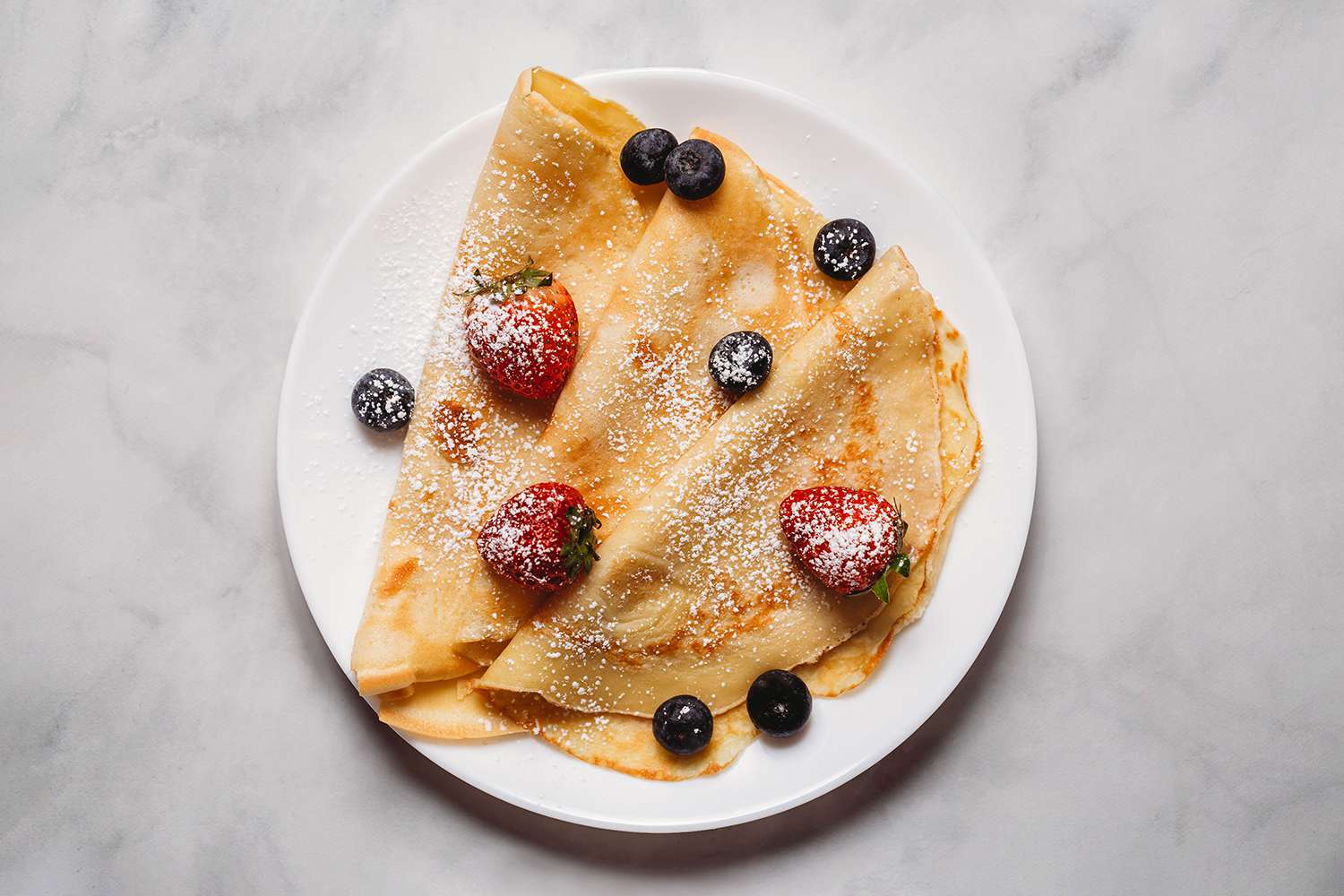
There are recipes that look fancy because they require rare ingredients, dramatic equipment, or the emotional confidence of a TV chef. Then there are French crêpes: elegant, paper-thin, beautifully golden, and made from the most ordinary kitchen staples imaginable. Flour, eggs, milk, butter, and a pinch of salt walk into a bowl, and somehow breakfast starts wearing a beret.
This Basic French Crêpe Recipe is designed for home cooks who want tender, flexible, restaurant-style crêpes without panic, smoke alarms, or a crêpe pan that costs more than dinner. The method is simple: make a thin batter, let it rest, swirl it in a hot skillet, flip, stack, and fill. Once you understand the rhythm, crêpes become one of the most useful recipes in your kitchen. They can be sweet, savory, breakfast-y, brunch-y, dessert-y, or “I forgot to grocery shop but somehow this looks intentional.”
Unlike American pancakes, French crêpes are thin and delicate rather than fluffy. They do not rely on baking powder or baking soda for lift. Instead, the magic comes from a smooth batter, the right pan temperature, and a quick swirl that coats the skillet in a whisper-thin layer. The result is soft, lightly browned, and flexible enough to fold around berries, jam, lemon sugar, ham, cheese, mushrooms, spinach, or whatever delicious little situation you have going on in the fridge.
What Are French Crêpes?
French crêpes are thin pancakes traditionally associated with French cooking, especially the style of cooking where simple ingredients are treated with respect instead of buried under twelve unnecessary sauces. A classic crêpe batter is thinner than pancake batter and usually includes flour, eggs, milk, melted butter, and salt. Sugar is optional, which is excellent news because one batter can go sweet or savory depending on the filling.
The best crêpes have three important qualities: they are thin, tender, and flexible. Thinness comes from a loose batter and proper swirling. Tenderness comes from resting the batter so the flour hydrates and the gluten relaxes. Flexibility comes from the egg and milk structure, plus just enough fat to keep the crêpe soft instead of leathery. In short, the batter needs a nap before it performs. Honestly, relatable.
Basic French Crêpe Ingredients
This recipe makes about 10 to 12 medium crêpes, depending on the size of your skillet and how enthusiastic your pouring hand becomes.
Ingredients
- 1 cup all-purpose flour
- 2 large eggs
- 1 1/2 cups whole milk, plus 1 to 2 tablespoons more if needed
- 2 tablespoons unsalted butter, melted and slightly cooled
- 1/4 teaspoon fine salt
- 1 tablespoon granulated sugar, optional for sweet crêpes
- 1 teaspoon vanilla extract, optional for dessert crêpes
- Extra butter or neutral oil, for greasing the pan
Ingredient Notes
All-purpose flour gives the crêpes enough structure without making them heavy. Spoon it into the measuring cup and level it off instead of scooping directly from the bag, because packed flour can turn your batter thick and stubborn.
Eggs help bind the batter and give crêpes their flexible texture. Too few eggs can make the crêpes fragile; too many can make them taste like an omelet that took a wrong turn.
Milk creates a smooth, spreadable batter. Whole milk gives a richer result, but 2% milk also works. If the batter thickens after resting, whisk in a tablespoon or two of milk until it pours like light cream.
Melted butter adds flavor and helps keep the crêpes tender. Let it cool slightly before adding it so it does not scramble the eggs. Nobody invited scrambled eggs to this crêpe party.
Sugar and vanilla are optional. Use them if you plan to fill the crêpes with fruit, chocolate spread, jam, whipped cream, or powdered sugar. Skip them for savory fillings like ham and cheese, mushrooms, eggs, or sautéed vegetables.
How to Make Basic French Crêpes
The process is simple, but the details matter. Crêpes are not difficult; they are just a little dramatic for the first one. The first crêpe often comes out weird, pale, torn, or shaped like a map of a country no one recognizes. That is normal. The first crêpe is the pan’s handshake.
Step 1: Mix the Batter
In a blender, combine the flour, eggs, milk, melted butter, salt, and optional sugar or vanilla. Blend for 20 to 30 seconds, just until smooth. Scrape down the sides if needed and blend again briefly.
If you do not have a blender, use a mixing bowl and whisk. Start by whisking the eggs and about half the milk together. Add the flour and salt, whisk until thick and smooth, then gradually whisk in the remaining milk and melted butter. This helps reduce lumps. A few tiny lumps are not a tragedy, but a silky batter makes smoother crêpes.
Step 2: Rest the Batter
Cover the batter and refrigerate it for at least 30 minutes. One hour is even better, and overnight is excellent if you want make-ahead breakfast glory. Resting gives the flour time to absorb liquid and allows the gluten to relax, which helps the crêpes cook up tender instead of rubbery.
After resting, stir the batter. It should be thin enough to swirl easily across the bottom of a pan. If it looks thicker than heavy cream, whisk in 1 tablespoon of milk at a time until it loosens.
Step 3: Heat the Pan
Set a 9- or 10-inch nonstick skillet over medium heat. Let it warm for a few minutes. Add a tiny bit of butter or neutral oil, then wipe out the excess with a paper towel. You want the pan lightly greased, not swimming. Crêpes prefer a spa mist, not a deep-sea adventure.
The pan is ready when a few drops of water sizzle and evaporate quickly. If the batter browns too fast, lower the heat. If it sits there looking pale and bored, raise the heat slightly.
Step 4: Pour and Swirl
Lift the pan off the heat. Pour in about 1/4 cup of batter, then immediately tilt and rotate the skillet so the batter spreads into a thin, even circle. Work quickly. Crêpe batter sets fast, and hesitation is how you get a pancake with identity issues.
Return the pan to the burner and cook for about 45 to 60 seconds, or until the top looks set, the edges begin to lift, and the underside is lightly golden.
Step 5: Flip and Finish
Slide a thin spatula under the edge of the crêpe. Gently loosen it, then flip. Cook the second side for 20 to 30 seconds. It will usually be lighter than the first side, and that is perfectly fine.
Transfer the finished crêpe to a plate. Continue with the remaining batter, lightly greasing the pan as needed. Stack the crêpes as you go. They stay soft from their own steam, which is one of the rare times being trapped in a stack is actually helpful.
Recipe Card: Basic French Crêpes
Prep Time
10 minutes
Rest Time
30 minutes
Cook Time
20 minutes
Total Time
About 1 hour
Yield
10 to 12 crêpes
Instructions Summary
- Add flour, eggs, milk, melted butter, salt, and optional sugar or vanilla to a blender.
- Blend until smooth, about 20 to 30 seconds.
- Cover and refrigerate the batter for at least 30 minutes.
- Stir the batter and thin with a little milk if needed.
- Heat a lightly greased nonstick skillet over medium heat.
- Pour in about 1/4 cup batter and swirl to coat the pan.
- Cook until set and lightly golden, then flip and cook briefly on the second side.
- Stack crêpes on a plate and serve warm with sweet or savory fillings.
Best Fillings for French Crêpes
The beauty of a basic French crêpe recipe is that it behaves like a blank canvas, except tastier and less likely to end up in a museum where people whisper at it.
Sweet Crêpe Fillings
- Lemon and sugar: A classic, bright, simple combination.
- Fresh berries and whipped cream: Great for brunch or dessert.
- Banana and chocolate spread: Popular, rich, and impossible to eat politely.
- Strawberry jam and powdered sugar: Easy and pantry-friendly.
- Apple cinnamon: Warm sliced apples cooked with a little butter, sugar, and cinnamon.
- Peanut butter and honey: Not traditionally French, but your skillet will not report you.
Savory Crêpe Fillings
- Ham and cheese: Simple, salty, melty, and dependable.
- Spinach and mushrooms: Add garlic and a little cheese for a satisfying meal.
- Scrambled eggs and herbs: A smart brunch filling.
- Chicken and creamy sauce: Ideal for turning leftover cooked chicken into dinner.
- Smoked salmon-style alternatives: Try cooked flaked fish, cream cheese, cucumber, and dill for a fresh savory option.
- Roasted vegetables: Zucchini, peppers, onions, and goat cheese make a colorful filling.
Tips for Perfect Homemade Crêpes
Use a Nonstick Skillet
You do not need a dedicated crêpe pan. A good nonstick skillet works beautifully. Choose one with a flat bottom and low-to-medium sides so flipping is easier.
Rest the Batter
Resting is one of the biggest differences between decent crêpes and delicate crêpes. Even 30 minutes helps. If you make the batter the night before, breakfast becomes almost suspiciously easy.
Keep the Batter Thin
Crêpe batter should pour easily. If it plops, it is too thick. Add a little milk until it flows smoothly across the pan.
Control the Heat
Medium heat is usually the sweet spot. Too hot, and the batter sets before you can swirl it. Too cool, and the crêpe dries out before it browns. Adjust as you cook; your stove has moods.
Grease Lightly
Too much butter can fry the edges and make the crêpe greasy. Brush or wipe the pan with just enough fat to prevent sticking.
Do Not Panic Over the First Crêpe
The first one often tests the pan temperature and batter thickness. Consider it a snack for the cook. This is not failure; this is quality control.
Common Crêpe Problems and How to Fix Them
Why Are My Crêpes Rubbery?
Rubbery crêpes usually come from overmixing, skipping the rest time, or cooking them too long. Blend only until smooth, let the batter rest, and cook each crêpe just until set and lightly browned.
Why Is My Batter Lumpy?
Lumps happen when flour meets liquid too quickly and gets clingy. A blender fixes this fast. If whisking by hand, add the milk gradually. You can also strain the batter through a fine-mesh sieve before resting.
Why Do My Crêpes Tear?
The batter may be too thin, the pan may not be hot enough, or you may be flipping too early. Let the crêpe cook until the edges lift and the surface looks dry before flipping.
Why Are My Crêpes Too Thick?
You may be using too much batter or not swirling quickly enough. Use about 1/4 cup for a 9- or 10-inch skillet, and tilt the pan immediately after pouring. If the batter still seems thick, add a splash of milk.
Why Are My Crêpes Sticking?
The pan may not be fully heated, the nonstick surface may be worn, or there may not be enough fat in the pan. Lightly grease between crêpes as needed and give the pan time to heat properly.
How to Store, Freeze, and Reheat Crêpes
Crêpes are excellent for meal prep because they stack neatly and reheat quickly. Let cooked crêpes cool completely, then place parchment paper between them if you want easy separation. Store them in an airtight container or resealable bag.
Refrigerated crêpes are best enjoyed within 3 to 4 days. For longer storage, freeze them for up to 2 months. To freeze, stack with parchment between each crêpe, wrap tightly, and place in a freezer-safe bag.
To reheat, warm crêpes in a skillet over low heat for a few seconds per side, microwave them briefly under a damp paper towel, or cover a stack with foil and warm in a low oven. Avoid overheating, because thin crêpes can dry out faster than a group chat after someone says, “We need to talk.”
Food Safety Note for Crêpe Batter
Although crêpe batter may look harmless, it contains raw flour and raw eggs before cooking. Do not taste raw batter. Cook each crêpe fully, wash hands and utensils after handling raw batter, and keep prepared batter refrigerated until you are ready to cook.
Sweet vs. Savory Crêpes: One Batter, Two Personalities
The same basic French crêpe batter can work for both sweet and savory recipes if you keep it neutral. For the most flexible version, skip the sugar and vanilla. You can still serve the finished crêpes with sweet toppings, but you will also be able to use them for dinner fillings.
If you know you are making dessert crêpes, add sugar and vanilla to the batter. For savory crêpes, consider adding chopped herbs, black pepper, or a tiny pinch of nutmeg. Just avoid overloading the batter with chunky ingredients, because crêpes need to spread thinly and evenly.
Serving Ideas for Every Occasion
For Breakfast
Fill crêpes with scrambled eggs, cheese, and sautéed spinach. Or keep things sweet with Greek yogurt, berries, and honey. A dusting of powdered sugar makes even a Tuesday feel like it owns a tiny café table.
For Brunch
Set up a crêpe bar with bowls of fruit, whipped cream, jam, chocolate spread, sautéed mushrooms, ham, cheese, and herbs. Guests can build their own crêpes, which means less work for you and more opportunities for someone to invent a questionable but memorable combination.
For Dessert
Fold warm crêpes into triangles and serve with strawberries, chocolate sauce, vanilla ice cream, or caramelized apples. Keep the portions small and elegant, then immediately eat two more in the kitchen like tradition intended.
For Dinner
Use crêpes like soft wrappers for creamy chicken, roasted vegetables, mushrooms, or cheese. Place filled crêpes in a baking dish, add a light sauce, and warm them in the oven until everything is cozy and bubbling.
Make-Ahead Strategy
If mornings are not your strongest personality trait, make the batter the night before. Store it covered in the refrigerator, then stir it well before cooking. The batter may thicken overnight, so add a splash of milk if needed. You can also cook the crêpes in advance and reheat them later, which is ideal for brunch parties, holiday breakfasts, or mornings when your kitchen ambition has not yet had coffee.
Experience Notes: What I Learned Making Basic French Crêpes at Home
The first time you make crêpes, the recipe may feel too simple to be trusted. The batter is thin, the pan is hot, and the instructions basically say, “Pour, swirl, flip, believe in yourself.” That is not always comforting. But after making crêpes several times, the process starts to feel less like a cooking test and more like a rhythm. The biggest lesson is that crêpes reward patience before cooking and confidence during cooking.
Resting the batter made the most noticeable difference. When I rushed and cooked the batter right away, the crêpes were still edible, but they felt slightly tougher and did not spread as gracefully. After a 30-minute rest, the batter poured more smoothly, coated the pan better, and produced crêpes that folded without cracking. Overnight batter was even easier to work with. It needed a quick stir and a small splash of milk, but the texture was beautifully soft.
The second major lesson was pan temperature. At first, I kept the heat too high because I wanted golden crêpes quickly. That produced edges that browned before the center had time to set. Lowering the heat to steady medium made the crêpes more even and easier to flip. The pan should be hot enough that the batter starts cooking immediately, but not so hot that it freezes in place before you can swirl it.
Another useful discovery: less grease is better. A shiny puddle of butter sounds delicious, but it can make the batter slide around instead of coating the pan. Wiping the skillet with a lightly buttered paper towel created a better surface. The crêpes browned gently, released cleanly, and did not taste greasy.
The first crêpe almost always looked strange. Sometimes it was too thick. Sometimes it tore. Sometimes it had the shape of a historical accident. But by the second or third crêpe, the pan settled, the batter behaved, and everything improved. That is why I now treat the first crêpe as the cook’s sample. It is not ugly; it is privately delicious.
For fillings, the simplest combinations were often the best. Lemon and sugar tasted bright and classic. Strawberries with whipped cream felt like brunch had put on nice shoes. Ham and cheese made the recipe feel practical enough for lunch or dinner. The basic batter became more useful than expected because it worked with whatever was already in the kitchen.
The most important experience-based advice is this: do not aim for perfect circles. Aim for thin, tender, tasty crêpes. A slightly uneven edge does not matter once the crêpe is folded and filled. Homemade crêpes should feel charming, not factory-issued. Once you stop worrying about making every crêpe look identical, the recipe becomes relaxing, flexible, and genuinely fun.
Final Thoughts
A basic French crêpe recipe is one of those kitchen skills that feels fancy but is secretly practical. With a few everyday ingredients and a little technique, you can make thin, tender crêpes for breakfast, brunch, dessert, or dinner. The key is to keep the batter smooth, let it rest, use moderate heat, and swirl with confidence. Even if the first crêpe looks like it made several poor life choices, keep going. The stack gets better fast.
Once you master the basic method, you can customize crêpes endlessly. Add vanilla for sweet crêpes, herbs for savory ones, or keep the batter neutral for maximum flexibility. Serve them with fruit, cheese, vegetables, eggs, or leftovers dressed up like they planned this all along. Simple, elegant, and surprisingly forgiving, homemade French crêpes prove that a humble bowl of batter can absolutely have main-character energy.