Starting yoga can feel a little like arriving late to a party where everyone else already knows the dance. Someone is casually folding in half, another person is balancing on one foot, and the instructor has just said something about “sending your sit bones toward the sky.” Do not panic. Your sit bones are not expected to achieve liftoff.
The best yoga poses for beginners are simple, adaptable movements that teach you how to breathe, balance, stretch, and pay attention to your body. You do not need impressive flexibility, expensive leggings, or the ability to pronounce every Sanskrit pose name. You need a comfortable space, a few minutes, and permission to modify anything that does not feel right.
Regular yoga practice may support flexibility, strength, balance, sleep, stress management, and general well-being. The results tend to come from consistent, comfortable practice rather than forcing your body into dramatic shapes. In beginner yoga, slow progress is not a consolation prize. It is the entire strategy.
Why These Beginner Yoga Poses Work
A useful beginner routine should introduce several fundamental movement patterns without making you feel as though you have accidentally joined a circus. The poses below include standing postures, gentle spinal movement, hip stretches, basic balance work, mild backbends, and deliberate rest.
Together, they help you practice three core yoga skills: moving with control, breathing without holding your breath, and recognizing the difference between manageable effort and pain. Foundational poses such as Mountain Pose, Tree Pose, Cat-Cow, Child’s Pose, Warrior variations, and Downward-Facing Dog are commonly recommended as starting points because they can be modified as your mobility and confidence develop.
What You Need Before Starting Yoga
You can begin with surprisingly little equipment. A yoga mat is helpful but not mandatory if you have a nonslip surface. Two yoga blocks can make the floor feel several inches closer, which is excellent news for anyone whose fingertips and toes are not currently on speaking terms. Thick books can work as temporary substitutes. A folded blanket supports sensitive knees, while a yoga strap or long towel can help with stretches.
- Wear comfortable clothing that allows you to move freely.
- Choose a quiet area with enough room to extend your arms and legs.
- Begin with 10 to 20 minutes rather than an ambitious hour-long session.
- Keep water nearby, especially in a warm room.
- Use a wall or sturdy chair for balance when needed.
Start slowly and stop if a movement causes sharp pain, pinching, numbness, dizziness, or unusual shortness of breath. A stretch may feel noticeable, but it should remain controlled and tolerable. Beginners with an injury, recent surgery, pregnancy, significant joint or spinal problems, balance difficulties, or a medical condition that affects exercise should ask a healthcare professional or qualified instructor about appropriate modifications. Props, chair-based movements, and personalized instruction can make yoga considerably more accessible.
12 Best Yoga Poses for Beginners
1. Mountain Pose
Mountain Pose, or Tadasana, may look suspiciously similar to standing still. However, it teaches posture, balance, alignment, and body awareness.
Stand with your feet together or hip-width apart. Spread your weight evenly across the heels, the bases of the big toes, and the bases of the little toes. Keep your knees soft rather than locked. Lengthen your spine, relax your shoulders, and let your arms rest beside you. Take five slow breaths.
Imagine the crown of your head rising while your feet remain grounded. Avoid pushing your ribs forward or squeezing your shoulders together. This is active standing, not waiting impatiently in a grocery-store line. Mountain Pose creates a stable starting position for many other standing postures.
2. Easy Pose
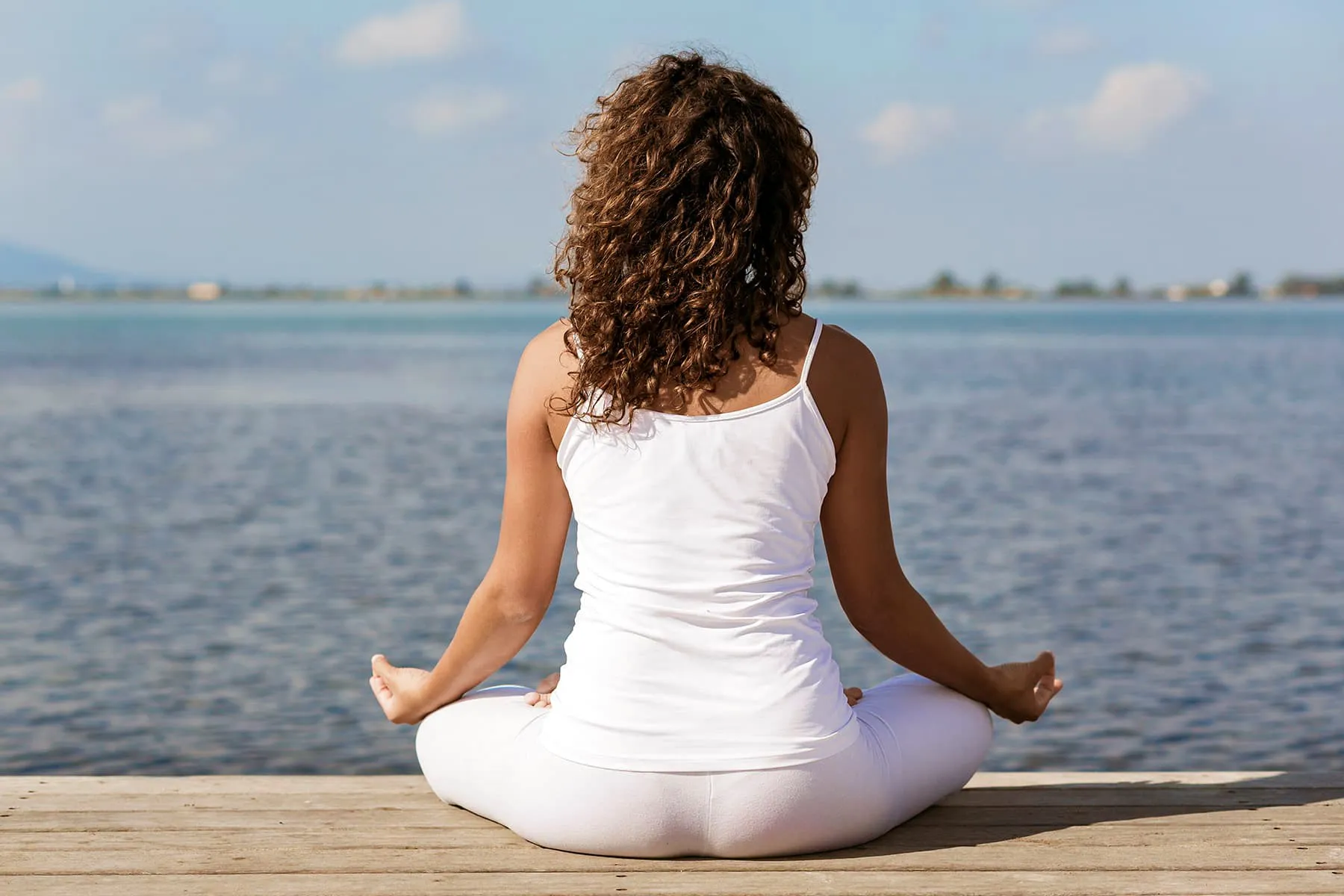
Easy Pose, or Sukhasana, is a comfortable cross-legged seat used for breathing, meditation, and settling into a practice. Despite its optimistic name, it is not automatically easy for people with tight hips.
Sit on the mat with your legs crossed and your hands resting on your thighs. Lengthen your spine and allow your shoulders to soften. If your knees sit much higher than your hips or your lower back rounds, sit on a folded blanket, cushion, or yoga block. You can also practice while seated in a sturdy chair with both feet flat on the floor.
Stay for five to ten breaths. Focus on making your inhalations and exhalations smooth rather than unusually deep. The objective is calm awareness, not winning a competitive breathing tournament. Seated props are widely used to make beginner postures more comfortable and sustainable.
3. Cat-Cow Pose
Cat-Cow is a gentle sequence that moves the spine between rounded and extended positions. It is an excellent warm-up after sitting at a desk, driving, or spending an impressive amount of time examining your phone.
Begin on your hands and knees with wrists under shoulders and knees under hips. As you inhale, allow your belly to lower slightly, broaden your chest, and lift your gaze without sharply throwing your head backward. This is Cow Pose. As you exhale, press the floor away, round your back, draw your abdomen inward, and let your head follow the curve of your spine. This is Cat Pose.
Repeat six to ten times at a comfortable pace. Place a folded towel beneath your knees if they are sensitive. If your wrists object, perform the same spinal movements while seated in a chair with your hands resting on your thighs.
4. Child’s Pose
Child’s Pose, or Balasana, is often used as a resting position. Begin on your hands and knees, bring your hips toward your heels, and lower your upper body toward the mat. Your knees can remain together or separate comfortably. Extend your arms forward or rest them beside your body.
Your hips do not need to touch your heels. Place a folded blanket between your thighs and calves if your knees feel compressed. A cushion or block under your forehead can also help your neck and shoulders relax.
Take five to eight unhurried breaths. Child’s Pose gently stretches areas around the back and hips, but it should not create knee pain. Return to a seated or hands-and-knees position whenever you are ready.
5. Downward-Facing Dog
Downward-Facing Dog, or Adho Mukha Svanasana, is one of yoga’s most recognizable poses. It is also frequently described as a resting pose by people who have apparently forgotten what resting feels like.
Start on your hands and knees. Spread your fingers, tuck your toes, and lift your hips upward and backward until your body forms an upside-down “V.” Keep your knees generously bent, especially if your hamstrings or lower back feel tight. Press through your hands while lengthening your spine.
Your heels do not need to touch the floor. In fact, bending your knees is often more useful than forcing your legs straight and rounding your back. Hold for three to five breaths.
For a gentler version, place your hands on a wall or countertop, walk your feet backward, and lower your chest between your arms. This reduces pressure on the wrists and shoulders while preserving the spine-lengthening action.
6. Standing Forward Fold
From Mountain Pose, soften your knees and hinge forward from your hips. Let your head and arms hang, or place your hands on blocks, a chair, or your thighs. Keep as much bend in your knees as necessary.
The goal is not to touch your toes. Your toes have survived perfectly well without being touched, and they can wait. Focus instead on releasing tension in your neck and allowing your torso to move toward your thighs.
Stay for three to five breaths. To come up, bend your knees, place your hands on your thighs, and rise with a long spine. Move slowly, particularly if you are prone to dizziness. People with back problems may find a supported or seated forward bend more comfortable than a deep standing fold. turn338865search1turn338865search6turn741132search12
7. Low Lunge
Low Lunge introduces hip-flexor mobility while helping you build stability through the legs. From your hands and knees, step your right foot between your hands. Place blocks beneath your hands if the floor feels too far away. Keep your right knee approximately above your ankle and slide your left knee backward until you feel a comfortable stretch at the front of the left hip.
Keep your hands on the blocks, place them on your front thigh, or reach your arms overhead if you feel stable. Avoid forcing your pelvis downward. Lengthen upward first, then allow the hips to move forward slightly.
Hold for three to five breaths and repeat on the other side. Place padding beneath the back knee or keep it lifted for a stronger version.
8. Warrior II
Warrior II, or Virabhadrasana II, strengthens the legs while teaching balance, endurance, and alignment. Step your feet wide apart. Turn your right foot toward the short end of the mat and angle your left foot slightly inward. Bend your right knee while keeping it directed toward the same general line as your toes.
Extend your arms parallel to the floor and look over your right fingertips. Keep your torso upright and your shoulders relaxed. Hold for three to five breaths, straighten the front leg, and switch sides.
Shorten your stance if your legs shake uncontrollably or your front knee feels strained. A mild wobble is normal; a full reenactment of a suspension bridge in high wind means it is time to reduce the intensity. Standing beginner poses such as Mountain, Tree, and early Warrior variations allow plenty of room for gradual progression. <span cl
9. Tree Pose
Tree Pose, or Vrksasana, is a beginner-friendly balance posture with several useful variations. Begin in Mountain Pose and shift your weight into your left foot. Place your right toes on the floor with your heel against your left ankle, or place the sole of your right foot against your left calf or inner thigh.
Do not press your foot directly against the side of the knee. Bring your hands together at your chest or keep one hand on a wall. Focus your eyes on a stationary point and breathe for three to five cycles before switching sides.
Your balance may be excellent on Monday and mysteriously disappear on Tuesday. That is normal. Balance changes with fatigue, concentration, footwear, stress, and other factors. Practice the version that lets you remain steady enough to breathe. <span cl
10. Cobra Pose
Cobra Pose, or Bhujangasana, introduces a gentle backbend and helps counter the rounded posture many people develop while sitting.
Lie on your stomach with your legs extended behind you. Place your hands beside your lower ribs and keep your elbows pointing backward. Press the tops of your feet into the mat. As you inhale, lift your head and chest a small distance using your back muscles, with only light pressure in your hands.
Keep the back of your neck long and your shoulders away from your ears. A small, comfortable lift is more valuable than pushing into a dramatic arch. Lower on an exhalation and repeat two or three times. The movement should feel distributed through your spine rather than concentrated sharply in your lower back. <span cl
11. Bridge Pose
Bridge Pose strengthens the back of the body while gently opening the front of the hips and chest. Lie on your back with your knees bent and your feet flat, approximately hip-width apart. Position your feet close enough that your fingertips can nearly reach your heels.
Press into your feet and lift your hips to a comfortable height. Keep your knees pointing forward rather than allowing them to fall outward. Your arms can remain beside your body, or you can roll your shoulders gently beneath you if that feels natural.
Hold for three to five breaths, then lower slowly. Avoid turning your head while your hips are lifted. For a supported version, place a yoga block beneath the back of your pelvis and rest your weight on it.
12. Corpse Pose
Corpse Pose, or Savasana, is the traditional resting posture at the end of practice. Lie on your back with your legs extended and your arms relaxed beside you, palms facing upward. Let your feet fall outward naturally and close your eyes if comfortable.
If your lower back feels strained, bend your knees or place a bolster, cushion, or rolled blanket beneath them. If lying flat is uncomfortable, rest on your side or sit in a supported chair.
Stay for two to five minutes while allowing your breathing to return to its natural rhythm. Savasana may look like a nap with better branding, but remaining quietly aware gives your body and attention time to settle after movement.
A Simple 15-Minute Beginner Yoga Routine
You do not need to practice every pose each day. This short sequence offers a balanced place to begin:
- Easy Pose and slow breathing: 1 minute.
- Cat-Cow: 1 minute.
- Child’s Pose: 1 minute.
- Downward-Facing Dog and Standing Forward Fold: 2 minutes.
- Low Lunge and Warrior II: 2 minutes on each side.
- Tree Pose: 1 minute on each side.
- Bridge Pose: 2 minutes, including rests.
- Corpse Pose: 2 minutes.
Move slowly between positions and take additional rest whenever needed. Practicing a short routine consistently is usually more useful than completing one heroic session and then avoiding the mat for three weeks. Beginner-friendly styles such as Hatha, gentle yoga, slow flow, chair yoga, and restorative yoga can also provide a manageable introduction. <span cl
Common Beginner Yoga Mistakes
Holding Your Breath
Breathing should continue throughout each pose. When your breath becomes strained or stops entirely, reduce the intensity. Your yoga mat is not an underwater endurance test.
Forcing Flexibility
Flexibility develops gradually. Pushing a joint or muscle beyond a controllable range can irritate tissues and make future practice less appealing. Use blocks, bend your knees, shorten your stance, or choose a chair-based version.
Copying the Most Flexible Person in the Room
Two people can practice the same pose and look completely different because of differences in mobility, limb length, injury history, and anatomy. Follow the purpose of the posture rather than trying to reproduce somebody else’s exact shape.
Skipping Rest
Child’s Pose and Savasana are part of the practice, not evidence that you have failed. Rest allows you to regain steady breathing and return to movement with better control.
Advancing Too Quickly
Mastering foundational yoga poses creates strength and awareness for more complex movements. There is no prize for attempting an advanced inversion before you can comfortably support yourself through your hands and shoulders.
What Beginning Yoga Often Feels Like: A Realistic First-Month Experience
The first yoga session often begins with an unexpected discovery: movements that look easy on a screen may feel surprisingly complicated in your body. Mountain Pose requires more attention than ordinary standing. Cat-Cow asks you to coordinate breathing with spinal movement. Downward-Facing Dog introduces you to muscles you may not have heard from since elementary school.
During the First Few Sessions
A typical beginner may feel stiffness in the hips, hamstrings, shoulders, or ankles. The wrists may tire quickly in hands-and-knees positions. Balance poses can feel unpredictable, and following verbal instructions while remembering to breathe may seem like advanced multitasking.
This does not mean you are bad at yoga. It means you are learning a new movement vocabulary. Using a wall for Tree Pose, placing blocks under your hands in Low Lunge, and bending your knees in Downward-Facing Dog are intelligent adjustments. They allow you to experience the purpose of the pose without fighting your current range of motion.
After the First Week
The names and transitions usually begin to feel more familiar. You may no longer need to inspect every limb to confirm where it has gone. Cat-Cow becomes smoother, and you may start noticing when your shoulders creep toward your ears.
Some days will feel easier than others. A pose that felt comfortable yesterday may feel tight today after a long drive, poor sleep, a hard workout, or several hours at a desk. Yoga becomes more useful when you treat these changes as information instead of personal failure.
During Weeks Two and Three
Progress often appears in small details. You may breathe more steadily in Warrior II, hold Tree Pose for an extra second, or rise from a forward fold without feeling rushed. Your heels still may not touch the floor in Downward-Facing Dog, and they never need to. The improvement may simply be that your spine feels longer and your shoulders feel less crowded.
You may also become better at identifying different sensations. Muscular effort feels different from joint pressure. A broad stretch feels different from a sharp pinch. This growing body awareness is one of the most practical beginner yoga skills because it helps you adjust before discomfort becomes an injury.
By the End of the First Month
The most noticeable change may not be dramatic flexibility. It may be that starting practice requires less negotiation. Rolling out the mat becomes a normal part of the day rather than an event requiring perfect motivation, perfect lighting, and a spiritually significant playlist.
A beginner who practices for 10 to 20 minutes several times a week may notice smoother transitions, greater confidence with modifications, and a better understanding of which poses feel helpful. Some people enjoy morning yoga because it reduces stiffness, while others prefer evening sessions as a transition away from work.
The central lesson is that yoga progress is not measured only by how far you stretch. It can also mean breathing calmly during effort, choosing a modification without embarrassment, stopping when something hurts, or returning to practice after missing several days. Consistency matters, but consistency does not require perfection. Research and clinical guidance commonly emphasize gradual, regular practice without self-criticism or unnecessary strain. <span cl
Conclusion
The best yoga poses for beginners are not the ones that look most impressive in a photograph. They are the poses that help you develop balance, mobility, strength, breath awareness, and confidence without ignoring your body’s limits.
Begin with foundational movements such as Mountain Pose, Easy Pose, Cat-Cow, Child’s Pose, Downward-Facing Dog, Low Lunge, Warrior II, Tree Pose, Cobra, Bridge, and Savasana. Use props freely, keep your breathing steady, and modify any position that creates strain. Ten comfortable minutes practiced regularly can build a stronger foundation than an exhausting routine you dread repeating.
Most importantly, remember that yoga is a practice rather than a performance. Wobbling is allowed. Bent knees are allowed. Taking a break is allowed. Even confusing your left foot with your right foot is allowed, especially before coffee.