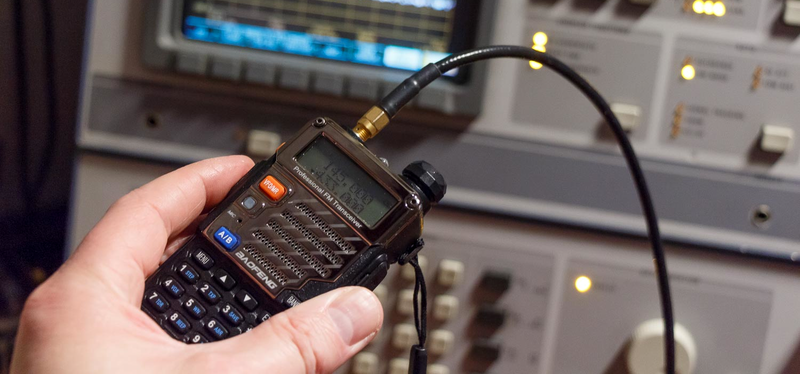
Note: This is a U.S.-focused overview of radio regulations and common-use scenarios, not legal advice. In radio, the push-to-talk button is tiny, but the consequences can occasionally be very large.
A cheap handheld radio has a certain magic. It looks like a movie prop, costs less than a restaurant meal, and suggests that you can communicate even when cell towers decide to take a coffee break. That is why Baofeng-style radios became popular with hobbyists, campers, volunteer groups, and people who simply enjoy owning gadgets with far too many buttons.
Then came the dramatic warning: Buy a Baofeng while you still can. The concern was not completely invented. In 2018, the Federal Communications Commission took action against an importer that marketed certain UV-5R-series radios capable of operating outside the scope of their equipment authorization, including on restricted frequencies. The FCC also warned sellers about VHF/UHF radios that could transmit beyond the permissions tied to their approvals.
Still, there is no reason to panic-buy a cardboard box full of handhelds like they are canned soup before a snowstorm. The FCC did not issue a blanket ban on every Baofeng radio, nor did it make ownership of an older handheld automatically illegal. The real question is more technical: what a specific model is authorized to do, what radio service you intend to use, and whether you are legally permitted to transmit there.
The FCC’s 2018 Warning: What Really Happened?
The famous “buy while you still can” panic grew from a genuine enforcement event, but the internet gave it extra seasoning. The FCC cited Amcrest Industries, doing business as Baofengradio.us, for marketing a version of the UV-5R V2+ that was capable of operating on restricted frequencies. The radio had equipment authorization under Part 90 land-mobile rules, but the FCC found that marketing it outside the scope of that authorization violated federal regulations.
That detail matters because equipment authorization is not just a shiny sticker on a product box. It connects a radio model to technical limits involving frequency coverage, output power, emissions, labeling, and intended radio service. A seller cannot market a Part 90 radio as an all-access transmitter merely because a user can type a frequency into the keypad.
The FCC’s concern was not that affordable radios are suspicious or that enthusiasts should stop enjoying amateur communications. The concern was that radios capable of drifting into restricted spectrum can create interference problems for authorized users. That includes business systems, public-safety channels, aviation communications, government allocations, and other services that are definitely not interested in hearing someone test a new antenna from the backyard.
Three Questions Every Radio Buyer Should Ask
1. Is the radio approved for the service you want to use?
Some radio services require transmitters to be certified specifically for that service. FRS, GMRS, MURS, and business land-mobile systems all have separate technical rules. A radio can display an FCC ID and still not be certified for the precise use you have in mind. The exact model, certification record, and intended service matter.
2. Are you authorized to transmit?
A legal radio can still be operated illegally. GMRS requires an FCC license. Amateur radio requires an amateur license and operating privileges. Business and public-safety channels generally require authorization held by the licensee, not a person holding a newly charged handheld and a healthy amount of confidence. Federal rules specifically require a valid individual license to operate a GMRS station.
3. Are you using the radio correctly?
Even with the right model and license, rules still apply to power limits, channels, call signs, emissions, interference, and communication types. Buying a radio is like buying a car: owning one is legal, having a license is legal, and yet neither gives you permission to drive across an airport runway.
Why “It Tunes There” Does Not Mean “You Can Transmit There”
Programmable VHF/UHF handhelds are appealing because they can receive or display a wide range of frequencies. The problem is that the VHF/UHF neighborhood is crowded. Public safety, aviation, maritime, federal, business, amateur, and personal-radio allocations can sit surprisingly close together. Your handheld may see them as numbers. The FCC sees them as separate legal neighborhoods with very different rules.
The risk is not theoretical. In 2019, FCC agents investigated unauthorized transmissions that interfered with a Pennsylvania fire-communications frequency. The notice stated that the operator admitted using a Baofeng UV-5R on that public-safety channel and had no license to operate there. A few seconds of curiosity can become a major problem when the frequency belongs to emergency responders.
Listening is not the same as transmitting, but hearing a signal does not give you permission to join it. Never key up on police, fire, EMS, aviation, maritime, railroad, utility, government, or commercial channels. A quiet frequency may simply mean nobody is speaking at that particular secondnot that the channel is available for your personal radio experiment.
FRS, GMRS, MURS, and Amateur Radio: The Differences That Matter
FRS: Convenient, but not for a typical ham-style handheld
Family Radio Service is designed for short-distance personal communication and is generally license-by-rule. Its easy access comes with strict equipment rules. An FRS transmitter must stay on authorized FRS channels and use a non-removable integral antenna. That means a typical detachable-antenna Baofeng-style handheld is not a legal substitute for an FRS walkie-talkie, even if it can be programmed to an FRS frequency.
GMRS: More capability, but licensing and certification apply
General Mobile Radio Service can be useful for families, road trips, property communication, and repeaters. It is a licensed service, and GMRS transmitters must be certified for GMRS. The rules also restrict GMRS certification for radios that include amateur-radio capabilities. Put simply: a wide-open amateur handheld does not become a legal GMRS radio because it can enter GMRS frequencies.
MURS: License-free does not mean rule-free
Multi-Use Radio Service can support certain short-range voice, data, and telemetry uses without an individual license. However, the transmitter must be MURS-certified, operate only on its authorized channels, and remain within technical limits. MURS transmitters have a two-watt output ceiling, and operators must avoid causing harmful interference. A generic handheld that covers nearby VHF frequencies is not automatically a legal MURS radio.
Amateur radio: The flexible path for people willing to learn
For people interested in repeaters, antennas, simplex contacts, propagation, and emergency-communications skills, amateur radio is usually the best path. It requires an FCC license and responsible operation within the licensee’s privileges. The FCC generally does not apply equipment authorization to transmitters built solely for amateur use, but multi-service radios can become complicated because they may operate outside amateur bands.
Should You Buy a Baofeng?
Yes, if you are buying the correct model for a lawful, specific purpose and are willing to learn the rules. No, if the plan is to buy one radio that “works on everything” and start transmitting whenever cell service gets grumpy.
The smartest purchase is not necessarily the cheapest radio with the broadest frequency range. It is the radio whose certification, controls, programming options, and support fit your actual purpose. An FRS pair may be ideal for a family campground. A GMRS-certified radio may suit a licensed family or road-trip group. A capable amateur handheld can be an excellent learning tool for a newly licensed ham.
A Smarter Radio-Buying Checklist
- Name the job. Are you coordinating a hike, using a GMRS repeater, working under a business license, or studying for amateur radio?
- Choose the service first. Do not choose a frequency range first and invent a legal use later.
- Verify the exact model. Check the specific radio, not merely a similar-looking model with the same brand name.
- Get licensed before transmitting. Amateur and GMRS licensing should come before the first on-air test.
- Program conservatively. Keep only channels you are authorized to use and label them clearly.
- Learn repeater etiquette. Know access tones, offsets, identification rules, and local policies.
- Respect emergency communications. Emergency preparedness is not a license to use random restricted channels during ordinary situations.
What Happens When Someone Ignores the Rules?
The consequences can range from annoying interference to serious public-safety problems. Unauthorized operation can interfere with business dispatch systems, repeaters, public-safety channels, or other licensed users. The FCC warns that unauthorized radio operation may result in enforcement actions, equipment seizure, fines, and possible criminal penalties.
The radio community also notices poor behavior. Responsible operators teach newcomers how to use channels safely, help with proper programming, and encourage licensing where it is required. Reckless use does the opposite: it gives regulators, retailers, and critics more reasons to restrict affordable radio equipment.
The Bottom Line: Buy Knowledge, Not Panic
The old “buy a Baofeng while you still can” headline reflected a real 2018 enforcement concern, but it is not a permanent command to stockpile radios. The FCC’s focus was on equipment marketed or operated outside lawful authorization. The smart takeaway is simple: match the radio to the service, match the service to your legal authorization, and do not treat a programmable handheld like an invisible all-access pass.
Buy the right radio. Learn the rules. Get licensed when required. Program carefully. Then enjoy the part that made handheld radios fun in the first place: making a clear, legal connection across a small slice of invisible sky.
Experience-Based Field Notes: What New Radio Owners Commonly Learn
This section is a composite of common beginner experiences and does not claim personal operation.
The first lesson many new handheld-radio owners learn is that the device feels more powerful before it is programmed than after. Out of the box, a wideband handheld can show pages of frequencies and menu settings with names that sound like a minor space program. That creates a tempting illusion: surely every number is a possible destination. A little research changes the mood quickly. Some frequencies are only for listening, some belong to licensed services, and some should never be used by casual operators. The first “wow, this can do everything” moment usually becomes a healthier “wow, I need a plan.”
The second lesson is that range is not a number printed on a box. A person on a hill may reach a repeater far beyond what a retail package suggests. The same person inside a vehicle, between tall buildings, or at the bottom of a valley may hear mostly static and disappointment. Terrain, antenna height, building materials, battery condition, and local activity usually matter much more than a dramatic “long-range” claim. A five-watt handheld is not a magic wand. It is a small radio trying its best in a very large physical world.
Third comes the etiquette surprise. Radio conversations are not phone calls. You listen first. You pause before speaking. You keep transmissions brief. You avoid talking over someone else. You identify as required by the service. Then you discover that squelch, offsets, and access tones are not secret-hacker trivia; they are the practical details that help shared systems stay organized.
A fourth common experience is realizing that the cheapest radio is not always the most economical choice. A bargain handheld can be an excellent learning device, but it may also lead to extra purchases: a programming cable, replacement battery, protective case, compatible antenna, or a clearer manual. A purpose-built FRS or GMRS radio may cost more initially while reducing the chance of programming mistakes or accidental rule violations.
Finally, responsible owners usually enjoy their radios more. Instead of worrying whether a random channel is safe, they create a small legal channel plan, save authorized repeaters, practice on permitted simplex frequencies, and test equipment before a trip. The result is less “tactical gadget fantasy” and more practical confidence. That may not sound as dramatic as an FCC showdown, but it is the version that works when communication actually matters.