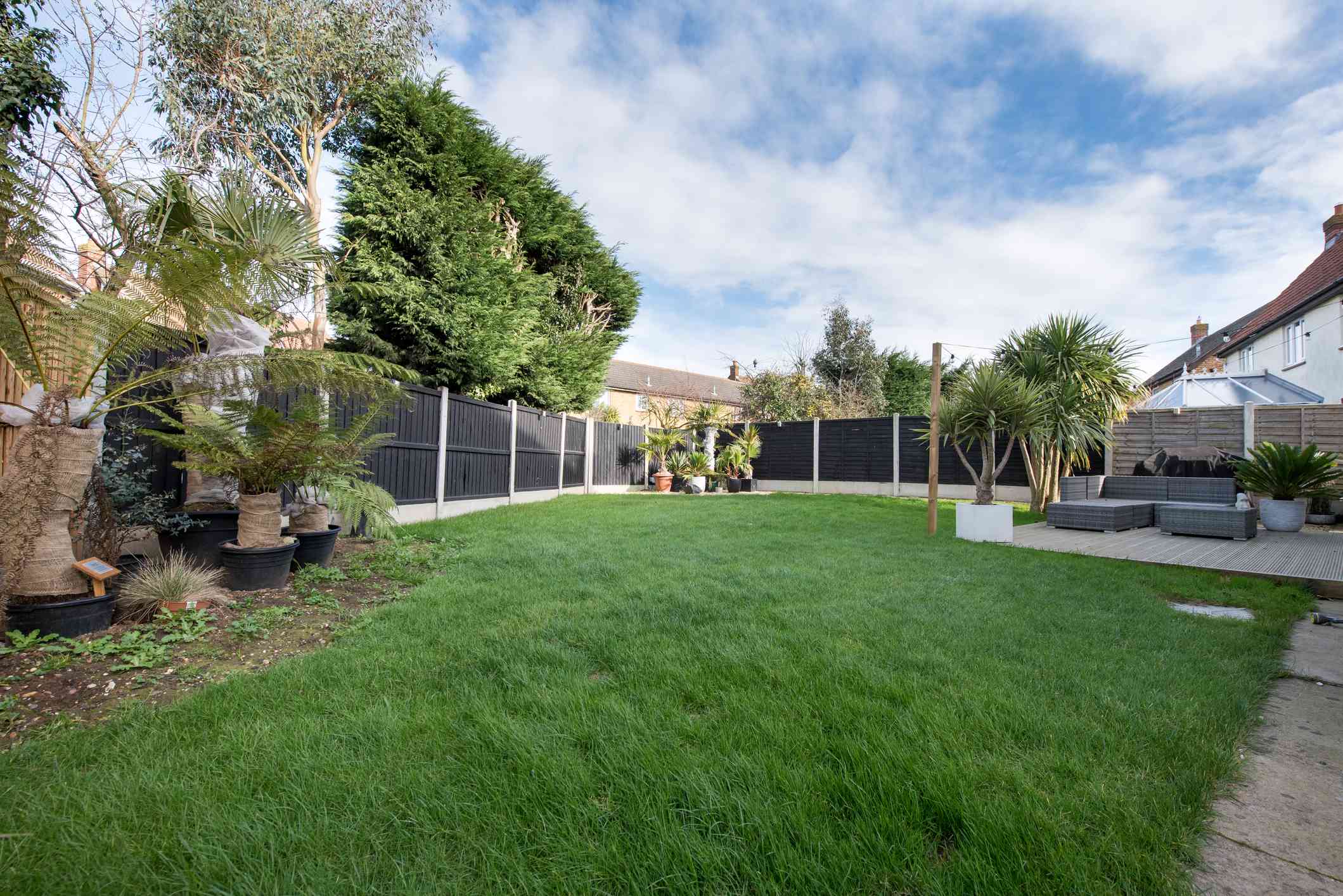
There are few things more “suburban drama” than a branch from your neighbor’s tree hovering over your patio like it pays taxes there. Maybe it drops leaves into your pool, acorns onto your car, or shade onto the tomatoes you’ve been emotionally supporting since April. So the big question is simple: can you trim a neighbor’s tree that hangs over your yard?
In many cases, yes, you usually can trim branches that cross into your property. But this is one of those deceptively simple homeowner questions where the real answer comes with a parade of asterisks. You may be allowed to trim only up to the property line. You generally cannot trespass onto your neighbor’s land. You cannot prune so aggressively that you seriously damage or destabilize the tree. And depending on where you live, local ordinances, protected-tree rules, homeowners association rules, or utility-line issues may change the equation fast.
That means the smartest answer is not “grab the ladder and go full lumberjack.” It is “slow down, check the rules, and don’t start a tree war over one annoying limb.” Here is what legal experts, arborists, and extension specialists say homeowners should know before making the first cut.
The Short Answer: Usually Yes, But Only Within Limits
Across much of the United States, the general rule is that a homeowner may trim branches or roots from a neighbor’s tree when they cross onto the homeowner’s property. The catch is that the trimming usually must stop at the property line, must be done from your side, and must not unreasonably harm the tree. Think of it as self-help, not tree vengeance.
That is why this issue confuses so many people. The branch may be physically over your yard, but the tree itself often still belongs to the neighbor if the trunk is entirely on their land. In plain English, you can often deal with the part that invades your space, but you do not suddenly become co-owner of the whole maple just because one limb wandered over the fence like an uninvited party guest.
Experts also stress that “can trim” does not always mean “should trim yourself.” If the work is high off the ground, near wires, involves heavy limbs, or could affect the structure of the tree, calling a professional is not a luxury. It is what keeps a minor yard problem from turning into a property-damage claim, a hospital visit, or a feud that outlives the tree.
Why Tree Law Is So Weirdly Complicated
Neighbor-tree disputes sound tiny until you realize they sit at the intersection of property law, nuisance law, safety law, and local municipal regulation. In other words, this is not just about leaves. It is about ownership, risk, damage, and whether a city considers that giant oak a protected local treasure with more paperwork than a kitchen remodel.
The “self-help” rule
In many states, the traditional rule is a self-help approach. That means if branches or roots cross onto your property, you are generally allowed to cut them back to the line at your own expense. This is often the first remedy the law expects you to use for routine encroachment. If the problem is ordinary overhang, shade, leaf drop, or minor interference, this is usually where the matter begins and ends.
But not every state treats tree disputes the same way
Some states or court decisions take a stricter nuisance approach. If a tree is dead, diseased, visibly dangerous, or causing actual damage, the tree owner may have greater responsibility. In some places, if self-help is not enough and the tree poses real harm, a homeowner may have stronger legal remedies. That is why nationwide advice must always come with one important reminder: local law matters. A branch in Ohio is still a branch, but legally it may behave a little differently in Florida, California, or Kansas.
Boundary trees are a special category
If the trunk sits directly on the property line, the tree may be considered a boundary tree. That usually means both property owners have shared rights in it. Major trimming or removal becomes much riskier without mutual agreement. This is the moment when a casual backyard disagreement can mutate into an expensive legal issue. If you are not sure where the trunk sits, do not guess. Property lines drawn from “where the old fence kind of used to be” are not a legal strategy.
What Homeowners Should Check Before Touching a Saw
1. Confirm the property line
The first step is boring, which is exactly why it is so important. Confirm where the property line actually is. If the dispute is serious, a survey may be worth every penny. Experts warn that people make confident statements about lot lines all the time and are wrong with incredible enthusiasm.
If the trimming will be minor, a city parcel map or recent survey may be enough to guide the discussion. But if large limbs are involved, or the tree may be partly on the line, professional confirmation can save you from making a very expensive “oops.”
2. Check local ordinances and protected-tree rules
This is the step many homeowners skip, and it is the one that can bite hardest. Some cities protect certain species, large-diameter trees, heritage trees, or trees in designated zones. In those places, pruning beyond a certain amount may require a permit, even on private property. Yes, even if the branch is annoying. Yes, even if you are very annoyed.
Local ordinances may regulate how much canopy can be removed, whether a certified arborist must be involved, and whether special approval is needed for historic or protected trees. If you live in a city with strong urban-forest rules, assume nothing. A quick call to the planning, public works, or urban forestry department can prevent a not-so-quick fine later.
3. Check for utility lines
If branches are anywhere near overhead electrical lines, stop right there. Do not trim. Do not improvise. Do not recruit the “handy cousin” who owns a chainsaw and too much confidence. Utility-related tree work is dangerous, and qualified professionals should handle it.
Tree experts and electrical safety organizations consistently warn homeowners not to prune near power lines. Some utilities require notice if your hired tree trimmer will work within a certain distance of the lines. If the branch is close to wires, call the utility company first. The tree may be irritating, but electricity remains undefeated.
4. Think about tree health, not just branch location
You may have the right to trim the part of the branch over your yard, but that does not give you a free pass to butcher the tree. Improper pruning can create decay, weak regrowth, structural instability, and long-term decline. If the cut would remove a major scaffold limb, unbalance the canopy, or leave ugly stubs, you could end up harming the tree and inviting liability.
This is why arborists recommend pruning to accepted standards, not using “hack until sunlight appears” as your guiding philosophy. Topping, for example, is widely criticized because it removes too much crown, stresses the tree, and encourages weak shoots. In homeowner terms, it solves one problem by creating three new ones.
5. Talk to the neighbor first
Legally, you may not always need permission to trim branches from your own side. Socially, it is still a very good idea to speak with the neighbor first. A calm conversation often works better than a surprise pruning session at 7:12 a.m. on a Saturday.
Sometimes the neighbor will agree to pay for the work, split the cost, or hire their own tree service. Other times, they may tell you the tree is protected, recently inspected, or tied up in an insurance issue you did not know about. Communication does not just preserve good manners. It often gives you better information.
Who Pays for Trimming and Damage?
For routine overhanging branches, the homeowner bothered by the branches usually pays for trimming on their side. That surprises people, but it is common. The law often treats minor encroachment as something you can fix yourself rather than something that automatically creates a bill for the tree owner.
Damage claims are more nuanced. If a healthy tree drops a limb in a storm, that may be treated differently from a tree that was visibly dead, diseased, or dangerous and ignored. If the tree owner knew or should have known the tree posed a hazard, liability may shift. This becomes especially important if there were prior complaints, arborist reports, visible decay, or previous limb failures.
In short, ordinary annoyance is often your problem. Neglected danger may become your neighbor’s problem. Because this area depends heavily on state law and facts, homeowners dealing with actual property damage should speak with their insurer and, when needed, a local attorney.
Common Situations That Cause the Most Confusion
Leaves, acorns, and general tree mess
Most of the time, falling leaves, needles, seed pods, and acorns are treated as natural conditions, not legal wrongdoing. That means you usually cannot force a neighbor to pay because autumn has once again weaponized your gutters. If overhanging branches are the source, trimming back to the property line may be your practical solution.
Roots lifting a driveway or invading a pipe
Roots are where tree disputes get more complicated. In some places, homeowners may cut roots at the property line just as they can trim branches. But root pruning can seriously injure a tree, and underground damage claims often raise nuisance and liability questions. If roots are damaging hardscape, sewer lines, or foundations, get an arborist and possibly a plumber or contractor involved before anyone starts digging.
Fruit hanging over the fence
This is the most charming version of a legal problem. The short answer is still: be careful. In many places, the tree owner retains ownership of the tree and often the fruit, even if branches overhang your yard. So while the peaches may look like destiny, they may legally be your neighbor’s peaches. Asking first is cheaper than turning stone fruit into a neighborhood cold war.
A blocked view or too much shade
People are often shocked to learn that “their tree blocks my sunlight” is not always a winning legal argument. Unless a local ordinance, covenant, or special rule says otherwise, ordinary shade and blocked views do not necessarily create liability. Your hydrangeas may file an emotional complaint, but courts usually want more than plant sadness.
What Experts Recommend Instead of DIY Guesswork
Hire a certified arborist for meaningful pruning
If the work involves large limbs, high branches, possible disease, or structural concerns, bring in an ISA-certified arborist or another qualified tree professional. Arborists do more than cut wood. They evaluate tree health, determine which cuts are appropriate, and reduce the chance that your “solution” kills the tree or makes it more hazardous later.
A good arborist can also document the condition of the tree before work begins. That documentation matters if the neighbor later claims you damaged the tree, or if you need proof that the tree was dead, decayed, or dangerous before any pruning took place.
Use proper pruning cuts
Proper pruning is not random shortening. Experts recommend cuts that respect branch collars, avoid leaving stubs, and preserve the tree’s natural structure. Large limbs may require multi-step cutting to prevent bark tearing. This is why professional tree work looks methodical while amateur tree work often looks like the aftermath of a disagreement with gravity.
Document conversations and estimates
If a neighbor dispute seems even slightly tense, document everything. Save texts and emails. Take photos before and after. Keep the arborist’s written recommendations and invoices. You are not being dramatic. You are being organized, which is much less exciting but far more useful.
A Simple Script for Talking to Your Neighbor
You do not need to show up with a legal treatise and a laser pointer. Start with something like this:
“Hey, a few branches from your tree are hanging over my yard and causing some issues with my fence and patio. I wanted to talk with you before doing anything. I’m looking into having them professionally trimmed back to the property line. If you’d like, I can share the estimate and we can figure out the best approach together.”
That kind of message does three helpful things at once. It signals respect, shows you are not sneaking around, and frames the solution as practical rather than personal. The goal is to solve the branch problem without growing a people problem.
The Bottom Line
So, can you trim a neighbor’s tree that hangs over your yard? In many U.S. jurisdictions, yes, you can usually trim back encroaching branches to the property line from your side of the boundary. But that right is not unlimited. You generally cannot trespass, cannot recklessly damage the tree, cannot ignore local protected-tree rules, and absolutely should not mess with branches near power lines.
The safest and smartest path looks like this: confirm the line, check city rules, talk to the neighbor, and use a qualified arborist when the work is significant. That approach may not be as thrilling as a spontaneous backyard pruning spree, but it is far more likely to protect your yard, your wallet, and your peace with the folks next door.
Real-World Experiences Homeowners Often Have With Overhanging Trees
One of the most common experiences homeowners describe is realizing that the legal answer and the practical answer are not always the same thing. A person might technically have the right to trim back a limb, but after looking at the branch more closely, they realize the cut would remove a major portion of the canopy and leave the tree lopsided. That is when many people discover the value of an arborist. What started as “I just want more sun on my patio” becomes “I should probably not gamble with a fifty-foot oak using hardware-store confidence.”
Another common experience is the surprise survey. Neighbors can spend years assuming they know exactly where the property line is, only to learn that the fence is off, the planting bed crosses the line, or the trunk they thought was fully next door is actually a boundary tree. That single discovery changes everything. Homeowners often say the survey felt expensive until they compared it with the cost of a legal dispute, a damaged tree claim, or a relationship with the neighbor that suddenly required icy silence and strategic garbage-can placement.
Many people also report that a simple conversation solved more than the law ever would have. A homeowner annoyed by branches over a driveway may expect an argument, then find out the neighbor was already worried about the same tree and happy to split the cost of pruning. Once both sides talk, the issue often stops being “your tree versus my yard” and becomes “how do we handle this without someone falling off a ladder?” In the real world, cooperation is frequently faster and cheaper than righteous indignation.
Then there are the cautionary tales. Homeowners sometimes trim aggressively without understanding how much foliage they are removing. The result is a tree that looks hacked apart, sends up weak shoots, or declines over the next season. That is the kind of experience people remember with a grim laugh. It begins as a mission to fix a nuisance and ends with awkward conversations, accusations about tree damage, and the sinking realization that the “quick weekend project” now involves professional opinions and possibly insurance paperwork.
Power lines create another memorable category of experience. Plenty of homeowners say they did not initially notice how close the branches were to utility wires until a tree professional pointed it out. What seemed like a routine trimming job suddenly became a utility call. In those situations, people often realize how lucky they were not to tackle it themselves. The branch may have been over the yard, but the danger was over everyone’s head.
Finally, many homeowners describe learning that local rules matter far more than they expected. A tree that seems ordinary may be protected because of species, size, or city designation. A person can go from “I thought I could just prune this thing” to “apparently this tree has a permit process and municipal importance.” It is a humbling experience, but also a useful one. By the end, most homeowners come away with the same conclusion: tree disputes are rarely improved by haste, assumption, or a dramatic entrance with a chainsaw. Patience, paperwork, and professionals may not be glamorous, but they tend to win.