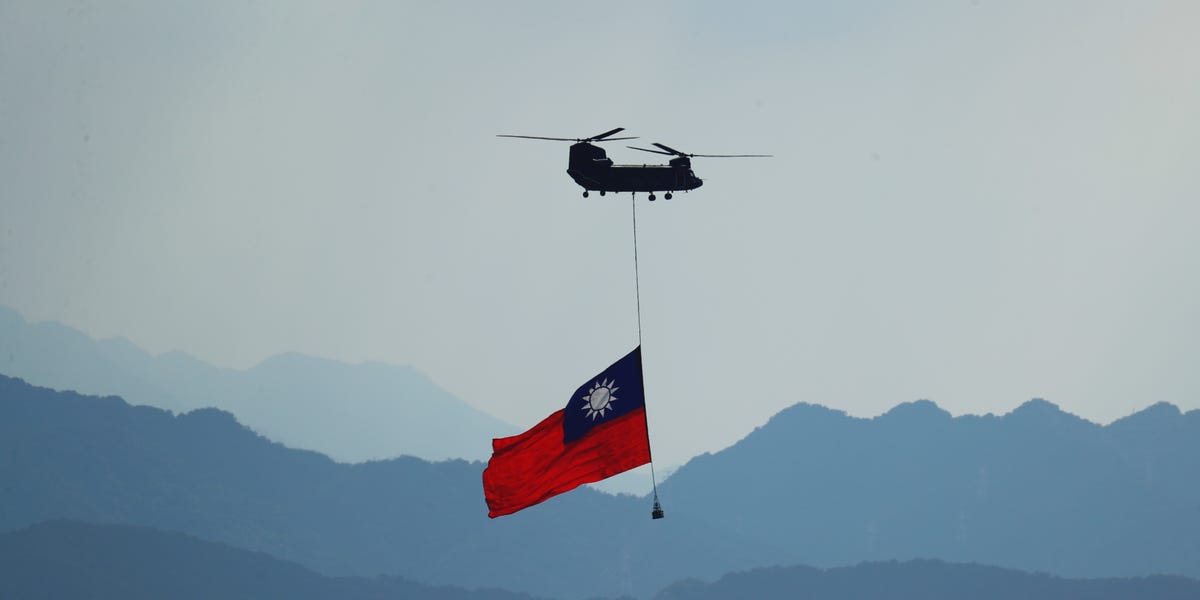
The China-Taiwan conflict is one of those global issues that sounds simple for about three secondsthen suddenly becomes a history exam, a military briefing, a semiconductor supply-chain lecture, and a diplomatic etiquette test all wearing the same trench coat. At the center is Taiwan, a self-governed democratic island of about 23 million people, and China, the world’s second-largest economy, which claims Taiwan as part of its territory.
Beijing says Taiwan must eventually be unified with the mainland, by peaceful means if possible and by force if necessary. Taiwan’s government says the island is already self-governing, democratic, and not ruled by the People’s Republic of China. The United States, meanwhile, walks a careful diplomatic tightrope: it recognizes Beijing as China’s government, maintains unofficial relations with Taiwan, sells Taiwan defensive weapons, and tries to prevent either side from making a dramatic move that could turn a tense standoff into a catastrophic war.
So yes, it is complicated. But complicated does not mean impossible to understand. Think of the China-Taiwan conflict as a three-layer cake: history on the bottom, identity and politics in the middle, and military strategy with a frosting of global economics on top. It is not exactly party dessert, but it does explain why the Taiwan Strait is watched so closely by governments, investors, technology companies, and anyone who enjoys a functioning global economy.
What Is the China-Taiwan Conflict?
The China-Taiwan conflict is a long-running dispute over Taiwan’s political status and future. China, officially the People’s Republic of China, claims Taiwan as part of its sovereign territory. Taiwan, officially the Republic of China, operates as a separate political system with its own elected president, legislature, military, currency, courts, and passport.
The core question is painfully direct: Who has the right to decide Taiwan’s future? Beijing argues that Taiwan is an internal Chinese matter. Taiwan’s leaders and most of its people argue that Taiwan’s future should be decided by Taiwan’s 23 million residents. The United States and many other countries do not officially recognize Taiwan as an independent country, yet they maintain strong unofficial ties with Taipei and oppose coercive changes to the current situation.
This current situation is often called the status quo. In plain English, that means Taiwan continues governing itself, China continues claiming it, and the world tries very hard not to kick the diplomatic hornet’s nest too aggressively.
A Short History of the China-Taiwan Dispute
From Qing Rule to Japanese Rule
Taiwan’s modern political story did not begin yesterday, despite what social media comment sections may suggest. The island was under Qing dynasty control before being ceded to Japan in 1895 after China’s defeat in the First Sino-Japanese War. Japan ruled Taiwan until the end of World War II in 1945, when control was transferred to the Republic of China.
The Chinese Civil War and Two Governments
The conflict’s modern roots lie in the Chinese Civil War. In 1949, Mao Zedong’s Communist forces won control of mainland China and founded the People’s Republic of China in Beijing. Chiang Kai-shek’s Nationalist government, the Republic of China, retreated to Taiwan. For decades, both governments claimed to be the legitimate government of all China. That was not just awkward; it was diplomatically gymnastic.
Over time, the People’s Republic of China gained international recognition as the government of China. In 1979, the United States switched diplomatic recognition from Taipei to Beijing. However, Washington also passed the Taiwan Relations Act, which created a legal foundation for unofficial U.S.-Taiwan relations and for providing Taiwan with defensive support.
Taiwan’s Democratic Transformation
One of the biggest changes in the story is Taiwan’s political evolution. Taiwan moved from authoritarian rule to full democracy, holding its first direct presidential election in 1996. Since then, Taiwan has developed a vibrant civil society, competitive elections, free media, and peaceful transfers of power. That transformation strengthened a separate Taiwanese identity and made the idea of being ruled by Beijing increasingly unpopular among many Taiwanese citizens.
What Does China Want?
China’s government sees Taiwan as a core national interest. For Beijing, unification is tied to sovereignty, national pride, historical grievance, and the legitimacy of the Chinese Communist Party. Chinese leaders argue that Taiwan is part of China and that separation is a leftover problem from civil war and foreign interference.
Beijing says it prefers peaceful unification, but it has not ruled out the use of force. China has also passed laws and issued political statements warning against formal Taiwan independence. In recent years, Chinese military aircraft, naval vessels, coast guard ships, cyber operations, and disinformation campaigns have become part of what analysts call gray-zone pressureactions that fall below open war but still apply serious pressure.
In other words, Beijing is not only waving a big stick. It is also tapping the windows, testing the locks, buzzing the driveway, and occasionally saying, “Nice island you’ve got there.”
What Does Taiwan Want?
Taiwan is not politically monolithic. Different parties and voters hold different views about identity, relations with China, and how loudly Taiwan should assert itself. However, public opinion has consistently shown that most Taiwanese prefer maintaining the status quo, at least for now. That usually means no immediate declaration of formal independence and no unification with the People’s Republic of China.
Taiwan’s Democratic Progressive Party generally emphasizes Taiwan’s separate identity and sovereignty. The Kuomintang, historically associated with Chinese nationalism, tends to favor more dialogue and economic engagement with Beijing, though it also does not support rule by the People’s Republic of China. Smaller parties and independent voters add further complexity, because democracy loves nuance almost as much as cable news hates it.
For many people in Taiwan, the issue is not abstract. It is about whether they can keep electing their own leaders, speaking freely, building businesses, debating politics, and living without the threat of military coercion.
What Is the U.S. Role in the Taiwan Strait?
The United States plays a central role because of its military power, alliances in Asia, economic interests, and long-standing relationship with Taiwan. Washington follows a “one China policy,” which is not the same as Beijing’s “one China principle.” This distinction matters. The United States acknowledges Beijing’s position that Taiwan is part of China, but it does not formally endorse Chinese sovereignty over Taiwan.
Under the Taiwan Relations Act, the United States provides Taiwan with defensive arms and maintains the capacity to resist force or coercion that would threaten Taiwan’s security or social and economic system. However, the United States does not have a formal defense treaty with Taiwan. Instead, Washington has traditionally used strategic ambiguity, meaning it does not clearly state in advance whether it would intervene militarily if China attacked Taiwan.
The idea is to deter China from attacking while also discouraging Taiwan from making a unilateral move toward formal independence. It is diplomacy’s version of telling everyone at Thanksgiving dinner, “Let’s not find out what happens if you throw the cranberry sauce.”
Why Is the Conflict Heating Up?
China’s Military Modernization
China has spent decades modernizing the People’s Liberation Army. Its navy has grown rapidly, its missile forces have expanded, and its air force can operate more frequently around Taiwan. Beijing now has more tools to intimidate, blockade, or potentially attack Taiwan than it had in the 1990s.
Gray-Zone Tactics
China does not need to launch an invasion to pressure Taiwan. It can send aircraft across sensitive lines, conduct naval patrols, use coast guard vessels to challenge maritime space, launch cyberattacks, spread disinformation, restrict trade, or stage large military exercises. These gray-zone tactics aim to normalize Chinese presence around Taiwan and wear down Taiwan’s military, government, and public confidence.
Taiwan’s Changing Identity
More people in Taiwan identify primarily as Taiwanese rather than Chinese. This trend alarms Beijing because it weakens the idea that Taiwan’s population naturally wants political unification with the mainland. The more Taiwan sees itself as distinct, the harder it becomes for Beijing to sell unification as a family reunion instead of a forced merger.
U.S.-China Rivalry
The Taiwan issue is also tied to wider U.S.-China competition over technology, military influence, trade, regional leadership, and global order. Taiwan sits in the middle of the First Island Chain, near Japan, the Philippines, and major shipping lanes. That makes it strategically important even before we talk about computer chipswhich, of course, we must, because modern geopolitics apparently runs on tiny rectangles.
Why Taiwan Matters to the World
Semiconductors and the “Silicon Shield”
Taiwan is one of the most important semiconductor manufacturing hubs in the world. Taiwan Semiconductor Manufacturing Company, better known as TSMC, produces a major share of the world’s most advanced chips. These chips power smartphones, artificial intelligence systems, cars, medical devices, defense equipment, cloud computing, and many other technologies that keep modern life from turning into a very expensive paperweight.
This has led to the phrase “silicon shield”: the idea that Taiwan’s importance to global technology makes other countries more likely to care about its security. However, the silicon shield is not magic armor. A conflict could damage factories, disrupt shipping, freeze supply chains, and shock the global economy.
Sea Lanes and Regional Security
The Taiwan Strait is a key maritime corridor. A war or blockade could disrupt trade routes across East Asia and the wider Pacific. Japan, South Korea, the Philippines, Australia, and the United States all have strong interests in keeping the region stable.
Democracy and International Norms
Taiwan is also important because it is a democracy facing pressure from a much larger authoritarian neighbor. For many governments, especially in the West, Taiwan represents more than a strategic asset. It represents the question of whether a powerful country can use coercion to change the political future of a smaller self-governed society.
What Could a China-Taiwan Conflict Look Like?
1. Full-Scale Invasion
A direct amphibious invasion would be the most dramatic scenario, but also one of the most difficult. Taiwan’s geography is challenging: rough seas, limited landing beaches, dense cities, mountains, and a population that could resist occupation. China would need to move troops, armor, supplies, aircraft, ships, and command systems across the Taiwan Strait while facing Taiwan’s defenses and possibly outside intervention.
2. Blockade or Quarantine
A blockade may be more likely than a sudden invasion. China could use naval, air, missile, cyber, and coast guard forces to restrict shipping and air traffic around Taiwan. Beijing might call it a quarantine, inspection regime, or law-enforcement operation rather than a blockade, because terminology is cheaper than missiles and sometimes more confusing.
3. Missile and Air Campaign
China could use missiles and airpower to target Taiwan’s military bases, command centers, ports, energy infrastructure, and communication networks. Such an attack could aim to shock Taiwan into negotiations or weaken its ability to resist a follow-on operation.
4. Cyberattacks and Disinformation
Cyber operations would almost certainly play a major role in any crisis. Attacks could target government websites, power grids, banking systems, media outlets, and communication networks. Disinformation could attempt to create panic, divide society, or convince people that resistance is hopeless.
5. Slow-Motion Coercion
The most realistic danger may not be one big dramatic event, but a steady increase in pressure. More patrols. More exercises. More economic punishments. More cyberattacks. More attempts to isolate Taiwan diplomatically. This strategy tries to make Taiwan feel surrounded without giving the world a single clear moment to respond.
Recent Developments in 2026
As of mid-2026, tensions remain high. China has continued military and coast guard activity near Taiwan, while Taiwan has increased preparedness through defense drills, civil-resilience planning, and renewed attention to infiltration risks. Reports in July 2026 described Taiwan conducting exercises that simulated a Chinese blockade, sabotage, cyberattacks, natural disaster response, and possible invasion scenarios. Taiwan’s military has also revived ideological education for some graduates, reflecting deeper concern about Chinese pressure and internal security.
China’s coast guard activity east of Taiwan has also drawn concern because it suggests Beijing is testing not only the western side of the island, closest to mainland China, but also maritime areas that matter for Taiwan’s access to the Pacific. Taiwan rejects China’s sovereignty claims and argues that Beijing has no law-enforcement authority in those waters.
These developments do not mean war is inevitable. They do mean that the “new normal” in the Taiwan Strait looks more tense, more militarized, and more vulnerable to miscalculation than it did a decade ago.
Why Doesn’t Taiwan Just Declare Independence?
Many people ask this question, and on the surface it sounds logical. Taiwan already governs itself, so why not make it official? The answer is that Beijing has repeatedly warned that formal independence could trigger military action. Many Taiwanese voters support Taiwan’s democracy and separate identity, but they also understand that a formal declaration could carry extreme risks.
That is why Taiwan’s leaders often use careful language. They may say Taiwan is already sovereign, already democratic, and already not ruled by Beijing, without taking the specific legal step of declaring a new independent Republic of Taiwan. It is a delicate balancing act: assert reality, avoid provoking disaster, and hope nobody drops the plates.
Why Doesn’t China Simply Invade?
Because invasion would be enormously risky. China would face military, economic, political, and diplomatic costs. A failed invasion could damage the Chinese Communist Party’s legitimacy. Even a successful invasion could lead to years of resistance, international sanctions, destroyed infrastructure, and a shattered regional economy.
China also depends on global trade, energy imports, technology flows, and stable financial markets. A war over Taiwan could disrupt all of that. Beijing may believe time is on its side and that pressure, intimidation, and political influence can achieve results without immediate war. Still, the risk grows if Chinese leaders conclude that peaceful unification is impossible or that the balance of power is shifting against them.
How Likely Is War Over Taiwan?
No serious analyst can give a perfect answer. Anyone who says they know the exact date of a Taiwan war is either guessing, selling something, or auditioning for a very stressful fortune-teller job.
What can be said is this: the risk is real, but war is not inevitable. China has strong incentives to avoid a disastrous conflict, but it also has strong political reasons to keep pressure on Taiwan. Taiwan wants to preserve its democracy and autonomy without triggering a war. The United States wants to deter China, support Taiwan, reassure allies, and avoid direct conflict with a nuclear-armed great power.
The danger lies in miscalculation. A collision at sea, an aircraft incident, a cyberattack, a disputed election reaction, a large military exercise, or a blockade-style operation could escalate faster than leaders expect. In a crisis, everyone may believe they are being defensive while the other side sees provocation.
Key Terms to Understand
One China Policy
The U.S. framework that recognizes the People’s Republic of China as the government of China while maintaining unofficial relations with Taiwan. It is deliberately nuanced and often misunderstood.
One China Principle
Beijing’s position that there is only one China and Taiwan is part of it. China expects other countries to respect this view.
Status Quo
The current arrangement in which Taiwan governs itself, China claims Taiwan, and most countries avoid formal recognition of Taiwan as a separate state.
Strategic Ambiguity
The U.S. practice of not clearly stating whether it would defend Taiwan militarily in a Chinese attack. The uncertainty is meant to deter both war and unilateral moves.
Gray-Zone Warfare
Coercive actions below the threshold of full war, such as cyberattacks, disinformation, military patrols, maritime pressure, and economic punishment.
What Would Keep the Peace?
Peace in the Taiwan Strait depends on deterrence, communication, restraint, and resilience. Taiwan needs credible defenses that make coercion costly. The United States and its allies need clear crisis-management channels and enough capability to discourage aggression. China needs to believe that force would be too costly and that patience is better than escalation.
At the same time, diplomacy matters. Military deterrence without communication can become a room full of people holding fireworks and pretending nobody smells smoke. Crisis hotlines, military-to-military communication, confidence-building measures, and clear political messaging all reduce the risk of accidental escalation.
Real-World Experiences Related to the China-Taiwan Conflict
For people outside East Asia, the China-Taiwan conflict can feel distant, like something discussed by generals, diplomats, and think tank panelists who own too many navy-blue suits. But the issue becomes more concrete when viewed through everyday experiences. A technology worker in California may never think about the Taiwan Strait, yet the laptop on their desk, the phone in their hand, and the cloud servers running their apps may all depend on chips connected to Taiwan’s semiconductor industry. A disruption in Taiwan would not stay politely inside a foreign-policy newsletter. It could show up as higher prices, delayed electronics, car shortages, and nervous markets.
For Taiwanese families, the experience is far more personal. Many live ordinary lives filled with school, work, night markets, elections, family gatherings, and weekend plans. Yet military aircraft alerts, cyberattack warnings, and news of Chinese drills are part of the background noise. Imagine planning a wedding, launching a small business, or choosing a university while analysts on television debate whether your home could become the center of the next global crisis. That creates a strange emotional mix: normal life on the surface, strategic uncertainty underneath.
For students studying international relations, Taiwan is a real-time case study in how history refuses to stay in textbooks. The Chinese Civil War, U.S. Cold War policy, democratization, nationalism, trade, technology, and military deterrence all collide in one narrow stretch of water. It teaches a humbling lesson: borders are not just lines on maps. They are stories, identities, legal claims, military calculations, and memories of past trauma layered together.
For business leaders, the conflict is a reminder that supply chains are not just spreadsheets with shipping dates. They are political systems. Companies that rely on advanced chips, East Asian shipping routes, or Chinese and Taiwanese markets must think about risk in ways that go beyond quarterly profits. Diversifying production, building inventory buffers, and monitoring geopolitical signals may sound boringuntil boring becomes the difference between operating normally and explaining to customers why everything is delayed until “please do not ask us when.”
For travelers and expatriates in the region, the Taiwan issue also shapes practical decisions. People monitor travel advisories, flight routes, insurance policies, and local news. Most days are calm, vibrant, and completely normal. Taipei is not a movie set for crisis; it is a lively city with excellent food, efficient public transportation, and people trying to get through Monday like everyone else. That contrast is important. Taiwan is not only a “flashpoint.” It is a society. Reducing it to a chess square misses the human reality.
The biggest experience-related lesson is that the China-Taiwan conflict is not simply about who wins a strategic contest. It is about how ordinary people live under uncertainty, how governments manage risk, and how interconnected the modern world has become. A crisis in the Taiwan Strait would not be a local thunderstorm. It would be a global weather system. Understanding that helps readers move beyond dramatic headlines and see why prevention, patience, and clear thinking matter so much.
Conclusion: Why the Taiwan Strait Matters
The China-Taiwan conflict is not just a quarrel over territory. It is a test of power, identity, democracy, deterrence, and global interdependence. China wants unification and refuses to rule out force. Taiwan wants to preserve its self-governing democracy. The United States wants stability without war, support for Taiwan without formal recognition, and deterrence without escalation. That is a diplomatic balancing act so delicate it should probably come with bubble wrap.
The most important point is that war is not inevitable, but complacency is dangerous. The Taiwan Strait remains one of the world’s most consequential flashpoints because it combines military risk, economic importance, national identity, and great-power rivalry. Understanding the conflict requires more than asking who owns Taiwan. It requires asking who gets to decide Taiwan’s future, what price the world would pay for conflict, and how leaders can preserve peace when every side believes history is on its side.
Note: This article is written as a neutral educational explainer based on publicly available information from U.S. government sources, major policy research institutions, and reputable international news reporting. It is intended for general analysis and web publication, not as legal, financial, military, or diplomatic advice.