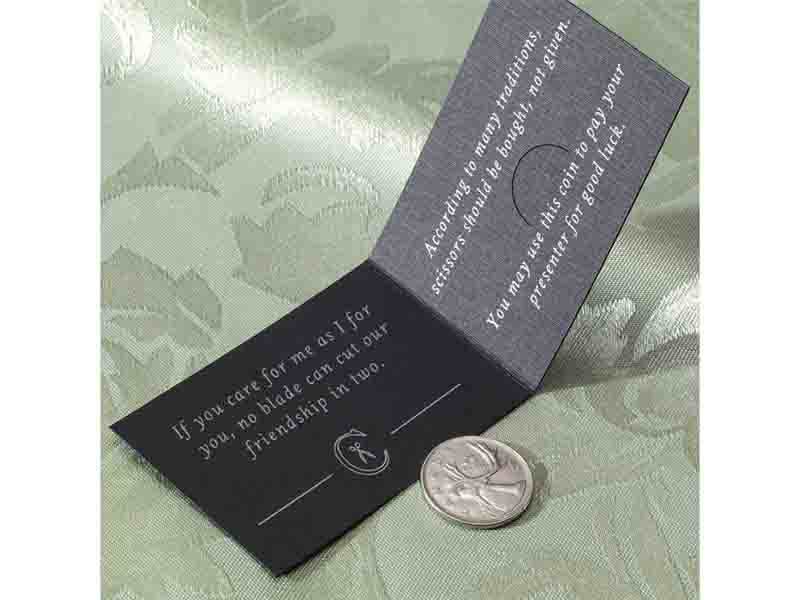
A beautifully made pair of scissors can be a surprisingly memorable gift. It is practical, long-lasting, and far more interesting than another mug announcing that someone is the “World’s Okayest Coworker.” However, scissors arrive with a peculiar piece of folklore: in several gift-giving traditions, sharp objects are believed to cut the relationship between the giver and recipient.
The Ciselier Gift Enclosure Card turns that superstition into a charming ritual. Designed to accompany Ciselier luxury scissors, the card explains why the recipient should give the giver a small coin. That symbolic payment transforms the scissors from a gift into a purchase, preventing themat least according to traditionfrom snipping the friendship in half.
It is a tiny accessory with an unusually large job. The card explains the custom, provides space for a personal message, and makes the presentation of handcrafted scissors feel complete. More importantly, it gives both people a story they will probably repeat long after the wrapping paper has entered the recycling bin.
What Is the Ciselier Gift Enclosure Card?
The Ciselier Gift Enclosure Card is a custom card created for gifts involving Ciselier scissors. Rather than functioning as a generic “To” and “From” label, it introduces the traditional belief that giving a sharp object may symbolically sever affection, loyalty, friendship, or love.
The recipient is invited to return a coin to the giver. Because money changes hands, the scissors are technically “purchased” rather than received for free. The amount does not matter. A penny, nickel, dime, or other small coin can complete the ritual. Nobody needs to open a spreadsheet or calculate sales tax.
This makes the card part note, part conversation starter, and part good-luck insurance policy. Even people who do not believe in superstitions can enjoy the gesture as a playful nod to global gifting traditions.
More Than a Decorative Gift Tag
A basic gift tag identifies the recipient. An enclosure card adds context. It can explain why the gift was chosen, describe its cultural meaning, or preserve a personal message that would otherwise be forgotten once the wrapping disappears.
With luxury scissors, that context is especially useful. A first-time recipient may not immediately understand why a pair of household scissors deserves premium presentation. The card helps connect the object to craftsmanship, longevity, heritage manufacturing, and the symbolic coin exchange.
The Story Behind Giving Scissors and a Coin
Sharp objects appear in gift superstitions across multiple regions and generations. Knives, scissors, shears, and similar tools can represent separation because their everyday purpose is to divide one thing from another. In symbolic language, the blades might “cut” a friendship, romance, marriage, or family bond.
The traditional workaround is delightfully practical: the recipient gives the giver a small coin. This token payment converts the exchange into a sale. Since the scissors were technically bought, they were not given, and the supposed bad luck loses its contractual authority.
Versions of this custom have been associated with European and Asian gift-giving traditions. Details vary from family to family. Some people tuck a coin into the package so the recipient can hand it back immediately. Others ask the recipient to find a coin independently. The second method adds suspense, particularly when everyone discovers that nobody carries cash anymore.
Why the Ritual Still Feels Meaningful
The modern appeal is not necessarily about believing that scissors possess relationship-destroying powers. The ritual works because it creates participation. Instead of passively opening a box, the recipient becomes part of a tiny ceremony.
That interaction makes the gift memorable. It also communicates that the giver researched the object, understood its traditions, and cared about the presentation. Thoughtfulness is difficult to measure, but people are generally excellent at noticing when it is missing.
Why Ciselier Scissors Make Distinctive Gifts
Ciselier specializes in high-quality scissors sourced from heritage manufacturers. The company focuses on workshops that continue to use traditional processes such as forging, tempering, grinding, sanding, hand assembly, sharpening, and polishing.
The name “Ciselier” means “scissormaker” in French, which tells you the brand is fairly committed to the subject. This is not a store where scissors occupy one lonely hook between tape dispensers and novelty staplers. The collection treats scissors as precision tools and examples of functional craftsmanship.
Depending on the recipient, gift-worthy options may include kitchen scissors, embroidery scissors, tailoring shears, office scissors, paper-cutting tools, or true left-handed designs. Choosing the correct type matters because specialized blades are created for different materials and cutting motions.
A Useful Gift That Can Last
Well-made scissors can remain useful for decades when they are cleaned, dried, sharpened, and maintained correctly. That longevity gives the enclosure card additional importance. A handwritten message preserved with the presentation box can remain part of the gift’s history.
A recipient may eventually forget what was served at the birthday dinner, but they may remember who gave them the excellent kitchen shears they use every week. The card keeps that connection visible.
How to Use a Ciselier Gift Enclosure Card
The card is easy to use, but a little planning can make the exchange feel polished rather than improvised.
1. Match the Scissors to the Recipient
Consider how the person spends time. A home cook may appreciate detachable kitchen scissors that can be cleaned thoroughly. A quilter or dressmaker may prefer precise fabric shears. A gardener, paper artist, embroiderer, or dedicated gift wrapper may need a more specialized cutting tool.
Also confirm whether the recipient is left-handed. True left-handed scissors reverse both the grips and blade arrangement, allowing the user to see the cutting line and apply pressure naturally.
2. Write a Brief Personal Message
An enclosure card does not need to become a memoir. Two or three sincere sentences are usually enough. Mention the recipient, the occasion, and why the scissors seemed right for them.
For example:
For the person who can turn fabric, thread, and imagination into something beautiful. Please give me a coin so these scissors never cut our friendshiponly your next great project.
3. Include a Coin When Appropriate
You can place a small coin inside the card, under the ribbon, or in a tiny envelope. The recipient then returns it to you. This is convenient at parties where loose change may be harder to locate than a quiet corner.
For a more interactive presentation, let the recipient find their own coin. Explain the tradition through the card and wait for the transaction. Dramatic negotiations over a single penny are optional but encouraged.
4. Present the Card Before the Scissors Are Used
Position the enclosure card where it will be noticed immediately, preferably on top of the presentation box or beneath the ribbon. The recipient should understand the ritual before enthusiastically testing the blades on the nearest piece of wrapping paper.
What to Write on the Card
The best gift enclosure messages sound like the giver rather than a greeting-card committee operating under fluorescent lighting. Use plain language, one specific detail, and a warm closing.
Birthday Message
Happy birthday! These scissors are sharp enough for your projects but, with one lucky coin, not sharp enough to cut our friendship.
Wedding or Anniversary Message
For all the beautiful things you will create together. Please return the enclosed coin so these blades cut ribbon, herbs, and paperbut never the bond between you.
Gift for a Cook
For opening packages, trimming herbs, preparing poultry, and defeating every stubborn bag in the kitchen. A coin keeps the friendship safe; proper cleaning keeps the scissors safe.
Gift for a Sewing Enthusiast
May every cut be clean, every seam behave, and every missing pin eventually reveal itself somewhere other than the carpet. Please trade me a coin for these scissors.
Professional Gift
Thank you for your craftsmanship, precision, and attention to detail. These scissors seemed like an appropriate symbol of work done properly. Please return the coin to complete the tradition.
Occasions Suited to a Gift Enclosure Card
The Ciselier Gift Enclosure Card is particularly appropriate when the gift marks a milestone or recognizes a personal skill. Suitable occasions include birthdays, weddings, anniversaries, graduations, housewarmings, holidays, business celebrations, retirement parties, and creative achievements.
It can also elevate an everyday thank-you gift. A dedicated home cook who regularly hosts dinner, a neighbor who repairs clothing, or a friend who helped with a craft project may appreciate a tool selected specifically for their interests.
For corporate gifting, scissors can symbolize precision, opening new opportunities, or cutting through unnecessary complexity. Use those metaphors carefully. Giving scissors to an employee immediately after discussing “organizational cuts” may produce a slightly different emotional experience.
How the Card Improves Gift Presentation
Presentation shapes the recipient’s first impression. Quality paper, a neatly tied ribbon, and a handwritten message signal that the gift was chosen deliberately. The goal is not to create packaging so elaborate that opening it requires engineering credentials. The goal is coherence.
Choose wrapping materials that complement the scissors and their presentation box. Kraft paper, textured white paper, deep solid colors, narrow velvet ribbon, cotton twill tape, or simple twine can work well. A sprig of rosemary may suit kitchen scissors, while a short length of beautiful fabric can decorate a gift for a sewist.
Keep the Card Legible
Use a pen that writes cleanly without smearing or bleeding through the paper. Dark blue or black ink is dependable, although a metallic pen can work on darker cardstock. Write slowly, spell the recipient’s name correctly, and leave enough space for your signature.
Perfect handwriting is unnecessary. Handwritten notes are valuable precisely because they contain human variation. A slightly uneven line feels personal. A completely illegible message feels like a medical referral.
Common Mistakes to Avoid
The most common error is treating the enclosure card as an afterthought. Writing “Enjoy!” while standing in the driveway five minutes before the party wastes an opportunity to explain why the gift matters.
Avoid messages that are too generic, too long, or overly focused on the price of the scissors. The recipient should feel understood, not informed that you have made a significant capital investment in their kitchen drawer.
Do not tape the card directly to polished metal, blades, or delicate packaging. Adhesive can leave residue or damage surfaces. Place it inside the box, in a protective envelope, or beneath a removable ribbon.
Finally, explain the coin exchange clearly. Handing someone a pair of scissors and urgently demanding money without context can make a festive gathering feel like an extremely small robbery.
What to Consider Before Ordering
Specialty products and accessories may have limited or changing availability. Confirm current details with the retailer, including card availability, gift packaging, personalization options, pricing, delivery times, and whether the card is automatically included or must be added separately.
If the official enclosure card is unavailable, the tradition can still be honored with a blank card. Explain that the coin protects the relationship by turning the gift into a symbolic purchase. Include a small envelope for the coin and write the message by hand.
The essential ingredients are not a particular paper size or printing technique. They are context, sincerity, and the playful transaction between giver and recipient.
Why a Small Card Can Matter More Than Expected
Gifts communicate more than their practical function. They can express affection, recognition, gratitude, encouragement, or shared identity. A thoughtful message makes that meaning explicit.
Without a card, the recipient receives scissors. With the Ciselier Gift Enclosure Card, the recipient receives scissors, a cultural story, a private joke, and proof that the giver considered the entire experience.
The card also balances the seriousness of luxury craftsmanship with a bit of humor. Beautifully forged steel can sound formal and intimidating. Asking for a penny in exchange brings the moment back to earth.
Experience-Based Observations: Giving Scissors With the Enclosure Card
The most noticeable difference between giving ordinary scissors and presenting luxury scissors with an enclosure card is the pace of the moment. A routine gift may be opened, admired, and placed beside the other packages within seconds. The Ciselier card encourages the recipient to pause.
First comes curiosity. Why does a pair of scissors need its own card? Then the recipient reads about the old belief that sharp gifts can cut relationships. Someone nearby usually recognizes the superstition or remembers a relative who followed a similar rule with knives. Within moments, the card has created a conversation among people who may have arrived with little more to discuss than traffic and the weather.
The search for a coin is often the most entertaining part. At a family gathering, an older relative may produce exact change instantly, while everyone else searches pockets that contain earbuds, charging cables, and absolutely no legal tender. When the recipient finally hands over a penny or dime, the exchange feels ceremonial without becoming solemn.
The card works especially well when the message connects the scissors to something specific. For a baker, mention opening ingredient bags, trimming parchment, or snipping herbs. For a quilter, recognize the patience involved in turning hundreds of pieces of fabric into one coherent design. For a new homeowner, describe the scissors as one of those reliable tools that will gradually become part of the household.
Presentation also changes how the scissors are perceived. When the box is wrapped neatly and the card sits directly beneath the ribbon, the recipient understands immediately that this is not a disposable utility item. They tend to examine the finish, movement, balance, and blades more carefully. Some people test the scissors on paper or ribbon, while experienced cooks and sewists often notice the smooth action before making a single cut.
A practical lesson is to keep the explanation brief. The enclosure card should introduce the ritual, not deliver a graduate seminar on international folklore. A clear paragraph and one personal sentence usually provide enough context. The giver can tell the longer version after the coin changes hands.
It also helps to choose a card message that will age well. Jokes about a birthday number or current office drama may be funny for one evening, but a message about creativity, craftsmanship, friendship, or shared memories remains meaningful when the card is rediscovered years later.
Recipients often keep the card in the presentation box, particularly when the scissors are reserved for a specialized activity. Each time the box is opened, the message reappears. That repeated contact can make the enclosure card one of the most durable parts of the gift, despite being made from the least durable material.
The overall experience demonstrates why small details matter. The scissors provide usefulness and craftsmanship. The coin introduces tradition. The handwritten note supplies emotional context. Together, they turn a practical object into a story about the people exchanging it.
That is the real appeal of the Ciselier Gift Enclosure Card. It does not merely prevent imaginary bad luck. It gives the recipient a reason to remember who selected the scissors, why they were chosen, and how one tiny coin supposedly saved an entire relationship from a very sharp ending.
Final Thoughts
The Ciselier Gift Enclosure Card is a clever finishing touch for a beautifully crafted pair of scissors. It explains a centuries-old style of gift superstition, creates a playful coin exchange, and offers space for a message that can remain with the tool for years.
Its value comes from the experience it creates rather than the amount of paper it contains. A good enclosure card tells the recipient, “I chose this for you,” while the coin ritual adds, “and I would prefer that our relationship remain uncut.” That is a lot of emotional work for something small enough to fit beneath a ribbon.