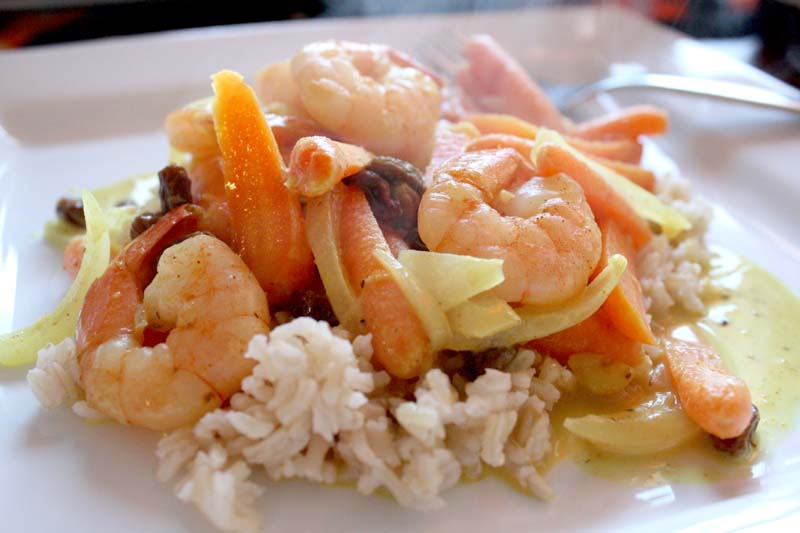
Coconut curry shrimp is the kind of dinner that tastes as though it spent hours becoming fabulous, even though it can be ready in about 30 minutes. Plump shrimp simmer briefly in a silky coconut milk sauce flavored with curry, garlic, ginger, lime, and just enough chile to keep every bite interesting.
The result is creamy without feeling excessively heavy, spicy without turning dinner into a survival challenge, and comforting enough to make plain rice feel like it has finally discovered its purpose. Better still, everything comes together in one skillet, so cleanup does not require negotiations with the rest of the household.
This recipe uses ingredients commonly available in American supermarkets. Its flavor profile draws inspiration from Thai, Indian, Caribbean, and other coconut-based curry traditions, but it is not meant to represent one definitive regional dish. It is a flexible home-style curry designed for busy cooks who appreciate bold flavor and reasonably clean countertops.
Why This Coconut Curry Shrimp Recipe Works
The key to excellent coconut curry shrimp is timing. Curry paste, dry spices, onion, garlic, and ginger need time in the skillet to release their flavor. Shrimp, however, need only a few minutes before they become firm and opaque. Building the sauce first and finishing the seafood near the end creates deeper flavor without producing rubbery shrimp.
Full-fat coconut milk provides richness and body. Lime juice cuts through that richness with acidity, while fish sauce or soy sauce adds savory depth. A small amount of brown sugar rounds out bitter spices and chile heat without making the curry noticeably sweet.
This salty-sour-sweet-spicy balance appears in many successful coconut shrimp curry recipes, although the spices and aromatics vary widely among cuisines and individual cooks.
Ingredients for Coconut Curry Shrimp
Large Raw Shrimp
Use large or extra-large raw shrimp, preferably peeled and deveined. Shrimp labeled 21/25 or 26/30 are particularly convenient: large enough to remain juicy, but small enough to cook quickly.
Both fresh and frozen shrimp work well. When buying fresh shrimp, look for firm flesh with a translucent or pearly appearance and little odor. Avoid seafood with strong fishy, sour, or ammonia-like smells.
Thaw frozen shrimp overnight in the refrigerator. For faster thawing, place them in a sealed bag and submerge the bag in cold water. Pat the shrimp thoroughly dry before cooking so they sear instead of releasing a small indoor swimming pool.
Full-Fat Coconut Milk
Choose canned, unsweetened, full-fat coconut milk. It creates a richer and more stable sauce than light coconut milk. Do not substitute refrigerated coconut beverage, which is formulated for drinking and usually contains too little fat for a creamy curry.
Curry Paste and Curry Powder
This recipe combines Thai red curry paste with yellow curry powder. The paste contributes concentrated chile and aromatic flavors, while the powder adds warm notes such as turmeric, coriander, cumin, and fenugreek.
Curry paste brands vary dramatically in heat and saltiness. Begin with one tablespoon, taste the finished sauce, and add more if needed. One brand may whisper politely; another may arrive wearing combat boots.
Aromatics and Flavor Balancers
Onion, garlic, and fresh ginger form the aromatic base. Bell pepper supplies sweetness and texture. Fish sauce delivers savory depth, although low-sodium soy sauce is an effective substitute. Brown sugar softens sharp heat, and fresh lime juice brightens the finished curry.
Easy Coconut Curry Shrimp Recipe
Prep time: 15 minutes
Cook time: 15 minutes
Total time: 30 minutes
Servings: 4
Ingredients
- 1 1/2 pounds large raw shrimp, peeled and deveined
- 1/2 teaspoon kosher salt, plus more as needed
- 1/4 teaspoon freshly ground black pepper
- 2 tablespoons neutral cooking oil, divided
- 1 small yellow onion, thinly sliced or finely chopped
- 1 red bell pepper, thinly sliced
- 3 garlic cloves, minced
- 1 tablespoon finely grated fresh ginger
- 1 to 2 tablespoons Thai red curry paste
- 1 teaspoon yellow curry powder
- 1 can (13.5 ounces) full-fat unsweetened coconut milk
- 1/2 cup low-sodium chicken broth, seafood stock, or water
- 1 tablespoon fish sauce or low-sodium soy sauce
- 1 to 2 teaspoons light brown sugar or honey
- 1 teaspoon finely grated lime zest
- 1 to 2 tablespoons fresh lime juice
- 1 cup baby spinach, optional
- 1/4 cup chopped cilantro or Thai basil
- Cooked jasmine rice, basmati rice, or rice noodles
- Lime wedges and sliced green onions, for serving
Instructions
- Prepare the shrimp. Pat the shrimp dry with paper towels. Season them evenly with salt and black pepper.
- Sear them briefly. Heat one tablespoon of oil in a large skillet over medium-high heat. Arrange the shrimp in a single layer and cook for approximately 60 to 90 seconds per side. Transfer them to a plate when the exteriors begin turning pink. The centers can remain slightly undercooked.
- Cook the vegetables. Reduce the heat to medium. Add the remaining oil, onion, and bell pepper. Cook for four to five minutes, stirring occasionally, until the onion softens and the pepper becomes crisp-tender.
- Bloom the seasonings. Add the garlic, ginger, curry paste, and curry powder. Cook for 45 to 60 seconds, stirring constantly. The mixture should smell intensely fragrant but should not darken or burn.
- Build the coconut curry sauce. Pour in the coconut milk and broth. Stir while scraping up any flavorful browned bits from the bottom of the skillet. Add the fish sauce and one teaspoon of brown sugar.
- Simmer gently. Bring the sauce to a gentle simmer and cook for four to six minutes. Stir occasionally until the sauce has reduced slightly and can lightly coat the back of a spoon.
- Finish cooking the shrimp. Return the shrimp and any accumulated juices to the skillet. Add the spinach, if using. Simmer gently for two to three minutes, stirring once or twice, until the shrimp are opaque.
- Balance the flavors. Remove the skillet from the heat. Stir in the lime zest, one tablespoon of lime juice, and the fresh herbs. Taste the sauce and adjust it with additional lime, fish sauce, sugar, salt, or curry paste.
- Serve immediately. Spoon the coconut curry shrimp over hot rice or noodles. Finish with sliced green onions, herbs, and lime wedges.
How to Keep Shrimp Tender
Overcooking is the most common shrimp mistake. A few unnecessary minutes can turn juicy seafood into something with the texture and emotional warmth of a pencil eraser.
The two-stage method used here provides more control. Sear the shrimp briefly, remove them, prepare the sauce, and return them only for the final simmer. This prevents them from sitting in bubbling coconut milk while the sauce reduces.
Shrimp are done when their flesh becomes pearly or white and opaque. FoodSafety.gov recommends using these visual signs when cooking shrimp, lobster, crab, and scallops.
A loose “C” shape often indicates tender shrimp, while a very tight curl may suggest overcooking. However, opacity and firmness are more reliable indicators than shape alone.
How to Balance Coconut Curry Sauce
If the Curry Tastes Flat
Add a little salt or fish sauce before adding more curry paste. An under-seasoned sauce can make even strong spices seem strangely quiet. Once the salt level is right, add lime juice for brightness.
If the Curry Is Too Spicy
Stir in additional coconut milk and a small pinch of sugar. Serve the curry with extra rice and cooling sides such as cucumber salad or avocado. Avoid pouring in large amounts of water, which reduces the heat but also dilutes every other flavor.
If the Sauce Is Too Sweet
Add lime juice and a little fish sauce or salt. The goal is not to eliminate sweetness completely, but to bring the savory and acidic elements back into balance.
If the Sauce Is Too Thin
Let it simmer before returning the shrimp. For a faster solution, combine one teaspoon of cornstarch with one tablespoon of cold water. Stir the mixture into the simmering sauce and cook for about one minute.
If the Sauce Separates
A small amount of oil separation is normal in coconut curry and may even intensify its aroma. Stir gently and reduce the heat. Aggressive boiling can cause coconut milk to appear oily, particularly when it contains few stabilizers.
Popular Coconut Curry Shrimp Variations
Thai-Inspired Red Curry Shrimp
Increase the red curry paste and use fish sauce rather than soy sauce. Add bamboo shoots, snap peas, zucchini, or baby bok choy. Finish with Thai basil and plenty of lime.
Indian-Inspired Coconut Shrimp Curry
Replace the red curry paste with additional curry powder, cumin, turmeric, coriander, and cayenne. Cook one chopped tomato with the onion before adding the coconut milk. Cilantro makes a natural finishing herb.
Caribbean-Inspired Curry Shrimp
Add thyme, scallions, allspice, and finely chopped Scotch bonnet pepper. Diced sweet potato or plantain can make the dish more substantial. Introduce Scotch bonnet carefully unless everyone at dinner has signed the appropriate paperwork.
Vegetable-Packed Coconut Curry
Add mushrooms, green beans, broccoli, peas, spinach, or sliced zucchini. Cook firm vegetables before adding the coconut milk and delicate vegetables during the final few minutes.
Lower-Carbohydrate Version
Serve the curry over cauliflower rice, sautéed cabbage, zucchini noodles, or roasted vegetables. The coconut sauce provides enough richness that the meal still feels complete.
What to Serve With Coconut Curry Shrimp
Jasmine rice is an excellent partner because its fragrance complements coconut milk, lime, and fresh herbs. Basmati rice has drier, more separate grains and works especially well with warm Indian-style spices.
Rice noodles absorb the sauce beautifully, while naan or roti is ideal for wiping the skillet clean with the concentration of a professional evidence-removal team.
Fresh side dishes help balance the rich sauce. Good options include:
- Cucumber salad with lime and herbs
- Roasted cauliflower or broccoli
- Garlic green beans
- Fresh mango or pineapple
- Shredded cabbage slaw
- Steamed edamame
Storage and Reheating
Transfer leftovers to a shallow airtight container and refrigerate them promptly. USDA guidance states that cooked seafood leftovers can generally be refrigerated for three to four days.
Reheat coconut curry shrimp gently in a covered skillet over medium-low heat. Add a splash of water, broth, or coconut milk if the sauce has thickened. Remove it from the heat as soon as the shrimp are hot because repeated boiling can make them tough.
The finished dish can be frozen, although the texture of the shrimp and coconut sauce may change after thawing. A better meal-prep strategy is to freeze the curry sauce without the seafood. Thaw and reheat the sauce, then cook a fresh batch of shrimp directly in it.
The Experience of Making Coconut Curry Shrimp at Home
The Recipe Moves Faster Than Expected
Coconut curry shrimp is easy, but it rewards preparation. Once the garlic, ginger, and curry paste reach the skillet, the recipe moves quickly. That is not the ideal moment to discover that the can opener has disappeared or that the lime rolled behind the toaster during the previous administration.
Measure the sauce ingredients, chop the vegetables, and dry the shrimp before turning on the stove. This simple preparation makes the cooking experience calmer and prevents the aromatics from burning while you search through a crowded cabinet.
The early stages look modest: sliced onion, bell pepper, and a little oil. Then the curry paste begins to fry, the garlic and ginger release their aromas, and the kitchen suddenly smells as though a considerably more ambitious cook has taken over.
The Sauce Teaches You How to Taste
One of the most useful lessons from making curry is that “it needs something” is not a single problem. A sauce that tastes dull may need salt. One that feels rich and heavy may need lime. Sharp or bitter spice may need a small amount of sugar. A flavorful sauce that seems overly polite may need more curry paste or chile.
A practical tasting technique is to divide a few spoonfuls of sauce among three small bowls. Add a drop of lime juice to one, fish sauce to another, and a pinch of sugar to the third. Taste each version before adjusting the entire skillet.
This tiny experiment reveals which element is missing without turning dinner into a high-stakes chemistry demonstration. It is the culinary equivalent of testing pool water with one toe rather than performing an unsolicited cannonball.
Shrimp Provide Immediate Feedback
Shrimp cook quickly enough to make distracted cooks nervous, but they also provide visible clues. Their gray, translucent flesh becomes opaque, while their bodies gradually curl. Removing them after a quick initial sear may feel premature, but the second simmer finishes the centers without drying the exteriors.
This two-stage approach is especially helpful when entertaining. The curry sauce can wait over low heat for a few minutes; fully cooked shrimp cannot. Prepare the sauce almost completely, then add the shrimp shortly before everyone sits down.
Tails-on shrimp create a more dramatic presentation, but tails-off shrimp are easier to eat in rice bowls. Nobody particularly enjoys performing tiny seafood surgery while attempting to keep orange curry away from a white shirt.
It Becomes a Flexible Weeknight System
After the basic method becomes familiar, coconut curry shrimp stops feeling like a rigid recipe. It becomes a reliable way to turn available ingredients into dinner.
Half a zucchini can replace some of the bell pepper. Spinach can wilt into the sauce during the final minute. Frozen peas, mushrooms, green beans, or leftover roasted cauliflower can all join the skillet. The main rule is to cook firm vegetables before adding the shrimp and delicate vegetables near the end.
The dish also adapts to different occasions. On a busy Tuesday, serve it with microwave rice and recognize that convenience is not a character flaw. For guests, add cucumber salad, toasted cashews, warm flatbread, and fresh mango for dessert.
The Final Adjustment Matters Most
The last squeeze of lime and handful of fresh herbs may look decorative, but they transform the eating experience. Heat softens fresh aromas, so adding citrus and herbs after removing the skillet from the burner restores brightness.
A well-balanced coconut curry should taste creamy first, followed by savory spice and acidity, with heat arriving at a level chosen by the cook. Some households prefer additional sweetness, others want extra lime, and some believe the correct quantity of chile is “until the ancestors notice.”
The recipe supplies the structure, but that final tasting is where the dish becomes personal.
Conclusion
Coconut curry shrimp deserves a regular place in the weeknight dinner rotation because it delivers bold flavor with surprisingly little effort. Build the curry sauce before fully cooking the shrimp, use full-fat coconut milk for body, and balance the finished dish with salty, sour, sweet, and spicy ingredients.
Serve it with jasmine rice, basmati rice, noodles, vegetables, or warm flatbread. Once the basic method is understood, the recipe becomes endlessly adaptableand suspiciously effective at making miscellaneous vegetables from the refrigerator look intentional.