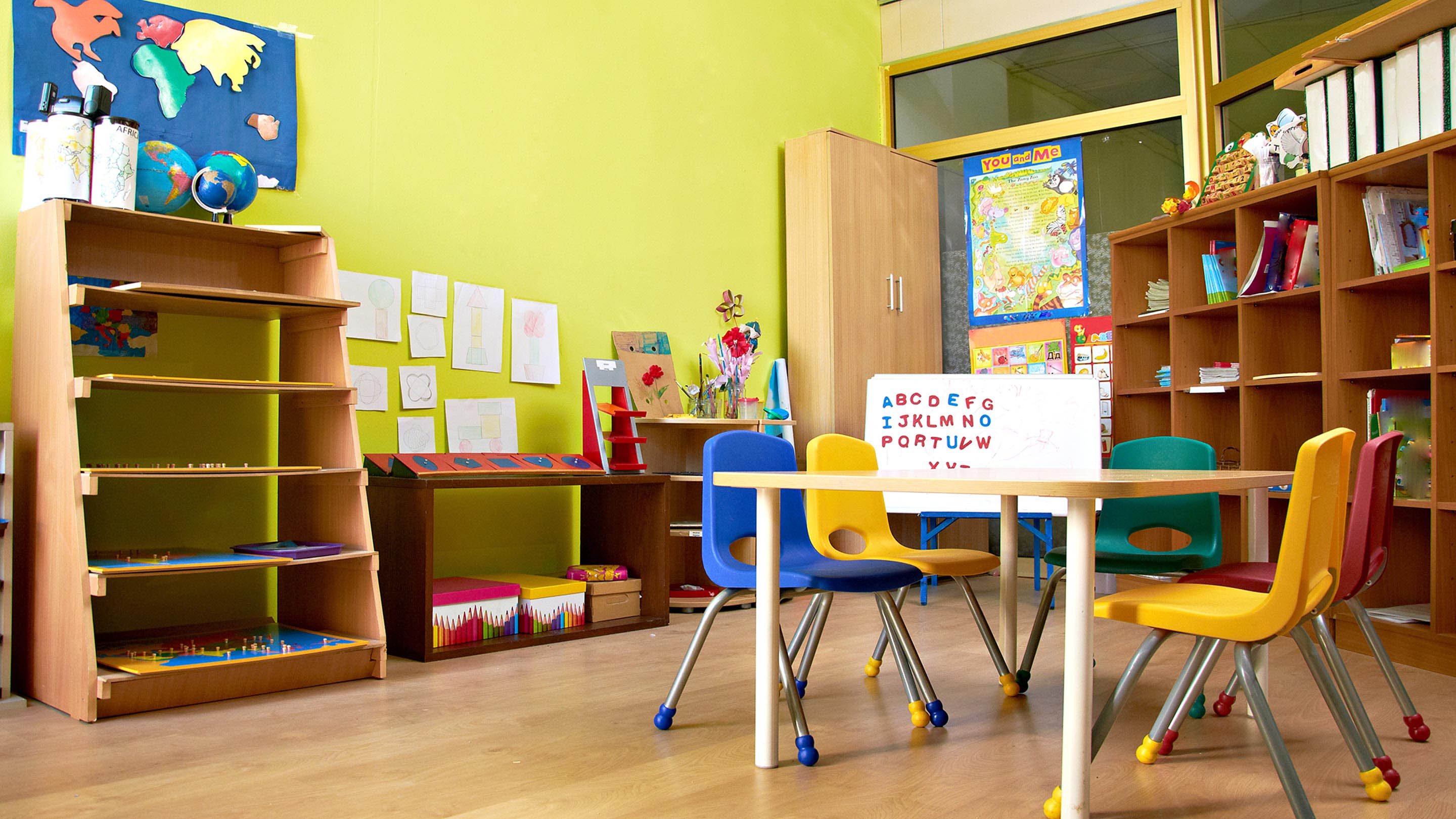
A classroom can whisper, “Come in, think deeply, make something wonderful,” or it can shout, “Behold: 47 laminated posters, three broken glue guns, a mystery box from 2018, and one very tired teacher.” The difference often comes down to clutter. When a classroom is overloaded with visual noise, unused materials, tangled routines, and every worksheet ever copied “just in case,” creativity has to fight for elbow room.
To decrease classroom clutter is not to create a sterile room that looks like a dentist’s waiting area with sight words. It means designing a learning environment where students can focus, explore, collaborate, and create without being ambushed by piles of paper or walls screaming in neon. A clean, organized classroom gives ideas somewhere to land.
Research on classroom visual environments has shown that heavily decorated rooms can distract young learners and reduce attention during lessons. Education organizations also emphasize that organized, accessible spaces help students feel welcome, independent, and ready to learn. In other words, decluttering is not about being “Pinterest-perfect.” It is about building a classroom that works hard without looking like it is having a garage sale.
Why Classroom Clutter Quietly Blocks Creativity
Creativity needs mental space. Students generate original ideas when they can observe, question, combine, revise, and take risks. A cluttered classroom interrupts that process in several ways. First, it competes for attention. A student trying to write a poem about autumn may be staring at a faded behavior chart, a multiplication poster, last month’s pumpkin craft, and a shelf full of leaning binders. That is not inspiration; that is a visual traffic jam.
Second, clutter slows decision-making. When supplies are scattered or hidden behind “teacher stuff,” students spend more energy searching than creating. “Where are the markers?” becomes the opening act before every project. By the time the markers are found, two have no caps, one is suspiciously sticky, and the spark of the idea has wandered off to recess.
Third, clutter can make a room feel less emotionally safe. Students who are sensitive to noise, movement, color, or visual overload may struggle in classrooms with crowded walls and overflowing surfaces. A calmer room can support self-regulation, especially for students who need predictable spaces and clear pathways. Creativity grows better in a space that feels usable, not overwhelming.
Decluttering Is Classroom Design, Not Decorating
One of the biggest myths in education is that a great classroom must be covered from floor to ceiling. Bright borders, inspirational quotes, anchor charts, seasonal crafts, student work, word walls, rules, schedules, calendars, labels, learning targets, and emergency procedures can all be useful. The problem begins when everything is displayed at once.
Good classroom design asks, “What does this space help students do?” Decoration asks, “Is this cute?” Cute has its place. Nobody is banning cheerful bulletin boards. But a classroom should be a learning tool before it becomes a scrapbook. When displays are purposeful, current, and connected to student thinking, they support creativity. When displays become wallpaper, they become clutter.
Use the “Learning Purpose” Test
Before adding anything to a wall, shelf, table, or digital classroom, ask three simple questions:
- Does this help students learn, create, collaborate, or manage themselves?
- Do students actually use it?
- Is it current, readable, and placed where it makes sense?
If the answer is no, the item may need a new home. A poster that supports today’s writing workshop belongs on the wall. A poster from a unit completed six weeks ago may belong in a folder, a photo archive, or the recycling bin. We thank it for its service and let it retire with dignity.
Clear Walls Can Make Better Thinking Visible
Walls do not need to be empty, but they do need breathing room. A clutter-free classroom wall gives the eye a place to rest and gives important information a chance to stand out. When every inch is covered, nothing feels important. It is like highlighting an entire textbook page: technically colorful, academically useless.
Instead of covering walls before students arrive, leave space for learning to unfold. Display student questions, draft thinking, evolving anchor charts, project prototypes, and reflections. A wall that changes with the class tells students, “Your ideas matter here.” That message is more powerful than 19 store-bought posters saying “Believe!” in glitter font.
Create Zones for Different Types of Thinking
A creativity-friendly classroom usually has clear zones. These do not require expensive furniture. Even a small room can benefit from areas with distinct purposes:
- A quiet zone for reading, reflection, or independent writing.
- A collaboration zone for group discussion and problem-solving.
- A creation zone with art materials, building supplies, or project tools.
- A display zone for current student work and process documentation.
- A teacher zone that is small, functional, and not slowly colonizing the entire room.
When students know where things happen, they move more independently. Independence supports creativity because students can act on ideas without waiting for permission at every tiny step. A room with clear zones says, “You can begin.”
Reduce Visual Noise Without Removing Joy
Minimalism in the classroom does not mean beige sadness. Children deserve warm, inviting spaces. The goal is not to remove personality but to reduce unnecessary stimulation. A room can be colorful without being chaotic. Think of it as editing, not erasing.
Choose a few consistent colors for labels and storage. Use natural light when possible. Keep frequently used tools visible and accessible, but store rarely used items out of sight. Rotate displays instead of stacking new ones over old ones. Let student-created work be the main decoration. The room will still feel alive, but it will not feel like a bulletin board exploded during indoor recess.
Try the 30-Second Scan
Stand at the classroom door and scan the room for 30 seconds. Notice what grabs your attention first. Is it the learning target? Student work? A creative project area? Or is it a pile of ungraded papers leaning like the Tower of Pisa?
Then sit in a student’s seat and scan again. This is important because teachers often design from the front of the room, while students experience the room from desks, tables, floors, corners, and line-up spots. If a display is not readable from where students sit, it may be decoration pretending to be instruction.
Declutter Materials So Students Can Create Faster
Creative classrooms need materials: paper, markers, books, manipulatives, instruments, fabric scraps, recycled cardboard, science tools, sticky notes, devices, and occasionally something called “googly eyes,” which somehow multiply when no one is watching. The answer is not to remove materials. The answer is to organize them so students can use them without chaos.
Accessible storage builds ownership. Clear bins, simple labels, open shelves, and student jobs help materials stay useful. Labels should be easy enough for students to understand without needing a teacher-led expedition. For younger students, combine words with pictures. For older students, use categories that match actual classroom routines: “drafting tools,” “presentation supplies,” “prototype materials,” “research texts,” or “math manipulatives.”
Keep, Store, Share, or Let Go
Teachers are professional savers. This is understandable. Every bottle cap could become a math manipulative. Every cardboard tube could become a rocket. Every extra worksheet might be needed by a future student during a future unit on a future Tuesday. But unlimited saving creates limited space.
Use four categories when sorting classroom materials:
- Keep: Used often and directly supports learning.
- Store: Useful, but only during specific units or seasons.
- Share: Helpful, but not needed by you right now.
- Let go: Broken, outdated, duplicated, or kept only because of guilt.
The “let go” category is where old curriculum binders, dried-out markers, mystery cords, and half-complete craft samples go to meet their destiny. Be brave. The recycling bin believes in you.
Declutter Routines, Too
Classroom clutter is not always physical. Routines can be cluttered. Digital spaces can be cluttered. Directions can be cluttered. A lesson can have so many steps, tabs, handouts, and “quick reminders” that students spend more time decoding the process than doing the thinking.
Creativity increases when routines are simple and predictable. Students should know how to get supplies, where to turn in work, how to request help, how to transition between activities, and how to clean up. These routines create structure, and structure gives creativity a safe container. Without it, “creative freedom” can quickly become “everyone is holding scissors and nobody knows why.”
Make Digital Spaces Cleaner
Modern classrooms often have two rooms: the physical classroom and the digital classroom. A beautiful physical space loses its power if students open an online platform and find 63 unlabeled assignments, old links, duplicate folders, and files named “NEW NEW FINAL final2.” Digital clutter is real clutter.
Use consistent naming systems, archive old materials, organize assignments by unit, and give students a predictable place to find resources. A clean digital classroom helps students spend less time hunting and more time making, revising, discussing, and submitting work that reflects actual thought rather than survival skills.
How Less Clutter Supports Different Learners
A clutter-free classroom can benefit all students, but it may be especially helpful for learners who experience attention challenges, anxiety, sensory sensitivities, executive function difficulties, or visual processing differences. Clear pathways support mobility. Organized materials support independence. Reduced visual distraction supports focus. Quiet corners support emotional regulation.
This does not mean every student needs the same environment. Some students love visual reminders. Some thrive with color. Some need movement, flexible seating, or hands-on materials. The goal is balance. A responsive classroom offers enough stimulation to invite curiosity and enough order to prevent overwhelm.
Design for Access, Not Perfection
Classroom organization should make learning more accessible. Students should be able to find what they need, understand what is expected, move safely, and contribute to the room. The best classroom setup is not the one that photographs beautifully after school when no children are present. The best setup is the one that still works at 1:47 p.m. on a rainy Thursday when a science project, a writing conference, and a missing lunchbox are all happening at once.
Simple Ways to Decrease Classroom Clutter This Week
Decluttering does not require a dramatic weekend makeover or a twelve-part labeling system involving a laminator and spiritual awakening. Start small. Small changes are easier to maintain, and maintenance matters more than the initial clean-out.
1. Clear One Surface
Choose one table, shelf, counter, or corner. Remove everything. Put back only what serves a daily or weekly purpose. A clear surface can become a project table, a writing station, a student conference area, or simply a place where your coffee is less likely to be buried under spelling tests.
2. Rotate Anchor Charts
Keep current charts visible and store older ones in a chart binder, photo folder, or unit archive. Students are more likely to use charts when they are timely and relevant. A wall of every chart from September to May is not a resource; it is educational wallpaper.
3. Create a “Student-Use Only” Supply Area
Separate student supplies from teacher supplies. Students should not have to dig through personal files, assessment folders, or the sacred drawer of emergency chocolate to find scissors. A student-use supply area builds independence and reduces interruptions.
4. Use a One-In, One-Out Rule
When a new poster, bin, tool, or display enters the classroom, remove something else. This prevents slow accumulation. Clutter rarely arrives with a marching band; it sneaks in one freebie, one donation, and one “I might use this someday” at a time.
5. Give Students Ownership
Students can help maintain creative spaces. Assign roles such as materials manager, display curator, library helper, tech organizer, or project station resetter. When students help manage the room, they learn that creativity includes care for shared tools and spaces.
Creativity Loves Constraints
It may sound strange, but creativity often grows stronger with limits. A cluttered classroom offers too many accidental choices. A well-designed classroom offers intentional choices. Students do not need access to every material at every moment. They need the right tools, enough freedom, and a clear purpose.
For example, instead of placing every art supply on the table, offer three: black markers, colored paper, and recycled cardboard. Students will invent within the limits. Instead of showing 20 project examples, show two and discuss the thinking behind them. Instead of covering a board with every possible writing strategy, display the three strategies students are practicing now.
Constraints help students focus. Focus helps them persist. Persistence helps them move from “I have no ideas” to “Wait, what if we tried this?” That moment is where creativity begins to stretch its legs.
The Teacher’s Desk: Command Center or Clutter Island?
No discussion of classroom clutter is complete without addressing the teacher’s desk, also known as the place where sticky notes go to form societies. Some teachers need a desk. Others prefer a small station, cart, or cabinet. The key question is whether the teacher area supports instruction or absorbs space that students could use.
If the teacher’s desk is mainly a storage unit, consider shrinking it. Move files to vertical storage, scan documents when appropriate, and keep only daily essentials nearby. A smaller teacher footprint can create more room for student collaboration, reading, building, and reflection. Students should feel that the classroom belongs to them, not that they are visiting a paperwork museum curated by an exhausted adult.
Make Student Work the Star
One of the best ways to decrease clutter and increase creativity is to replace generic decorations with meaningful student work. But even student work can become clutter if it is displayed without purpose. Choose work that shows process, growth, revision, or risk-taking. Add student reflections. Display drafts next to final versions. Show questions, mistakes, and breakthroughs.
This turns the classroom into a studio instead of a showroom. In a studio, work is alive. Students see that creativity is not magic; it is a process. They learn that ideas can be messy, but the environment does not have to be.
A 15-Minute Classroom Declutter Routine
Teachers do not need another impossible task. The following routine can be done weekly, preferably before clutter grows fangs:
- Spend three minutes removing trash, broken items, and outdated papers.
- Spend four minutes returning supplies to labeled homes.
- Spend three minutes clearing one student work area.
- Spend three minutes checking walls for outdated displays.
- Spend two minutes choosing one improvement for next week.
This routine is short enough to survive real life. It also communicates an important message: the learning environment is not fixed. It evolves. Students can participate in that evolution, which helps them see the classroom as a shared creative ecosystem.
Experiences: What Happens When Classroom Clutter Goes Down
In many classrooms, the first sign that decluttering is working is not silence. It is smoother movement. Students stop asking where every supply lives. Transitions become less dramatic. Group work starts faster. The teacher spends less time saying, “Hold on, I know it’s here somewhere,” which is a sentence that can drain the life force from a lesson.
Imagine a fourth-grade classroom preparing for a design challenge. Before decluttering, the materials table is a mountain of pipe cleaners, tape, cardboard, old worksheets, random math cubes, dried glue sticks, and one sock no one claims. Students rush the table, grab too much, argue over supplies, and return to their groups with items they do not need. The creative task becomes a supply buffet with engineering on the side.
After decluttering, the teacher creates three labeled bins: “Build,” “Connect,” and “Decorate.” Each group chooses a limited number of items. Extra materials stay in a reserve bin. Cleanup roles are posted. Suddenly, the energy changes. Students spend less time grabbing and more time planning. One group revises its bridge design because the available materials force them to think differently. Another group asks whether folded paper can create strength. Creativity increases not because the room has more stuff, but because the stuff is easier to understand.
In a middle school writing classroom, reducing visual clutter can change the tone of discussion. Instead of walls packed with every grammar rule, essay structure, reading strategy, and motivational slogan, the teacher displays only the current unit focus: voice, evidence, and revision. Student drafts are posted with sticky-note comments about choices the writers made. The room feels less like a test-prep cave and more like a writing studio. Students begin referring to each other’s work: “I tried the opening move Maya used,” or “I revised my evidence like Jordan did.” The wall becomes a conversation, not a collage.
In an early childhood classroom, clutter reduction may look like fewer toys available at once. This can feel risky at first. Adults sometimes worry that fewer options will bore children. Often, the opposite happens. When the block area contains a thoughtful selection of blocks, animals, fabric pieces, and drawing tools, children play longer and build more elaborate stories. When every toy is available, play can become shallow because attention keeps bouncing. A smaller selection invites deeper imagination.
Teachers often report an emotional benefit, too. A cluttered room can create low-level stress all day. Even when instruction is strong, the environment keeps whispering, “You are behind.” Clearing one corner or simplifying one wall can bring surprising relief. That relief matters because teacher creativity is part of student creativity. A teacher who can find materials, move around the room, and think clearly is more likely to improvise, notice student ideas, and say yes to meaningful exploration.
Decluttering also gives students a model for creative discipline. Artists clean brushes. Engineers organize tools. Writers manage drafts. Scientists label samples. Creative people are not simply messy geniuses surrounded by chaos and dramatic lighting. They build systems that allow ideas to survive. When students learn to reset a project station, curate a display, organize digital files, or choose only the materials they need, they learn that creativity is both freedom and responsibility.
The most powerful experience is the moment students begin to own the space. They notice when the marker bin is messy. They ask to display a draft because it might help someone else. They suggest moving a table to make collaboration easier. They understand that the classroom is not just where learning happens; it is something they can shape. That sense of agency is creative at its core.
Conclusion
To decrease classroom clutter is to increase the space available for attention, independence, collaboration, and imagination. A clutter-free classroom does not have to be plain. It should be purposeful. It should display student thinking, support different learners, simplify routines, and make materials easy to use. Most of all, it should help students feel that their ideas have room to grow.
Start with one shelf, one wall, one supply station, or one digital folder. Remove what no longer serves learning. Keep what students use. Rotate what is seasonal. Celebrate what shows thinking. The goal is not a perfect classroom. The goal is a creative classroom where students can breathe, build, write, wonder, revise, and occasionally find the glue before the bell rings.
Note: This article is based on synthesized classroom-design research, education guidance, and real instructional practices from reputable U.S. education sources. Source links are intentionally not included in the article body per publishing requirements.