Note: This original article is written in standard American English and synthesizes real public information about Chris Agee’s “Eyewash,” one-panel comics, webcomics, cartoon humor, and the modern digital comics audience.
A Quick Splash of Humor in a Very Noisy World
Some comics ask for a full cup of coffee, a quiet room, and the kind of emotional stamina usually reserved for assembling flat-pack furniture. “Eyewash,” the one-panel comic series by Chris Agee, asks for something much simpler: one glance, one gag, and ideally one laugh that escapes before you can pretend to be mature.
The title “Eyewash” feels wonderfully appropriate. It suggests a rinse, a refresh, a small break from the digital dust that collects on the brain after too much doomscrolling. It also carries a playful hint of nonsense, which is exactly where many great one-panel comics live. They are not lectures. They are not motivational posters wearing glasses. They are compact jokes with shoes on, ready to run across the page and disappear before anyone asks them to explain themselves.
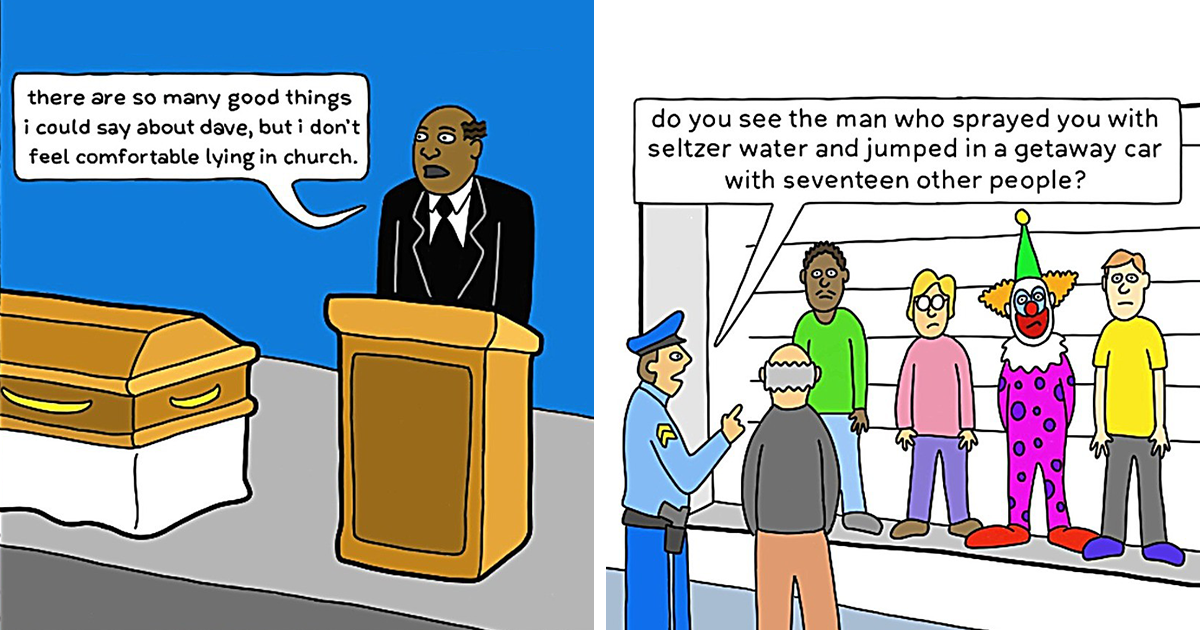
Chris Agee’s “Eyewash” comics follow the classic logic of pithy humor: keep the setup clean, make the image do heavy lifting, and deliver a punchline sharp enough to cut through the daily fog. The Bored Panda collection titled “My 45 One-Panel Comic Strips With Pithy Humor” presents the series as a batch of quick-hit visual jokes, building on Agee’s preference for single-panel storytelling and his affection for legendary panel comics such as “The Far Side.”
What Makes “Eyewash” Work?
The magic of “Eyewash” comes from compression. A one-panel comic has no runway. There is no first panel for setup, second panel for escalation, and third panel for the punchline to land like a cat knocking over a water glass. Everything has to happen in one frame. The character design, background detail, caption, facial expression, and implied situation all have to cooperate instantly.
That is harder than it looks. A successful one-panel comic must feel immediate without feeling obvious. If the joke is too plain, it becomes a greeting card that forgot its envelope. If it is too obscure, readers stare at it with the haunted expression of someone reading a printer manual. “Eyewash” generally finds its lane between those extremes: accessible, silly, occasionally pun-packed, and rooted in the everyday absurdities people already understand.
The Power of the Pithy Punchline
Pithy humor is short, but it is not lazy. A good pithy punchline trims the fat until only the funny bone remains. In “Eyewash,” the humor often depends on a little turn of phrase, a visual misunderstanding, or a character reacting to a ridiculous situation as if it were perfectly normal. That calm response to nonsense is a classic comedy move. The weirder the situation, the funnier it becomes when everyone inside the comic behaves like this is just another Tuesday.
For readers, this creates the pleasure of recognition. We may not live in Agee’s cartoon world, but we know the feeling: the awkward conversation, the over-literal interpretation, the tiny social disaster, the pun that arrives uninvited and refuses to leave. “Eyewash” takes those little sparks and turns them into one-panel comic strips that are easy to share, easy to remember, and dangerously easy to read in batches when you were definitely supposed to be answering emails.
Chris Agee and the Digital Cartoon Tradition
Chris Agee’s background helps explain the rhythm of “Eyewash.” According to his own public writing about the comic, he has long had jokes, puns, doodles, scripts, routines, and comic ideas bouncing around in his head. During the pandemic, he focused that creative energy into a one-panel comic strip with bold, simple art and concise punchlines. After early rough drafts received encouraging feedback, the comic relaunched online in April 2022 across social platforms including Instagram, Webtoon, Twitter, and Facebook.
That path is very modern. Decades ago, a cartoonist usually needed newspapers, magazines, syndication, or a very patient editor with a stack of submissions taller than a nervous intern. Today, creators can post directly to audiences. The trade-off is obvious: access is easier, but attention is harder. A comic now competes with news alerts, short videos, pet photos, celebrity drama, and someone’s suspiciously perfect sourdough loaf.
“Eyewash” benefits from the digital environment because one-panel comics are naturally scroll-friendly. They do not demand a long reading commitment. They load quickly, communicate visually, and reward the reader fast. In a world where people read on phones while standing in line for coffee, a compact comic has a real advantage. It can deliver a tiny entertainment snack without requiring a plate, fork, or emotional investment.
The One-Panel Comic: Small Space, Big Pressure
The one-panel comic has a long and respected place in American humor. Magazine cartoons, newspaper panels, editorial cartoons, and webcomics have all used the format to make a complete joke inside a single visual moment. The best-known examples often rely on surprise: animals acting like people, people acting like furniture, or society acting like society, which is usually strange enough without help.
Gary Larson’s “The Far Side” remains one of the most influential examples of single-panel cartooning. Its success showed that one image could contain an entire comic universe: strange logic, odd characters, scientific curiosity, social awkwardness, and a punchline that sometimes needed half a second to detonate. “Eyewash” does not copy that formula, but it belongs to the same broad family of humor that trusts readers to make a quick leap.
Why One Panel Can Be Funnier Than Three
A multi-panel comic can build rhythm. A single-panel comic must imply rhythm. That is the challenge. It drops readers into the funniest moment and lets them reconstruct the rest. What happened before? Why is this character saying that? Why is the dog so confident? Why does this situation feel like a business meeting held inside a blender?
That missing context is not a weakness. It is part of the joke. The reader becomes a collaborator, filling in just enough story to make the gag work. This is why single-panel humor can feel so satisfying. It respects the reader’s intelligence while also inviting that intelligence to trip over a banana peel.
The Humor Style: Silly, Sharp, and Refreshingly Unheavy
One of the most appealing things about “Eyewash” is that it does not seem desperate to prove that it is important. Plenty of comics use humor to make political, moral, or cultural arguments, and many do it brilliantly. “Eyewash” leans more toward relief. Its goal is not to win a debate. Its goal is to give readers a quick splash of levity and a break from the endless shouting match of modern online life.
That does not mean the humor is empty. Light comedy can still be smart. A pun can be clever. A silly drawing can reveal something true about how people talk, worry, misunderstand, and overthink. In fact, silliness often works because it sneaks past our defenses. A heavy joke knocks on the front door. A silly joke climbs in through the window wearing a fake mustache.
Examples of “Eyewash” Humor Without Spoiling the Comics
Instead of reproducing specific comic panels, imagine the kinds of engines that power the series: a phrase taken too literally, a character misunderstanding a common expression, a strange creature having a very ordinary problem, or a familiar social situation tilted just enough to become ridiculous. The comedy often lives in that tilt. It is not a complete collapse of reality. It is reality with one screw loosened.
That is why the comics work well for casual readers. You do not need to know an elaborate cast of characters or follow a storyline from episode one. You can jump in anywhere. Each panel stands on its own little cartoon feet.
Why Readers Love Pithy One-Panel Comics
Readers love short comics because modern attention is under siege. We are constantly switching tabs, checking messages, answering notifications, and pretending we only opened the refrigerator to “think.” A one-panel comic offers a rare bargain: a complete comedic experience in seconds.
There is also a social advantage. A pithy comic is easy to share because it does not require explanation. Someone can send it to a friend with the message, “This is you,” which is either affection or a legal threat depending on the comic. The best one-panel jokes become tiny social gifts. They say, “I saw this absurd thing and thought of your absurd life.”
“Eyewash” fits that sharing culture nicely. Its jokes are generally approachable, visually clear, and built for quick enjoyment. That does not make them disposable. It makes them efficient. In comedy, efficiency is not a small achievement. It is the difference between a joke that lands and a joke that circles the airport until everyone gets tired.
The Art Style: Bold, Simple, and Built for the Joke
Agee has publicly described the art in “Eyewash” as bold and simple, which is part of its charm. The drawings do not need to chase hyper-realistic detail because the humor is the star. In a one-panel comic, overly busy art can smother the joke. The reader should know where to look immediately. The eye should travel from character to context to punchline without needing a map, compass, or motivational podcast.
Simple cartooning also supports expression. A raised eyebrow, a blank stare, a stiff posture, or a tiny mouth can do a surprising amount of comedic work. In visual humor, faces are punctuation marks. They tell us whether the character is confused, smug, alarmed, bored, or experiencing the spiritual crisis of discovering a parking ticket.
As “Eyewash” has continued, Agee has noted that his style has evolved. Some character details have become more simplified, while confidence with objects and visual elements has grown. That is the natural development of a cartoon series. Over time, a creator learns which lines matter and which ones are just loitering.
How “Eyewash” Fits Into Webcomic Culture
Webcomic culture rewards consistency, personality, and shareability. Readers may discover a comic through Instagram, Facebook, Webtoon, Bored Panda, or a repost sent by a friend. They may not know the creator’s entire archive at first. They just know one panel made them laugh, so they look for another.
This makes collections like “My 45 One-Panel Comic Strips With Pithy Humor” especially useful. They give new readers a generous sample of the comic’s voice. Instead of one joke standing alone, the collection shows patterns: the kinds of setups Agee likes, the rhythm of his punchlines, the visual simplicity of the panels, and the overall tone of friendly absurdity.
For a creator, this kind of collection also builds identity. A single viral comic can be lucky. A batch of 45 suggests range, discipline, and a repeatable sense of humor. It tells readers, “Yes, there is more where that came from,” which is one of the most important promises a webcomic can make.
Lessons Creators Can Learn From “Eyewash”
1. Keep the Concept Clear
A one-panel comic needs an instantly readable situation. If readers spend too long identifying the scene, the joke loses momentum. “Eyewash” keeps its premise direct enough for quick reading while leaving room for surprise.
2. Let the Caption and Image Share the Work
In strong panel cartoons, the caption should not merely describe the image, and the image should not merely decorate the caption. They should create a small collision. That collision is where the laugh happens.
3. Build a Repeatable Voice
Readers return to a comic because they recognize its personality. “Eyewash” has a recognizable blend of puns, weirdness, and lighthearted nonsense. That voice matters as much as any individual joke.
4. Do Not Fear Simplicity
Simple art is not lesser art. In humor, clarity is power. A clean drawing can make a punchline land faster than a highly detailed scene that distracts the eye.
5. Make the Reader Feel Included
The best pithy humor makes readers feel smart for getting it. “Eyewash” often does this by building jokes around familiar phrases, ordinary social habits, and common misunderstandings. The reader gets the pleasure of solving the gag almost instantly.
My Experience With “Eyewash” and One-Panel Humor
Reading a collection like “Eyewash”: My 45 One-Panel Comic Strips With Pithy Humor feels a bit like opening a drawer full of tiny novelty alarms. Each one goes off differently, but they all exist to interrupt your seriousness. That is a valuable thing. Most people spend the day surrounded by tasks that pretend to be urgent: inboxes, deadlines, bills, updates, forms, reminders, and those mysterious software notifications that appear only when you are already annoyed.
One-panel comics offer a break because they are complete without being demanding. I do not need to “get into” the story. I do not need to remember a character’s tragic backstory, an alternate timeline, or whether the raccoon in panel two is secretly the mayor. I can simply look, process, laugh, and move on with my life slightly less grumpy than before.
What stands out about “Eyewash” is the sense that the comics are made by someone who enjoys the act of noticing silly possibilities. That matters. Forced humor has a smell, and it is usually the smell of a brainstorming meeting where someone wrote “make it viral” on a whiteboard. “Eyewash” feels more like a creator collecting odd little thoughts before they escape. A phrase turns into a picture. A picture turns into a joke. A joke turns into a panel. The whole process seems casual, but the result requires craft.
As a reader, I especially appreciate comics that do not punish me for relaxing. Some humor arrives carrying a thesis statement and a folding chair. It wants to sit down and explain society. That kind of work can be excellent, but there is also room for comedy that simply says, “Here is a weird idea. Enjoy it before it bites someone.” “Eyewash” belongs to that second category. Its best moments feel like someone opened a window in a stuffy room.
There is also something nostalgic about the format. Many readers grew up encountering cartoons in newspapers, magazines, calendars, or books left on coffee tables. You could flip to a page, read one gag, and feel like you had found a little prize. “Eyewash” translates that pleasure into the digital age. Instead of waiting for the Sunday paper, readers find the comic on social media, webcomic platforms, or curated humor sites. The delivery changed, but the pleasure remains familiar.
From a creator’s perspective, the series is a reminder that small formats are not small achievements. A one-panel comic is a miniature stage play where the curtain rises at the funniest possible second. Every prop has to matter. Every facial expression has to earn its place. Every word has to justify the space it occupies. When the result looks effortless, that usually means the creator has done the difficult work of removing everything unnecessary.
That is why “Eyewash” is easy to recommend to readers who enjoy funny single-panel comics, pithy punchlines, visual humor, and absurd everyday observations. It is not trying to be the loudest comic on the internet. It is trying to be a quick splash of levity. On many days, that is exactly enough.
Conclusion: A Small Comic With a Big Sense of Timing
“Eyewash” proves that one panel can still do a lot of work. In a single frame, Chris Agee can suggest a situation, twist a phrase, introduce a ridiculous character, and deliver a punchline before the reader has time to put on their serious-person face. That is the beauty of pithy humor: it arrives quickly, lands cleanly, and leaves the door open for the next joke.
The collection “My 45 One-Panel Comic Strips With Pithy Humor” is more than a gallery of quick laughs. It is a reminder that comic strips do not need sprawling plots or elaborate worlds to be memorable. Sometimes all they need is a clear idea, a funny angle, and the courage to be silly on purpose. In an online world that can feel crowded, cranky, and overcaffeinated, “Eyewash” earns its name by giving readers a refreshing rinse of nonsense.
And honestly, a little nonsense is good for the eyes.