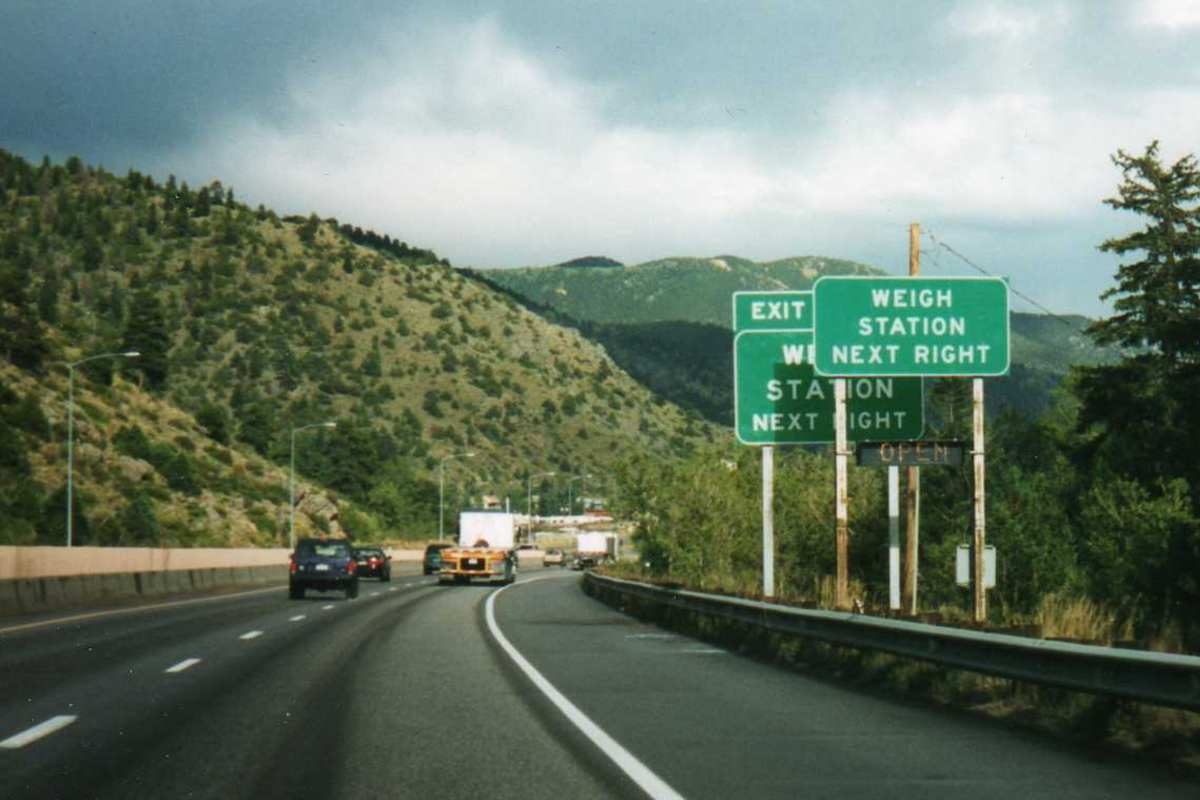
To most motorists, a weigh station is one of those mysterious roadside compounds populated by pavement loops, blinking arrows, severe-looking signs, and enough concrete to build a small moon base. Cars cruise past. Tractor-trailers peel off the highway. Some truccted for a particularly bureaucratic game show.
But the North American weigh station is not simply a giant bathroom scale for trucks. It is part traffic-control system, part safety checkpoint, part infrastructure-protection tool, and increasingly part data network. Modern facilities may identify a truck before it reaches the exit, estimate axle weights while it is still moving, electronically check carrier information, and decide in seconds whether the driver gets a green light or a closer look.
For curious road-trippers, new commercial drivers, and anyone who has ever asked, “Why did that truck stop while the next one kept going?”, here is a field guide to the machines, rules, and roadside choreography of the modern weigh station.
Why North America Has Weigh Stations
Heavy vehicles are remarkably good at moving freight and equally talented at putting stress on pavement and bridges. That is not a criticism of trucks; it is physics being physics, which is famously unwilling to negotiate.
In the United States, federal standards on the Interstate System generally limit gross vehicle weight to 80,000 pounds, single axles to 20,000 pounds, and tandem axles to 34,000 pounds, subject to the Federal Bridge Formula and various statutory or permitted exceptions. The Bridge Formula considers both the number of axles and the distance between them. In other words, the question is not merely, “How heavy is this truck?” but also, “Where is that weight sitting?”
A properly distributed 80,000-pound combination may be legal while a lighter truck with too much weight concentrated on an axle group can have a problem. Bridges and roads care about load distribution. They are surprisingly detail-oriented for objects made mostly of concrete and steel.
Weigh stations support size and weight enforcement, but many facilities also serve as commercial vehicle inspection points. Inspectors may examine equipment, cargo securement, operating credentials, driver records, and hours-of-service compliance. The station is therefore less of a tollbooth and more of a roadside diagnostic center for the freight network.
Anatomy of a Typical Weigh Station
There is no single universal weigh station design. A small static scale on a secondary highway may look nothing like a large commercial vehicle enforcement facility beside a major Interstate. Still, modern stations tend to share several recognizable features.
The Advance Warning Zone
The weigh station experience begins before the exit. Roadside signs warn commercial drivers that a scale or inspection facility is ahead. Electronic message boards, lane signals, flashing lights, or variable signs may indicate whether the station is open.
At facilities using electronic screening, roadside equipment may already be communicating with eligible trucks or detecting vehicle information. By the time the average car driver notices the “WEIGH STATION” sign, a commercial vehicle may already be undergoing a digital pre-screening process.
The Entrance and Sorting Lanes
Large stations are designed to process commercial traffic efficiently. They may have separate approach lanes, bypass lanes, ramps to scales, and areas where selected trucks can be directed for further examination.
Lane-control signals matter. Drivers follow arrows, signs, traffic lights, and instructions from enforcement personnel. This is not the moment for creative interpretation. A weigh station is one of the few places where “I thought the red X looked decorative” will probably not improve the conversation.
The Scale House
The scale house is the operational center of a traditional fixed station. Weight information and other screening data can be reviewed by station personnel. Some facilities use static scales; others use low-speed or mainline weigh-in-motion technology as part of the screening process.
Nearby inspection bays, parking areas, and pull-off spaces allow officers or commercial vehicle inspectors to examine selected vehicles without blocking the flow of trucks moving through the station.
How a Truck Is Actually Weighed
Static Scales: Stop and Be Counted
A static scale weighs a stationary or nearly stationary vehicle under controlled conditions. Depending on the facility, the scale arrangement may measure axles or axle groups as the truck is positioned on the platform.
The advantage is accuracy suitable for enforcement verification. The disadvantage is traffic flow. When thousands of trucks use a major freight corridor, stopping every vehicle for a traditional scale process would create a parking lot with diesel engines.
Weigh-in-Motion: Measuring a Moving Truck
Weigh-in-motion, commonly shortened to WIM, changes the process. Sensors associated with the roadway collect information as a truck rolls across the measurement area. Depending on the system, weight estimates can be combined with other vehicle-screening technologies.
Mainline WIM can help identify vehicles that appear compliant while they remain on the highway or approach the station. Lower-speed systems can also sort vehicles inside a facility. A truck whose measurements raise questions may be routed toward a static scale for closer verification.
This explains one of the great roadside mysteries: why one truck obediently exits toward a weigh station while another continues down the Interstate. The second truck may be participating in an authorized electronic screening or bypass program and may have received a valid bypass instruction. It did not necessarily “get away with something.”
Which Vehicles Must Stop?
Here comes the answer drivers occasionally dislike: it depends on the jurisdiction, vehicle, operation, and signs at the facility.
State requirements vary. California guidance, for example, requires commercial vehicle drivers to stop where commercial inspections are being conducted and signs require a stop, with specific rules and definitions affecting vehicles such as pickups. Florida guidance says trucks traveling on state-maintained highways are expected to stop at weigh stations and agricultural inspection stations, while particular vehicle-and-trailer combinations can also trigger requirements. Georgia states that vehicles or combinations at 10,001 pounds GVWR or actual gross weight and above must enter open weight and inspection stations.
Oregon provides another useful illustration of why drivers must pay attention to local rules. Its guidance includes exemptions and bypass circumstances, but oversize or heavy-haul loads may still be required to stop at open scales even after receiving certain electronic bypass indications.
The practical lesson is simple: do not build a continental weigh-station strategy around something a cousin’s neighbor’s retired trucker supposedly said in 1998. Drivers should know the requirements for the jurisdictions on their route and obey posted signs and enforcement instructions.
Weigh Stations Inspect More Than Weight
The word weigh in “weigh station” undersells the modern facility.
Commercial vehicle inspections may occur at weigh stations, roadside sites, border checkpoints, temporary inspection areas, and other enforcement locations. Across the United States, Canada, and Mexico, the Commercial Vehicle Safety Alliance’s North American Standard Inspection Program provides a common framework for multiple inspection levels.
Level I: The Full Examination
A North American Standard Level I inspection is the comprehensive driver-and-vehicle inspection many commercial drivers have in mind when they hear “full inspection.” Inspectors may check driver credentials and duty status while examining major vehicle systems and safety components.
Brakes, cargo securement, coupling devices, steering, suspension, tires, wheels, lighting, fuel systems, frames, exhaust components, and other applicable equipment can be included. The process is intentionally thorough. A tractor-trailer contains many parts whose failure would be inconvenient at zero miles per hour and dramatically more interesting at highway speed.
Level II: The Walk-Around Inspection
Level II generally covers driver requirements and vehicle items that can be checked without the inspector physically getting underneath the vehicle. It can still reveal problems with tires, lights, securement, brakes, and other visible components.
Level III: Driver and Credential Checks
A Level III inspection focuses on driver, credential, and administrative requirements. Depending on applicability, that can include a driver’s license, medical documentation, record of duty status, hours of service, seat belt use, carrier information, and related records.
Other Inspection Levels
CVSA also defines special inspections, vehicle-only inspections, inspections associated with certain radioactive material shipments, jurisdictionally mandated inspections, and the Level VIII electronic inspection concept. The last category is particularly interesting because it points toward a future in which compliant commercial vehicles may exchange required safety and credential information electronically while in motion.
The ELD Has Joined the Conversation
For drivers required to maintain records of duty status under applicable federal rules, electronic logging devices are a major part of modern compliance. An ELD automatically records driving time and certain vehicle-related data, helping document hours-of-service activity.
During an applicable inspection, driver duty status and hours-of-service compliance can be examined. That means a beautifully polished truck with chrome bright enough to signal satellites does not automatically earn a quick trip through the station if the driver’s records show a compliance problem.
Professional drivers often treat preparation as an everyday process rather than something performed five miles before a scale. Equipment condition, records, cargo securement, and credentials are considerably easier to manage before the engine starts than while an inspector waits nearby.
Electronic Screening and the Art of the Green Light
Electronic screening is one of the biggest changes in commercial vehicle enforcement. Its goal is to help agencies distinguish vehicles requiring additional attention from trucks that appear eligible to continue without a traditional stop.
A system may use vehicle identification technology, transponders, license plate information, weigh-in-motion measurements, and available carrier or credential data. The exact technology and decision process differ by program and jurisdiction.
For an eligible participating carrier, a bypass service can provide an in-cab instruction. A green signal may authorize the driver to bypass a participating facility. A pull-in instruction means exactly what it sounds like.
The efficiency benefit is obvious. Safe, compliant operations may avoid unnecessary delays, while enforcement personnel can devote more attention to higher-risk vehicles or apparent violations. Federal transportation research has specifically examined pre-clearance and e-screening as tools supporting roadside enforcement.
Yet a bypass system is not an invisibility cloak. Drivers remain subject to enforcement, and special loads or particular instructions can override normal bypass expectations. Harry Potter rules do not apply to commercial vehicle operations.
What Happens When a Truck Is Overweight?
The consequences of an overweight condition depend on the jurisdiction and circumstances. Weight violations can lead to citations or other enforcement action. A truck may also need its load adjusted or otherwise brought into compliance before proceeding.
For divisible cargo, correcting an axle-weight problem may involve repositioning the load or adjusting a tractor’s sliding fifth wheel or a trailer’s sliding tandem assembly where the equipment and operation allow it. Drivers frequently use commercial truck scales before reaching an enforcement scale precisely because discovering a weight-distribution problem at a truck stop is preferable to receiving the news from an officer.
Oversize and overweight permitted operations are a separate world of route restrictions, permit conditions, axle configurations, and jurisdiction-specific requirements. A permit is not a universal permission slip to become the heaviest object on the highway. The truck must operate under the conditions of the applicable authorization.
A Driver’s Practical Weigh Station Playbook
Know the Route Before Departure
Commercial drivers should understand the rules and expected scale facilities along the route. Requirements can change when crossing a state, provincial, or international boundary.
Read the Signs, Not Your Assumptions
An open station, lane-control arrow, electronic bypass message, and officer’s direction each carry practical importance. Following the current instruction is safer than relying on what happened during the last trip.
Approach at the Posted Speed
Weigh-in-motion and station traffic-control systems work best when drivers use designated lanes and comply with posted speeds. Smooth operation also reduces the likelihood of turning a busy scale entrance into an impromptu emergency-braking demonstration.
Keep Documentation Organized
When credentials or records are requested, organization helps. A driver who can promptly produce applicable information makes the interaction easier for everyone involved.
Conduct Serious Pre-Trip Inspections
Tires, lights, brakes, coupling systems, securement, and other safety items deserve attention because they matter on the road, not merely because someone at a weigh station may look at them.
The best strategy for passing an inspection is disappointingly unglamorous: operate legal equipment, maintain it properly, secure the cargo, keep accurate records, and follow the rules. There is no secret handshake.
Roadside Experiences: Learning to Read a Weigh Station Like a Machine
Spend enough time driving major North American highways and weigh stations begin to develop personalities. Not human personalities, exactly. More like extremely large appliances that have been placed beside the road and programmed to judge trucks.
My first lesson in observing them is that the interesting part starts well before the scale platform. Watch the commercial traffic as the advance signs appear. Drivers who have traveled the corridor before tend to position themselves early. Some trucks head toward the station entrance. Others continue on the mainline after receiving legitimate electronic bypass instructions. From a passenger car, the movements can look random. Once you understand electronic screening, the pattern becomes visible.
At a busy facility, efficiency is the real spectacle. A loaded combination may cross a screening sensor, enter a designated lane, follow an illuminated arrow, and be released back to the highway in surprisingly little time. Another vehicle receives a different signal and turns toward a static scale or parking area. The entire station behaves like a sorting algorithm rendered in asphalt.
I have also learned that a quiet-looking weigh station can become busy very quickly. Five trucks arrive almost together. Brake lights appear. Lane signals change. An inspector walks toward a parked combination. A truck rolls slowly across a scale while another waits behind it. Two minutes earlier, the site looked abandoned enough to host a low-budget zombie movie.
The trucks themselves tell stories. A dry van hauling packaged goods presents different inspection concerns from a flatbed carrying steel, a tanker transporting liquid, or a heavy-haul combination moving specialized equipment. On an open-deck trailer, cargo securement hardware is visible even from a distance. Chains, straps, binders, and load placement transform the trailer into a rolling lesson in applied mechanics.
Liquid tankers offer another memorable lesson: gross weight is only part of the challenge. Liquid cargo can move, and drivers must account for vehicle dynamics. Weight management is also a practical fuel question. Diesel in the tractor’s tanks adds pounds. When a combination operates near legal limits, seemingly routine decisions can become calculations rather than casual choices.
One of the most useful habits I have heard repeatedly in commercial driving circles is to solve scale problems before meeting an enforcement scale. After loading, drivers may use a certified commercial truck scale to check steer, drive, trailer axle, and gross weights. When axle weights are not distributed correctly, an adjustable fifth wheel or sliding trailer tandems may allow legal redistribution, depending on the equipment and load.
That process changes the way you look at a tractor-trailer. The truck is no longer simply “a big vehicle that weighs 80,000 pounds.” It is a system of axle groups, distances, movable components, cargo position, fuel, and legal limits. Move one part and the loads on other axle groups can change. It is basically a physics homework problem capable of delivering groceries.
The inspection side is equally revealing. Many motorists imagine officers searching trucks for dramatic contraband, because television has trained us poorly. Commercial vehicle safety inspections are often much more mechanical and procedural. A tire, brake component, lighting problem, cargo securement issue, driver’s records, or hours-of-service concern can be the center of attention.
Watching an inspection also builds respect for professional drivers who maintain their equipment carefully. A modern tractor may travel enormous distances while pulling loads through heat, freezing temperatures, mountain grades, urban congestion, construction zones, and roads whose potholes seem to have incorporated as independent municipalities. Keeping the entire combination compliant requires routine attention.
Another lesson is that geography matters. A driver crossing several states cannot assume every weigh station follows identical stop rules. The North American Standard Inspection Program creates important consistency in inspection practices, but state requirements about which vehicles must enter a scale can differ. Rental trucks, pickups used commercially, trailers, agricultural vehicles, and heavier nontraditional combinations can create questions that ordinary motorists rarely consider.
For recreational travelers towing large trailers, this is worth remembering. Seeing a personal-use RV bypass a scale does not prove that every truck of a similar size may do the same. Classification and use matter. The lettering on a vehicle, registration, weight rating, actual weight, jurisdiction, and nature of the operation can affect requirements.
Perhaps the greatest experience-based insight is that the modern weigh station is really a filter. Older public perception focuses on the scale: truck enters, truck stops, truck gets weighed. Today’s larger facilities can combine weight screening, data, vehicle identification, electronic credentials, and inspection resources. The station is trying to process an enormous freight stream without unnecessarily stopping every compliant vehicle.
Once you recognize that purpose, all those roadside gadgets become less mysterious. The sensors in the pavement, cameras, antennas, electronic arrows, bypass lanes, static scales, and inspection sheds are pieces of one system. They are looking for weight problems and safety concerns while trying to keep legal freight moving.
And yes, after learning how the system works, you may find yourself slowing your road-trip conversation to stare at a weigh station and announce, “Look, that’s probably weigh-in-motion screening.” Your passengers may not be impressed.
That is their loss.
Conclusion: The Weigh Station Is More Interesting Than It Looks
The North American weigh station occupies an unusual position in highway infrastructure. It protects roads and bridges through size and weight enforcement, supports commercial vehicle safety inspections, and increasingly uses electronic screening to focus enforcement resources where they are most useful.
The familiar roadside scale has evolved into a technology-rich freight checkpoint. A modern facility can weigh moving trucks, sort traffic, support credential checks, examine hours-of-service information, and route selected vehicles toward detailed inspections. Yet the fundamental mission remains refreshingly straightforward: keep commercial vehicles within applicable requirements and reduce unsafe equipment or operations on public roads.
So the next time a highway sign announces a weigh station ahead, look beyond the scale house. Watch the lane signals. Notice the pavement sensors and antennas. Observe which trucks pull in, which are directed onward, and where inspection areas sit in relation to the scale.
You are looking at a giant roadside filter for one of the world’s busiest freight systems. Admittedly, it contains fewer flashing lasers than a science-fiction checkpoint. But give the transportation engineers time.
Note: Commercial vehicle weight, inspection, and weigh-station stop requirements vary by jurisdiction, vehicle classification, operation, load, and permit status. Drivers should verify current federal, state, provincial, territorial, and local requirements applicable to their route.