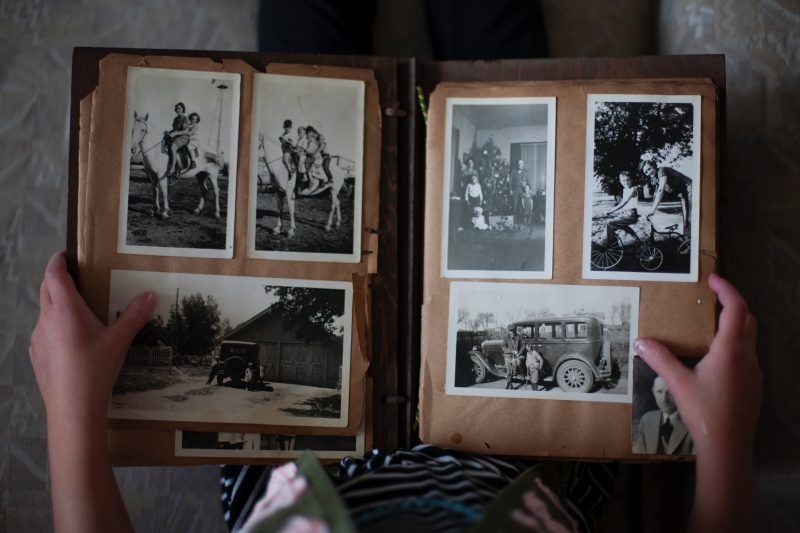
Think about the moment you heard a world-changing piece of news. You may remember where you were sitting, who spoke first, what the room looked like, and perhaps even the half-eaten sandwich on the table. The scene may feel preserved in mental high definition, complete with surround sound and emotional special effects.
Psychologists call this experience a flashbulb memory: a vivid autobiographical recollection of the circumstances in which someone learned about an important, surprising, and emotionally charged event. The term suggests a camera flash freezing one instant in time. Unfortunately, the brain is less like a camera and more like an enthusiastic documentary editor. It preserves meaningful material, cuts uninteresting footage, rearranges scenes, and occasionally adds details that were never in the original script.
Flashbulb memories reveal something fundamental about the relationship between emotion and cognition. Emotion can focus attention, strengthen memory consolidation, and create a powerful sense of certainty. Yet it can also narrow perception, encourage repeated storytelling, and make reconstructed details feel unquestionably true. In other words, an emotional memory may be unforgettable without being perfectly accurate.
What Is a Flashbulb Memory?
A flashbulb memory is not simply a strong memory of a dramatic event. More precisely, it is a memory of the reception context: where you were, what you were doing, who was nearby, and how you reacted when you first learned the news.
For example, a person may not have directly witnessed a historic event but may vividly remember hearing about it during breakfast. The public event and the personal scene become linked. “The announcement happened” is factual knowledge; “I was standing beside the refrigerator when my sister called” is autobiographical memory.
Psychologists Roger Brown and James Kulik introduced the term in the 1970s after studying memories surrounding shocking public events. They proposed that surprising, consequential news could activate a special mechanism that produced detailed, durable recollections. Later research complicated that idea. Most evidence now suggests that flashbulb memories rely on ordinary memory processes operating under extraordinary emotional and social conditions.
Common features of flashbulb memories
- A surprising or emotionally intense event
- A strong feeling that the event matters personally or socially
- Vivid sensory and contextual details
- Frequent mental rehearsal or discussion
- High confidence in the memory
- A feeling of mentally reliving the original moment
That final point is especially important. Flashbulb memories feel different from ordinary memories. Recalling what you ate last Tuesday may resemble opening a blurry spreadsheet. Recalling where you were during a national crisis can feel like stepping back into the room.
How Emotion Influences Cognition
Emotion is not an ornamental feature added after thinking takes place. It influences what receives attention, how information is interpreted, which details are stored, and how memories are retrieved. Emotional arousal effectively tells the brain, “This may be important. Put down the grocery list and pay attention.”
Emotion directs attention
Attention is limited. The brain cannot deeply process every sound, object, facial expression, notification, and suspicious crumb on a shirt at the same time. Emotion helps prioritize information.
When something alarming or exciting happens, attention is pulled toward the most meaningful element. During a frightening incident, a person may remember a threatening object or a speaker’s expression while forgetting the color of the walls. This is sometimes called an emotional memory trade-off: central emotional information is strengthened while peripheral details receive less processing.
Research indicates that emotion does not improve memory evenly across an entire experience. It can enhance selected visual or conceptual details while leaving other contextual information vulnerable to forgetting. Negative arousal often produces especially strong focal effects.
The amygdala marks emotional significance
The amygdala, a group of structures deep within the temporal lobes, helps detect emotional significance. It is particularly responsive to potential threats, novelty, and biologically important information. It does not function as a tiny panic button that single-handedly creates memories, despite its frequent casting in popular neuroscience.
Instead, the amygdala interacts with the hippocampus and other brain regions. The hippocampus helps bind together elements of an episode, including people, places, timing, and relationships among details. Emotional arousal can influence this system through stress hormones and neurotransmitters such as norepinephrine, increasing the likelihood that selected information will be consolidated into long-term memory.
This amygdala–hippocampus cooperation helps explain why emotional moments can remain accessible for years. It also explains why the remembered emotional core may be stronger than the surrounding context. The brain may preserve the fire alarm while misplacing the floor plan.
Emotion changes the experience of remembering
Emotion influences not only what is stored but also how remembering feels. Emotional memories are often accompanied by vivid imagery, bodily reactions, and a strong sense of mental time travel. A racing heart or sudden wave of sadness during recall can be interpreted as evidence that the memory must be accurate.
However, emotional intensity is not a certificate of authenticity. It is possible to feel deeply certain about a detail that changed during years of retelling. Studies of flashbulb memories repeatedly show that emotional recollections maintain vividness and confidence even when their content becomes inconsistent.
Vividness Is Not the Same as Accuracy
The most famous lesson from flashbulb-memory research is wonderfully inconvenient: people can be confident, detailed, sincere, and wrong at the same time.
In one influential study, researchers recorded participants’ memories shortly after the September 11 attacks and tested them again later. Memories of the reception context changed at rates comparable to ordinary autobiographical memories. The difference was that participants remained much more confident in their flashbulb memories. Confidence stayed dressed for a formal event while consistency quietly left through the back door.
Other studies involving the Challenger explosion, presidential assassinations, earthquakes, verdicts, and major public deaths have produced similar patterns. People frequently remember the emotional meaning and broad outline while changing who delivered the news, where they were standing, what they were doing, or when a conversation occurred.
This does not mean every flashbulb memory is false. Many details may be accurate, particularly when they were distinctive, repeatedly confirmed, or recorded soon after the event. The crucial point is that subjective certainty cannot independently prove accuracy.
Why Flashbulb Memories Change
Memory is reconstructed during retrieval
Remembering is an active process. The brain does not retrieve an untouched file from a biological hard drive. It rebuilds an episode using stored fragments, general knowledge, current beliefs, emotional states, and cues available at the moment of recall.
Each reconstruction can slightly alter the memory. The updated version may then influence later recollections. This process is useful because it allows memories to remain connected to new knowledge. It is also why a confident story can gradually drift away from the original experience.
Rehearsal strengthens both truth and error
Major events are repeatedly discussed. People watch news coverage, scroll through images, compare stories, and answer the question, “Where were you when you heard?” many times.
Rehearsal makes a memory easier to retrieve, but it does not guarantee that every rehearsed detail is correct. If an error enters the story early, repetition may strengthen it. A person can become fluent at telling an inaccurate version, and fluency itself can feel like proof.
Social conversations reshape recollection
Memories are also social. Families and communities develop shared narratives about significant events. During conversation, one person’s detail may be incorporated into another person’s account. Group agreement can increase confidence even when the group is collectively polishing the wrong fact.
Social rehearsal is not always harmful. Discussion can preserve accurate details and provide useful retrieval cues. The effect depends on what information is introduced, how confidently it is presented, and whether people distinguish personal observation from later knowledge.
Schemas fill missing spaces
A schema is a mental framework representing what normally happens in a familiar situation. Schemas help people understand experiences quickly, but they can also supply plausible details that were not observed.
Suppose someone remembers receiving alarming news in an office. Years later, the person may “remember” coworkers gathering around a television because that fits a familiar crisis narrative. Perhaps everyone actually checked individual computer screens. The added detail is not necessarily a lie. It may be the brain filling a gap with its best prediction.
What Makes a Flashbulb Memory More Likely?
Surprise
Unexpected information interrupts ordinary processing. A surprising event receives attention because it conflicts with what the brain predicted. Still, surprise alone is not enough. Discovering that a vending machine has dispensed two bags of chips is surprising and delightful, but it rarely becomes a lifelong memory unless snacks are unusually central to one’s identity.
Personal importance
An event is more likely to produce a flashbulb memory when it affects a person’s safety, values, identity, relationships, or community. The same public announcement may create an enduring memory for one individual and only a vague recollection for another.
Emotional arousal
Fear, grief, anger, pride, and joy can all contribute to vivid memories. Flashbulb research has historically emphasized negative events, but positive milestoneschampionship victories, election results, marriage proposals, long-awaited medical news, or reunionscan also produce detailed reception memories.
Rehearsal and media exposure
Repeated discussion keeps a memory accessible. Continuous media coverage can also merge public images with personal recollection. After seeing the same video dozens of times, someone may struggle to separate what was personally witnessed from what was learned later.
Social and cultural identity
Events connected to a person’s national, religious, professional, political, or community identity tend to carry greater emotional meaning. Flashbulb memories therefore help individuals maintain not only personal history but also a sense of belonging to a larger group.
Flashbulb Memories Versus Traumatic Memories
Flashbulb memories and traumatic memories can overlap, but they are not interchangeable. A flashbulb memory usually concerns the moment someone learned about consequential news. A traumatic memory involves direct or indirect exposure to an event experienced as threatening, horrifying, or overwhelming.
Traumatic memories may be vivid, intrusive, fragmented, avoided, or difficult to place in chronological order. Not everyone who forms a flashbulb memory develops trauma symptoms, and not every traumatic experience produces a clear flashbulb-style recollection.
Ordinary forgetfulness after a distressing event should not automatically be interpreted as evidence of dishonesty. Stress can strengthen certain central elements while disrupting attention to sequence, timing, and peripheral detail. Memory responses vary according to arousal, proximity, prior experiences, sleep, social support, and many other factors.
Why Flashbulb Memories Matter in Everyday Life
Eyewitness testimony
Legal systems often place great weight on confident recollection. Flashbulb research shows why confidence must be evaluated carefully. Suggestive questions, repeated interviews, media reports, and feedback from other people can influence memory after an event.
This does not make eyewitness evidence useless. It means early, uncontaminated statements and independent corroboration are extremely important. Later confidence may reflect rehearsal and social reinforcement rather than original accuracy.
Relationships and family disagreements
Couples and relatives often argue about emotionally significant moments: who said what, when a decision was made, or how someone reacted. Both people may be completely sincere because each is recalling a reconstructed version shaped by different attention, emotions, and expectations.
Understanding reconstructive memory can change the goal from proving that one person is irrational to identifying what evidence remains available. It may not save every family dinner, but it can prevent the mashed potatoes from becoming collateral damage.
Education and communication
Emotion can make information more memorable when it highlights meaning without overwhelming attention. Teachers, speakers, and writers often use stories, novelty, humor, and personal relevance to improve engagement.
However, dramatic presentation should support accurate content rather than replace it. A shocking anecdote may be remembered while the statistics vanish. Effective communication pairs emotional significance with clear structure, repetition of essential facts, and opportunities for reflection.
Media literacy
Images, headlines, and repeated commentary can alter how people remember public events. Separating firsthand experience from later exposure is an important media-literacy skill. “I remember seeing it happen” may actually mean “I remember seeing a replay many times afterward.”
How to Preserve a More Reliable Record
No method turns human memory into flawless surveillance footage. A few habits can nevertheless reduce distortion:
- Write an account early. Record what happened before reading extensive commentary or comparing stories.
- Separate observation from interpretation. Distinguish what you directly saw or heard from what you concluded.
- Record uncertainty. “I think the call came before lunch” is more honest and useful than converting a guess into certainty.
- Avoid repeated suggestive questioning. Questions can introduce information and reshape later recollection.
- Compare independent evidence. Messages, photographs, timestamps, calendars, and contemporaneous notes can confirm or correct memory.
- Update beliefs without rewriting history. New facts can change your interpretation without proving that you knew those facts originally.
Experiences That Show How Flashbulb Memories Work
Consider a college student who receives a late-night message announcing that the university will close because of an unfolding emergency. Years later, she remembers sitting on the floor of her apartment, hearing rain strike the window, and watching her roommate drop a blue coffee mug. The memory feels cinematic.
When she finds an old photograph, however, the mug is red. A weather archive shows that the night was dry. The university message arrived in the afternoon, not late at night. Her emotional reaction was genuine, and the broad event was correctly remembered, but some scenery came from other moments during the same stressful week. The memory preserved significance more faithfully than chronology.
Now imagine a man learning that his favorite team has won a historic championship. He remembers watching the final play with his brother at their parents’ house. He can practically taste the pizza and hear the shouting from the street. His brother later insists they watched from a sports bar.
A photograph settles the dispute: they were at the bar. The pizza, however, came from a family viewing party earlier in the season. Two emotionally similar experiences had blended together. Because the championship story had been told at family gatherings for years, the familiar home setting gradually became part of it. Repetition strengthened the narrative, including its borrowed details.
A third example involves a woman receiving important medical news. She clearly remembers the physician using a specific frightening phrase. Her partner, who attended the appointment, remembers different wording. The visit summary contains neither version.
The woman was not inventing the conversation. Anxiety may have narrowed her attention toward the most threatening interpretation. Later internet searches and discussions introduced additional terminology. When she reconstructed the appointment, her brain combined the physician’s general meaning, her emotional response, and language encountered afterward.
These experiences illustrate why disagreements about emotional events can be so difficult. People often assume that vividness proves accuracy and that contradiction proves dishonesty. Flashbulb-memory research offers a kinder and more realistic explanation: sincere minds can construct different versions of the same moment.
Many people notice this process when comparing memories with diaries, text messages, or photographs. A remembered room is larger than it really was. A conversation occurred on a different day. A person believed to have been present had not yet arrived. Each correction may feel startling because the original recollection carried such strong sensory detail.
The practical lesson is not to distrust every memory. Human memory is remarkably useful. It preserves relationships, knowledge, identity, warnings, and lessons across decades. The lesson is to treat confidence as one piece of information rather than a final verdict.
Flashbulb memories show that emotion gives cognition priorities. It tells the brain which experiences deserve attention and continued rehearsal. That prioritization can preserve the heart of a moment while allowing its edges to shift. We may accurately remember that the world suddenly felt different even when the wallpaper, weather, wording, or coffee mug has been quietly recast.
Conclusion
Flashbulb memories occupy the fascinating border between emotional truth and factual reconstruction. Surprise and personal importance focus attention. The amygdala, hippocampus, stress systems, and wider cognitive networks help consolidate selected information. Rehearsal then keeps the memory accessiblebut also creates opportunities for new details, social influence, and current beliefs to reshape it.
The result is a memory that may remain vivid and emotionally powerful long after some of its details have changed. Understanding this does not make meaningful memories less valuable. It makes our approach to them more thoughtful. We can honor what an experience meant while remaining appropriately humble about whether every mental pixel is original.
Research note: This article synthesizes findings from peer-reviewed research and educational resources published by the American Psychological Association, the Association for Psychological Science, NIH and NCBI, Harvard-affiliated researchers, Duke University researchers, and other established psychology and neuroscience sources.