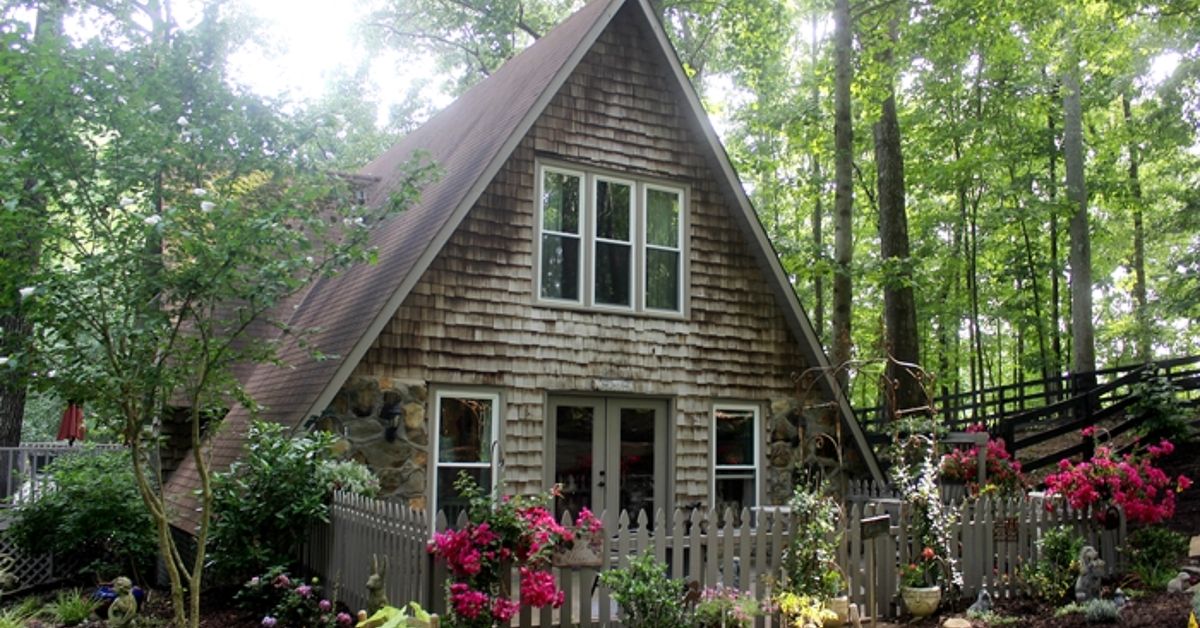
A French Country A-frame Cottage sounds like the kind of house that would serve lavender lemonade, wear linen, and somehow know how to make a gravel driveway look romantic. It blends two beloved design worlds: the storybook charm of rural France and the bold triangular silhouette of an A-frame cabin. One side brings stone, shutters, patina, toile, beams, and soft Provençal color. The other brings steep rooflines, walls of glass, cozy lofts, and that irresistible “hide me in the woods with a good book” energy.
The magic happens when these two styles stop competing and start dancing. A traditional A-frame can feel modern, rustic, Scandinavian, midcentury, or mountain-lodge casual. Add French country cottage style, and suddenly it becomes warmer, softer, and more layered. Think creamy plaster walls instead of stark white drywall, antique brass instead of black metal everywhere, woven baskets instead of plastic bins, and a kitchen that looks as if it has hosted soup, gossip, and at least one dramatic pie crust incident.
This guide explores how to design, decorate, renovate, or simply dream about a French Country A-frame Cottage. We will cover architecture, exterior materials, interior layout, color palettes, furniture, kitchens, bedrooms, bathrooms, lighting, landscaping, and practical ideas for making a compact triangular home feel graceful rather than cramped. No berets required, although a straw market basket will absolutely help the mood.
What Is a French Country A-frame Cottage?
A French Country A-frame Cottage is not a strict historical house style. Instead, it is a creative hybrid. The structure uses the recognizable A-frame form: a steeply pitched roof that often extends close to the ground, creating a triangular profile. Inside, A-frames usually feature vaulted ceilings, open living areas, loft bedrooms, dramatic front windows, and compact footprints.
French country style, meanwhile, is rooted in the relaxed elegance of rural French homes, especially those associated with Provence. It favors natural materials, weathered finishes, stone, plaster, wood, linen, antique pieces, muted colors, curved furniture, floral patterns, and a mix of rustic and refined details. It is not fussy in the “do not touch the pillows” way. It is more like, “Yes, sit down, but please admire the carved chair while you do.”
When combined, the result is a cottage that feels architectural and cozy at the same time. The A-frame shape gives the house drama. The French country details give it soul. It is a smart pairing for mountain cabins, lakeside retreats, woodland cottages, guest houses, vacation rentals, and small full-time homes where personality matters as much as square footage.
Why the A-frame Shape Works So Well
The A-frame has practical advantages that make it more than a pretty triangle. Its steep roof helps shed rain and snow, which is one reason the style is popular in mountain and vacation-home regions. The structure can create a feeling of height and openness even when the floor plan is modest. Large windows at the gable ends bring in natural light and create a strong visual connection with the landscape.
That said, the A-frame is not perfect. Sloped walls reduce usable vertical wall space. Storage can be tricky. Hanging art may require creativity. Upstairs lofts can feel magical, but they can also become warm if ventilation is not handled well. The French country approach helps soften these challenges by embracing built-ins, baskets, layered textiles, antique storage pieces, and rooms that look collected rather than rigidly symmetrical.
The Ideal Setting
A French Country A-frame Cottage looks especially beautiful in natural surroundings: a wooded lot, a meadow, a lakefront parcel, a hillside, or a quiet rural lane. The style thrives when the house feels connected to the land. Gravel paths, lavender, rosemary, climbing roses, hydrangeas, stone steps, and aged terracotta pots can make even a new cottage feel as if it has been quietly charming the neighborhood for decades.
Exterior Design: The Storybook Triangle
The exterior is where the French country A-frame concept makes its first impression. A plain A-frame can look sleek and minimal. A French country version should feel warmer, more textured, and more timeless.
Stone, Stucco, and Weathered Wood
French country homes often use durable, natural-looking materials such as stone, brick, limestone, stucco, and wood. For an A-frame cottage, these materials can be used strategically. A full stone façade may look heavy on a small structure, but a stone chimney, stone foundation, or stone entry wall can add instant old-world charm. Creamy stucco on the gable ends can contrast beautifully with a dark roof. Weathered cedar, whitewashed wood, or soft gray siding can keep the cottage from looking too formal.
If the roof is the largest visual feature, choose it carefully. A standing-seam metal roof can work if the color is muted, such as charcoal, aged bronze, deep green, or soft gray. Wood shingles or composite shakes can give a more cottage-like effect. The goal is not to make the roof disappear; that would be impossible, like asking a giraffe to be subtle. The goal is to make it feel intentional.
Windows, Doors, and Shutters
Large gable windows are classic in A-frame design. To give them French country character, consider divided-light windows, warm wood frames, or blackened bronze trim instead of stark modern frames. French doors leading to a deck or garden can make the cottage feel more romantic and usable.
Shutters are a powerful detail, but they should look appropriately scaled. Soft blue-gray, sage green, warm taupe, faded charcoal, or natural wood shutters can all feel French country. Avoid colors that look too candy-bright unless your goal is “Provence theme park,” which is a bold choice and possibly a cry for help from the trim.
Interior Palette: Soft, Warm, and Never Boring
The best French country interiors use muted colors that feel sun-washed rather than flat. Cream, ivory, warm white, oatmeal, mushroom, soft gray, clay, pale yellow, faded blue, dusty rose, sage, olive, and lavender-gray all fit the mood. These shades are easy on the eyes and help small spaces feel calm.
Inside an A-frame, color matters because the ceiling and walls often merge. Painting everything bright white can increase light, but it may also feel cold. A warmer plaster-like finish, limewash effect, or creamy matte paint adds softness. Wood beams or exposed rafters can bring depth overhead. If the cottage has too much orange-toned wood, balance it with pale textiles, antique brass, stone, and painted furniture.
Living Room: Cozy Without Clutter
The living room is usually the heart of an A-frame cottage. Because the ceiling rises dramatically, the space can feel grand even if the footprint is small. The trick is to ground the room with comfortable furniture and natural textures.
Choose a sofa in linen, cotton, performance fabric, or a soft neutral slipcover. Add a pair of curved armchairs, a weathered wood coffee table, and a vintage-style rug. French country design loves pieces with history, but the room should not look like an antique store sneezed. Use a few standout items: a carved mirror, an old trunk, a ceramic lamp, a landscape painting, or a wrought-iron chandelier.
Fireplace or Stove
If possible, include a fireplace, wood stove, or stone hearth. Nothing says cottage comfort like a fire, especially in a steep-roof cabin where winter evenings feel extra cinematic. A simple limestone surround, reclaimed mantel, or plaster fireplace can look elegant without overpowering the room.
Kitchen: Rustic, Practical, and Slightly Flirty
A French Country A-frame Cottage kitchen should feel useful, warm, and charming. This is not the place for a kitchen so perfect that chopping onions feels illegal. Instead, imagine open shelves, stone or butcher-block counters, painted cabinets, unlacquered brass, ceramic pitchers, copper pans, and a farmhouse sink.
Cabinet colors can include warm white, putty, sage, blue-gray, or mushroom. For backsplash materials, consider handmade-look tile, tumbled stone, brick, or plaster. A compact A-frame kitchen benefits from vertical storage, hanging rails, pot racks, and open shelving, but keep the display edited. Three pretty bowls are charming. Forty-seven mugs are a cabinet intervention.
Small Kitchen Layout Tips
Use an efficient work triangle, even in a tiny kitchen. Place the sink near a window if possible. Choose appliances that fit the scale of the cottage. Add a small island only if circulation remains comfortable. If space is tight, a farmhouse table can double as prep zone, dining table, homework desk, and emotional support furniture.
Bedroom and Loft Ideas
Many A-frame cottages place the bedroom in a loft. This can be dreamy, especially under exposed rafters, but it requires thoughtful design. Use low-profile beds, built-in drawers, wall sconces, and soft bedding. French country bedrooms often feature layered linens, quilts, floral prints, ruffles, ticking stripes, and antique-inspired furniture.
For a serene retreat, keep the color palette gentle. A creamy quilt, linen duvet, faded floral pillows, and a small painted nightstand can do more than a room full of themed décor. In a compact loft, avoid bulky headboards. A fabric panel, painted wall detail, or antique screen can create a soft focal point without stealing precious inches.
Bathroom: Petite but Polished
A small cottage bathroom can still feel luxurious. French country style works beautifully with marble-look tile, travertine, limestone, beadboard, plaster walls, skirted sinks, brass fixtures, framed mirrors, and woven baskets. If the cottage has a clawfoot tub, congratulations: the house is officially flirting with the internet.
For showers, use clear glass to keep the room open. Choose warm metals instead of cold chrome if you want a softer effect. Add a small stool, a linen curtain, a vintage rug, or a ceramic vase with flowers. Keep storage practical with recessed shelves, hooks, and baskets.
Furniture and Décor: The Art of Collected Comfort
French country design feels best when it looks collected over time. Mix old and new pieces. Pair a modern sofa with a vintage chair. Place a rustic bench under a refined mirror. Use a carved console table with simple linen lamps. The tension between rustic and elegant is the whole point.
Patterns should feel layered but not chaotic. Toile, ticking stripes, gingham, faded florals, and small checks all fit the cottage mood. The secret is varying the scale. A large floral pillow, a tiny check curtain, and a striped bench cushion can work together if the colors are related.
What to Avoid
Avoid over-theming the space. Too many roosters, Eiffel Towers, faux wine labels, and “bonjour” signs can turn a beautiful cottage into a gift shop with plumbing. Let the architecture, materials, and textures carry the French country feeling. One rooster is a wink. Twelve roosters is a board meeting.
Lighting: Warm Glow Over Harsh Shine
Lighting is essential in an A-frame because the ceiling height can create shadows. Use layered lighting: overhead fixtures, sconces, table lamps, floor lamps, and candles. A small chandelier or lantern-style pendant can add French country elegance. In the kitchen, brass or bronze pendants work well. In the bedroom, wall sconces save space and add charm.
Choose warm bulbs, dimmers, and fixtures with texture. Wrought iron, antique brass, ceramic, wood, and linen shades all fit the look. Avoid lighting that feels too slick or futuristic unless you want the cottage to look like it is about to launch into orbit.
Outdoor Living: Provence Meets Cabin Life
The outdoor areas should feel like an extension of the cottage. A deck can be softened with planters, bistro chairs, outdoor linen-look cushions, lanterns, and climbing plants. Gravel patios are especially compatible with French country style. Add terracotta pots, rosemary, lavender, thyme, boxwood, roses, or hydrangeas depending on your climate.
A pergola, vine-covered trellis, or simple awning can create shade. If the cottage is in a wooded setting, keep the landscaping natural and slightly loose. French country gardens are not meant to look like they were measured with a laser by a nervous accountant. They should feel structured, fragrant, and a little wild.
Practical Design Tips for a French Country A-frame Cottage
1. Build Storage Into the Low Walls
The sloped sides of an A-frame can create awkward spaces. Turn them into drawers, cabinets, benches, or open cubbies. Use baskets to keep the look relaxed.
2. Use Large Windows Wisely
Gable windows are beautiful, but they can affect heating and cooling. Choose quality glazing, add window coverings where needed, and plan for ventilation.
3. Keep the Palette Cohesive
Small cottages feel larger when the colors flow from room to room. Use three or four main tones, then add seasonal accents with pillows, flowers, and art.
4. Choose Furniture by Scale
Oversized furniture can overwhelm a compact A-frame. Look for slim arms, exposed legs, round tables, nesting stools, and pieces that serve more than one purpose.
5. Let Imperfection Work for You
Aged finishes, slightly uneven ceramics, worn wood, and vintage textiles make French country style feel authentic. Perfectly matching everything can make the cottage feel less charming, not more.
Experience Section: Living With the French Country A-frame Cottage Feeling
The best way to understand a French Country A-frame Cottage is to imagine arriving on a Friday afternoon. The road narrows, the trees lean in, and then the roofline appears: steep, simple, and welcoming. The cottage looks small at first, but not shy. Its stone chimney gives it confidence. The shutters look sun-faded in the best possible way, as if they have heard good stories and decided not to repeat them.
You step onto a gravel path edged with lavender and low herbs. The scent is immediate but not perfume-shop aggressive. It is softer, cleaner, more like the garden is casually mentioning that it has excellent taste. A pair of bistro chairs waits near the door. One has a linen cushion that probably should not be left out in the rain, but cottages are built on optimism.
Inside, the ceiling rises dramatically. The A-frame shape makes the room feel taller than expected, while the French country details keep it from feeling empty. There is a slipcovered sofa, a faded rug, a round wooden table, and a stack of books that look intentionally casual. The windows frame the trees like living paintings. Afternoon light moves across the plaster walls, and suddenly you understand why people use phrases like “golden hour” instead of “the sun is doing that nice thing again.”
The kitchen is small but hardworking. A copper pan hangs near the stove. Open shelves hold white plates, a few bowls, and one pitcher that seems too pretty for orange juice but will be used anyway. Someone makes coffee. Someone else opens a cabinet and finds mismatched mugs, which somehow makes the whole place feel more expensive because nothing is trying too hard.
Evening is when the cottage becomes its best self. Lamps turn on. The wood stove glows. The triangular ceiling gathers shadows in a cozy way, not a spooky way. Dinner is simple: soup, bread, cheese, maybe a salad if everyone is pretending to be balanced. The table does not need a centerpiece, though a small jar of wildflowers appears because French country style has a way of making flowers seem like a basic utility.
Upstairs, the loft bedroom feels tucked under the roof like a secret. The sloped walls mean you learn humility quickly, especially if you stand up too fast. Still, the low bed, linen sheets, and tiny reading sconce make the space feel peaceful. Rain on the steep roof sounds dramatic but comforting, like nature is performing a percussion solo just for you.
By morning, the cottage has done its quiet work. It has slowed everything down. Coffee tastes better near the window. The gravel path looks charming again. The baskets by the door hold shoes, scarves, and evidence that small-space storage can be beautiful. A French Country A-frame Cottage is not about having the biggest home. It is about having a home with atmosphere, texture, warmth, and enough character to make ordinary moments feel edited by a very tasteful film director.
That is the real appeal of this style. It creates a place where practicality and romance can share the same chair. The A-frame gives you structure, views, and architectural drama. French country design gives you softness, history, and hospitality. Together, they create a cottage that feels both grounded and enchanting: a house that can handle muddy boots, fresh flowers, rainy mornings, long dinners, and the occasional person bumping their head in the loft and pretending it was graceful.
Conclusion
A French Country A-frame Cottage is a beautiful answer to a modern craving: the desire for a home that feels simple, soulful, efficient, and deeply personal. It combines the best of compact cabin living with the romance of rural French design. The steep roofline brings drama and durability. The French country details bring warmth, patina, and elegance. The result is a cottage that feels equally suited to weekend escapes, vacation rentals, creative retreats, or cozy year-round living.
To get the look right, focus on honest materials, warm colors, layered lighting, natural textures, practical storage, and a balanced mix of rustic and refined pieces. Let the A-frame shape stay bold, but soften it with plaster, linen, stone, wood, flowers, antiques, and thoughtful outdoor spaces. Keep it charming, not cluttered. Collected, not themed. Elegant, but still ready for soup.