Note: This article is written for web publication and is based on publicly reported entertainment, fashion, and red-carpet coverage. It does not include source links, affiliate links, or citation placeholders.
Red carpets are supposed to be glamorous, but every so often they become something closer to a courtroom with better lighting. That is exactly what happened when Millie Bobby Brown stepped onto the Stranger Things Season 5 red carpet in London wearing a dramatic couture look that many online commenters quickly labeled a “lingerie” outfit. Within hours, the photos were everywhere: fashion pages praised the design, critics questioned the styling, fans defended Brown’s right to dress like the adult woman she is, and the internet did what it always does bestturned one dress into a full-blown cultural debate before anyone had time to locate a snack.
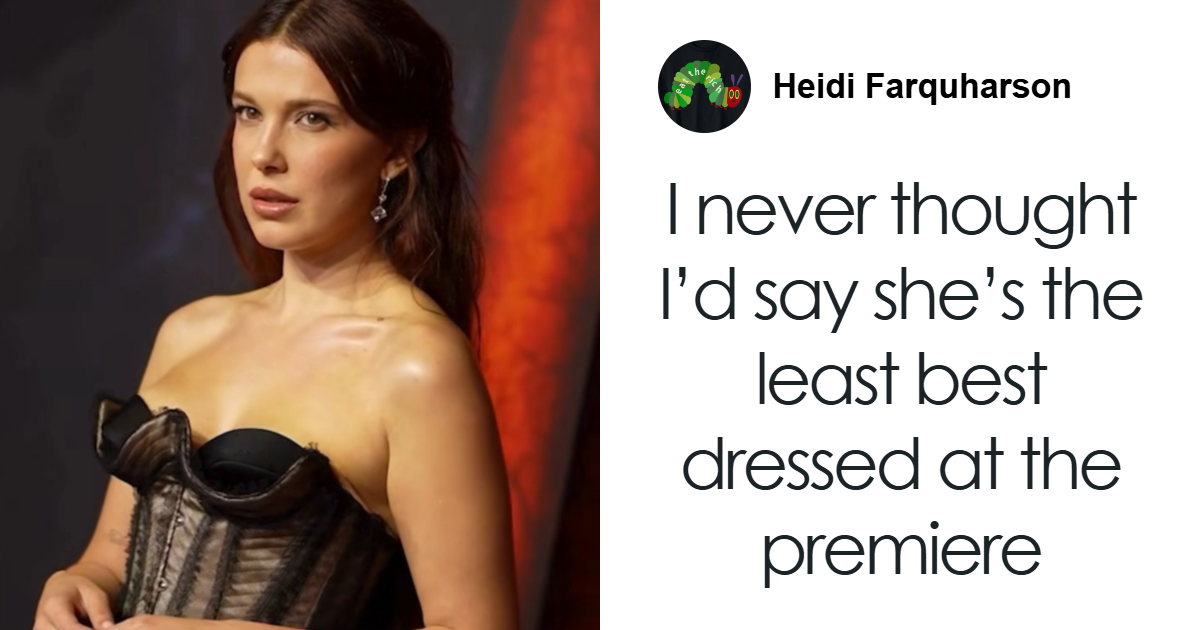
The look at the center of the storm was not a simple slip dress or a casual party outfit. Brown wore a black, lingerie-inspired Ashi Studio couture gown with a structured corset bodice, sheer tulle, sculpted hips, a high-cut draped skirt, and a sweeping train. The ensemble leaned into dark glamour, theatrical fashion, and the boudoir-inspired red-carpet trend that has been seen on plenty of major celebrities. But because this was Millie Bobby Brownan actress many people still emotionally associate with the shaved-head, waffle-loving Eleven from Season 1the reaction became louder, sharper, and more personal.
So why did a fashion choice cause so much fury? The answer is not just about one dress. It is about growing up in public, the impossible standards placed on young women, the internet’s complicated relationship with celebrity adulthood, and the way red-carpet fashion is often judged less like art and more like a moral exam. Let’s unpack the controversy without clutching pearls so hard they turn into powder.
What Happened on the ‘Stranger Things’ Red Carpet?
Millie Bobby Brown attended the London premiere event for the fifth and final season of Stranger Things, marking one of the biggest promotional moments for the Netflix series. Season 5 was already carrying heavy emotional weight for fans because it represented the end of a pop-culture era. Brown, who became globally famous as Eleven when she was still a child, arrived not as the kid audiences first met in 2016 but as a 21-year-old actor, producer, entrepreneur, wife, and new mother.
Her outfit reflected that transformation. The Ashi Studio gown was designed with couture drama in mind: a corseted upper half, sheer black tulle, a sharply shaped silhouette, and a train that made the whole look feel more gothic opera than casual underwear drawer. She paired the gown with sheer tights, sleek heels, minimal jewelry, and polished hair and makeup. The overall effect was bold, adult, theatrical, and intentionally eye-catching.
For fashion watchers, the outfit fit neatly into Brown’s recent style direction. During the final Stranger Things press tour, she embraced darker, more mature, and more architectural looks. These outfits matched the mood of a final season: dramatic, nostalgic, eerie, and a little funereal in the most fashionable way possible. If Stranger Things is saying goodbye, Brown’s wardrobe appeared determined to do it with a smoke machine, a spotlight, and excellent tailoring.
Why People Called It a “Lingerie” Look
The word “lingerie” appeared quickly in online conversations because the gown used several design elements associated with underwear: corsetry, boning, sheer fabric, a high-cut lower half, and a balconette-style structure. In fashion terms, this is not unusual. Lingerie-inspired clothing has been part of high fashion for decades, from slip dresses in the 1990s to corset gowns on modern couture runways. Designers often borrow from intimate apparel to create structure, tension, softness, and drama.
The issue is that the average social media feed does not always pause to separate fashion vocabulary from moral judgment. “Lingerie-inspired” can be a neutral design description. “She wore underwear on the red carpet” is usually meant as criticism. Once photos of Brown’s look circulated, some commenters framed the outfit as inappropriate, too revealing, or attention-seeking. Others argued that the criticism was unfair, especially because similar designs are regularly praised when worn by older stars or by celebrities who did not grow up in front of millions of viewers.
That double standard matters. Brown was not breaking a law of fashion. She was wearing couture. Whether someone personally liked the gown is a matter of taste. But turning a styling opinion into a judgment of her character is where the conversation loses the plot faster than a Hawkins teenager entering the woods alone.
The Real Reason the Reaction Was So Intense
Fans Still See Her as Eleven
One of the biggest reasons the outfit sparked such strong reactions is that many fans have a frozen image of Millie Bobby Brown in their minds. They remember her as a child actor from the early seasons of Stranger Things: vulnerable, mysterious, and young. That emotional attachment can make it uncomfortable for some viewers to accept that she is now an adult making adult style choices.
This is a common problem for former child stars. Audiences feel like they “grew up with” them, which can create a false sense of ownership. Fans may mean well, but they sometimes treat a celebrity’s adulthood like a betrayal of childhood nostalgia. Brown is not obligated to dress like a memory from 2016. She is allowed to evolve, experiment, and occasionally wear a gown that looks like it was designed for a vampire countess attending Paris Couture Week.
The Internet Loves a Fashion Fight
Another reason the controversy grew so quickly is simple: online platforms reward outrage. A measured comment like “The corset construction is interesting, though I might have chosen a different skirt shape” will not travel nearly as far as “Why is she wearing lingerie on a red carpet?” The louder reaction wins the algorithmic talent show.
Red-carpet photos are especially vulnerable to this cycle because they are visual, instantly shareable, and easy to judge in seconds. A single angle can make a gown look more revealing than it appears in motion. A cropped image can remove context. A headline can frame a couture look as scandal before readers even know the designer’s name. By the time nuance arrives, the comment section has already set up camp.
Women in Entertainment Face a No-Win Standard
Brown has already spoken publicly about the intense scrutiny she faces over her appearance. Earlier in 2025, she addressed criticism about her face, body, age, and style, pushing back against the expectation that she should remain visually frozen as the child actor viewers first discovered. That context makes the “lingerie look” backlash feel less like an isolated fashion debate and more like another chapter in a long pattern.
Young women in entertainment are often criticized no matter what they do. If they dress modestly, they may be called boring. If they dress boldly, they may be called desperate. If they experiment with makeup, people speculate. If they change their hair, people panic. If they look young, they are infantilized. If they look grown, they are accused of aging too quickly. It is a rigged game, and the scoreboard is written by strangers with ring lights.
Was the Dress Actually Inappropriate?
That depends on what standard you are using. If the question is, “Was this a traditional, conservative red-carpet gown?” then no. It was daring. If the question is, “Was it a legitimate couture fashion look?” then yes. The outfit came from a high-fashion design language that uses corsetry, tulle, transparency, and sculptural shapes to create drama.
Fashion is not always meant to be universally flattering, safe, or easy to digest. Some red-carpet looks are designed to provoke conversation. Others are meant to reference runway trends, character themes, or personal reinvention. Brown’s gown did all three. It connected to the darker aesthetic of the final Stranger Things season, showed her current adult style identity, and participated in the broader trend of exposed structure and lingerie-inspired eveningwear.
It is perfectly fair to say the styling was not for everyone. Some people may think the proportions were too sharp, the skirt too high-cut, or the overall look too theatrical for a Netflix premiere. Fashion criticism is allowed. But criticism should focus on the garment, styling, and visual conceptnot on shaming the woman wearing it.
The Difference Between Fashion Critique and Body Shaming
A healthy fashion critique sounds like this: “The corset is beautifully constructed, but the skirt shape feels unbalanced from certain angles.” Or: “The dark romantic concept fits the final season, though the sheer elements may divide viewers.” That kind of commentary discusses design choices.
Body shaming sounds very different. It attacks the person instead of the outfit. It questions her motives, her maturity, her morality, or her worth. It turns fabric into a character assassination. Once the conversation shifts from “I don’t love this dress” to “What is wrong with her?” it stops being fashion commentary and starts becoming harassment wearing a very cheap hat.
This distinction is especially important for Brown because she has spent much of her adolescence and adulthood under public inspection. She began acting professionally as a child and became one of Netflix’s most recognizable faces at a young age. The public has watched her grow up, but watching someone grow does not grant permission to police every version of that growth.
How the Look Fits Millie Bobby Brown’s Style Evolution
Millie Bobby Brown’s red-carpet style has changed dramatically over the years, which is exactly what style is supposed to do. Early in her career, her looks were youthful, polished, and often playful. As she entered adulthood, her wardrobe became more experimental: structured gowns, vintage references, darker palettes, stronger silhouettes, and bolder beauty choices.
The Ashi Studio gown fits into this evolution. It was not random shock dressing. It belonged to a press-tour wardrobe that leaned into gothic romance and high-drama glamour. For the final season of a supernatural series built around darkness, monsters, alternate dimensions, and emotional farewells, a black corseted couture gown makes thematic sense. Honestly, if someone showed up to a Stranger Things finale event dressed like they were attending a cheerful spring picnic, that might be the stranger thing.
Brown is also not the only celebrity embracing lingerie-inspired fashion. Corsets, sheer gowns, slip dresses, visible boning, and boudoir styling have become common on red carpets. The difference is that Brown’s history as a child star makes the public reaction more complicated. The dress may be new, but the discomfort belongs partly to viewers who have not updated their mental image of her.
The “Smile” Moment Added Fuel to the Conversation
The red-carpet event also drew attention because Brown reportedly responded to a photographer who told her to smile. Her quick comeback became another viral moment, with some viewers praising her for setting a boundary and others saying red-carpet photographers are simply doing their job. The moment mattered because it fit the broader theme: Brown is no longer willing to be treated as a silent subject for public consumption.
When combined with the dress debate, the “smile” exchange created a larger conversation about celebrity expectations. Are stars required to be endlessly cheerful while strangers shout instructions? Are young women expected to accept every comment about their bodies, faces, and expressions without complaint? Brown’s response suggested that she is not interested in performing comfort for everyone else’s benefit. That may irritate some people, but it also signals a very human boundary.
Why This Controversy Says More About Us Than About the Dress
The fury over Millie Bobby Brown’s “lingerie” look reveals how quickly the internet turns women’s clothing into a public referendum. A gown becomes a debate about age. A hairstyle becomes a debate about identity. A facial expression becomes a debate about gratitude. The actual person at the center of the conversation almost disappears.
There is also a strange contradiction in how audiences treat celebrities. We demand authenticity, then punish change. We say we want stars to grow, then mock them for growing. We celebrate confidence, then call it arrogance when a woman displays too much of it. Brown’s red-carpet look became controversial not because it was the most shocking outfit in fashion history, but because it forced viewers to confront the fact that the girl they remember is now a grown woman with her own taste, body, career, and boundaries.
That does not mean everyone has to love the gown. Fashion would be incredibly dull if every look received polite applause and a participation ribbon. But the best conversations about celebrity style are specific, thoughtful, and aware of context. The worst ones use fashion as an excuse to shame women for existing too visibly.
What Brands, Media, and Fans Can Learn
For fashion brands
Brown’s viral moment proves that a daring red-carpet look still has enormous cultural power. A single gown can dominate entertainment headlines, drive searches for the designer, and position a celebrity within a new style era. But brands also need to understand that bold dressing invites polarized reactions. The stronger the visual statement, the louder the conversation.
For entertainment media
There is a responsibility to cover celebrity fashion without turning every outfit into a moral panic. A headline can analyze, describe, and critique without humiliating the person wearing the clothes. Words like “lingerie-inspired” can be accurate; words that imply shame or scandal can be lazy. The difference matters.
For fans
Fans can dislike a look without becoming cruel. It is possible to say, “This dress is not my favorite,” and then continue living a peaceful life, perhaps drinking water and touching grass. The internet often makes every opinion feel urgent, but not every red-carpet outfit requires a public emergency response.
Experience Notes: What This Red-Carpet Debate Feels Like From the Audience Side
If you have ever opened a celebrity fashion post “just to look at the dress” and then accidentally fallen into 900 comments, you already know how quickly style discourse can turn into a digital food fight. One person sees couture. Another sees underwear. A third person writes a paragraph about society collapsing because a famous woman wore tulle. By the fourth scroll, nobody is talking about tailoring anymore; they are diagnosing strangers through pixels.
The Millie Bobby Brown debate feels familiar because many readers have experienced a smaller version of it in everyday life. Maybe it was a prom dress someone thought was “too much.” Maybe it was a wedding outfit a relative judged before dessert. Maybe it was a work look that made one person say “confident” and another say “attention-seeking.” Clothing is personal, but people often react to it as if it were public property. That is why this red-carpet moment connects beyond celebrity gossip. It touches the uncomfortable truth that women’s style choices are constantly interpreted, ranked, and moralized.
There is also the experience of watching a public figure grow up and realizing our perception is outdated. Many people first saw Brown as a child in Stranger Things. They remember the buzz cut, the hospital gown, the frightened stare, the Eggo waffles. That memory is powerful. But memory is not reality. The actress on the red carpet is not a paused Netflix thumbnail. She is an adult who has lived nearly a decade since that first season changed her life. The discomfort some fans feel may come less from the gown itself and more from the emotional whiplash of time passing.
As entertainment readers, we can also admit that bold red-carpet fashion is part of the fun. We click because we want drama. We want the gown, the pose, the surprise, the “wait, is that couture or a very expensive thundercloud?” moment. The trick is enjoying the spectacle without forgetting the person inside it. A celebrity can wear something daring without inviting cruelty. A viewer can critique a look without acting like the fashion police just issued an arrest warrant.
The best way to approach a controversy like this is with curiosity first. What was the designer referencing? How does the outfit connect to the press tour? Why does this particular celebrity trigger such a strong reaction? What does the response reveal about age, femininity, nostalgia, and fame? Those questions make the conversation smarter. They also keep us from reducing a woman’s public appearance to a single unkind punchline.
In the end, the experience of watching this debate is a reminder that fashion is never only fabric. It is identity, timing, memory, branding, culture, and projection stitched together under flashbulbs. Millie Bobby Brown’s look may not have pleased everyone, but it did what major red-carpet fashion often does: it started a conversation. Whether that conversation becomes thoughtful or toxic is up to the rest of us.
Conclusion
The fury over Millie Bobby Brown’s “lingerie” look on the Stranger Things red carpet was about far more than a corset gown. It was about the way audiences process a child star becoming an adult, the way women’s bodies are judged in public, and the way social media turns fashion into a battlefield. Brown’s Ashi Studio look was daring, theatrical, and divisivebut it was also a clear expression of her current style era.
People are allowed to dislike the gown. Fashion criticism is part of red-carpet culture. But the conversation becomes harmful when it shifts from the outfit to personal attacks. Brown does not owe the public a frozen version of her younger self. She does not need to dress according to a fan’s nostalgia. She can be bold, glamorous, imperfect, experimental, and fully grown.
In other words, the dress had a trainbut the discourse had baggage.