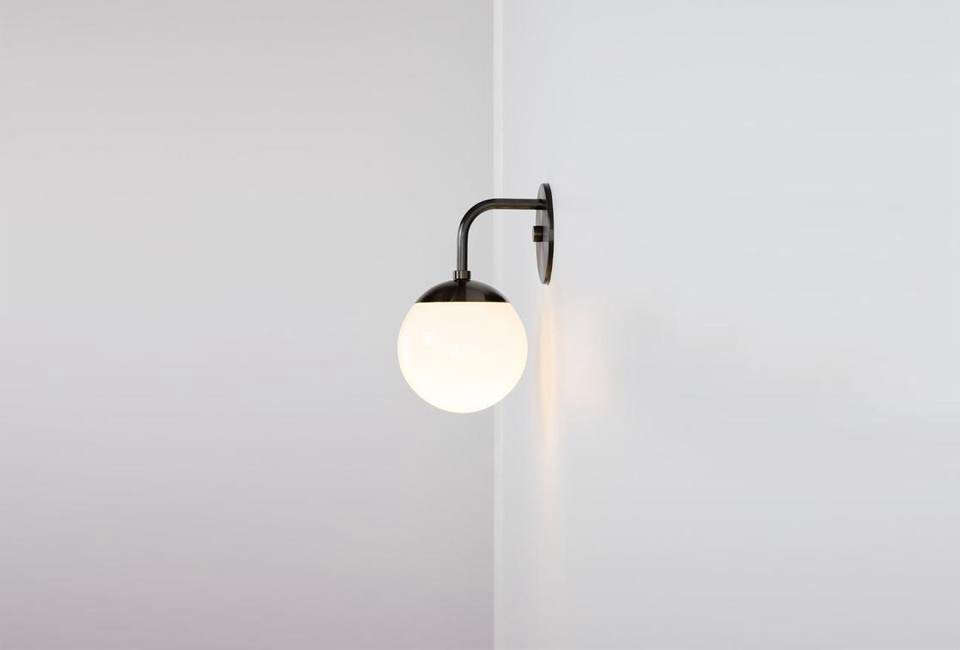
A globe sconce is the lighting equivalent of a perfectly round dinner roll: simple, comforting, and somehow able to make everything around it look better. With its spherical glass shade and wall-mounted design, this fixture blends practical illumination with sculptural charm. It can soften a hallway, dress up a bathroom vanity, frame a bed, or rescue a sad blank wall from looking like it just got ghosted by the decorator.
What makes the globe wall sconce so popular is its balance. It is modern without being cold, vintage without smelling like grandma’s attic, and decorative without screaming for attention like a chandelier with a podcast. Whether finished in brass, matte black, polished nickel, bronze, chrome, or mixed metals, a globe sconce works beautifully in mid-century modern homes, contemporary apartments, transitional interiors, hotel-style bathrooms, and even cozy traditional spaces.
This guide explains what a globe sconce is, where to use it, how to choose the right size, which glass shade works best, what installation details matter, and how to style it like you did not panic-buy lighting at 11:47 p.m. after watching one design video.
What Is a Globe Sconce?
A globe sconce is a wall-mounted light fixture featuring a round or nearly round shade, usually made of glass. The shade may be clear, frosted, opal, milk glass, seeded glass, smoked glass, or ribbed glass. The globe can point upward, downward, outward, or sit centered on a metal arm or backplate.
The “sconce” part simply means the fixture attaches to a wall rather than hanging from the ceiling or sitting on a table. The “globe” part refers to the spherical shade. Together, they create a compact lighting solution that can add ambient light, accent light, or task light depending on placement and bulb choice.
Globe sconces are often associated with mid-century modern design because round glass lighting was a big part of that era’s love for clean geometry. But today, designers use globe wall lights in many styles. A brass opal globe sconce feels warm and vintage. A black globe sconce with clear glass leans industrial. A polished nickel globe bathroom sconce looks crisp and tailored. A double or triple globe sconce over a vanity can feel like a boutique hotel, minus the tiny shampoo bottles.
Why Globe Sconces Are So Popular
They Add Soft, Flattering Light
The round shade helps diffuse light more evenly than many narrow or exposed-bulb fixtures. This is especially true with opal glass, frosted glass, and milk glass. These materials blur the harsh outline of the bulb and create a gentle glow that flatters walls, mirrors, faces, and furniture. In a bathroom, that matters. Nobody wants a vanity light that makes them look like they are being interrogated about missing cookies.
They Save Space
Unlike table lamps, globe wall sconces do not take up surface area. This makes them useful beside beds, near reading chairs, in narrow hallways, beside mirrors, and around compact entryways. Plug-in globe sconces are especially practical for renters or anyone who wants the look of built-in lighting without opening the wall.
They Work With Many Design Styles
The sphere is one of the most forgiving shapes in interior design. It softens straight lines, balances rectangular furniture, and adds movement to rooms dominated by square cabinets, flat walls, and sharp corners. In a minimalist room, a globe sconce becomes a quiet focal point. In a layered room, it acts as a polished supporting character. In a maximalist room, it politely joins the party and does not spill punch on the rug.
Common Types of Globe Sconces
Single Globe Sconce
A single globe sconce has one round shade and is the most versatile option. Use it beside a bed, along a hallway, next to a mirror, above a small console, or as an accent in a reading nook. Single sconces are excellent when you want subtle character without overwhelming the room.
Double Globe Sconce
A double globe sconce includes two glass spheres, usually arranged vertically, horizontally, or on branching arms. This type provides more light and stronger visual impact. It works well in bathrooms, powder rooms, entryways, and dining rooms where one globe might look too shy.
Multi-Light Globe Sconce
Three-light and four-light globe sconces often appear over bathroom vanities or as statement wall lighting. These fixtures can replace a traditional vanity bar while looking more refined. They are especially effective above a wide mirror, where their repeated round forms add rhythm and symmetry.
Plug-In Globe Sconce
A plug-in globe wall sconce connects to a standard outlet and usually includes a visible cord. It is a smart choice for apartments, dorms, guest rooms, home offices, or anyone who does not want to hire an electrician. Some plug-in models have cord covers for a cleaner built-in look.
Hardwired Globe Sconce
A hardwired globe sconce connects directly to the home’s electrical wiring. It looks cleaner because there is no cord, and it can be controlled by a wall switch or dimmer. Hardwired sconces are ideal for permanent installations in bathrooms, hallways, kitchens, and primary bedrooms.
Best Places to Use a Globe Sconce
Bathroom Vanity
The bathroom is one of the best places for globe sconces. A pair of sconces mounted on either side of a mirror gives balanced facial lighting and reduces shadows. This is better than relying only on overhead lighting, which can cast shadows under the eyes, nose, and chin. Great for dramatic movie villains, less great for brushing your teeth.
For bathrooms, always check whether the fixture is rated for damp locations. A damp-rated globe sconce is designed for moisture-prone areas like bathrooms, laundry rooms, and covered outdoor spaces. If the fixture will be exposed directly to rain or water spray, look for a wet-rated model instead.
Bedroom
Globe sconces are perfect beside the bed because they free up nightstand space. Install one on each side for a balanced look, or use a single sconce on a small wall where a table lamp will not fit. Choose warm bulbs and dimmable options to create relaxing evening light. A frosted or opal globe is usually better for bedrooms than clear glass because it reduces glare.
Hallway
A row of globe wall lights can make a hallway feel intentional instead of merely “the place where shoes mysteriously gather.” Sconces add rhythm and help guide movement through the home. For long hallways, space fixtures evenly and consider using smaller globes so the wall does not feel crowded.
Living Room
In a living room, globe sconces can flank artwork, frame a fireplace, highlight built-ins, or add mood lighting near a sofa. They are especially helpful in rooms with limited ceiling lighting. A brass globe sconce can warm up a neutral room, while a black or bronze finish adds graphic contrast.
Dining Room
Dining rooms benefit from layered lighting. A chandelier or pendant may provide the main glow, but wall sconces add depth and atmosphere. Globe sconces look especially elegant on either side of a buffet, mirror, large painting, or architectural niche. Dim them low during dinner and suddenly even takeout looks emotionally expensive.
Entryway
A globe sconce near the front door sets the tone immediately. It says, “Welcome, this home has lighting opinions.” Use one beside a console table, a pair around a mirror, or a larger globe sconce in a small foyer where a ceiling fixture would feel too heavy.
How to Choose the Right Globe Sconce
Consider the Glass Shade
The shade determines both the look and the quality of light. Clear glass feels crisp, modern, and airy, but the bulb is visible, so you need an attractive bulb. Opal glass creates a smooth, diffused glow and is one of the most popular choices. Milk glass has a soft vintage feel and works beautifully with brass, bronze, and nickel. Smoked glass adds drama and mood, especially in modern or industrial spaces. Ribbed or fluted glass adds texture while still keeping the round silhouette.
Choose a Finish That Matches Your Room
Brass globe sconces bring warmth and a classic mid-century feel. Matte black sconces create contrast and pair well with modern, farmhouse, industrial, or transitional spaces. Polished nickel and chrome feel clean and bathroom-friendly. Bronze adds depth and works well in traditional or moody interiors. Mixed-metal designs, such as black with brass accents, offer flexibility when your room already contains several finishes.
Measure the Scale
A globe sconce should feel proportional to the wall, mirror, furniture, and ceiling height. A tiny globe on a large wall can look like a decorative afterthought. A giant globe in a narrow hallway can feel like the wall grew a bubble. For bathroom mirrors, smaller single globes often work well on the sides, while multi-light globe fixtures suit wider vanities. For bedrooms, choose a globe large enough to provide useful light but not so large that it hovers awkwardly over your pillow like a tiny moon with boundaries issues.
Check the Bulb Type
Many globe sconces use standard E26 bulbs, while smaller fixtures may use candelabra-style bulbs. LED bulbs are usually the best choice because they are energy-efficient, long-lasting, and available in many color temperatures. For cozy rooms, choose warm white bulbs around 2700K to 3000K. For bathrooms and task areas, 3000K to 3500K can feel clean without becoming harsh.
Look for Dimming Compatibility
A dimmable globe sconce gives you control over mood and function. Bright light may be helpful for grooming or reading, while low light is better for relaxing, dining, or pretending the laundry pile is not visible. Make sure the fixture, bulb, and dimmer switch are compatible before installation.
Globe Sconce Placement Tips
General Wall Height
For many rooms, wall sconces are installed roughly 60 to 72 inches from the finished floor, measured to the center of the fixture or light source. This range helps keep the light near eye level without creating glare. However, the best height depends on ceiling height, furniture, mirror size, and how the sconce will be used.
Bathroom Mirror Placement
When placing globe sconces beside a bathroom mirror, mount them at about eye level for the main users of the space. A common range is around 60 to 66 inches from the floor to the center of the light. Leave enough room between the mirror edge and the globe so the design feels balanced. If using a multi-light globe fixture above the mirror, center it over the vanity or mirror whenever possible.
Bedside Placement
For bedside globe sconces, think about how you actually use the bed. If you read at night, the light should fall comfortably over your shoulder or onto the page. Many bedside sconces work best slightly above the nightstand and near seated eye level. Swing-arm globe sconces can be useful if you want more control, but fixed globes look cleaner and more sculptural.
Hallway Spacing
In hallways, sconces are often spaced several feet apart depending on wall length and fixture size. The goal is even illumination without creating a runway effect unless your hallway is actively auditioning for fashion week. Keep fixtures high enough to avoid bumps, especially in narrow corridors.
Globe Sconce Materials and Quality Details
A good globe sconce is more than a pretty ball of glass. Look closely at the construction. Solid brass, steel, and high-quality aluminum tend to be more durable than thin, flimsy metals. Glass should sit securely in the fitter or socket assembly. The backplate should cover the electrical box neatly. If the shade is removable, cleaning and bulb changes will be much easier.
In bathrooms and moisture-prone areas, confirm the location rating. In homes with children, pets, or tight walkways, consider how far the fixture projects from the wall. A beautiful globe sconce is less charming when someone clips it with a backpack every morning.
Globe Sconce Style Ideas
Mid-Century Modern
Pair an opal glass globe with aged brass, walnut furniture, tapered legs, and warm neutral walls. This look feels timeless because the simple round shade complements the clean lines of mid-century design.
Modern Minimalist
Choose a matte black or polished chrome globe sconce with a simple backplate. Keep the surrounding decor restrained. The globe becomes the visual punctuation mark: small, round, and quietly confident.
Vintage Bathroom
Use milk glass globes with polished nickel or unlacquered brass. Pair them with a framed mirror, marble countertop, and classic faucet. The result feels elegant without becoming too formal.
Industrial Chic
Try clear glass globes with exposed filament-style LED bulbs and a black or bronze base. This works well with brick, concrete, leather, and reclaimed wood. Just avoid bulbs that are too bright, because clear glass does not hide glare.
Soft Contemporary
Select frosted globes, rounded mirrors, curved furniture, and warm white paint. The globe sconce reinforces the room’s softness and creates a calm, polished atmosphere.
Common Mistakes to Avoid
Choosing Clear Glass Without Thinking About Glare
Clear glass is beautiful, but it exposes the bulb. If the bulb is too bright or unattractive, the whole fixture suffers. Use decorative LED bulbs and lower lumen output when needed.
Ignoring Location Ratings
A globe sconce for a dry hallway may not be suitable for a steamy bathroom or covered patio. Check whether the fixture is dry-rated, damp-rated, or wet-rated before buying.
Installing the Fixture Too High
Too-high sconces can cast strange shadows and make the room feel off-balance. Globe sconces are usually most flattering around eye level, especially near mirrors and beds.
Using the Wrong Bulb Color
Cool, bluish light can make warm interiors feel sterile. Very yellow bulbs can make white bathrooms look dingy. Warm white is usually safe for bedrooms and living rooms, while soft neutral white often works better for bathrooms and task zones.
Forgetting About Cleaning
Round glass collects dust. Frosted and opal globes can show fingerprints. Choose a fixture that allows easy shade removal, and clean the glass regularly with a soft cloth. Your sconce should glow, not look like it has been lightly breaded.
Buying Checklist for a Globe Sconce
Before purchasing, check the fixture dimensions, projection from the wall, shade diameter, finish, bulb base, maximum wattage, LED compatibility, dimming compatibility, installation type, location rating, and return policy. Also review whether the shade is replaceable. Glass is lovely, but gravity has a long and successful career.
If buying online, compare product photos in different rooms and read specifications carefully. A globe that looks small in a styled photo may be much larger in real life. Tape the dimensions on your wall with painter’s tape before ordering. It is not glamorous, but neither is returning three wall lights while muttering at cardboard.
Real-Life Experiences With Globe Sconces
One of the best things about a globe sconce is how quickly it changes the feeling of a room. In many homes, lighting is treated like an afterthought. People paint the walls, choose furniture, hang art, and then live for years under a single overhead light that makes the living room feel like a waiting area at a dentist’s office. Adding globe sconces can instantly create depth, warmth, and intention.
In a small bedroom, a pair of plug-in globe sconces can be a practical upgrade. Nightstands suddenly have room for books, water glasses, phone chargers, and the mysterious collection of receipts nobody admits to keeping. With warm LED bulbs and opal glass shades, the light feels soft enough for winding down but bright enough for reading. The round shape also breaks up the rectangles of the bed, headboard, pillows, windows, and artwork.
In bathrooms, globe sconces often solve a common problem: unflattering shadows. A single ceiling light may technically illuminate the room, but it does not always help when shaving, applying makeup, styling hair, or checking whether that tiny speck is toothpaste or existential despair. Side-mounted globe sconces at mirror height provide more even light across the face. Frosted or milk glass shades are especially forgiving because they diffuse brightness instead of blasting it directly forward.
Hallways are another place where globe sconces shine, both literally and emotionally. A plain hallway can feel like wasted space, but a few well-placed sconces make it feel designed. In older homes, brass globe sconces can highlight trim, arches, or vintage doors. In newer homes, matte black or nickel fixtures can add architectural character where there is not much detail. The result is subtle, but guests notice. They may not say, “Excellent sconce spacing,” but they will feel the difference.
There is also a surprisingly personal side to choosing globe sconces. Clear glass may appeal to someone who likes visible bulbs and a crisp modern edge. Opal glass may suit someone who wants calm, gentle light. Brass may feel warm and nostalgic, while black feels bold and graphic. In other words, a globe sconce is not just a lighting fixture; it is a tiny design confession mounted on the wall.
The most satisfying installations usually happen when the fixture matches the room’s purpose. A dimmable globe sconce in a dining room can create a dinner-party mood even when dinner is frozen pizza. A bedside globe light can make a rental bedroom feel custom. A bathroom globe vanity light can make the morning routine less aggressive. A hallway sconce can turn a pass-through space into a moment.
Of course, globe sconces are not magic. They will not fold laundry, fix a bad floor plan, or stop anyone from buying too many throw pillows. But they do something almost as useful: they make everyday spaces feel considered. They add glow where there was glare, shape where there was flatness, and charm where there was a blank wall quietly begging for help.
Conclusion: Is a Globe Sconce Worth It?
A globe sconce is worth considering if you want lighting that is useful, stylish, and flexible. Its rounded glass shade brings softness to modern rooms, warmth to bathrooms, polish to bedrooms, and character to hallways. It can be subtle or dramatic, vintage or contemporary, budget-friendly or luxury. That versatility is exactly why globe wall sconces continue to appear in designer homes, retail collections, boutique hotels, and everyday renovations.
The key is choosing the right shade, finish, scale, bulb, and placement. Use opal or frosted glass for soft diffusion, clear glass for a crisp decorative look, brass for warmth, black for contrast, and damp-rated fixtures where moisture is present. Install them thoughtfully, dim them when possible, and let them do what great lighting does best: make the room look better while pretending it was effortless all along.
SEO Tags
Note: This article was written in original American English and synthesized from reputable U.S. lighting, home design, retailer, and safety guidance for publication-ready use.