Some designers leave behind a style. Hans J. Wegner left behind a posture. Sit in one of his chairs and you understand the assignment immediately: relax your shoulders, trust the joinery, and stop pretending a dining chair has to feel like a polite punishment. Wegner’s genius was not that he made furniture look clever. It was that he made it feel inevitable. His chairs seem less “invented” than discovered, as if the wood had been patiently waiting for someone to remove everything unnecessary and let the form breathe.
That is why Wegner still matters in every conversation about chair design, Danish modern furniture, and midcentury modern interiors. He worked in a design language that feels calm without being dull, sculptural without being showy, and functional without becoming cold. He understood something many brands still struggle to learn: people do not want to admire a chair from across the room forever. Eventually, they want to sit down, lean back, cross a leg, linger over coffee, and discover whether beauty has any manners. Wegner’s furniture almost always does.
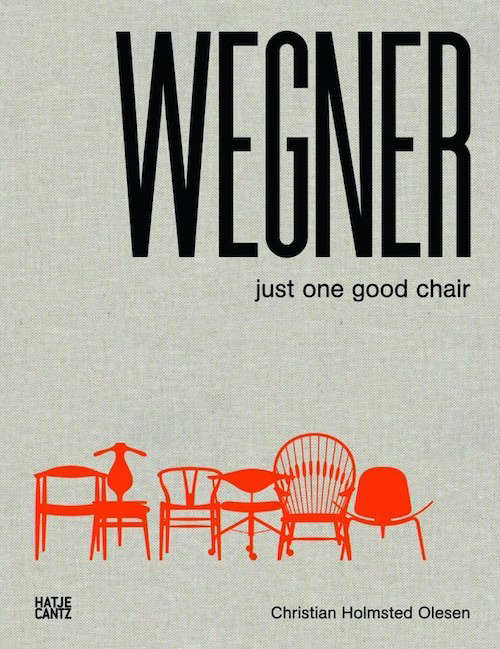
The title Just One Good Chair gets at the delightful paradox of his career. Wegner spent a lifetime proving that one good chair is never just one good chair. It becomes a new question, a new angle, a new experiment in comfort, proportion, balance, and material honesty. A curved back becomes more refined. A seat becomes lighter. A joint becomes quieter. A silhouette learns to whisper instead of shout. And before long, you have not one good chair, but a whole forest of them.
The Cabinetmaker’s Eye
Before Wegner became a design icon, he learned to respect the stubborn, glorious reality of materials. That background matters. Plenty of furniture can be sketched by someone who has never had to wrestle a piece of wood into submission. Wegner was different. He brought a cabinetmaker’s discipline to modern design, which meant he did not treat structure as an afterthought or craftsmanship as decorative frosting. For him, the logic of construction was part of the beauty.
That helps explain why so many Hans J. Wegner chairs feel resolved from every angle. The curve of an armrest is not only graceful; it also guides the body. The joinery is not just technically impressive; it contributes to the chair’s visual calm. Even the negative space matters. Wegner understood that the empty space around a chair is part of the design, too. His work never clutters a room. It clears one.
He also stood at a fascinating intersection in 20th-century design history. On one side was traditional craftsmanship and woodworking discipline. On the other was modernism’s push toward simplification, utility, and new forms of living. Wegner did not choose one camp and sneer at the other. He fused them. That is why his furniture can feel both ancient and modern at once. A Wegner chair often carries the memory of historical forms, but it arrives stripped of costume drama. No powdered wig required. No tiny throne energy. Just elegant problem-solving.
Why Wegner Kept Coming Back to the Chair
A chair is the hardest working object in the room
Tables can coast on flat surfaces. Cabinets get to hide their secrets behind doors. Chairs have no such luxury. A chair must support the body, survive daily abuse, look good from all sides, and hold its own in a room full of louder personalities. It is structure, sculpture, ergonomics, and social theater all at once. Wegner seemed to understand that the chair is where design theory stops talking and starts sweating.
That may be why he returned to the form again and again. Not because he lacked imagination, but because the chair gave him infinite chances to refine it. In his hands, the chair became a laboratory for human-centered design. Some pieces leaned into warmth and handcraft. Others explored ergonomics more directly. Some were feather-light in spirit. Others were broad, embracing, and almost architectural. Yet the through-line remained consistent: respect the sitter, respect the material, and never pretend ornament can save bad proportions.
His designs make comfort look intelligent
Wegner’s great trick was making comfort look elegant without advertising it like a mattress commercial. He did not design furniture that screamed, “Look! Padding!” Instead, he shaped wood, rope, cane, and upholstery so the body would understand the chair almost intuitively. The back met the spine where it should. The arms invited rest without trapping the sitter. The seat offered support without fuss. In many cases, you can tell whether a Wegner chair will be comfortable simply by looking at it, which is a rarer skill than the furniture industry would like to admit.
The Chairs That Made the Legend
The Wishbone Chair: the graceful overachiever
If one Wegner design has become shorthand for Scandinavian furniture in American interiors, it is the Wishbone Chair. It is easy to see why. The silhouette is spare but warm. The Y-shaped back gives the design its nickname and visual identity. The woven seat adds texture and craft. The overall effect is light, airy, and confident. It looks equally at home around a rustic wood table, inside a sleek minimalist dining room, or in that one magazine-worthy breakfast nook where everyone pretends they always eat grapefruit in perfect sunlight.
Part of the chair’s lasting appeal is that it solves multiple problems at once. It reads as sculptural, but not fussy. It feels handcrafted, but not precious. It is deeply associated with Danish modern design, yet its roots stretch back further, drawing inspiration from historical Chinese seating forms. That blend of reference and reduction is pure Wegner. He did not copy the past; he translated it.
The Wishbone Chair also shows his commitment to visual lightness. Many dining chairs either disappear entirely or dominate the table like uninvited dinner guests. This one does neither. It contributes shape and character while letting the room breathe. That balance is harder to achieve than it looks. Plenty of chairs want to be iconic. The Wishbone simply sits there being right.
“The Chair”: when good design met American television
Then there is The Chair, the piece that helped turn Wegner from a celebrated designer into a figure of broader cultural memory. Americans especially remember it because John F. Kennedy and Richard Nixon sat in Wegner armchairs during the first nationally televised U.S. presidential debate in 1960. It was an extraordinary moment for a piece of furniture: not merely present in history, but participating in the image of it. Most chairs would be thrilled just to survive Thanksgiving. This one landed in political mythology.
But the fame stuck because the design deserved it. The Chair feels like a masterclass in restraint and confidence. The curves are gentle, the construction is clear, and the chair radiates authority without heaviness. It is not a pompous power chair. It is a smart chair. The kind of chair that suggests the person sitting in it might actually finish a sentence worth hearing.
Wegner’s use of wood and cane in this design also captures what made him special: he could create real presence without visual bulk. Many formal chairs rely on mass to signal importance. Wegner relied on proportion, joinery, and line. That choice still feels modern because it values intelligence over intimidation.
Beyond the headline acts
Wegner’s legacy, of course, is larger than the Wishbone and The Chair. The Chinese Chair series reveals his fascination with historical forms and cultural translation. The Shell Chair shows how daring he could be when pushing sculptural modernism. The Flag Halyard Chair proves he was not married to wood as a single-note identity; he could use steel, rope, and sheepskin to create something futuristic and oddly inviting. The Swivel Chair, meanwhile, demonstrates his interest in ergonomics and mobility, bringing industrial materials into conversation with the warmth of handcrafted wood.
That range matters. It keeps Wegner from being flattened into a one-chair legend, which would be ironic for someone whose entire career was a long argument against easy categorization. He was not simply “the Wishbone guy.” He was a relentless editor of form, a student of how people sit, and a designer who could move from dining chair to lounge chair to office seating without losing his voice.
Why Wegner Still Feels So Current
He designed for longevity, not trends
One reason Hans J. Wegner remains central to conversations about timeless furniture is that his work rarely depends on trends for survival. He did not chase novelty through gimmicks, weird proportions, or decorative noise. His pieces tend to age well because they are grounded in durable principles: comfort, clarity, proportion, craftsmanship, and honest materials. That sounds simple until you look around at how much furniture is currently trying way too hard.
Today’s design world talks constantly about sustainability, longevity, and buying fewer, better things. Wegner’s work feels especially relevant in that context. He designed objects that reward long use. They wear in, not out. They acquire patina rather than obsolescence. In an age of fast furniture and algorithm-approved sameness, a Wegner chair feels almost radical in its patience.
He understood that minimalism needs warmth
Minimalism can go wrong fast. Remove too much and a room starts to feel less serene than emotionally unavailable. Wegner understood the antidote: texture, tactility, and human scale. His chairs are lean, but not sterile. They often feature woven seats, visible grain, softened edges, and forms that engage the body with generosity. That is why they continue to work in homes that are traditional, contemporary, eclectic, or somewhere in the wonderfully messy middle.
Designers still return to his work because it solves a very modern problem: how to make a room feel clean without making it feel cold. Wegner’s answer was never to add clutter. It was to make every line matter more.
What “One Good Chair” Really Means
At first glance, the phrase sounds modest. Almost humble. But in Wegner’s world, “one good chair” is an impossibly high bar. It means solving for beauty, comfort, material logic, craftsmanship, and daily life all at once. It means designing something that can live in a museum and at a dinner table without seeming confused about either role. It means creating an object that a collector can obsess over and a child can casually climb into. Not many designers clear that bar even once.
Wegner cleared it repeatedly. That is his legacy. Not just iconic chairs, but a design ethic. He showed that great furniture does not need to bully the eye to earn attention. It can be calm. It can be generous. It can be quietly exacting. It can make the room better and the body happier at the same time. That is not flashy genius. It is the harder kind.
And maybe that is why Hans J. Wegner still feels fresh. His furniture does not ask us to admire a designer’s ego. It asks us to notice the relationship between body, material, and space. That relationship never goes out of style. Sit down in a Wegner chair and the lesson arrives before the words do.
Experience the Idea: Living With Wegner for a While
Spend real time around Hans J. Wegner’s work and something funny happens: you stop thinking of the chairs as famous objects and start thinking of them as unusually well-behaved companions. In photos, a Wegner chair can look almost too perfect, like it belongs to the sort of person who alphabetizes their spice jars and says things like “we summer in light oak.” In everyday life, though, the chairs feel friendlier than that. They do not posture. They participate.
Imagine walking into a dining room with a set of Wishbone Chairs in soft natural wood. At first, what you notice is the line: that elegant back, the open frame, the woven seat that adds just enough texture to keep the room from floating away into minimalism. Then breakfast happens. Someone drags a chair out with one hand. A kid hooks a foot on the stretcher. Coffee lands on the table. The room becomes real. And the chairs still look right. That may be Wegner’s most underrated talent: his work keeps its dignity without demanding precious treatment. It is refined, but not fragile in spirit.
The experience changes again with one of his lounge chairs. A Shell Chair, for example, does not merely offer a seat; it stages a small event. You lower yourself into it and suddenly understand why people describe furniture in emotional terms. The chair feels springy, open, and slightly theatrical, as if it knows it has good angles and is trying not to brag. A Flag Halyard Chair creates the opposite mood: it practically tells you to cancel your plans, grab a book, and commit to horizontal ambition. It is less “sit properly” and more “let the afternoon happen.”
What stands out most over time is how Wegner handled the body. So much furniture either underestimates the human form or treats it like a problem to be controlled. Wegner’s chairs feel as though they were designed by someone who had actually met a spine. Your shoulders settle. Your elbows find a home. Your back feels invited instead of disciplined. Even when the form is visually crisp, the physical experience is generous.
There is also a quiet pleasure in noticing the craftsmanship up close. The joinery, the transitions between curves, the way light catches the grain, the woven seat that looks simple until you remember a human being had to make itthese details reward attention without begging for it. You do not need a lecture to appreciate them. You just live with the piece, and the appreciation sneaks up on you. That is rare. Many “statement” chairs reveal everything in the first ten seconds and then spend the next ten years repeating themselves.
Wegner’s designs do the opposite. They deepen with familiarity. A chair that looked merely elegant on day one starts to reveal its logic on day thirty. You notice why the back is shaped that way, why the proportions feel calm, why the room seems more balanced with that particular silhouette in it. The chair does not become louder over time; it becomes smarter. That is a lovely experience to have with any object in a home.
And perhaps that is the most human thing about Hans J. Wegner’s work. His chairs do not just photograph well, though they certainly do that. They support ordinary rituals: breakfast, reading, conversation, a jacket tossed over a backrest, a long dinner that runs late, a five-minute sit that somehow becomes an hour. They prove that great design lives not only in museums or auction catalogs, but in repeated daily use. With Wegner, the experience is never just about seeing a beautiful chair. It is about realizing that beauty, comfort, and usefulness do not have to compete. In the best rooms, and in the best lives, they work together.
Conclusion
Hans J. Wegner did not become one of the defining names in furniture design because he chased spectacle. He became essential because he made chairs that still answer the same basic question better than most furniture on the market today: how should a person sit, and how should a chair earn its place in a room? His answer was brilliantly consistent. Use honest materials. Respect craftsmanship. Refine until the form looks effortless. And never forget that a chair is not finished until a human body proves the design right.
That philosophy is why Wegner still anchors conversations about Scandinavian furniture, Danish modern design, and timeless midcentury modern chairs. The Wishbone Chair remains a benchmark. The Chair remains a cultural icon. His broader catalog remains a lesson in how to make furniture feel both humane and exacting. In a world full of disposable trends and furniture that peaks in the showroom, Wegner’s work still offers something richer: design with staying power, grace, and a very good seat.