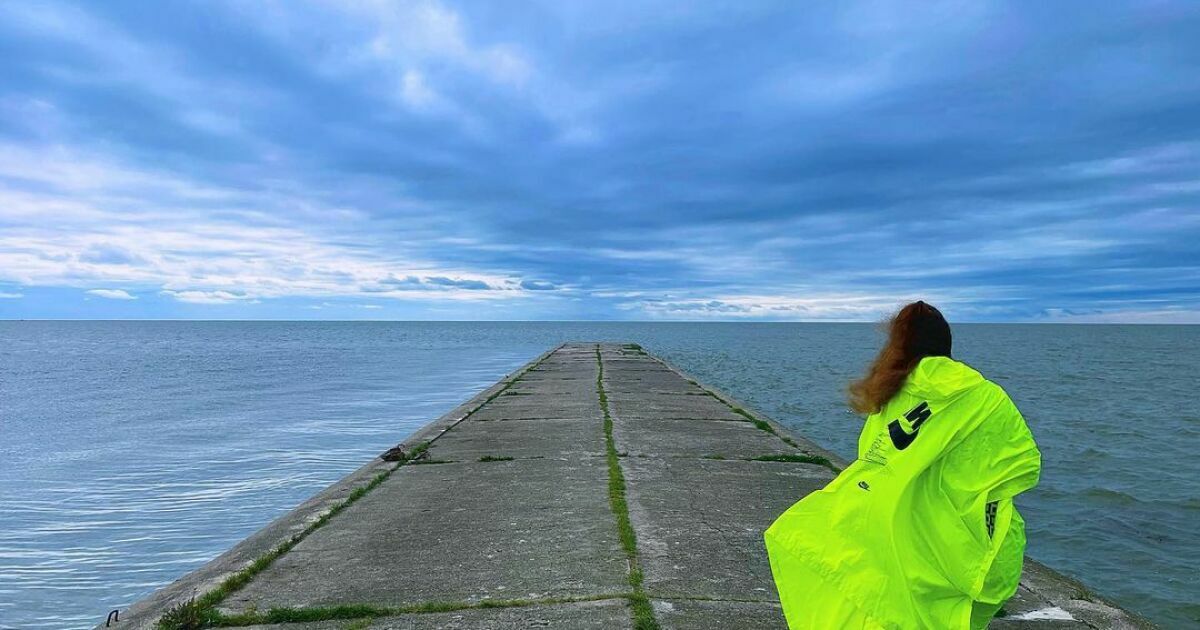
Every traveler has that one photo. You know the one. It is not always the sharpest, most technically perfect, most “please hire me, National Geographic” masterpiece. Sometimes it is a crooked snapshot of a train station at 6:12 a.m., a blurry street dog who clearly owns the neighborhood, or a sunset so dramatic it looks like the sky accidentally opened a premium editing app.
That is the magic behind the question: “Hey Pandas, share your favorite photo you’ve taken while traveling.” It is not just about showing off a beautiful destination. It is about sharing a tiny, frozen piece of a journey: the smell of street food, the sound of waves, the panic of realizing your camera battery is at 3%, and the strange joy of getting lost but pretending it was “spontaneous exploration.”
Travel photography has become one of the most personal ways people document the world. Whether captured on a DSLR, mirrorless camera, compact camera, or smartphone, a favorite travel photo can say, “I was here,” but it can also say, “This place changed me a little.” And yes, sometimes it says, “I climbed 400 stairs for this view and now my calves are filing a complaint.”
Why Favorite Travel Photos Matter More Than Perfect Ones
The best travel photos are not always postcard-perfect. In fact, the most meaningful travel pictures often have a story hiding behind them. A photo of the Eiffel Tower at golden hour is lovely, but a photo of your friend laughing because a pigeon tried to steal their croissant? That is cinema. That is drama. That is France with feathers.
A favorite travel photo usually matters because it holds emotion. It might remind you of a quiet morning in Kyoto, a chaotic market in Mexico City, a foggy hike in the Pacific Northwest, or a family road trip where everyone swore they were “fine” but secretly wanted snacks. These images become memory anchors. They help us return to a place long after the suitcase is unpacked and the laundry pile has achieved architectural significance.
Researchers have found that taking photos can increase attention to visual details during an experience. That makes sense. When you are looking for a photo, you are also looking more carefully at light, faces, colors, and small moments. You notice the old woman arranging oranges at a fruit stand. You notice the reflection of neon signs in rainwater. You notice that your travel partner has been wearing the same “lucky” hat for five days and nobody has had the courage to discuss it.
What Makes a Travel Photo Worth Sharing?
A travel photo worth sharing does not need to be expensive, exotic, or taken from a helicopter. Please do not rent a helicopter just to impress strangers on the internet unless you also plan to invite us. The most shareable travel photos usually include one or more of these ingredients: story, atmosphere, perspective, timing, and personality.
1. A Strong Sense of Place
A great travel photo makes viewers feel like they have stepped into the scene. It gives them clues: architecture, landscape, weather, food, clothing, signs, colors, or local details. A photo of a red tram curving through Lisbon, a desert road in Arizona, or a fisherman mending nets in Maine instantly tells us where we are, even before the caption joins the party.
2. Light That Does the Heavy Lifting
Light is the unpaid intern of photography: it does most of the work and rarely gets enough credit. Early morning and late afternoon often create soft shadows, warm colors, and depth. Midday light can be harsh, but it can also work beautifully for bold architecture, beach scenes, and high-contrast street photos. Night photography brings its own personality, from glowing city signs to lantern-lit alleys.
3. A Human Moment
People bring scale, emotion, and context. A lone hiker standing beneath a giant cliff tells us how massive the landscape is. A vendor smiling in a night market gives warmth to a busy street scene. A child chasing bubbles in a plaza can turn an ordinary square into a tiny festival. When photographing strangers, be respectful. Ask permission when appropriate, especially for close portraits or culturally sensitive situations.
4. A Detail Others Might Miss
Not every favorite travel photo has to be a sweeping view. Sometimes the winning shot is a door handle, a coffee cup, a handwritten menu, a row of shoes outside a temple, or raindrops on a bus window. Details are powerful because they feel intimate. They are the travel equivalent of whispering, “I noticed this little thing, and it mattered.”
Popular Types of Favorite Travel Photos
When people share their favorite travel photos online, certain themes appear again and again. They are popular because they connect instantly with viewers and invite stories.
Landscape Photos That Make Everyone Quiet for a Second
Mountains, beaches, forests, deserts, waterfalls, canyons, and national parks are classic travel-photo subjects for a reason. Nature has range. One minute it is peaceful and poetic; the next minute it is throwing wind at your tripod like it has personal issues. A strong landscape photo often needs foreground, middle ground, and background to create depth. Rocks, flowers, trails, fences, or waves can lead the viewer’s eye into the image.
Street Photography With a Pulse
Street travel photos capture daily life: commuters, markets, cafés, musicians, taxis, bicycles, shop windows, and unexpected humor. The trick is patience. Instead of snapping randomly, find an interesting background and wait for the right person, gesture, or movement to complete the scene. Travel rewards the patient photographer. It also rewards the person who remembered to wear comfortable shoes.
Food Photos That Deserve Their Own Passport
Food is one of the best parts of travel, and photographing it is basically a public service. A favorite food photo might show steaming ramen in Tokyo, barbecue in Texas, lobster rolls in Maine, tacos in Los Angeles, or beignets in New Orleans wearing a snowfall of powdered sugar. Natural window light helps. So does shooting before everyone attacks the plate like a tiny delicious emergency.
Wildlife Photos Taken the Right Way
Wildlife photography can be unforgettable, but it must be ethical. Keep a safe distance, follow local rules, never feed animals, and use a zoom lens instead of moving closer. If you are close enough to take a selfie with wildlife, you are not a brave explorer; you are a future cautionary sign. Respecting animals protects them, protects you, and protects everyone else who would prefer not to read about your bison incident on the news.
Travel Self-Portraits That Actually Say Something
A travel selfie can be more than “here is my face blocking 80% of a monument.” Good self-portraits show relationship to place. Try stepping back, using a timer, including movement, or capturing a candid moment instead of the standard arm-stretch angle. A silhouette on a bridge, a reflection in a train window, or a small figure walking through a grand landscape can feel personal without turning the whole photo into a face parade.
How to Take a Travel Photo You Will Still Love Years Later
The goal is not to take a photo that wins the internet for 12 minutes. The goal is to take an image that still gives you a little emotional kick years later. Here is how to increase your odds.
Slow Down Before You Shoot
Before taking a photo, pause. Look around the frame. What is the subject? What is distracting? Is the horizon straight, or does the ocean look like it is sliding off the planet? Small adjustments can make a huge difference. Move left or right. Crouch. Step back. Wait for a person to enter or leave the frame. Your knees may object, but your photo will thank you.
Use Composition Without Becoming a Robot
The rule of thirds, leading lines, framing, symmetry, layers, and negative space are useful tools. They help organize a scene so viewers know where to look. But rules are not handcuffs. If the photo feels stronger with the subject centered, center it. If the chaos of a street scene tells the story, let it breathe. Composition should support emotion, not bully it.
Pack Light Enough to Enjoy the Trip
Travel photography gear can become a trap. One camera, one versatile lens, extra batteries, memory cards, a cleaning cloth, and a small tripod or phone tripod can be enough for many travelers. Smartphones are also incredibly capable, especially when paired with good light and thoughtful framing. Remember: the best camera is the one you actually bring, not the one sitting at home because it required its own emotional-support suitcase.
Edit Gently
Editing should make the photo feel closer to what you experienced, not transform a quiet mountain morning into a radioactive candy storm. Adjust exposure, contrast, shadows, highlights, crop, and color with intention. A light touch usually ages better than heavy filters. The goal is not to prove you own every slider in the app.
How to Share Your Favorite Travel Photo Like a Storyteller
If you are answering the prompt “Hey Pandas, share your favorite photo you’ve taken while traveling,” do not just upload the image and vanish into the digital bushes. Add a caption that gives people a reason to care.
A strong caption can include where the photo was taken, what was happening, why the moment mattered, and one small detail that brings the scene to life. For example: “I took this photo at sunrise in Sedona after waking up at 4:30 a.m. and questioning every life choice. Ten minutes later the rocks turned bright orange, and everyone on the trail went completely silent.” That is much better than “Nice view.” Although, to be fair, sometimes it really is a nice view.
You can also share the imperfect truth. Maybe the photo was taken after you missed a bus. Maybe the weather ruined your original plan. Maybe you found the best shot behind the hotel, not at the famous landmark. Travel stories become more interesting when they include surprise, failure, humor, or a tiny bit of chaos. Perfect trips are suspicious. Memorable trips usually have at least one plot twist.
Responsible Travel Photography: Get the Shot Without Being That Tourist
Travel photography comes with responsibility. A beautiful photo is not worth damaging a fragile landscape, disrespecting local communities, disturbing wildlife, or blocking a narrow street while you conduct a 47-minute scarf-twirling photoshoot. Be aware of your surroundings. Follow signs. Stay on trails. Respect sacred places. Support local businesses when possible. Ask before photographing people in personal or private moments.
Responsible photography also means telling the truth with dignity. Avoid turning poverty, grief, or cultural differences into visual souvenirs. If a scene involves real people, remember that they are not props. A respectful travel photographer is curious, patient, and humble. They understand that the world does not exist merely to decorate their camera roll.
Specific Travel Photo Ideas to Inspire Your Next Trip
If you want to create a favorite travel photo on your next adventure, try building a mini shot list. Not a rigid checklistthis is travel, not a tax auditbut a loose guide to help you notice more.
Photograph your first view from the hotel window. Capture the local breakfast before the fork lands. Take a photo of public transportation, because buses and trains reveal the rhythm of a place. Look for signs in different languages, old storefronts, handmade crafts, street musicians, shadows on walls, reflections in puddles, and quiet moments between famous attractions. Photograph your travel companions when they are not posing. Those are often the photos they will love most later, even if they complain at first.
Try taking one “postcard photo,” one “detail photo,” one “human moment,” one “funny travel fail,” and one “quiet memory” each day. By the end of the trip, you will have more than pretty images. You will have a visual diary with personality.
Why Online Communities Love Travel Photo Prompts
Prompts like “share your favorite travel photo” work because they invite everyone in. You do not need to be a professional. You do not need a luxury safari, a drone, or a lens longer than your forearm. You only need a moment you cared enough to keep.
Online communities thrive on shared experience. One person posts a misty mountain photo, another shares a neon-lit street in Las Vegas, someone else uploads a picture of a cat sleeping on a motorcycle in Greece, and suddenly strangers are swapping memories. Travel photos become conversation starters. They remind people of places they have been, places they hope to see, and places they did not know existed five minutes ago.
They also prove that travel is personal. Two people can visit the same city and come home with completely different favorite photos. One captures the skyline. Another photographs an old bookstore. Another remembers the bakery where the cashier taught them how to pronounce a pastry and everyone involved survived the attempt. That variety is the point.
Travel Photo Experiences Worth Sharing
Some of the best travel-photo experiences happen when the plan falls apart. Imagine arriving at a famous overlook expecting a glowing sunset, only to find fog so thick it looks like the mountain has been wrapped in a hotel towel. At first, it feels disappointing. Then a lone figure in a red raincoat walks into the frame, the fog parts for two seconds, and suddenly you have a moody, cinematic image that looks far more interesting than the standard sunset everyone else came to shoot.
Or think about a road trip through the American Southwest. The big destination might be the canyon, the national park, or the famous scenic drive. But your favorite photo could end up being a gas station at dusk, with pink clouds reflected in the windshield and a dusty dog sitting near the ice machine like the mayor of the entire desert. That photo works because it feels specific. It has place, color, humor, and a tiny story. It is not trying too hard, which is often why it succeeds.
Another classic experience is the early-morning photo walk. You wake before the city fully opens. Delivery trucks hum. Cafés stack chairs outside. The streets are not empty, exactly, but they are softer. In cities like New York, San Francisco, Chicago, Savannah, or New Orleans, morning light can turn ordinary corners into little film sets. A person crossing through steam from a manhole, a bakery window glowing before sunrise, or a bicycle leaning against a brick wall can become the image that defines the whole trip.
Then there are the photos that are technically imperfect but emotionally perfect. A blurry image of your family laughing in a rental car. A tilted shot of fireworks over a beach. A grainy phone photo from a night market where the food was incredible and nobody remembers what it was called. These images may not win awards, but they win something better: they bring the moment back. They remind you who you were with, what you felt, and why the trip mattered.
One underrated travel-photo experience is photographing the journey itself. Airports, train platforms, ferry decks, roadside diners, motel signs, luggage carts, and maps spread across a café table all tell the travel story before and after the destination. A favorite photo does not have to show the most famous place. It can show anticipation, movement, fatigue, curiosity, or relief. Sometimes the picture that says “we made it” is more powerful than the picture that says “look where we went.”
The best advice is simple: stay awake to the trip. Notice the big views, yes, but also the tiny scenes happening at the edges. Take the photo when your heart gives a little nudge. Share it with context. Tell us why it stayed with you. Because somewhere out there, another Panda may see your favorite travel photo and think, “I want to go there,” or even better, “I remember feeling exactly that.”
Conclusion
A favorite travel photo is more than an image; it is a personal souvenir, a story starter, and a time machine with pixels. Whether it shows a dramatic landscape, a quiet street, a plate of unforgettable food, a wild animal photographed safely, or your best friend laughing at a travel disaster, the value comes from meaning. Technical skill helps, but emotion is what makes people stop scrolling.
So, hey Pandas: share the photo that still makes you smile. Share the one with the wild weather, the strange timing, the perfect light, or the ridiculous backstory. The world is huge, but a single travel photo can make it feel wonderfully close.