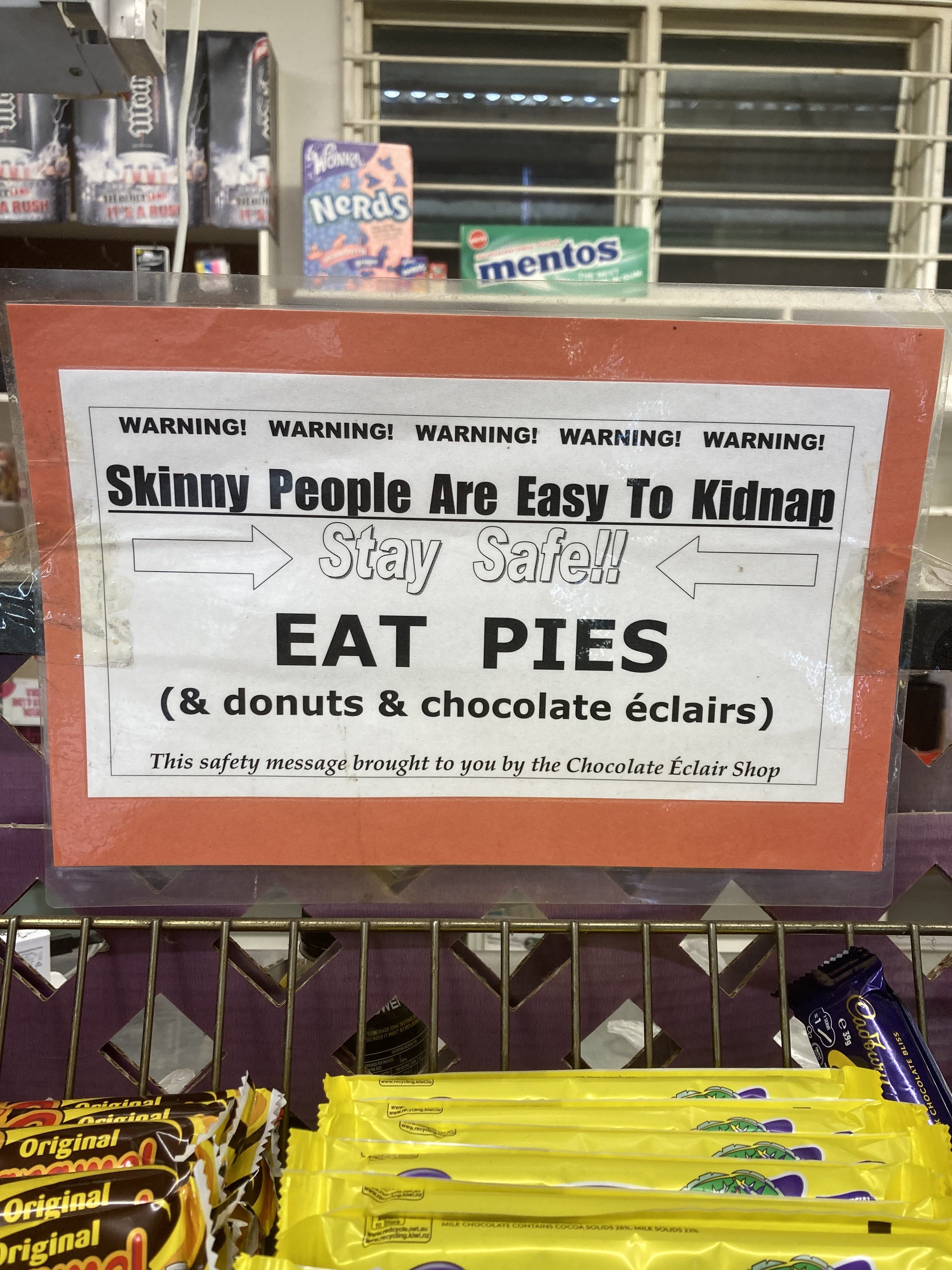
Some jokes are written by comedians. Others are accidentally installed on a fence, taped to a laundromat dryer, or printed on a restaurant chalkboard by someone who has clearly had enough of customers asking where the bathroom is. That is the magic behind funny signs: they sneak up on you in everyday life, usually when you are not emotionally prepared to laugh at a “Wet Floor” warning that sounds like it needs therapy.
The internet has turned these little public punchlines into a full-blown comedy genre. From hilarious road signs and church marquees to sarcastic shop notices, questionable warning labels, and handwritten notes left by exhausted neighbors, funny signs have become the people’s newspaper of chaos. They are short, visual, easy to share, and often funnier than anything planned by a marketing department with twelve meetings and a mood board.
So, Hey Panda’s! Show us the funniest sign you’ve ever seen. Was it a restaurant sign promising “free smells”? A parking notice written with the rage of a person who has watched one too many trucks block a driveway? A church sign using dad jokes for divine outreach? Or maybe it was a public notice so poorly worded that it accidentally became modern art. Whatever the case, the funniest signs remind us that humor is everywhereespecially where someone owns a label maker.
Why Funny Signs Are So Addictive
Funny signs work because they interrupt the ordinary. Most signs are supposed to be boring. They tell us where to park, where not to park, what door to use, what aisle has cereal, and why we should not touch the electric fence unless we have made peace with our ancestors. A humorous sign breaks that pattern. Instead of simply saying “No Entry,” it might say, “No Entry Unless You Are Bringing Snacks.” Suddenly, the message is not just understoodit is remembered.
There is also something wonderfully democratic about sign humor. You do not need a stage, a microphone, or a Netflix special. You need cardboard, a marker, and one deeply specific grievance. The best funny signs often come from small businesses, schools, churches, construction sites, pet stores, bars, apartment buildings, and offices. These are places where people deal with the public every day, which means they have collected enough human behavior to write a sitcom.
A good funny sign also creates instant community. When you see one, you become part of the joke with everyone else who saw it. Maybe you take a photo. Maybe you send it to your friend with “this is you” attached. Maybe you stand there in public laughing alone like a suspiciously cheerful traffic cone. Either way, the sign has done something rare: it made a normal errand feel like a story.
The Most Common Types of Funny Signs
1. Restaurant Signs That Roast You Before Feeding You
Restaurants and cafes are champions of funny signs. Sidewalk chalkboards have become the stand-up comedians of the food world. One day they are advertising soup; the next they are emotionally blackmailing you into buying tacos. These signs often use playful honesty: “Yes, we have Wi-Fi. No, it will not fix your personality.” That kind of joke works because it feels human, not corporate.
Funny restaurant signs are also practical. They grab attention from people walking past, communicate personality, and make a place feel approachable. A coffee shop that jokes about caffeine dependency understands its customers. A pizza place that admits “salad is just pizza’s opening act” knows exactly who it is serving. The best food signs do not merely sell lunch; they sell a mood.
2. Road Signs With a Sense of Humor
Humorous highway and traffic messages have become famous across the United States, especially electronic safety signs that use puns, pop culture references, or seasonal jokes to remind drivers to buckle up, slow down, or stop texting. Transportation officials have debated how much humor belongs on roads because safety signs must remain clear, direct, and easy to understand. Still, people remember clever messages because they stand out from the usual visual noise of commuting.
The funniest road signs often walk a tightrope between useful and ridiculous. A normal sign says, “Drive Safely.” A funny one says something like, “Your Car Is Not a Spaceship.” The message is the same, but the second version wakes up your brain. Of course, road humor should never confuse drivers, but when done well, it can make safety feel less like scolding and more like a friendly nudge from a very judgmental billboard.
3. Church Signs Powered by Puns and Holy Confidence
Church signs deserve their own comedy wing. Across America, many church marquees use puns, playful warnings, and modern references to catch attention. Some are wholesome. Some are surprisingly savage. Some sound like they were written by a youth pastor who discovered Twitter in 2011 and never emotionally recovered.
These signs work because they mix tradition with everyday language. A church sign that jokes about Wi-Fi, sunscreen, texting, or bad weather can make a serious message feel more approachable. It also proves that a pun can survive almost anywhere, including under a cross, next to a parking lot, in 96-degree heat.
4. Warning Signs That Accidentally Become Comedy
Some signs are funny because they are trying so hard not to be. Warning signs are meant to prevent disaster, but sometimes they raise more questions than they answer. “Do Not Lick the Fence” is not just a warning; it is evidence. Someone licked that fence. Maybe several people. Maybe enough people that management had to order a permanent sign.
The funniest warning signs reveal a hidden history of human nonsense. “Do Not Put Hands in Machinery” is clear. “Do Not Put Hands, Feet, Face, Hair, Sandwiches, or Small Children in Machinery” suggests the machine has seen things. These signs are tiny monuments to bad decisions, and they make us laugh because they confirm what we already suspected: common sense is not evenly distributed.
5. Store Signs Written by People Who Are Done
Retail signs can be hilariously direct. Anyone who has worked with the public understands why. After answering the same question 400 times, a tired employee may finally create a sign that says, “Yes, the door is locked because we are closed. That is how closed works.” It is not just information; it is a cry for help laminated for durability.
Small shops often use humor to set boundaries without sounding cold. Instead of “No Returns After 30 Days,” a sign might say, “No Returns After 30 Days, Even If Mercury Is in Retrograde.” Instead of “Do Not Touch,” it might say, “Touching This Will Not Make You Richer.” The joke softens the rule while making it more memorable.
What Makes a Sign Genuinely Funny?
Not every joke belongs on a sign. A funny sign has to be quick. People read it while walking, driving, shopping, or trying not to drop their iced coffee. That means the humor needs to land fast. Short sentences, familiar situations, puns, surprise endings, and playful exaggeration all work well.
The best funny signs usually have three ingredients: clarity, timing, and personality. Clarity means the reader understands the message immediately. Timing means the joke arrives at the right moment, like a bathroom sign that says, “Employees Must Wash Hands. Everyone Else Should Seriously Consider It.” Personality means the sign sounds like it was written by a human being, not a committee that says “brand voice” a lot.
Funny signs also benefit from contrast. A serious-looking sign with absurd text is funny. A polite sign delivering a dramatic threat is funny. A cheerful sign admitting defeat is funny. For example, a garden sign that says, “Please Do Not Step on the Flowers. They Are Already Having a Hard Week” gives personality to plants, and suddenly the flower bed has emotional depth.
Funny Signs and the Internet: A Perfect Match
Funny signs are made for social media because they are visual, bite-sized, and instantly understandable. A person can snap a photo in two seconds, upload it, and let the internet do what it does best: turn public weirdness into shared entertainment. Communities like Bored Panda have helped popularize these collections by inviting readers to submit real-life examples of signs spotted in the wild.
Part of the fun is that funny signs feel authentic. They are not polished advertisements. They are scratched, misspelled, sun-faded, crooked, handwritten, or placed in oddly specific locations. That imperfection makes them better. A perfect corporate joke can feel sterile, but a handwritten “Please Stop Feeding the Printer Your Feelings” taped above an office machine feels like lived experience.
Funny sign photos also travel well across cultures because the setup is usually simple. A sign is supposed to give instructions. When the instructions are weird, dramatic, overly honest, or accidentally confusing, the humor is universal. Everyone understands the comedy of a sign that says “Absolutely No Dancing” in a place where dancing was never expected in the first place.
Accidental Comedy: When Signs Go Wrong
Some of the funniest signs are not intentionally funny at all. Typos, missing letters, strange spacing, translation errors, poor design, and unfortunate placement can transform a normal message into comedy. A restaurant may intend to advertise “fresh crab cakes,” but if one letter falls off, the result could scare away customers and attract photographers.
Spacing matters too. A sign that says “Kids Eat Free” is clear. A sign that accidentally reads “Kid Seat Free” suddenly sounds like furniture news. Line breaks can be dangerous. Fonts can betray you. Capital letters can turn a friendly message into a ransom note. The world of signage is full of tiny design choices, and each one has the power to create a viral misunderstanding.
What makes accidental signs especially funny is innocence. Nobody set out to make a joke. The humor simply appeared, like a raccoon in a ceiling tile. We laugh not because someone failed, but because language is fragile, public spaces are chaotic, and even a professional sign can have a bad day.
Why Businesses Should Use Humor Carefully
Humor can make a business more memorable, but it should match the setting. A casual diner, bar, pet groomer, bookstore, or coffee shop can usually get away with playful signage. A hospital emergency entrance, airport security checkpoint, or legal office handling tax fraud probably needs to keep things more straightforward. Nobody wants a surgeon’s sign that says, “Oopsie Room This Way.”
The key is knowing the audience. A funny sign should welcome people, not insult them. It should be clever without being cruel. It should make the message clearer, not harder to understand. Humor works best when it adds warmth, not confusion. A sign that says “Please Close the GateThe Dog Has Plans” is funny and useful. A sign that requires three pop culture references and a philosophy degree is less effective.
Businesses should also avoid humor that punches down, relies on stereotypes, or makes customers feel unwelcome. The funniest public signs are usually inclusive because everyone can enjoy them. They joke about shared experiences: bad parking, caffeine addiction, slow Mondays, stubborn printers, hungry pets, and the eternal mystery of people ignoring obvious instructions.
Examples of Funny Sign Ideas Inspired by Real-Life Sign Humor
Here are a few original examples inspired by the types of funny signs people often spot in public:
- Coffee shop: “Decaf Available for People Who Enjoy Disappointment.”
- Pet store: “Unattended Children Will Be Given a Puppy and a Kazoo.”
- Office printer: “I Can Smell Fear and Low Toner.”
- Garden gate: “Please Close the Gate. The Dog Is Working on a Novel About Escape.”
- Restaurant: “Soup of the Day: Tequila. Technically Not Soup.”
- Parking lot: “Parking for Customers Only. Everyone Else Will Be Judged Silently.”
- Library: “Shhh. The Books Are Plotting.”
These examples work because they take ordinary messages and add personality. The information is still there, but now it has eyebrows.
How to Share the Funniest Sign You’ve Ever Seen
If you are joining the “Hey Panda’s! Show Us The Funniest Sign You’ve Ever Seen” conversation, the best submissions are clear, surprising, and easy to read. A blurry photo of a sign from three blocks away may be mysterious, but it is not ideal unless Bigfoot is holding it.
When sharing a funny sign, include a little context. Where did you see it? Was it outside a diner, on a highway, in an office, at a school, or taped to your neighbor’s trash can with alarming seriousness? Context makes the joke richer. A sign that says “Do Not Feed the Squirrels” is normal. A sign that says “Do Not Feed the SquirrelsThey Have Formed a Committee” becomes funnier if it is outside a city hall.
Also, remember to be respectful. Avoid sharing private information, license plates, addresses, or anything that could embarrass someone unfairly. The goal is to celebrate public weirdness, not ruin someone’s afternoon. Funny signs are best when everyone can laugh along.
Personal Experiences With Funny Signs: The Small Joys of Public Comedy
The funniest sign I have ever seen was not glamorous. It was not neon, professionally printed, or strategically placed by a brand team. It was a crooked piece of paper taped to a break room refrigerator that said, “This Is Not a Museum. Stop Leaving Ancient Yogurt.” That sign had everything: frustration, history, dairy-based horror, and the implication that multiple employees had treated the fridge like an archaeological site.
What made it memorable was how specific it felt. A normal sign might have said, “Please Remove Old Food.” Useful? Yes. Funny? Not really. But “ancient yogurt” gave the situation a villain. Suddenly, I could imagine the yogurt sitting in the back of the fridge, developing a personality, applying for citizenship, and possibly learning a second language. That is the beauty of funny signs: they turn boring rules into tiny stories.
Another unforgettable one was outside a small roadside diner. The sign read, “Come In and Try the Worst Coffee One Guy on Yelp Ever Had.” That is brilliant because it takes a negative review and flips it into confidence. Instead of hiding criticism, the diner framed it like a challenge. I immediately trusted the place more. Any restaurant willing to laugh at itself probably makes pancakes with emotional stability.
Then there are neighborhood signs, which often carry the energy of a person who has reached the final stage of patience. One fence sign said, “Please Don’t Let Your Dog Poop Here. My Dog Is Starting to Take It Personally.” That is not just a request; it is diplomacy between species. It made the rule less aggressive and more memorable. You could ignore a plain “No Dog Waste” sign, but once a dog’s feelings are involved, suddenly you are part of a moral drama.
Office signs are another treasure chest. Printers, microwaves, and shared kitchens seem to inspire the most desperate creativity. A microwave sign saying, “Your Fish Has Rights, But Not Here” tells you everything about a workplace without naming names. Somewhere, someone reheated salmon at 11:43 a.m., and the entire office entered a new era of policy-making. That sign is funny because every workplace has its own legends, and many of them smell like seafood.
Public bathroom signs can be funny too, especially when they reveal universal truths. A sign that says, “Employees Must Wash Hands. You Should Too, Because We Believe in You” manages to be encouraging and mildly suspicious at the same time. It reminds people to do the obvious without sounding like a school principal. That is a delicate art.
The best funny sign experiences usually happen unexpectedly. You are running errands, half-awake, thinking about groceries or bills, and suddenly a sign cracks a joke so perfectly that your day improves by 12 percent. It may not solve anything. Your inbox is still full. Gas is still expensive. Your laundry still has opinions. But for a second, the world feels friendlier because someone took the time to make a rule, warning, or advertisement a little more human.
That is why funny signs stay with us. They prove that humor does not need a big stage. Sometimes it just needs a sidewalk, a marker, and a person who has finally decided that “Please Use Other Door” is not enough. Whether intentional or accidental, polished or scribbled, funny signs are public reminders that humans are strange, language is dangerous, and laughter can be found almost anywhereeven next to a dumpster, under a highway exit, or taped to a refrigerator full of ancient yogurt.
Conclusion
Funny signs are the little comedy shows of everyday life. They make errands less boring, rules less bossy, businesses more memorable, and public spaces feel more alive. Whether they are clever restaurant chalkboards, pun-filled church marquees, sarcastic office notes, odd warning labels, or accidental typo disasters, hilarious signs give us a reason to pause, laugh, and share the moment with someone else.
The next time you see a sign that makes you laugh, take a closer look. It might be a perfect joke, a beautiful mistake, or a tiny masterpiece of frustration written by someone who has answered the same question too many times. Either way, it deserves appreciation. So, Hey Panda’sshow us the funniest sign you’ve ever seen. The world is weird, the markers are permanent, and somewhere out there, a printer is being threatened with retirement.