Applying for citizenship in Singapore is a little like preparing for a very important job interview, a tax audit, and a family scrapbook project at the same time. You need the right documents, a clear timeline, honest declarations, and enough patience to survive several months of refreshing your application status like it owes you money.
The good news? The process is structured. Singapore’s citizenship application is handled mainly online through the Immigration & Checkpoints Authority, better known as ICA. The not-so-magical news? Approval is not automatic. Being a Singapore Permanent Resident, having a strong career, paying taxes, marrying a Singapore citizen, or loving kaya toast with all your heart may help tell your story, but ICA still assesses each application on a broad set of factors.
This guide explains how to apply for Singapore citizenship in 13 practical steps, including eligibility, documents, fees, the Singapore Citizenship Journey, renunciation requirements, National Service considerations, and what to do after approval. It is written for applicants who want clear information without drowning in bureaucratic alphabet soup.
What Singapore Citizenship Means
Singapore citizenship gives a person the right to live permanently in Singapore, vote in national elections if eligible, hold a Singapore passport, receive stronger access to public housing schemes, and enjoy the full rights and responsibilities of being part of the country. It is a major personal decision, not just an upgraded immigration status with nicer stationery.
Citizenship also comes with obligations. Adult applicants should understand Singapore’s general position against dual citizenship, while male applicants and families with sons must pay close attention to National Service requirements. In other words, before clicking “submit,” make sure you are applying for the life that comes with the passport, not just the passport itself.
How to Apply for Citizenship in Singapore: 13 Steps
Step 1: Confirm That You Are Eligible
The first step is to check whether you fall into one of the accepted eligibility categories. In general, you may apply if you are a Singapore Permanent Resident aged 21 or older and have held PR status for at least two years. In this situation, you may be able to include your spouse, if they are also a PR, and unmarried children under 21 who were born within a legal marriage or legally adopted.
You may also apply if you are a PR who has been married to a Singapore citizen for at least two years, provided you have also been a PR for at least two years. Children under 21 who are born to, or legally adopted by, a Singapore citizen may also qualify through sponsorship by the citizen parent.
Students have a separate route. A PR studying in Singapore may apply after living in the country for more than three years, including at least one year as a PR, and after passing at least one national exam such as the PSLE, GCE N-Level, O-Level, or A-Level, or being in the Integrated Programme. Aged parents who are PRs may also apply if they are sponsored by a Singapore citizen child who is at least 21 years old.
One important reality check: holding an Employment Pass, S Pass, or other work pass alone does not make someone eligible for citizenship. Typically, the path is work pass, then Permanent Residence, then citizenshiplike a three-course meal, not an all-you-can-skip buffet.
Step 2: Understand How ICA Assesses Applications
Singapore citizenship is not granted through a simple points calculator that says, “Congratulations, you collected enough immigration loyalty stamps.” ICA considers multiple factors, including family ties to Singapore citizens, economic contributions, qualifications, age, family profile, length of residence, integration into Singapore society, and commitment to sinking roots in the country.
This means two applicants with similar salaries or similar years of residence may still receive different outcomes. A strong application usually tells a consistent story: you live in Singapore, contribute to Singapore, have built meaningful ties in Singapore, and intend to stay for the long term.
Step 3: Think Carefully About Dual Citizenship
Singapore generally does not allow adult citizens to keep another nationality. If your application is approved in principle, you may need to renounce your foreign citizenship before completing the final registration process. This can affect property ownership, inheritance planning, tax obligations, family arrangements, and travel rights in your original country.
Do not leave this question until the last minute. Some countries process renunciation quickly, while others move with the speed of a sleepy printer. If your home country has complex rules, speak with the relevant embassy, consulate, or a qualified professional before you apply.
Step 4: Review National Service Obligations
National Service, or NS, is one of the most important issues for male applicants and families with sons. Under Singapore law, male Singapore citizens and Permanent Residents are generally required to serve NS unless exempted. Male applicants who obtained PR or citizenship as foreign students or under their parents’ sponsorship may be liable for NS.
Families should not treat NS as fine print. It can affect education plans, university timing, future immigration applications, and renunciation decisions. If a male applicant has NS obligations, failing to fulfill them can lead to serious consequences, including problems with future long-term immigration facilities in Singapore.
Step 5: Set Up Singpass Early
The Singapore citizenship application is submitted online through ICA’s e-Service. Applicants and sponsors generally need Singpass to review forms, make declarations, and submit the application. Singpass approval can take a few working days, so do not start gathering documents on Monday night and expect to become administratively unstoppable by Tuesday morning.
If you are eligible for Singpass, register early. If an applicant is not eligible, ICA may provide unique login credentials. The important point is simple: make sure everyone who must review or sponsor the application can access the system before the clock starts ticking.
Step 6: Prepare Your Core Personal Documents
Before applying online, prepare the basic documents that prove who you are and how your family is structured. These may include a recent digital passport-sized photograph, passport or travel document, birth certificate or household register, adoption papers if applicable, marriage certificate, divorce documents, separation deed, death certificate of a former spouse, custody papers, letter of consent from an ex-spouse for minor children under joint custody, and deed poll or religious certificate for name changes.
Your photo should follow ICA’s requirements, including a white background and proper digital dimensions. This is not the time for moody lighting, beach sunglasses, or a crop from your cousin’s wedding photo. Think “official document,” not “LinkedIn profile with personality.”
Step 7: Gather Education and Professional Records
ICA may ask for education certificates, transcripts, professional licenses, skill certificates, and membership certificates. These documents help support your qualifications and professional profile. For students, school records and national examination results can be especially important because the student route has specific education-related requirements.
Make sure names and dates are consistent across documents. If your name changed after marriage, religious conversion, adoption, or a deed poll, prepare evidence linking the old and new names. Small inconsistencies can create big delays, and nobody wants their application held up because one certificate includes a middle initial and another behaves like the middle initial never existed.
Step 8: Prepare Employment, Income, and Tax Documents
For working adults, employment and income documents are central. You may need a current employment letter dated no more than three months from the online application date. This letter should usually state your occupation, date of employment, and monthly basic and gross salary. Recent pay slips, often for the last six months, may also be required.
If you are working overseas, you may need recent income tax assessments or receipts. Self-employed applicants should prepare business registration documents and financial statements, such as balance sheets and profit-and-loss statements. The goal is to show a stable, credible economic profile. In plain English: ICA wants to understand what you do, how long you have done it, and whether your paperwork agrees with your story.
Step 9: Translate and Certify Non-English Documents
Documents that are not in English must be officially translated. ICA generally accepts translations provided by the embassy of the country or place that issued the document, a notary public in Singapore or the issuing country, or a private translation that is properly attested or notarized.
Do not use casual translations, even if your bilingual friend is brilliant and once won a spelling bee. Immigration documents need formal treatment. A missing translation, uncertified copy, or unreadable scan can result in delays or non-acceptance of the application.
Step 10: Start the Online Application Through ICA
Once your documents are ready, log in to ICA’s citizenship e-Service. You will be asked to provide information about biodata, family members, education, employment, residence history, and supporting documents. ICA’s roadmap indicates that an individual application may take around 90 minutes to complete, assuming your documents are already organized.
Applicants typically have a limited period to fill in details and upload documents, followed by another period to review the information, confirm accuracy, and make payment. Treat this stage seriously. Do not rush. A typo in your employment date or a missing family document may not doom the application, but it can create unnecessary back-and-forth.
Step 11: Review, Declare, and Pay the Fee
Before submission, all required applicants should review the form and make their declarations. Read everything carefully. Citizenship applications involve legal declarations, not “I agree to cookies” energy.
The submission fee for many adult PR applicants and children of PRs is S$100 per application. Certain overseas-born children of Singapore citizen parents may have a different fee, such as S$18 inclusive of the citizenship certificate. If citizenship is granted, additional fees may apply during completion of formalities, including a citizenship certificate fee and an identity card fee for new citizens aged 15 and above.
Fees are generally non-refundable. Payment is made online through accepted methods such as credit or debit card, selected internet banking options, or PayNow. In short: check twice, pay once.
Step 12: Wait for the Outcome and Respond Promptly
Citizenship applications are commonly processed within 12 months, although some cases may take longer. Applications for children born overseas to Singapore citizens may be processed faster when all required documents are complete and in order.
During this waiting period, monitor your email and application status through ICA’s online services. If ICA requests more information, respond quickly and accurately. Also update changes in address, name, marital status, employment, or other important particulars where required. An application is not a time capsule; if your life changes, your records may need to change too.
Step 13: Complete the Singapore Citizenship Journey and Final Formalities
If your application is successful, you will receive an In-Principle Approval. Applicants aged 16 to 60 are generally required to complete the Singapore Citizenship Journey. This may include an e-Journey component, a Singapore Experiential Visit, and a Community Sharing Session.
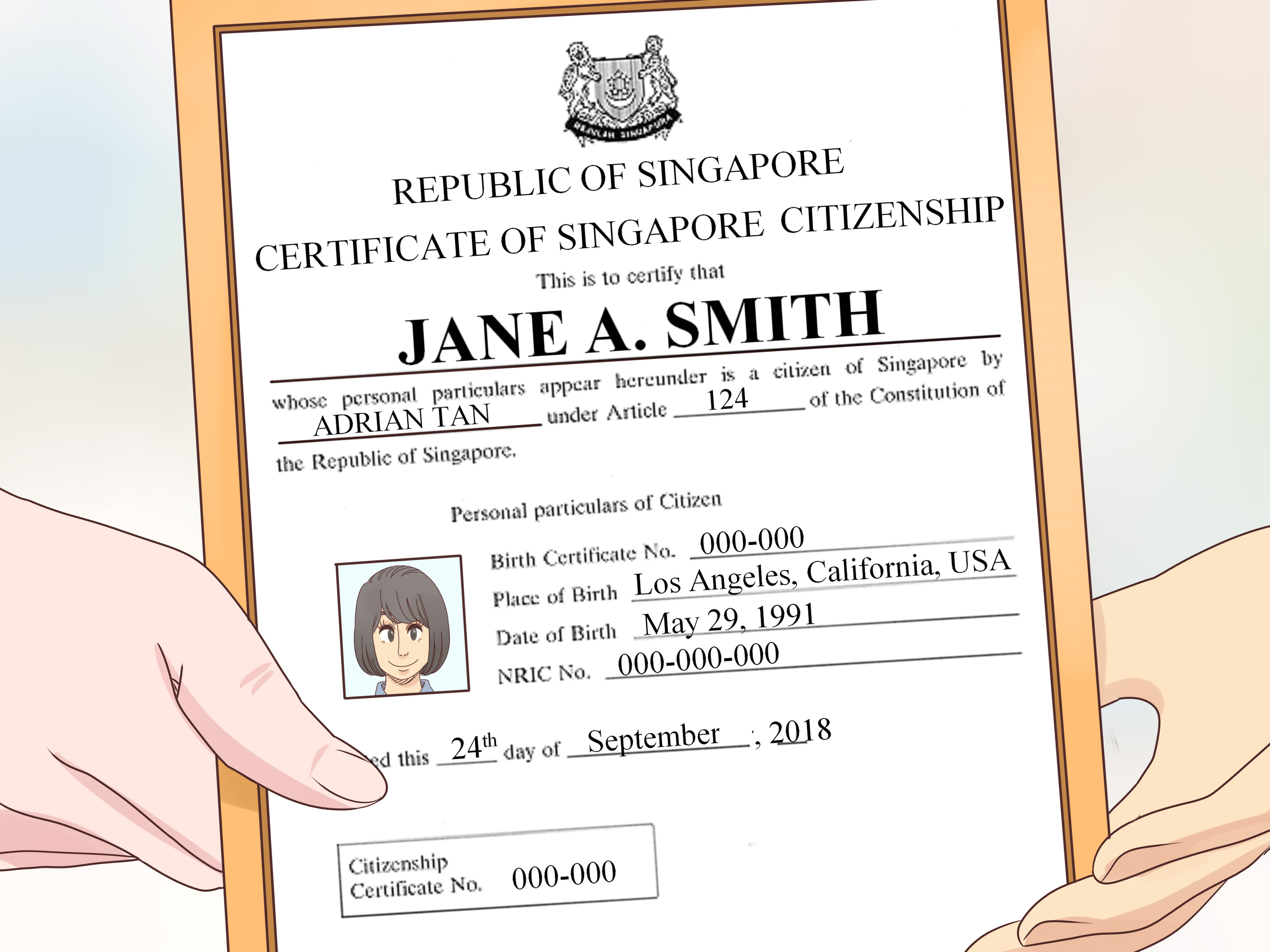
After that, you may need to complete renunciation of foreign citizenship, if applicable, and attend an appointment to register as a Singapore citizen. The final citizenship ceremony is usually organized later, often within several months after registration. At the ceremony, new citizens are welcomed formally and receive their Singapore Citizenship Certificate. It is the finish line of the application processand the starting line of actual citizenship.
Common Mistakes to Avoid
Applying Too Early
Meeting the minimum eligibility requirement does not always mean it is the best moment to apply. If your employment is unstable, your tax records are incomplete, or you have spent long periods outside Singapore, you may want to strengthen your profile before submitting.
Submitting Weak or Messy Documents
Blurry scans, mismatched names, expired passports, missing translations, and incomplete employment letters can slow down your application. Organize your files by category before logging in. Name them clearly. Future you will be grateful, and present you will feel oddly powerful.
Ignoring Family Details
Marriage, divorce, custody, adoption, and children from previous relationships can all matter. Citizenship applications are not only about the main applicant; they often involve the full family picture.
Assuming a Consultant Has Special Influence
ICA does not endorse private immigration consultants or external agencies for Singapore citizenship applications. A consultant may help organize documents, but nobody outside ICA can guarantee approval. Be cautious of anyone selling “special access,” “inside channels,” or “100% success.” That is not an immigration strategy; that is a red flag wearing a blazer.
What Makes a Singapore Citizenship Application Strong?
A strong Singapore citizenship application is usually consistent, complete, and credible. It shows that you have lived in Singapore long enough to build real ties, contributed economically or socially, maintained good records, and understand the responsibilities of citizenship.
Family ties can matter, especially for spouses of Singapore citizens, children, and aged parents. Economic contribution can matter for working adults. Education and integration can matter for students. Length of residence can matter for everyone. But no single factor guarantees approval.
Think of your application as a whole story. Your documents are the evidence, your residence history is the timeline, your family details are the context, and your declarations are the promise that the story is true.
Real-World Experience: What the Singapore Citizenship Process Feels Like
For many applicants, the hardest part of applying for Singapore citizenship is not one dramatic obstacle. It is the quiet accumulation of small tasks. You start with confidence: “I’ll just submit the application online.” Then you realize you need the right photo size, a current employment letter, old school certificates, tax records, marriage documents, translations, and possibly papers from three different life chapters you thought were already safely buried in a folder called “Important Stuff.”
A practical applicant’s experience often begins weeks before the online form. The smartest move is to create a document checklist and gather everything before logging in. People who do this usually have a calmer experience. People who do not may find themselves searching for a birth certificate at midnight while whispering motivational speeches to a scanner.
Another common experience is discovering that family paperwork takes longer than expected. For example, if you were married outside Singapore, divorced overseas, changed your name, adopted a child, or share custody with a former spouse, your application may require documents that are not sitting conveniently on your desk. Some documents may need official translations or certified true copies. This is why early preparation matters.
The waiting period can also feel surprisingly emotional. Twelve months is long enough for people to change jobs, move apartments, have children, or rethink long-term plans. Many applicants check their status repeatedly, even though they know the result will not change just because they looked at it during lunch. That is normal. Citizenship is not just paperwork; it is belonging, identity, and future planning wrapped in an online application.
Applicants who receive In-Principle Approval often describe a second wave of tasks. The Singapore Citizenship Journey is meaningful, but it also requires scheduling and completion. Renouncing a foreign citizenship can be deeply personal. For some, it is straightforward. For others, it involves emotional conversations with family, practical questions about property or inheritance, and the strange feeling of closing one official chapter before opening another.
The final ceremony tends to be the most memorable part. After months of forms and waiting, the process becomes human again. You are no longer just uploading PDFs; you are standing with other new citizens, being welcomed into the national community. The best advice from people who have gone through the process is simple: prepare early, be honest, stay organized, and understand what you are committing to. Singapore citizenship is not just a status upgrade. It is a long-term decision to build your future in one of the world’s most orderly, ambitious, and impressively efficient little red dots.
Conclusion
Applying for citizenship in Singapore is a serious process, but it is manageable if you approach it step by step. Start by confirming eligibility, understanding dual citizenship and National Service obligations, preparing Singpass, collecting documents, submitting a complete application through ICA, and responding promptly during processing. If approved, complete the Singapore Citizenship Journey, renunciation requirements if applicable, final registration, and the citizenship ceremony.
The best applications are not necessarily flashy. They are accurate, complete, consistent, and supported by real ties to Singapore. Treat the process with care, and you will avoid many of the common mistakes that turn a straightforward application into an administrative obstacle course.
Note: This article is for general informational and editorial purposes only. Singapore citizenship rules, fees, processing times, and document requirements can change, so applicants should always verify current requirements with ICA or the relevant Singapore government authority before applying.