If you want to make your yard more welcoming to bluebirds, you do not need a giant woodworking shop, a suspiciously expensive set of “artisan bird screws,” or a degree in avian architecture. You need a simple, well-built bluebird house with the right dimensions, the right materials, and the right placement. Bluebirds are not especially fancy, but they are picky in all the correct ways. They want a safe cavity, good airflow, a dry floor, protection from predators, and a location that does not feel like an alleyway for raccoons.
This guide breaks down exactly how to build a bluebird house that birds may actually use. You will learn what size entrance hole works, which wood to choose, how to add ventilation and drainage, where to mount the house, and what mistakes send bluebirds flying off in search of better real estate. Along the way, we will keep things practical, readable, and free of birdhouse nonsense. Because if you are going to build a bluebird house, it should be more “safe nursery in an open meadow” and less “decorative craft project with a tiny porch swing.”
Why Bluebirds Need the Right House
Bluebirds are cavity nesters, which means they naturally raise young in holes in trees, fence posts, and other protected spaces. The problem is that modern landscapes do not always offer enough natural nesting cavities. Dead trees get removed, older fence lines disappear, and competition from nonnative birds can be intense. A properly built bluebird house helps replace some of that missing habitat.
But “properly built” is doing a lot of work in that sentence. Bluebirds are more likely to use a nest box when the opening is the correct size, the interior is deep enough to protect chicks, the box stays dry, and the house is mounted in open habitat rather than tucked into dense shade. In other words, a bluebird house is less like patio decor and more like a very small engineering project with feathers as the quality-control department.
What Makes a Good Bluebird House?
A good bluebird house is simple, sturdy, easy to clean, and built around proven nest-box dimensions. Across many U.S. birding and wildlife sources, the same design principles show up again and again: use untreated wood, skip the perch, add drainage and ventilation, keep the roof extended and sloped, make the box easy to open for cleaning, and mount it on a metal pole with predator protection.
The house should feel like a natural cavity, not a miniature cottage from a gift shop. Bluebirds do not need decorative trim, painted shutters, or a balcony with rustic charm. They need safety. A perch may look cute to humans, but it is unnecessary for bluebirds and can make the box easier for predators or competitors to use. That is why the best bluebird houses are usually plain, functional, and just a little bit boring to anyone who is not a bird. To a bluebird, though, boring is beautiful.
Bluebird House Dimensions That Actually Work
If you remember only one part of this article, make it this section. Bluebird houses succeed or fail based on dimensions.
Recommended dimensions for a standard bluebird house
- Interior floor: about 5 to 5 1/2 inches square
- Interior depth: about 9 inches
- Entrance hole: 1 1/2 inches in diameter for most Eastern Bluebird boxes
- Hole height above the floor: roughly 7 to 8 3/4 inches
- Wall thickness: about 3/4 inch wood
- Mounting height: generally 4 to 6 feet above the ground
If you live in parts of the West, check which bluebird species you are targeting. Mountain Bluebirds often use a slightly larger entrance hole, around 1 9/16 inches. For many homeowners, though, the standard 1 1/2-inch round opening is the common starting point for an Eastern Bluebird house and helps discourage larger competitors such as European starlings.
The exact cut sizes of boards can vary a little from one proven plan to another. That is normal. Do not get lost in a dramatic measuring-tape crisis over an eighth of an inch. What matters most is that the interior floor is around 5 inches square, the inside depth is around 9 inches, and the entrance hole stays properly sized and positioned.
Materials and Tools You Will Need
Best materials
- Untreated cedar, pine, or fir
- Exterior-grade screws
- A metal pole for mounting
- A predator baffle or guard
Cedar is a favorite because it naturally holds up well outdoors. Pine and fir also work, especially if the wood is thick enough and the box is maintained. Avoid pressure-treated lumber. Chemicals that are fine for a deck are not what you want in a nursery full of baby birds.
Useful tools
- Tape measure
- Saw
- Drill and drill bits
- 1 1/2-inch hole saw or spade bit
- Screwdriver or driver bit
- Sandpaper for exterior edges only
You do not need to make the inside silky smooth. In fact, a slightly rough interior or shallow grooves below the entrance can help nestlings climb out when it is time to fledge. Think “safe grip,” not “luxury finish.”
How to Build a Bluebird House Step by Step
1. Cut the wood pieces
Start with a simple box design based on the target interior dimensions above. You will need a back panel, front panel, two sides, a floor, and a roof. Many builders use a single 1-by-6 board about 5 feet long as the base material for a standard box.
Make the roof wide enough to overhang the front. That overhang helps keep rain out and makes it harder for predators to reach into the entrance hole from above. A roof with a slight slope is even better because it sheds water more easily.
2. Drill the entrance hole
Drill a clean 1 1/2-inch hole in the front panel for a standard Eastern Bluebird house. Position it so the bottom of the hole sits high enough above the floor to keep the nest cup and chicks safely below the entrance. This is one of the most important details in the whole build. A hole that is too low creates an easier reach for predators and a riskier setup for nestlings.
Do not add a perch. Bluebirds do not need one. They can land at the entrance just fine without a tiny wooden welcome mat.
3. Add ventilation and drainage
This part is not optional. Good bluebird houses have ventilation holes near the top and drainage openings in the floor or cut corners at the floor. Ventilation helps reduce overheating and moisture buildup. Drainage keeps rainwater from turning the nest into a damp little sponge apartment.
A common approach is to leave small gaps under the roofline or drill ventilation holes high on the side walls. For drainage, drill a few holes in the floor or clip the corners of the floor piece. The goal is simple: air should move, and water should leave.
4. Assemble the box with screws
Screws are often better than nails because they hold tightly and make repairs easier later. Assemble the sides, floor, front, and back so the floor sits snugly inside the walls rather than underneath them. That helps prevent leaks and makes the box stronger.
One side or the front should open for monitoring and cleaning. A hinged side panel works well, or you can use a pivot screw design that lets one side swing open. However you do it, make sure the panel closes securely. You want easy human access and very difficult raccoon access.
5. Keep the interior natural
Do not paint or seal the inside. Leave the wood natural. If the exterior is very rough or splintery, clean up only the dangerous edges. The interior should stay safe, dry, and grippy, not glossy. Bluebirds are not impressed by interior design trends.
Where to Put a Bluebird House
You can build the world’s greatest bluebird house and still get zero tenants if you install it in the wrong place. Placement matters almost as much as construction.
Best habitat
Bluebirds prefer open or semi-open habitat: lawns with scattered trees, orchards, meadows, pasture edges, golf course margins, rural fields, and open country with low ground cover. They generally do not want a box buried deep in thick woods or hidden in dense shrubs.
Best mounting method
Mount the house on a smooth metal pole about 4 to 6 feet high. A metal pole with a predator baffle underneath is widely recommended because it is harder for raccoons, cats, snakes, and other climbers to use as a ladder. Trees and wooden fence posts may seem convenient, but they are often easier for predators to climb and may place the box in too much shade.
Which direction should the entrance face?
In many areas, facing the entrance toward open habitat and often toward the east is a smart default. East-facing entrances can help avoid some prevailing weather and harsh afternoon heat, though local wind, sun, and habitat conditions matter too. Think less about compass-point perfection and more about keeping the box dry, visible, and not directly blasted by the worst weather.
How far apart should boxes be?
If you install more than one bluebird house, space them about 300 feet apart. Bluebirds are territorial, and crowding boxes too closely can create conflict. There is one useful trick in areas with Tree Swallows: some experts pair two boxes about 15 to 20 feet apart, then keep those pairs about 300 feet from the next pair. That arrangement can reduce conflict because bluebirds and swallows sometimes tolerate neighboring native species better than same-species rivals.
How to Protect Your Bluebird House From Predators and Competitors
A bluebird house should not just attract birds. It should help them survive nesting season.
Use a predator guard
Add a baffle below the box on the pole. Common options include a cone baffle or stovepipe baffle. Some builders also add an entrance-hole guard or wooden block around the hole to make it harder for predators to reach inside and harder for squirrels to enlarge the opening.
Watch for invasive competitors
House Sparrows and European Starlings compete aggressively for cavities. A correctly sized entrance hole helps keep starlings out, but House Sparrows can still be a problem. That is one reason bluebird boxes should be monitored rather than installed and forgotten like lawn ornaments.
Keep branches and jumping-off points away
Do not mount the box where predators can leap in from a nearby branch, fence, or structure. Bluebirds appreciate a good home. Snakes and raccoons appreciate shortcuts. Do not give them one.
How to Maintain a Bluebird House
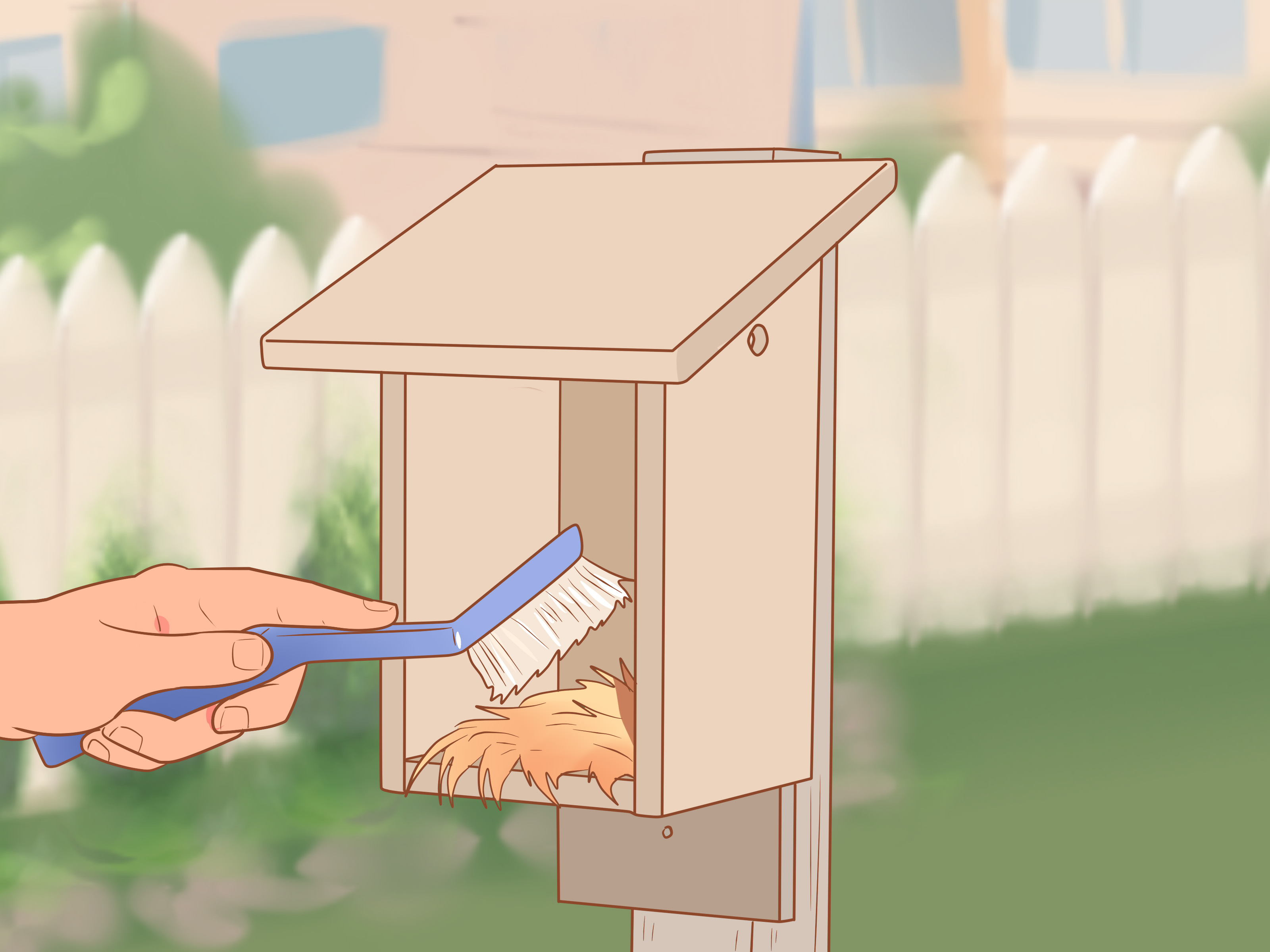
Bluebird houses work best when they are maintained. After a brood fledges, many bluebird monitors clean out the old nest so the box can be reused for another nesting attempt. At the end of the season, inspect the box, tighten screws, clear out debris, and confirm that the baffle and mounting hardware are still in good shape.
Quick checks during the nesting season can be helpful too, but keep them careful and brief. Do not fuss over the box constantly. You are providing housing, not running a tiny hotel concierge desk. Respect the birds’ space while still monitoring for safety issues.
Common Bluebird House Mistakes to Avoid
- Using treated lumber
- Adding a perch
- Making the entrance hole too large
- Skipping drainage or ventilation
- Mounting the house on a tree without predator protection
- Putting the box in dense shade or heavy brush
- Forgetting to make the box openable for cleaning
- Installing multiple boxes too close together
The biggest mistake of all is assuming any cute birdhouse will do. A bluebird house is a habitat tool, not a decoration. Build for the bird first, and the charm will come naturally when a bluebird actually moves in.
Final Thoughts
Building a bluebird house is one of those projects that checks all the right boxes: it is affordable, useful, satisfying, and surprisingly meaningful. A few pieces of untreated wood, some careful measurements, and a good mounting location can create a safe nesting site for a species that has benefited enormously from thoughtful conservation. That is a pretty strong return on one weekend project.
If you want the simplest formula for success, remember this: build a plain box with the right dimensions, leave off the perch, add ventilation and drainage, mount it on a metal pole in open habitat, and protect it with a baffle. That is the recipe. The rest is patience, a little seasonal maintenance, and the delight of seeing a flash of blue where there used to be only grass and sky.
Experiences and Practical Lessons From Building a Bluebird House
One of the most interesting things about building a bluebird house is that the project does not really end when the screws go in. That is when the education starts. People often begin with the woodworking part because it feels concrete. Measure the board, drill the hole, assemble the box, done. But the real learning happens after the house is outside and the birds begin judging your work with silent, feathery professionalism.
A first-time builder usually discovers that bluebirds care less about perfect craftsmanship than about smart design. A box with a slightly uneven roofline can still succeed if it is dry, secure, and mounted in the right place. Meanwhile, a gorgeous handmade birdhouse with fancy trim can sit empty for years if it is mounted in deep shade or has the wrong hole size. That experience teaches a useful lesson fast: in wildlife projects, function beats decoration every time.
Another common experience is learning how much placement changes everything. A box in an open field edge may attract attention quickly, while a nearly identical box just 30 yards away in a cluttered or heavily shaded corner might be ignored. Many people end up moving a box after the first season and suddenly seeing much better results. It is a reminder that birds read landscapes differently than humans do. What looks private and cozy to us may look risky and predator-friendly to a bluebird.
Builders also learn that maintenance is not a burden so much as part of the relationship. Opening the box after a successful brood has fledged, cleaning it out, checking the hardware, and making sure the baffle still works creates a sense of stewardship. You start noticing things you never paid attention to before: how hot afternoon sun hits the roof, whether grass grew too tall around the pole, whether wasps tried to claim a corner, whether a squirrel tested the entrance. The house becomes less of an object and more of an ongoing project in observation.
And then there is the emotional side, which no cut list really prepares you for. The first time a bluebird lands on top of the box you built, the experience is oddly electric. It feels like being reviewed by a very small contractor in a bright blue jacket. When a pair starts carrying nesting material inside, every boring errand in life suddenly competes with the urge to look out the window one more time. Even people who are not serious birders often find themselves becoming deeply invested in whether “their” box gets chosen.
Over time, many bluebird-house builders say the project changes how they see their yard. It is no longer just outdoor space. It becomes habitat. You begin noticing insects, open flight paths, nearby perches, weather exposure, and seasonal timing. In that sense, building a bluebird house is not just a DIY project. It is an invitation to pay attention. And for a structure made from a single board and a few screws, that is a pretty remarkable trick.