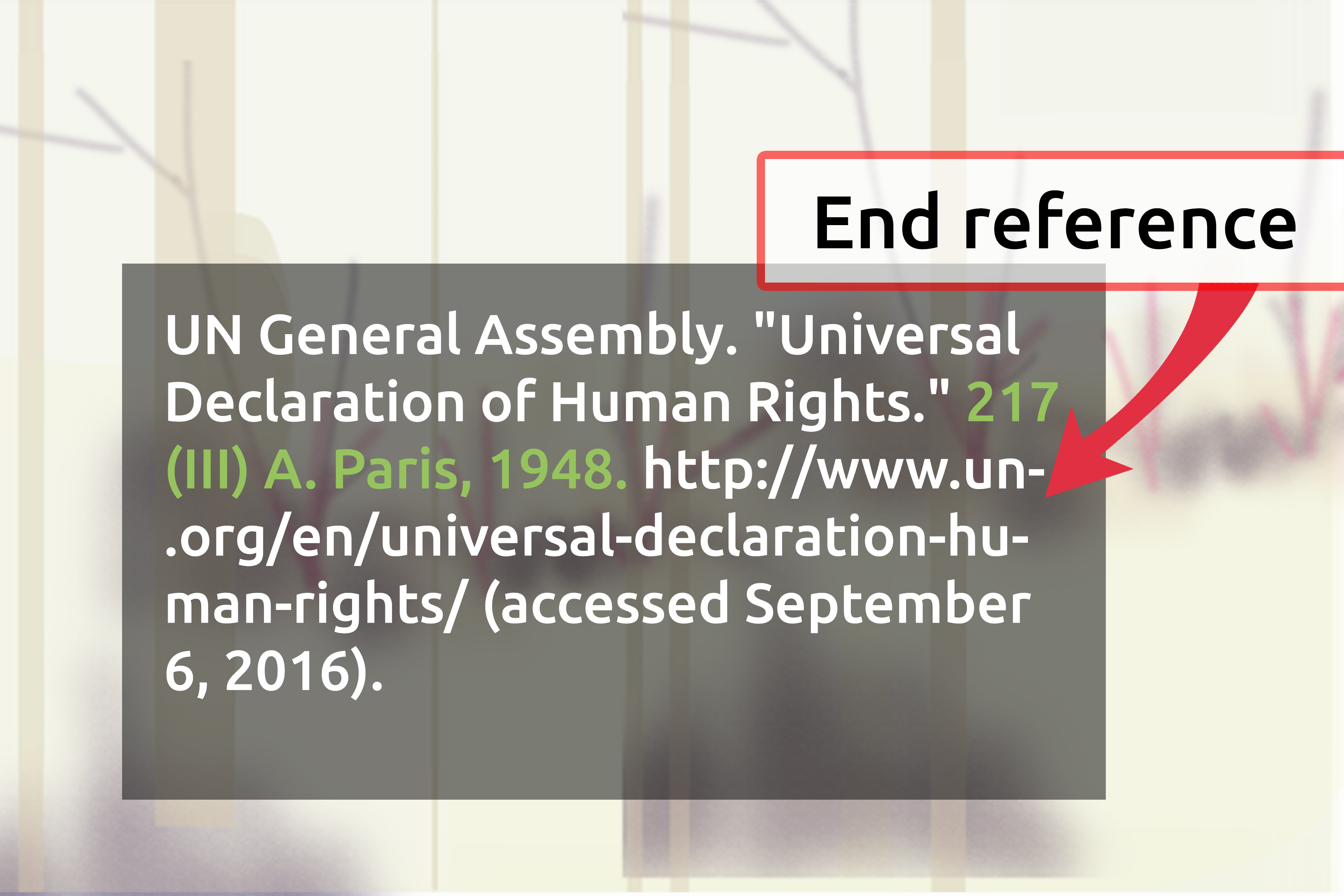
Learning how to cite the Universal Declaration of Human Rights sounds simple until you open your citation style guide and suddenly feel as if you have wandered into a diplomatic conference wearing flip-flops. Is the author the United Nations? The General Assembly? The document title? Do you need the resolution number? Should “article” be abbreviated? And why does one citation style look like a neat business card while another resembles a tiny legal spell?
Relax. The Universal Declaration of Human Rights, often shortened to UDHR, is one of the most cited human rights documents in the world, and the basic information you need is stable: it was adopted by the United Nations General Assembly on December 10, 1948, as Resolution 217 A (III). The document contains 30 articles describing fundamental rights and freedoms, from equality and dignity to education, work, due process, and freedom of thought.
This guide explains how to cite the Universal Declaration of Human Rights in APA, MLA, Chicago, and legal citation styles. It also shows how to cite specific articles, how to mention the UDHR in your writing, and how to avoid common mistakes that make teachers, editors, and law librarians reach silently for more coffee.
What Is the Universal Declaration of Human Rights?
The Universal Declaration of Human Rights is a landmark United Nations document adopted after World War II. Its purpose was to set out a common standard of basic rights for all people and all nations. Although it is not a treaty in the same way as the International Covenant on Civil and Political Rights or the International Covenant on Economic, Social and Cultural Rights, it has become one of the most influential human rights texts in modern history.
The UDHR is often cited in essays, legal papers, political science assignments, ethics discussions, sociology research, nonprofit reports, and international relations articles. Students use it when writing about equality, freedom of expression, religious liberty, asylum, education, labor rights, discrimination, and state responsibility. In other words, the UDHR has range. It is the Beyoncé of human rights documents: recognizable, influential, and constantly referenced.
Key Details You Need Before Citing the UDHR
Before choosing a citation style, gather the basic bibliographic information. A good UDHR citation usually includes some or all of the following details:
- Author or issuing body: United Nations or United Nations General Assembly
- Title: Universal Declaration of Human Rights
- Resolution: Resolution 217 A (III)
- Date adopted: December 10, 1948
- Document symbol: A/RES/217(III) or related UN document reference
- Publisher or website: United Nations
- URL: The official United Nations page for the UDHR, if you accessed it online
The exact ingredients depend on the citation style. APA prefers author-date clarity. MLA cares about container structure and access to the source. Chicago gives you a more formal note format. Legal citation styles often care deeply about resolution numbers, UN document symbols, and dates. The goal is always the same: help readers find the document and understand exactly what you are referencing.
How to Cite the Universal Declaration of Human Rights in APA Style
APA style is widely used in psychology, education, social sciences, public health, and many undergraduate research papers. In APA 7th edition, the UDHR can be treated as a document created by a group author. The group author is usually United Nations. Since the author and publisher are the same, you generally do not need to repeat the publisher name.
APA Reference List Example
Use this format when citing the official online version:
APA In-Text Citation
For a general reference to the document, use:
When citing a specific article, include the article number. This is especially helpful because the UDHR is organized by articles rather than ordinary book pages.
In a sentence, it might look like this:
The Universal Declaration of Human Rights states that all human beings are born free and equal in dignity and rights (United Nations, 1948, art. 1).
APA Tip: Use Article Numbers Instead of Page Numbers
If you are quoting or paraphrasing a specific part of the UDHR, article numbers are clearer than page numbers because online versions, PDFs, and printed copies may paginate differently. Article numbers are stable. Page numbers are like socks in a dryer: sometimes there, sometimes mysteriously missing.
How to Cite the Universal Declaration of Human Rights in MLA Style
MLA style is common in literature, humanities, cultural studies, composition classes, and many general education courses. MLA treats the UDHR as a legal or governmental document issued by an international governing body.
MLA Works Cited Example
This entry identifies the issuing body, the title, the resolution number, the adoption date, the publisher or container, and the URL. If your instructor prefers no URL, follow that instruction, but for web research, including the URL is usually useful.
MLA In-Text Citation
For a general reference, use the issuing body:
For a specific article, you can include the article number:
Example sentence:
The UDHR recognizes education as a human right and says elementary education should be free and compulsory (United Nations, General Assembly, art. 26).
MLA Tip: Keep the Title in Italics
In MLA, standalone works are usually italicized. The Universal Declaration of Human Rights is a complete document, so italicize the title in your Works Cited entry and in your prose when appropriate.
How to Cite the Universal Declaration of Human Rights in Chicago Style
Chicago style appears in history, publishing, theology, political science, and many interdisciplinary fields. Chicago has two main systems: notes and bibliography and author-date. For a document like the UDHR, the notes and bibliography format is often the most useful.
Chicago Footnote Example
Shortened Chicago Note
After the first full note, you can usually shorten later citations:
Chicago Bibliography Example
Chicago gives you room to be formal, which is helpful for historical or legal discussions. It also makes the document symbol visible, which readers may appreciate if they want to trace the text through United Nations records.
How to Cite the UDHR in Legal Writing
Legal citation can vary depending on whether you are using The Bluebook, a law school guide, a journal rulebook, or a professor’s preferred format. For legal writing, the citation often emphasizes the General Assembly resolution and date.
Common Legal Citation Example
Some legal citations include a UN document reference:
Which version should you use? If you are writing for a law review, court brief, or legal memo, check the required citation manual. Legal citation is famous for having rules, sub-rules, exceptions, and exceptions that look suspiciously like traps. When in doubt, ask your instructor, editor, or law librarian.
How to Cite a Specific Article of the UDHR
The UDHR is divided into 30 articles, so citing the article number is the cleanest way to point readers to a precise location. Here are examples across styles:
APA Specific Article
MLA Specific Article
Chicago Specific Article
Article 19 is often cited in discussions of freedom of opinion and expression. Article 26 is frequently cited in education essays. Article 14 appears in asylum discussions. Article 23 is useful for labor rights. Article 1 is the classic opening statement on dignity and equality. Basically, if the UDHR were a playlist, Article 1 would be the lead single.
Should You Cite the UDHR as a Treaty?
Usually, no. The UDHR is a declaration adopted by the United Nations General Assembly, not a treaty opened for ratification like many later human rights conventions. That distinction matters. Calling it a treaty may make your citation look more legally binding than the document technically is.
A safer phrase is: “The Universal Declaration of Human Rights, adopted by the United Nations General Assembly in 1948…” This wording is accurate, formal, and useful in academic writing.
Best Practices for Mentioning the UDHR in Your Paper
The first time you mention the document, write out the full title:
After that, you can use the abbreviation UDHR. This helps your writing flow naturally without forcing readers to wade through the full title every three sentences. Your paragraphs will breathe easier, and so will your audience.
When discussing the document, be specific. Instead of saying, “The UDHR supports freedom,” say which kind of freedom and where it appears. For example, cite Article 18 for freedom of thought, conscience, and religion, or Article 19 for freedom of opinion and expression. Precision is the difference between academic writing and inspirational wall art.
Common Mistakes to Avoid
Mistake 1: Forgetting the Issuing Body
Do not cite the UDHR as if it appeared magically on the internet. The issuing body is the United Nations or United Nations General Assembly, depending on your style.
Mistake 2: Using Only “UDHR” in the Reference List
Abbreviations are fine in the body after the first mention, but your reference list should use the full title: Universal Declaration of Human Rights.
Mistake 3: Treating It Like an Ordinary Webpage
The UDHR is available online, but it is not just a random webpage. It is a formal international document. Include the resolution number when your style allows or requires it.
Mistake 4: Citing Page Numbers Instead of Articles
Use article numbers for specific references. Article numbers stay consistent across formats, while page numbers can change depending on the version.
Mistake 5: Mixing Citation Styles
Do not start in APA, wander into MLA, and finish with Chicago unless your assignment is secretly testing chaos theory. Pick one style and use it consistently.
Quick Citation Examples You Can Copy
APA
MLA
Chicago
Legal Style
Why Correct UDHR Citation Matters
Citing the UDHR correctly does more than protect you from losing points on a paper. It shows respect for the document’s historical and legal importance. The UDHR is not just a decorative quote bank for speeches about fairness. It is a foundational text in international human rights discourse, and proper citation helps readers connect your argument to the original source.
Good citation also strengthens your credibility. If you are writing about human rights, discrimination, asylum, education, privacy, labor, or freedom of expression, a clean citation tells readers you are not casually waving at the UDHR from across the room. You actually know where the idea comes from.
Experience-Based Tips for Citing the Universal Declaration of Human Rights
In real writing situations, the hardest part of citing the UDHR is not finding the document. The official text is easy to locate. The tricky part is choosing the right citation format for the context. A student writing a sociology paper may need APA. A literature student may need MLA. A history paper may use Chicago. A legal memo may need Bluebook-style citation. The same document wears different citation outfits depending on the party.
One practical experience many writers share is that instructors often care more about consistency than perfection. That does not mean you should be careless. It means that once you choose APA, MLA, Chicago, or legal style, you should keep the same structure throughout the paper. A slightly imperfect but consistent citation is easier to fix than a reference list that looks like four citation styles got into a minor car accident.
Another useful habit is to cite the specific article whenever you discuss a particular right. If you are writing about education, do not merely cite the entire UDHR. Point readers to Article 26. If you are writing about freedom of expression, cite Article 19. If your topic is equality, Article 1 or Article 2 may be relevant. This makes your argument sharper and saves readers from hunting through the whole document like they are on an academic scavenger hunt.
Writers should also pay attention to the difference between quoting and paraphrasing. If you quote exact language from the UDHR, introduce it clearly and cite the article. If you paraphrase, cite the article anyway. Paraphrasing does not erase the need for citation; it simply changes how you use the source. Think of citation as giving credit, not as paying rent only when you copy the furniture.
A common classroom experience is confusion over whether the UDHR is “law.” The careful answer is that it is a declaration adopted by the UN General Assembly, not a binding treaty by itself. However, it has had enormous influence on later treaties, constitutions, legal arguments, and human rights advocacy. In academic writing, you can say it is a foundational human rights document, a declaration, or a common standard of achievement. Avoid overstating it as a treaty unless your source or assignment specifically frames it that way.
Finally, save your citation in a notes file once you format it correctly. The UDHR comes up in more assignments than people expect. Human rights, political science, education, law, ethics, immigration, journalism, and global studies courses all return to it. Having a clean APA, MLA, Chicago, and legal version ready is like keeping an umbrella in your backpack: not glamorous, but very satisfying when the citation weather gets weird.
Conclusion
Citing the Universal Declaration of Human Rights is straightforward once you know what information matters: the United Nations or UN General Assembly, the title, the 1948 adoption date, the resolution number, and the article number when citing a specific right. APA, MLA, Chicago, and legal styles format those details differently, but each style has the same basic mission: make your source clear, traceable, and credible.
If you remember only one rule, remember this: cite the UDHR as a formal United Nations document, not as a casual webpage. Use the full title on first mention, abbreviate it as UDHR afterward, and cite article numbers for specific rights. Do that, and your citation will look polished, professional, and far less likely to make your bibliography cry.
Note: This article is for educational and writing guidance. Always follow your instructor’s, editor’s, publisher’s, or law review’s required citation style when it differs from the examples shown here.