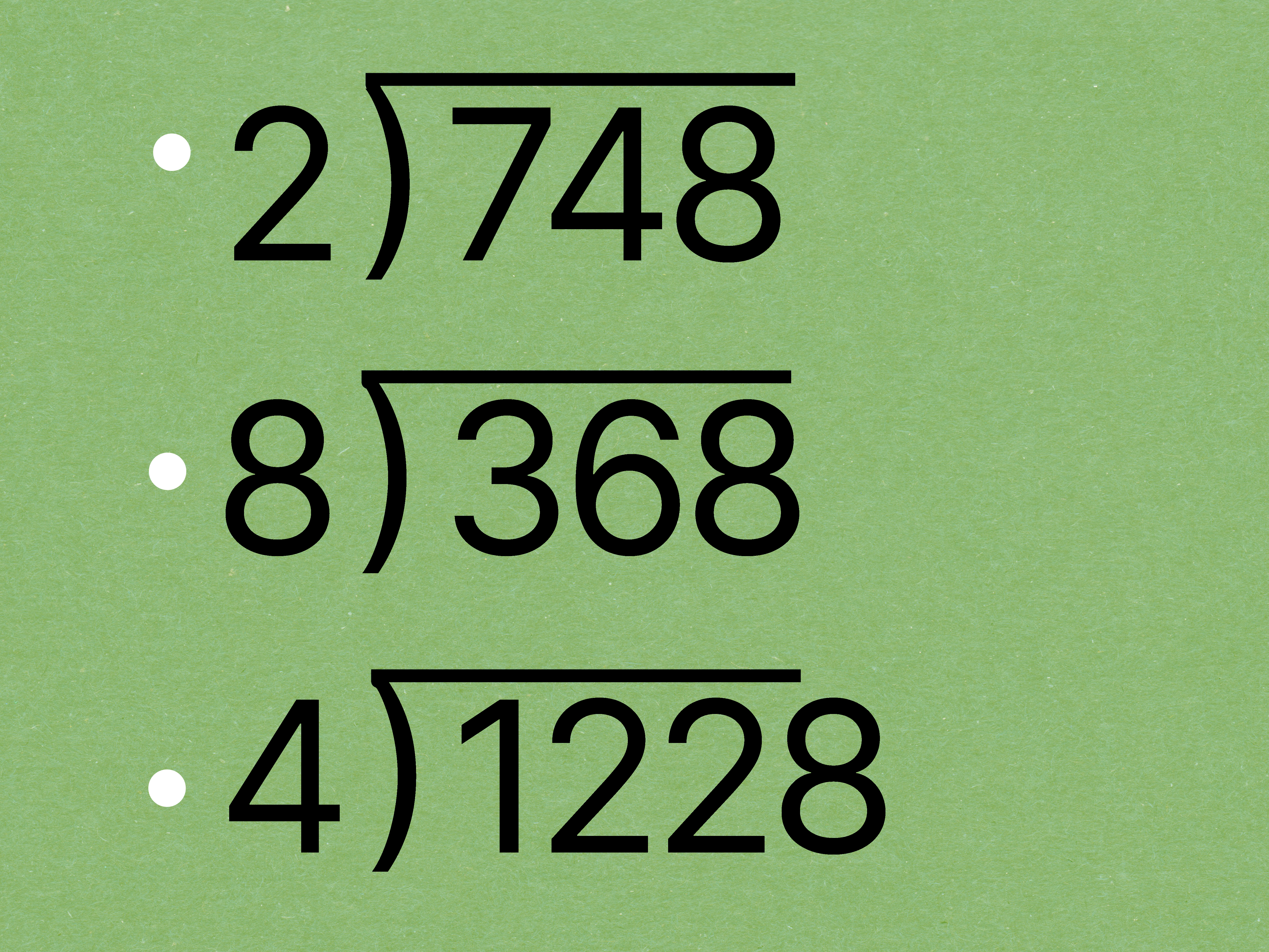
Note: This guide uses standard American English and focuses on short division with whole numbers, one-digit divisors, and remainders.
Short division has a bit of a drama-queen reputation. The moment people see a division bracket, they start acting like the worksheet personally offended them. But here is the good news: short division is one of the easiest ways to divide larger numbers when the divisor is only one digit. It is quick, tidy, and much less intimidating than full long division once you understand the pattern.
In simple terms, short division is a compact version of long division. Instead of writing every subtraction step in full, you do more of the thinking in your head. That makes it especially useful when you are dividing by numbers like 2, 3, 4, 5, 6, 7, 8, or 9 and already know your multiplication facts fairly well. If long division is the full orchestra, short division is the acoustic set. Same song, fewer instruments.
In this guide, you will learn exactly how to do short division in 9 steps, how to handle remainders without panic, how to check your answer, and which mistakes tend to trip people up. You will also see realistic examples, because division is much friendlier when it is not hiding behind vague math talk.
What Is Short Division?
Short division is a written method for dividing a larger number by a one-digit number. It follows the same logic as long division, but it skips some of the written working. You divide one digit or place value at a time from left to right, write the quotient above the bracket, and carry any remainder into the next digit.
This method works best when:
- the divisor is a single digit,
- you know basic multiplication tables,
- you can do simple subtraction or regrouping mentally, and
- you want a faster, cleaner way to divide whole numbers.
If you are brand new to division, short division may feel a little fast at first. That is normal. Once you understand what happens to the remainder at each step, the whole method becomes much easier.
Know These Division Terms Before You Begin
Before jumping into the steps, it helps to know the key vocabulary:
- Dividend: the number you are dividing.
- Divisor: the number you are dividing by.
- Quotient: the answer to the division problem.
- Remainder: the amount left over when the divisor does not go in evenly.
For example, in 847 ÷ 4:
- 847 is the dividend
- 4 is the divisor
- 211 is the quotient
- 3 is the remainder
So the answer is 211 R3.
How to Do Short Division: 9 Steps
Step 1: Write the problem in short division format
Put the divisor outside the bracket and the dividend inside. Your answer, called the quotient, will be written on top.
This means you are finding out how many times 4 goes into 847.
Step 2: Divide the first digit
Start with the digit on the far left of the dividend. Ask yourself: How many times does 4 go into 8? The answer is 2, because 4 × 2 = 8.
Write the 2 above the 8.
If the first digit is smaller than the divisor, you would look at the first two digits together. But in this example, 8 is large enough, so you can begin right away.
Step 3: Work out whether there is a remainder
Since 4 goes into 8 exactly 2 times, there is no remainder at this stage. That is wonderfully polite behavior from the number 8.
When there is no remainder, move on to the next digit. When there is a remainder, you carry it over to the next digit by treating it as part of the next place value.
Step 4: Move to the next digit and divide again
Now go to the next digit in 847, which is 4. Ask: How many times does 4 go into 4? The answer is 1.
Write 1 above the 4.
Again, there is no remainder because 4 × 1 = 4 exactly.
Step 5: Bring the next digit into the calculation
Now move to the final digit, 7. Ask: How many times does 4 go into 7? It goes in 1 time, because 4 × 1 = 4, and 4 × 2 = 8 would be too much.
Write 1 above the 7.
After using 4 once, there are 3 left over, because 7 – 4 = 3.
Step 6: Write the remainder clearly
Since there are no more digits to divide, the leftover 3 becomes the remainder. Write it as R3.
A remainder should always be smaller than the divisor. In this case, 3 is smaller than 4, so the answer makes sense.
Step 7: Understand what the remainder means
The remainder is not a random math crumb that fell off the table. It tells you that 847 cannot be split into equal groups of 4 without having 3 left over.
Depending on the problem, you may leave the answer as a remainder, turn the remainder into a fraction, or convert it into a decimal:
- Remainder form: 211 R3
- Fraction form: 211 3/4
- Decimal form: 211.75
For many elementary math problems, remainder form is exactly what your teacher wants. In real-life word problems, you may need to round up, round down, or interpret the remainder based on the situation.
Step 8: Check your answer
A fast way to check short division is to use this rule:
Quotient × Divisor + Remainder = Dividend
For our example:
The original dividend comes back, which means the answer is correct. Math loves a clean receipt.
Step 9: Practice with one more example
Let us try an example with no remainder: 924 ÷ 7.
- 7 goes into 9 one time, remainder 2.
- Carry the 2 to the next digit to make 22.
- 7 goes into 22 three times, remainder 1.
- Carry the 1 to the next digit to make 14.
- 7 goes into 14 two times, remainder 0.
So:
The more examples you do, the more natural short division feels. At some point, your pencil hand starts acting like it has seen this movie before.
What Happens When You Need to Carry a Remainder?
This is the part many learners find tricky at first. Suppose you are solving 965 ÷ 4.
- 4 goes into 9 two times, remainder 1.
- Carry that 1 into the next digit, turning 6 into 16.
- 4 goes into 16 four times, remainder 0.
- Now move to 5.
- 4 goes into 5 one time, remainder 1.
So the answer is 241 R1.
The main thing to remember is this: a remainder does not disappear. It gets carried into the next place value until there are no digits left. Then, if something is still left over, it becomes the final remainder.
Common Short Division Mistakes to Avoid
Forgetting to carry the remainder
This is the classic mistake. If you get a remainder and do not combine it with the next digit, your entire answer goes off the rails.
Using a multiplication fact that is too large
If you are dividing 7 into 31, choosing 5 because 7 × 5 = 35 is too high. Always choose the largest number that does not go over.
Writing the quotient in the wrong place
Each answer digit goes above the digit you just worked on. Place value matters. A lot.
Leaving a remainder bigger than the divisor
If your final remainder is the same as or larger than the divisor, the division is not finished yet.
Not checking the answer
Even one quick multiplication check can catch a lot of small errors. It takes seconds and saves dramatic eraser moments later.
Tips to Get Better at Short Division
- Memorize multiplication facts from 1 through 9.
- Say the steps quietly as you work: divide, carry, divide, carry.
- Practice with easy problems before jumping into ugly-looking numbers.
- Use graph paper if your digits wander across the page like lost tourists.
- Always check whether your answer is reasonable.
Short division is mostly about pattern recognition. Once your brain sees the pattern enough times, the process becomes much smoother.
Why Short Division Is Useful
Learning short division is not just about surviving a homework sheet. It helps you understand place value, multiplication, remainders, and mental math. It also prepares you for long division, fractions, decimals, and algebra later on. In other words, short division may look humble, but it quietly introduces a lot of important math thinking.
It is also useful in everyday life. You may need to divide money, share items evenly, split time, or figure out how many groups you can make from a total amount. Math does not always show up wearing a cape. Sometimes it shows up while you are cutting pizza or organizing party bags.
Experiences People Commonly Have When Learning Short Division
One of the most relatable experiences with short division is the moment when a student realizes that division is not actually one giant scary step. It is several small, manageable decisions made one after another. Before that moment, the work can feel mysterious. A child may look at something like 736 ÷ 4 and think the answer has to appear all at once, as if math is a magic trick. Then a teacher, tutor, parent, or patient older sibling breaks it down digit by digit, and suddenly the process starts to feel doable.
Another common experience is frustration with remainders. Plenty of students are perfectly happy when numbers divide evenly, because the answer looks neat and everybody goes home emotionally intact. But the second a remainder appears, confidence can wobble. Learners often wonder whether the remainder gets written down, turned into a fraction, changed into a decimal, or somehow hidden under the rug. That confusion is normal. In fact, many people only become comfortable with division after they understand that the remainder is simply leftover value and that what you do with it depends on the kind of problem you are solving.
Parents helping with homework often have their own short division experience, and it can be surprisingly funny. Many remember learning division one way years ago and then discover that their child’s teacher explained it with slightly different language. The math itself has not changed, but the wording sometimes has. That leads to classic kitchen-table moments where everyone agrees the answer is 132, yet nobody agrees on how to describe getting there. The good news is that if the place value is correct and the reasoning makes sense, the method is usually more flexible than it seems.
Teachers also notice that short division becomes easier when students are strong with multiplication facts. A learner who instantly knows that 6 goes into 24 four times usually moves through the steps with much more confidence than someone who has to rebuild each multiplication fact from scratch. That does not mean short division is impossible without perfect recall, but it does mean fluency makes the ride smoother. It is a little like riding a bike with well-inflated tires instead of square ones.
Adults returning to math after many years often describe short division as oddly satisfying. At first, they expect embarrassment or confusion, especially if math was never their favorite subject in school. Then they try a few examples, remember the basic pattern, and realize the skill comes back faster than expected. There is something encouraging about watching a method that once seemed difficult start to feel logical. It reminds people that learning is not always about raw talent. Sometimes it is just repetition, clarity, and a willingness to try again without declaring war on the pencil.
Perhaps the best experience related to short division is the quiet confidence that comes after enough practice. The learner no longer freezes when seeing a division bracket. They know where to start. They know what to do with a remainder. They know how to check the answer. That shift matters. It turns division from a stressful school task into a skill they can actually use. And for a math topic with such a stern-looking symbol, that is a pretty nice ending.
Conclusion
If you want to learn how to do short division, the secret is not speed. It is order. Start from the left, divide one place value at a time, carry remainders carefully, and check your answer at the end. That is the whole game. Once you practice those moves enough times, short division becomes far less intimidating and a lot more mechanical in the best possible way.
So the next time a division problem appears on the page looking all serious and dramatic, remember this: it is just asking for a sequence of small decisions. And small decisions are much easier to manage than a full-blown math crisis.