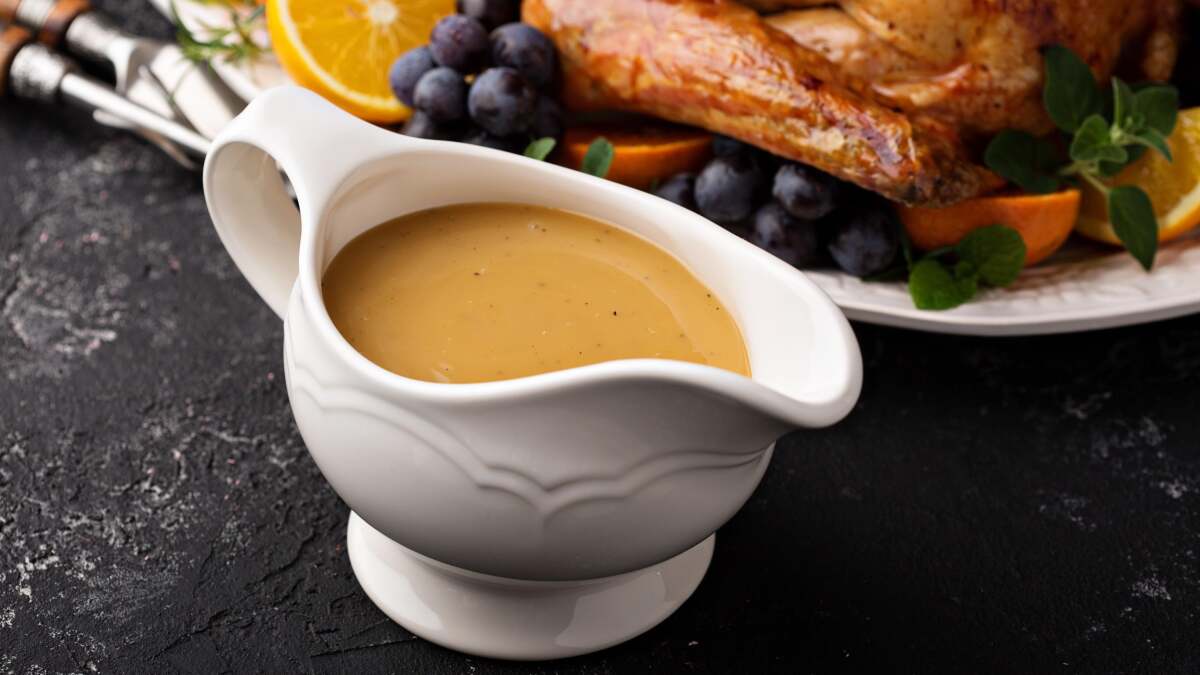
Thanksgiving gravy is the quiet hero of the holiday table. It does not arrive wearing a crown like the turkey, it does not sparkle with marshmallows like sweet potatoes, and it rarely gets its own dramatic entrance. Yet the moment the gravy boat appears, everyone suddenly becomes deeply emotional about mashed potatoes. That is power.
The problem is that gravy usually shows up at the most chaotic point of Thanksgiving cooking. The turkey is resting, the rolls are threatening to burn, someone is asking where the serving spoon went, and you are supposed to whisk pan drippings into a silky sauce while pretending the kitchen is not a steam-powered circus. This is exactly why learning how to freeze Thanksgiving gravy ahead of time is one of the smartest holiday cooking moves you can make.
Yes, you can freeze gravy. Even better, you can make a rich, flavorful Thanksgiving gravy days, weeks, or even a couple of months before the big meal, freeze it properly, thaw it safely, and reheat it until it tastes like you casually made it five minutes ago. Your guests do not need to know that Future You was rescued by Past You. That is between you, your freezer, and the tiny label you remembered to write.
Can You Freeze Thanksgiving Gravy?
Absolutely. Most traditional Thanksgiving gravy freezes well, especially gravy made with turkey stock, chicken stock, roasted poultry parts, pan drippings, butter, flour, herbs, and vegetables. A classic roux-thickened turkey gravy is one of the best candidates because it reheats smoothly when whisked patiently over gentle heat.
The key phrase is “most traditional gravy.” Dairy-heavy gravies, cream gravies, and gravies thickened with a lot of milk may separate after freezing. They are not unsafe just because they separate, but the texture can turn grainy or slightly broken. If your Thanksgiving gravy contains cream, half-and-half, or milk, consider freezing the gravy base before adding dairy. Then stir in the creamy ingredient after thawing and reheating.
Why Make Thanksgiving Gravy Ahead of Time?
Making gravy ahead is not just about saving time. It is about saving your Thanksgiving mood. Gravy is simple in theory, but it demands attention. A few extra minutes of distraction can create lumps, scorching, or a sauce that tastes more like flour than turkey. On Thanksgiving Day, attention is already being shared between the bird, sides, guests, oven traffic, and the person who keeps opening the refrigerator “just to check.”
Freezing gravy ahead gives you three huge advantages: better planning, better flavor control, and less last-minute pressure. You can make the gravy calmly, taste it properly, adjust seasoning, and freeze it in sensible portions. On the holiday itself, all you need to do is thaw, reheat, whisk, and add fresh pan drippings if you have them.
The Best Type of Gravy to Freeze
The best Thanksgiving gravy for freezing is a stock-based, roux-thickened gravy. This usually means fat plus flour, cooked together, then whisked with turkey stock, chicken stock, or a combination of stock and pan drippings. It should be smooth, slightly thick, and well seasoned, but not overly salty. Freezing and reheating can make flavors taste more concentrated, so it is wise to season confidently but not aggressively.
Great gravy styles for freezing
- Turkey gravy made with roasted turkey wings or necks
- Chicken-stock gravy used as a Thanksgiving base
- Roux-thickened gravy with butter and flour
- Make-ahead gravy finished later with turkey drippings
- Herb gravy with thyme, sage, rosemary, onion, celery, and carrot
Gravies that may need extra care
- Cream gravy or milk gravy
- Cornstarch-thickened gravy, which may thin after thawing
- Gravy with mushrooms or onions cut in large pieces
- Very salty gravy, which may taste stronger after reheating
How Far Ahead Can You Freeze Thanksgiving Gravy?
For best quality, freeze Thanksgiving gravy up to two to three months ahead. Food kept continuously frozen at 0°F remains safe for a long time, but quality can decline. Gravy may lose moisture, absorb freezer odors, or develop a duller flavor if stored too long. In normal kitchen language: it will probably not betray you immediately, but it may stop being its best self.
If you are planning for Thanksgiving, a smart schedule is to make and freeze gravy anywhere from early October to the weekend before Thanksgiving. If you are using homemade stock, you can also freeze the stock first, then turn it into gravy closer to the holiday.
How to Make Gravy Ahead for Freezing
A good freezer gravy starts before the container ever sees the freezer. Flavor matters. Texture matters. Cooling matters. A great make-ahead gravy usually begins with a deeply flavored stock. Many cooks roast turkey wings, turkey necks, chicken wings, onions, carrots, celery, garlic, and herbs, then simmer everything into a rich broth. This gives you Thanksgiving flavor without waiting for the actual Thanksgiving turkey to finish roasting.
Simple make-ahead turkey gravy base
Start by roasting turkey wings or necks with onion, carrot, celery, and garlic until everything is browned. Transfer the roasted ingredients to a pot, add stock or water, and simmer until the liquid tastes savory and full. Strain the stock, skim excess fat, and use it as the foundation for gravy.
Next, make a roux. Melt butter in a saucepan, whisk in flour, and cook until the mixture smells nutty and turns pale golden. Slowly whisk in warm stock, adding a little at a time to prevent lumps. Simmer until the gravy thickens enough to coat the back of a spoon. Season with salt, pepper, thyme, sage, or a small splash of apple cider vinegar if the flavor needs brightness.
Here is the secret: stop slightly before perfection. Make the gravy a little looser than your final desired texture. It will thicken as it cools and may thicken again after freezing. You can always reduce it later, but rescuing gravy that has become turkey-flavored paste requires patience and extra stock.
Step-by-Step: How to Freeze Thanksgiving Gravy Ahead of Time
Step 1: Let the gravy cool safely
Do not put a huge pot of boiling gravy directly into the freezer. That can warm nearby foods and slow the freezing process. Instead, transfer the gravy into shallow containers so it cools faster. Let it steam off briefly, then refrigerate or freeze within the safe cooling window. A shallow container is your friend here; a deep pot is basically a gravy hot tub.
Step 2: Portion it before freezing
Think about how you will serve the gravy. If you are feeding a crowd, freeze it in quart-size containers or freezer bags. If you want backup gravy for leftovers, freeze some in smaller portions. Ice cube trays are excellent for tiny amounts, especially if you like adding a little gravy to soups, pot pies, casseroles, or leftover turkey sandwiches later.
Step 3: Use freezer-safe containers
Use airtight freezer containers, heavy-duty freezer bags, or silicone freezer trays. Leave a little headspace because liquids expand as they freeze. If using freezer bags, press out extra air, seal tightly, and lay them flat on a baking sheet until frozen. Flat frozen gravy bags stack neatly, like delicious little filing folders.
Step 4: Label clearly
Write the date, amount, and type of gravy on the container. “Turkey gravy, 3 cups, Nov. 10” is useful. “Brown stuff” is less useful, especially when your freezer also contains chili, stock, and something mysterious from February.
Step 5: Freeze quickly
Place the containers in the coldest part of the freezer. Keep the freezer at 0°F for best storage. Once the gravy is solid, you can rearrange it wherever it fits. Avoid storing it near foods with strong odors unless the container is extremely well sealed. Nobody asked for gravy with a whisper of frozen banana.
How to Thaw Frozen Thanksgiving Gravy
The safest and easiest way to thaw frozen gravy is in the refrigerator overnight. A large container may need a full day, while a flat freezer bag or small portion may thaw more quickly. Place the container on a plate or in a bowl in case condensation or leaks happen.
If you are short on time, you can thaw sealed gravy in cold water, changing the water regularly so it stays cold. You can also reheat gravy directly from frozen in a saucepan over low heat. This works best with smaller portions. Add a splash of stock or water, cover the pan for a few minutes, then begin whisking as the gravy melts.
How to Reheat Frozen Gravy Without Ruining It
Reheating is where good gravy either returns triumphantly or throws a small tantrum. Use gentle heat, steady whisking, and a little patience. Place thawed gravy in a saucepan over medium-low heat. Whisk as it warms. If it looks too thick, add turkey stock, chicken stock, water, or pan drippings one tablespoon at a time until it loosens.
Bring the gravy to a simmer or boil as appropriate for safe reheating, and make sure it is heated thoroughly before serving. If you use a food thermometer, aim for 165°F. If the gravy separates, do not panic. Whisk vigorously. If needed, blend briefly with an immersion blender. A small pat of butter whisked in at the end can restore gloss and body.
How to fix common reheated gravy problems
- Too thick: Whisk in warm stock, broth, water, or pan drippings.
- Too thin: Simmer gently to reduce, or whisk in a small slurry of cornstarch and cold water.
- Lumpy: Strain through a fine-mesh sieve or use an immersion blender.
- Flat flavor: Add salt carefully, a splash of vinegar, black pepper, or fresh herbs.
- Too salty: Add unsalted stock, water, or a small amount of unsalted butter.
Should You Add Turkey Drippings Before or After Freezing?
If you have turkey drippings available when making the gravy, you can include them before freezing. However, many cooks prefer to freeze a make-ahead gravy base and add fresh pan drippings on Thanksgiving Day. This gives the gravy a just-roasted flavor and connects it beautifully to the turkey you are serving.
The best approach is flexible: make a flavorful base with roasted poultry parts and stock, freeze it, then reheat it on Thanksgiving with a few spoonfuls of defatted turkey drippings. Taste before adding salt, because drippings can be salty. This method gives you the calm of make-ahead cooking with the flavor of day-of cooking. Basically, it is Thanksgiving teamwork across time.
How Much Gravy Should You Freeze for Thanksgiving?
A good rule is to plan for at least 1/3 cup of gravy per person. If your family treats gravy like a beverage, increase that to 1/2 cup per person. For 10 guests, freeze about 4 to 5 cups. For 15 guests, aim for 6 to 8 cups. Leftover gravy is rarely a tragedy, especially when turkey sandwiches, mashed potatoes, biscuits, and casseroles are waiting in the wings.
Best Containers for Freezing Gravy
The right container depends on your space and serving plan. Freezer bags are excellent because they freeze flat and thaw quickly. Rigid containers protect gravy from being squished and are easy to stack. Glass containers work if they are freezer-safe and you leave enough room for expansion. Silicone trays or ice cube trays are perfect for small portions.
For Thanksgiving, consider freezing gravy in two or three containers instead of one large block. Smaller portions thaw faster, reheat more evenly, and give you backup if someone “samples” the gravy before dinner. Thanksgiving sampling is a real phenomenon and should be planned for.
Can You Refreeze Thanksgiving Gravy?
Refreezing gravy is possible if it has been thawed and handled safely, but quality may decline. Each freeze-thaw cycle can affect texture and flavor. If you know you will not use all the gravy at once, freeze it in smaller portions from the beginning. That way, you only thaw what you need.
After reheating gravy for serving, refrigerate leftovers promptly and use them within a few days. When reheating leftovers again, heat thoroughly. If the gravy has been left out too long at room temperature, do not try to rescue it with heroic boiling. Food safety is not the place for plot twists.
Flavor Boosters for Make-Ahead Thanksgiving Gravy
Frozen gravy can taste excellent, but a few finishing touches can make it taste freshly made. Add turkey drippings, a splash of stock, a knob of butter, fresh cracked pepper, chopped parsley, or a tiny splash of vinegar or lemon juice. Fresh herbs added at the end can brighten the flavor, while roasted garlic or caramelized onion can deepen it.
For a classic Thanksgiving profile, use sage, thyme, rosemary, bay leaf, onion, celery, carrot, and black pepper. For a richer gravy, roast poultry parts until deeply browned before simmering them into stock. Browning equals flavor. Pale turkey wings make polite stock; browned turkey wings make stock that enters the room with confidence.
Common Mistakes to Avoid When Freezing Gravy
Freezing gravy while it is too hot
Hot gravy should be cooled safely and quickly in shallow containers. Do not leave it on the counter for hours, and do not place a giant hot pot in the freezer.
Using weak stock
Gravy is only as good as its base. If the stock tastes watery before freezing, the finished gravy will not magically become rich later. Simmer, reduce, season, and build flavor before it goes into storage.
Over-thickening before freezing
Gravy thickens as it cools. Make it slightly looser than the final serving texture so it reheats smoothly.
Skipping the label
Always label the container. Holiday cooking already has enough mystery. Your freezer does not need to become a Thanksgiving escape room.
of Real-World Experience: What Freezing Thanksgiving Gravy Actually Feels Like
The first time you freeze Thanksgiving gravy ahead of time, it may feel suspiciously too easy. Holiday cooking has trained many of us to believe that every important dish must involve at least one moment of panic. Gravy, especially, has a reputation for being a last-second performance: whisk in one hand, roasting pan in the other, family hovering nearby like hungry weather reporters. But once you make gravy ahead and freeze it, you realize the holiday table does not care when the gravy was born. It only cares whether the gravy is hot, smooth, and delicious.
In practical experience, the biggest benefit is not just time savings. It is mental space. When the gravy is already made, you can focus on carving the turkey, warming side dishes, setting out serving utensils, or simply breathing like a person who is not being chased by a casserole. That calm shows up in the meal. You are less likely to rush seasoning, less likely to scorch the roux, and less likely to serve gravy with tiny flour dumplings floating around like confused little boats.
One helpful habit is to freeze gravy in more than one container. A large batch may seem efficient, but smaller portions are easier to manage. For example, freeze one large container for dinner and one smaller container for leftovers. The smaller portion becomes a gift the next day when someone wants an open-faced turkey sandwich or a quick bowl of mashed potatoes. Nothing improves leftovers faster than ready-made gravy. It is basically a blanket for food.
Another lesson: do not judge thawed gravy too early. Cold thawed gravy can look thick, dull, or slightly separated. This is normal. Once it warms and you whisk it with a splash of stock, it usually comes back beautifully. The texture often improves after a few minutes of simmering. If it still looks uneven, an immersion blender can work wonders. You do not need to announce this repair to anyone. The gravy has signed a confidentiality agreement.
Adding fresh turkey drippings at the end is one of the best tricks. Make the frozen gravy base slightly under-seasoned, then on Thanksgiving Day whisk in a small amount of defatted pan drippings. Suddenly the gravy tastes connected to the bird, even though most of the work happened weeks ago. This is especially useful if you roast, smoke, fry, or spatchcock your turkey and do not want to depend entirely on pan drippings for sauce.
The final experience-based tip is to treat gravy like a planned dish, not an afterthought. Taste it before freezing. Taste it after reheating. Keep extra stock nearby. Have a whisk ready. Warm the serving boat so the gravy stays hot longer. These tiny details make the difference between “good enough” gravy and the kind people quietly pour over everything, including foods that did not technically request gravy.
Conclusion: Freeze the Gravy, Save the Holiday
Freezing Thanksgiving gravy ahead of time is one of the easiest ways to make the holiday meal smoother, calmer, and tastier. A stock-based, roux-thickened gravy freezes beautifully when cooled properly, stored in airtight containers, labeled clearly, and reheated gently. Make it slightly loose, freeze it in useful portions, thaw it safely, and bring it back to life with whisking, warm stock, and fresh turkey drippings if available.
Thanksgiving will always have a little chaos. That is part of the charm. But your gravy does not need to be part of the drama. Make it ahead, freeze it well, and enjoy the rare luxury of serving a holiday classic without whisking through emotional turbulence.