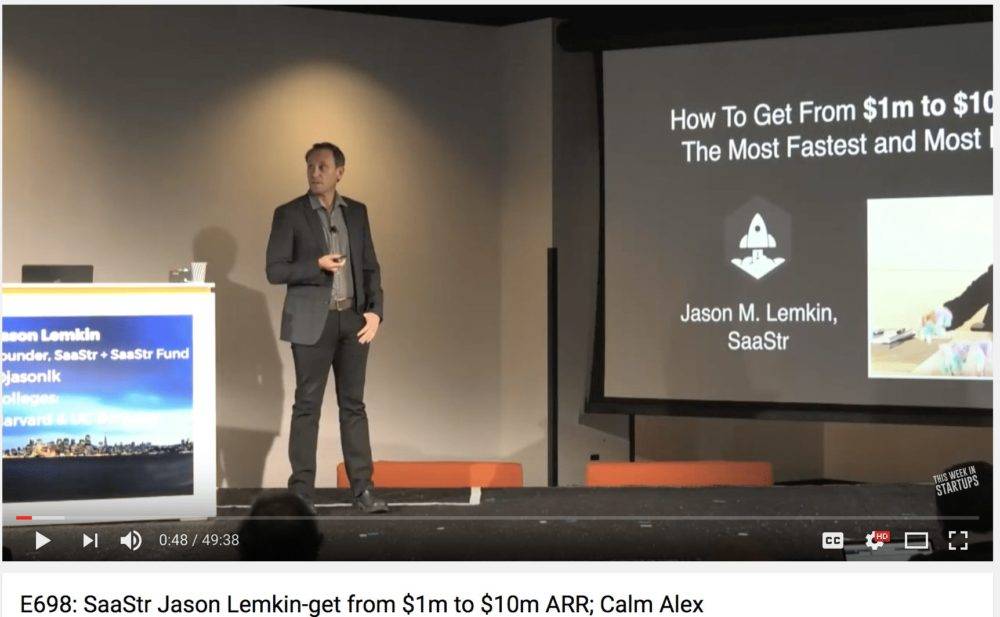
Getting from $1 million to $10 million in annual recurring revenue sounds simple in a spreadsheet. Just add a zero. Wonderful. Put it in the board deck, sprinkle in a few hockey-stick charts, and call it a strategy. In real life, however, the journey from $1M to $10M ARR is where SaaS companies either become real businessesor discover that “founder hustle” is not a scalable department.
The Launch Scale discussion popularized by SaaStr hit on a truth every B2B SaaS founder eventually feels in their bones: once you pass the first million, the game changes. Before $1M ARR, the founder can personally close deals, answer support tickets, write onboarding emails, fix the product roadmap, and somehow still remember where the coffee machine is. After $1M ARR, that heroic chaos starts breaking. Customers expect maturity. Prospects expect proof. Employees expect leadership. Investors expect metrics. Your calendar expects mercy.
So how do you get from $1M to $10M ARR the fastest? Not by doing everything faster. The fastest path is doing fewer things with more discipline: narrowing your ideal customer profile, turning founder-led sales into a repeatable revenue engine, hiring the right leaders at the right time, investing heavily in customer success, and making sure your unit economics do not quietly set the building on fire.
The $1M ARR Milestone Is Not the Finish Line
Reaching $1M ARR is a beautiful moment. It proves customers are willing to pay, the product solves a real problem, and the company has escaped the “interesting idea” zone. But $1M ARR is also the moment when many founders confuse traction with scale.
Traction means a specific group of customers really wants what you sell. Scale means you can find, sell, onboard, retain, and expand those customers repeatedly without the founder manually pushing every deal across the finish line like a tired shopping cart with one broken wheel.
At this stage, the question is no longer, “Can we sell this?” The better question is, “Can someone other than the founder sell this, to the same type of customer, at a predictable cost, with strong retention?” If the answer is yes, the road to $10M ARR becomes much shorter. If the answer is no, scaling spend only creates expensive confusion.
Start With a Painfully Clear Ideal Customer Profile
The fastest SaaS companies do not sell to “everyone who could technically use the product.” That phrase belongs in the same drawer as “we just need more awareness” and “our churn is mostly seasonal.” Maybe true, probably dangerous.
From $1M to $10M ARR, focus is oxygen. Your ideal customer profile should define the accounts most likely to buy quickly, activate successfully, renew happily, and expand naturally. That usually means looking at your current customer base and asking uncomfortable but profitable questions:
- Which customers closed fastest?
- Which customers use the product most deeply?
- Which customers renew without drama?
- Which customers expand into more seats, departments, usage, or products?
- Which customers send referrals without being bribed with a gift card?
The answer is your wedge. The wedge is not your total addressable market. It is the sharp point you use to enter the market with speed. Once you dominate that segment, you can expand. But trying to scale across five customer types too early creates five sales motions, five onboarding flows, five messaging strategies, and one exhausted team.
Turn Founder-Led Sales Into a Repeatable Machine
Many SaaS founders reach $1M ARR by selling personally. That is normal. In fact, it is often necessary. Founder-led sales teaches the company why buyers care, what language converts, which objections matter, and where the product still needs work.
But founder-led sales must eventually become company-led sales. The transition is one of the hardest parts of scaling from $1M to $10M ARR because founders often sell with context that exists only in their heads. They know every customer story, every product workaround, every objection, and every pricing exception ever created at 11:47 p.m.
To scale, you need to document the sales motion. Build a real playbook: qualification criteria, discovery questions, demo structure, objection handling, pricing rules, competitive positioning, mutual action plans, and handoff steps to customer success. If a new account executive cannot follow the process and close similar customers, the process is not yet repeatable.
Hire Sales Reps Before You Hire a Big Sales Executive
One common mistake is hiring a senior VP of Sales too early and expecting them to magically create repeatability. A great sales leader scales a working motion; they do not usually invent product-market fit from scratch. Before hiring a heavyweight revenue leader, aim to have at least a couple of sales reps consistently hitting quota. That proves the founder’s sales knowledge has been transferred into a process.
Once that foundation exists, a strong VP of Sales can help with hiring, coaching, forecasting, pipeline discipline, compensation plans, and sales team structure. At $5M ARR, a hands-on VP of Sales is often more useful than a lofty CRO who speaks entirely in strategy clouds. You need a builder, not a keynote speaker with a calendar.
Invest in Customer Success Earlier Than Feels Comfortable
The fastest path to $10M ARR is not only new logo acquisition. It is retention plus expansion. SaaS revenue compounds when customers stay, grow, and tell other people that your product is not merely “fine” but actually worth renewing. That is when growth starts getting a tailwind instead of requiring the sales team to sprint uphill forever.
Customer success should not be treated as a polite support function that sends renewal reminders and apologizes for bugs. It should be a revenue engine. Great customer success teams drive onboarding, adoption, business outcomes, renewal health, expansion opportunities, and customer advocacy.
At $1M ARR, you may not need a massive customer success department. But you absolutely need a clear owner for activation and retention. Measure time-to-value, product usage, account health, churn reasons, expansion signals, and renewal risk. The first 90 days of a customer relationship matter enormously. If customers do not experience value quickly, they may quietly begin emotionally canceling long before the actual renewal date.
Know Your Metrics or Prepare for Expensive Surprises
Scaling SaaS without metrics is like flying a plane by vibes. It might work for a while, but the landing will be memorable for all the wrong reasons.
The key metrics from $1M to $10M ARR include net revenue retention, gross revenue retention, CAC payback period, sales efficiency, burn multiple, gross margin, pipeline coverage, activation rate, churn, expansion ARR, and revenue per employee. You do not need a 94-tab dashboard that requires a finance PhD to interpret. You need a small set of metrics that the leadership team reviews consistently and uses to make decisions.
Net Revenue Retention Is the Compounding Metric
Net revenue retention shows whether your existing customer base is growing or shrinking after churn, downgrades, upgrades, and expansion. A company with strong NRR does not have to replace as much lost revenue every year. That makes growth faster, cheaper, and calmer. Calm is underrated in startups. Calm means fewer emergency board calls.
If NRR is weak, diagnose the cause. Are customers leaving because onboarding is poor? Is the product underused? Are you selling to the wrong customer segment? Is pricing misaligned with value? Are competitors winning renewals? Fixing retention is often more powerful than simply pouring more money into demand generation.
CAC Payback Keeps Growth Honest
CAC payback tells you how long it takes to recover the cost of acquiring a customer. A company can grow quickly and still be unhealthy if each dollar of new ARR costs too much to acquire. This is especially important when moving from founder-led sales into a paid go-to-market team. Salaries, tools, agencies, events, ads, and commissions add up quickly. Revenue is wonderful. Revenue that costs $2 to buy for every $1 returned is less wonderful.
The goal is not to spend nothing. Underinvesting after product-market fit can be just as dangerous as overspending. The goal is to invest where the motion is working. If a channel produces strong-fit customers with good retention and reasonable payback, scale it. If a channel produces noisy leads, long cycles, and sad sales reps, fix it or cut it.
Build One Scalable Go-To-Market Motion Before Adding Three More
Most companies between $1M and $10M ARR are tempted by channel sprawl. A founder hears that events are working for one company, outbound is working for another, product-led growth is working for a third, and partnerships are working for a fourth. Suddenly the company has six half-built motions and no clear winner.
The faster approach is to identify your strongest go-to-market motion and make it excellent. For some companies, that is founder-assisted enterprise sales. For others, it is high-velocity inside sales, product-led growth, account-based marketing, channel partnerships, or community-led growth. The motion should match your average contract value, sales cycle, buyer complexity, and product experience.
A $500-per-month self-serve SaaS product should not copy the same sales process as a $250,000 enterprise platform. Likewise, an enterprise compliance product should not pretend that a cheerful “Start Free Trial” button will replace legal review, security review, procurement, and the mysterious person in finance who appears only at the end of the quarter.
Raise Prices When Value Is Proven
Pricing is one of the most underused growth levers in SaaS. Many founders underprice early because they are grateful anyone is paying at all. That humility is charming at $100K ARR. At $5M ARR, it can become a growth tax.
If customers are receiving measurable value, your pricing should reflect that value. This does not mean randomly doubling prices and hoping nobody notices. It means studying usage, customer outcomes, willingness to pay, packaging, seat expansion, feature tiers, and value metrics. The best pricing connects what customers pay to the value they receive.
For example, a workflow automation platform might price by seats, tasks automated, usage volume, or departments. The right value metric encourages expansion as customers become more successful. The wrong metric punishes adoption and makes customer success accidentally bad for revenue.
Hire Leaders Who Remove Bottlenecks
From $1M to $10M ARR, hiring becomes a strategic weapon. The right leader can unlock a function. The wrong leader can create meetings about meetings and call it alignment.
Do not hire executives because a blog post says every startup needs a VP of Everything. Hire leaders when a function has become a bottleneck and you have enough signal for that leader to scale. Common early leadership needs include sales, marketing, customer success, engineering, product, and finance. The order depends on the company.
A VP of Engineering may be urgent if product reliability is slowing enterprise deals. A product leader may be urgent if every customer request becomes a roadmap emergency. A finance leader may be urgent if no one can explain gross margin, bookings, deferred revenue, or why the model says cash runs out in a month that everyone agreed not to discuss.
The best leaders at this stage are hands-on. They can recruit, manage, build process, coach teams, and still jump into the messy work. Prestige matters less than stage fit. Someone who scaled a public company may not enjoy building a dashboard from scratch in a conference room with suspicious Wi-Fi.
Use AI to Increase Leverage, Not to Avoid Strategy
AI has changed the SaaS scaling conversation. It can help small teams produce more output in sales research, customer support, onboarding, content, analytics, engineering, and internal operations. AI agents and automation can reduce repetitive work and help teams move faster.
But AI does not replace strategy. Automating a broken process creates a faster broken process. Before adding AI, define the workflow, the owner, the metric, and the quality standard. Then use AI to improve speed, consistency, and personalization.
For companies trying to move from $1M to $10M ARR, AI is especially useful in three areas: lead enrichment and prioritization, customer health monitoring, and support deflection. It can help sales teams identify better-fit accounts, help customer success teams spot churn risk earlier, and help support teams answer common questions instantly. The result is more leverage per employee, which matters a great deal when capital efficiency is back in fashion.
Do Not Let Product Complexity Kill Momentum
As revenue grows, customers will ask for more. Bigger customers ask for security features, integrations, admin controls, reporting, permissions, compliance support, custom workflows, and occasionally something so specific it sounds like it was invented during a procurement fever dream.
Some requests are strategic. Others are distractions wearing enterprise clothing. The product team must separate repeatable market demand from one-off customization. Saying yes to every big logo can turn a SaaS product into a consulting business with a login screen.
The best $1M-to-$10M companies build for a repeatable segment. They listen carefully to customers, but they do not let the loudest customer become the unpaid head of product. They prioritize features that improve activation, retention, expansion, and win rates across the target ICP.
Create a Revenue Operating Rhythm
Speed comes from rhythm. Weekly pipeline reviews, monthly retention reviews, quarterly planning, and clear dashboards help the company learn faster. Without rhythm, every problem becomes a surprise. With rhythm, problems become visible early enough to fix.
A strong revenue operating system should answer basic questions quickly: How much qualified pipeline do we have? Which deals are real? Which segments convert best? Which customers are at risk? Which onboarding steps delay activation? Which marketing channels produce revenue, not just applause? Which reps need coaching? Which product gaps block expansion?
When teams share the same numbers, arguments become more useful. Marketing, sales, customer success, product, and finance can stop debating whose spreadsheet is “the real one” and start improving the business.
Specific Example: The $2M ARR Company That Needs Focus
Imagine a SaaS company at $2M ARR selling workflow software to three segments: small agencies, mid-market operations teams, and enterprise IT departments. Revenue is growing, but slowly. Sales cycles vary wildly. Customer success is overloaded. Marketing creates broad content that attracts everyone and converts almost no one.
The fastest path is not “more leads.” The fastest path is analysis. The company discovers that mid-market operations teams have the best combination of contract size, sales cycle, retention, and expansion. Agencies churn because budgets are tight. Enterprise IT deals are large but painfully slow and require features the product does not yet support.
So the company narrows its ICP to mid-market operations teams. Marketing rewrites messaging around operational bottlenecks. Sales builds a demo for that buyer. Product prioritizes integrations those teams need. Customer success creates an onboarding plan tied to measurable workflow savings. Pricing shifts from flat tiers to usage-based expansion. Within two quarters, win rates improve, onboarding gets smoother, expansion becomes more predictable, and the team finally stops pretending that every customer type deserves equal attention.
The Fastest Path Is Usually the Most Disciplined Path
Going from $1M to $10M ARR is not about discovering one magic growth hack. It is about stacking disciplined advantages: sharper ICP, repeatable sales, stronger retention, better pricing, focused hiring, cleaner metrics, and scalable operations. Each improvement compounds. None of them require a wizard hat, although founders may want one for morale.
The Launch Scale lesson remains relevant because it emphasizes a simple reality: the companies that scale fastest are not always the loudest. They are the ones that learn faster, focus harder, and build systems before chaos becomes culture.
Additional Experiences and Lessons From the $1M to $10M ARR Journey
One of the most practical experiences founders share about scaling from $1M to $10M ARR is that the company’s biggest enemy is often not competition. It is internal drag. At $1M ARR, the team can still rely on informal communication. Someone shouts across Slack, a founder jumps on a call, an engineer ships a quick fix, and the customer is saved. At $6M ARR, that same behavior becomes operational debt. The team needs systems, ownership, and documentation, not because bureaucracy is fun, but because memory does not scale.
A useful experience is to run every major function through a “repeatability audit.” In sales, ask whether the last ten closed-won deals followed a similar path. In marketing, ask whether campaigns are tied to pipeline and revenue instead of vanity metrics. In customer success, ask whether onboarding is consistent or improvised. In product, ask whether roadmap decisions map to revenue strategy. In finance, ask whether leaders trust the forecast. Any area that depends on heroics is a future bottleneck.
Another lesson is that the founder’s role must evolve. The founder cannot remain the best salesperson, product manager, recruiter, support agent, and strategic thinker forever. That sounds impressive until everyone realizes the founder has become the company’s most dangerous single point of failure. The founder’s job shifts from doing the work to building the machine that does the work. That means hiring people who are better than the founder in specific functions and giving them enough context, authority, and accountability to win.
Customer conversations also change. Early customers often buy because they believe in the founder. Later customers buy because they believe in the company. That means your website, case studies, security posture, onboarding, documentation, support experience, and sales process all matter more. Buyers need confidence that your company will still be around, still improving, and still answering tickets after the contract is signed. Trust becomes part of the product.
Many companies also learn that expansion revenue must be designed, not wished into existence. If the product has no natural path from one team to many teams, from basic usage to advanced usage, or from one workflow to adjacent workflows, expansion will be harder. Build packaging that lets customers start easily and grow logically. Customer success should know what expansion-ready behavior looks like: more active users, higher usage, new departments, repeated feature requests, or measurable business impact.
Finally, the fastest companies protect momentum. They do not reinvent strategy every Monday. They pick a market, define a motion, measure the right numbers, and improve every week. They treat speed as a result of clarity. When everyone knows who the customer is, what problem matters, how revenue is created, and which metrics define success, the company moves faster without needing constant motivational speeches. And that is good news, because most motivational speeches should be kept under three minutes and away from microphones.
Conclusion
The journey from $1M to $10M ARR is where a SaaS startup becomes a real operating company. The fastest route is not reckless scaling; it is focused scaling. Define your ICP, build a repeatable sales motion, invest in customer success, monitor unit economics, price for value, hire stage-appropriate leaders, and use AI and automation to increase leverage. Above all, remember that recurring revenue compounds only when customers stay and grow. Growth is exciting, but durable growth is what gets you to $10M ARR with a business worth scaling beyond it.