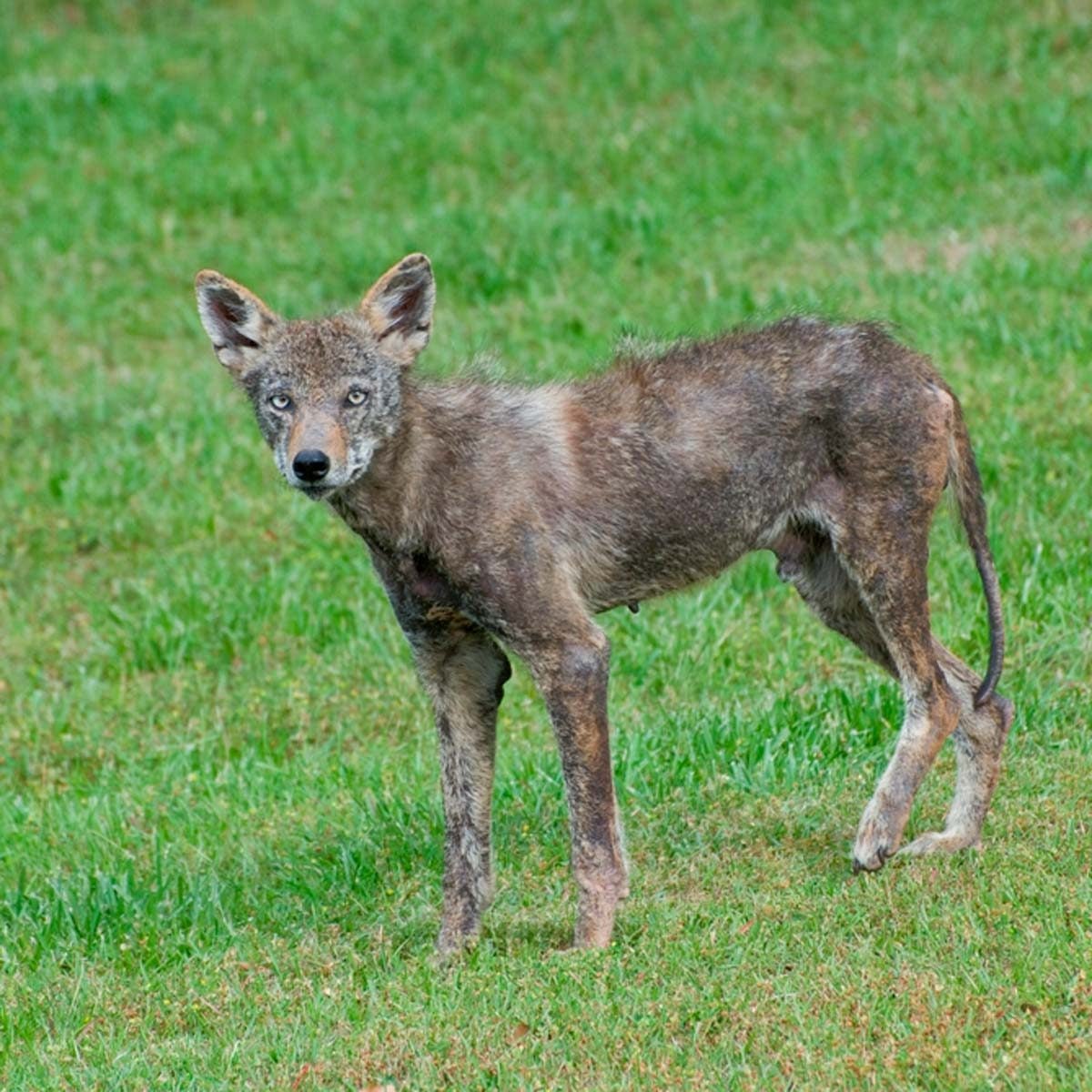
Coyotes are clever, adaptable, and apparently unimpressed by property lines. When one begins visiting your backyard, stalking the chicken coop, or treating your driveway like a wildlife shortcut, it is understandable to want it gone immediately.
The safest solution, however, is not to chase coyotes across town, set homemade traps, or turn your yard into a low-budget action movie. The effective approach is to remove whatever rewards the animal, make human-occupied areas uncomfortable, protect pets and livestock, and involve wildlife professionals when a coyote behaves aggressively.
In most situations, “getting rid of coyotes” means convincing them that your property offers no food, no shelter, and no peaceful place to hang around. Coyotes generally prefer avoiding people, but individuals that repeatedly find garbage, pet food, rodents, fruit, or unattended animals can gradually lose that caution.
Why Coyotes Keep Coming to Your Property
A coyote rarely visits because it admires your landscaping. It is usually searching for food, water, shelter, prey, or a convenient travel route. Coyotes are opportunistic feeders whose diets can include rodents, rabbits, carrion, insects, fruit, birds, reptiles, garbage, pet food, and small domestic animals.
Common backyard attractions include:
- Unsecured garbage and recycling containers
- Pet food or water bowls left outdoors
- Fallen fruit beneath trees
- Open compost containing food scraps
- Birdseed and the rodents attracted to it
- Outdoor feeding stations for community cats
- Chicken coops, rabbits, goats, or other small livestock
- Dense shrubs, crawl spaces, and openings beneath sheds
- Free-roaming cats and unattended small dogs
Simply seeing a coyote during the day does not automatically mean it is sick or aggressive. Coyotes may travel or hunt during daylight, particularly when feeding young or when an area is quiet. Behavior matters more than the clock. A coyote that crosses a road and avoids people is very different from one that repeatedly approaches adults, follows children, attacks leashed pets, or refuses to retreat when confronted.
1. Remove Every Available Food Source
The most effective coyote deterrent is an empty menu. Hazing may frighten a coyote temporarily, but the animal has a reason to return when your yard still serves a midnight buffet.
Secure trash and compost
Use sturdy garbage cans with tight, locking lids. Secure lightweight containers so they cannot be tipped over, and store them in a garage, shed, or enclosed bin whenever possible. Put garbage out on collection morning rather than leaving it at the curb overnight.
Keep compost securely covered. Avoid adding meat, bones, grease, dairy products, or other strongly scented animal matter to an exposed pile. Clean grills and outdoor cooking areas after use, including the delightfully aromatic grease tray everyone forgets until something furry discovers it.
Manage fruit, bird feeders, and pet food
Pick up fallen fruit regularly and harvest ripe produce promptly. Clean spilled seed beneath bird feeders because seed can feed rodents, and rodents can feed coyotes. Temporarily removing a feeder may be necessary when coyote activity is persistent.
Feed pets indoors. When outdoor feeding is unavoidable, supervise it and remove the bowl, leftovers, and spilled food as soon as the animal finishes. Do not intentionally feed coyotes. A fed coyote can begin associating people and homes with rewards, increasing the chance of bold behavior.
2. Use Coyote Hazing Correctly
Coyote hazing means deliberately frightening a coyote so it relearns that approaching people and developed areas is unpleasant. Research and agency guidance indicate that consistent hazing can reduce close approaches, although animals previously fed by people may be more persistent.
How to haze a coyote
- Stand upright and face the coyote.
- Make yourself look large by raising your arms or opening your jacket.
- Yell firmly, clap, stomp, or use a whistle, air horn, or shaker can.
- Move toward the animal cautiously if it does not retreat, while maintaining a safe distance.
- Continue until it leaves the entire property rather than stopping when it moves ten feet and gives you an offended look.
- Allow the coyote a clear escape route. Never surround or corner it.
A garden hose or motion-activated sprinkler can also be effective. Rotate deterrents so the coyote does not become accustomed to a single sound or device. Neighbors should use similar techniques because one fearless household can undermine an entire block’s efforts.
Do not run. Running may trigger pursuit behavior. Do not approach a coyote that appears trapped, injured, sick, or protective of a den. Never attempt to touch, capture, or physically strike it. The goal is to make the animal leave, not to start a wrestling match you will regret explaining at urgent care.
3. Install Motion-Activated Deterrents
Automated deterrents help protect a yard when nobody is outside. Useful options include motion-activated sprinklers, bright motion lights, and audible alarms designed for wildlife. Move the devices periodically because coyotes may learn that a stationary light or noise poses no actual threat.
Focus deterrents near likely entry points, chicken coops, compost areas, fruit trees, and pet exercise spaces. These devices work best as part of a larger plan. A flashing light beside an open bag of dog food is not security; it is dinner theater.
Inspect the yard for travel corridors. Trim dense vegetation near play areas, remove brush piles, and block unnecessary gaps along fences. Keep grass and weeds controlled where they provide cover for rodents, which can attract hunting coyotes.
4. Build a Coyote-Resistant Fence
Coyotes can jump, climb, squeeze through gaps, and dig beneath barriers. A decorative three-foot fence may communicate your aesthetic preferences, but it will not communicate “no coyotes.”
For stronger protection:
- Use a solid, chain-link, or heavy woven-wire fence approximately six feet high.
- Eliminate gaps around gates and along the ground.
- Bury the bottom of the fence or install a wire apron extending outward to discourage digging.
- Add an outward-facing extension or a properly installed rolling bar to prevent climbing.
- Keep furniture, firewood, storage boxes, and raised garden structures away from the fence so they cannot become launching platforms.
- Inspect the perimeter regularly for erosion, loose wire, and freshly dug holes.
Fence recommendations vary according to the structure and local conditions. Washington wildlife guidance, for example, describes buried barriers or outward wire aprons to address digging, while Florida guidance recommends fences at least six feet high for pet areas and notes that rollers may help prevent climbing. Check building codes, utility locations, and electrical-fence regulations before modifying a boundary.
5. Protect Dogs, Cats, and Other Animals
Small pets are particularly vulnerable, but larger dogs can also become involved in territorial conflicts. A fenced yard is not a substitute for supervision when coyotes are active nearby.
Protecting dogs
Accompany dogs outside, especially around dawn, dusk, and nighttime. Keep small dogs on a short, non-retractable leash during walks. Scan wooded edges, drainage channels, parks, and vacant lots before allowing a dog to investigate every interesting smell in the county.
When a coyote appears, bring the dog close, stand tall, and haze the coyote while slowly leaving the area. Picking up a very small dog may help in some situations, but use caution: an intensely focused coyote could continue approaching the pet while it is in your arms.
Protecting cats and poultry
Keep cats indoors or provide a fully enclosed catio. Free-roaming cats face risks from coyotes, vehicles, disease, dogs, and other wildlife. Feeding outdoor cats can also attract rodents and coyotes unless the feeding station is carefully managed and all food is removed promptly.
House poultry in a sturdy coop with secure latches. Lightweight chicken wire alone may not stop a determined predator. Use stronger hardware cloth or welded wire where appropriate, cover outdoor runs, reinforce the base against digging, and lock birds inside before dark.
Young goats, lambs, rabbits, and similar animals should be confined in predator-resistant shelters during vulnerable periods. Ranchers and small-farm owners can ask USDA Wildlife Services, cooperative extension personnel, or state wildlife specialists about fencing, husbandry changes, guardian animals, and other nonlethal predator-management tools.
6. Prevent Coyotes from Denning Near the House
Close access beneath decks, porches, sheds, and outbuildings before an animal moves in. Use durable barriers rather than loose lattice that wildlife can push aside.
Do not seal an opening until you are certain it is empty. A coyote, fox, skunk, or other animal may already be inside, possibly with young. Look for tracks, digging, hair, droppings, repeated travel, or sounds beneath the structure. When occupation is suspected, contact a state wildlife agency or qualified wildlife-control professional for species-specific guidance.
Avoid aggressive hazing immediately beside an active den unless an animal approaches or threatens someone. Parents protecting young may behave defensively. Keep people and dogs away from the site and obtain professional advice about exclusion timing.
7. Coordinate with the Neighborhood
Coyote management works poorly when one homeowner secures trash while another leaves pet food outside every night. Talk with neighbors, property managers, homeowners’ associations, and local officials about sightings and attractants.
Record the date, time, location, and behavior of each sighting. Distinguish between an animal merely passing through and one approaching people or targeting pets. A shared log can help wildlife officials identify repeated problem behavior without turning every distant howl into a neighborhood emergency.
Community programs should focus on education, attractant removal, pet protection, and consistent hazing. Removing a single animal without correcting food and shelter conditions can leave an attractive territory available for another coyote.
What Not to Do
Do not use poison. Poison can kill pets, birds of prey, scavengers, and other unintended animals, and its use may violate state and federal law. Do not set traps unless you have confirmed that the method is legal, appropriate, and performed by a properly licensed professional. Traps can injure pets and non-target wildlife.
Do not attempt to relocate a coyote yourself. Wildlife relocation is restricted or prohibited in many jurisdictions, and a released animal may be injured, killed, spread disease, enter another coyote’s territory, or try to return.
Do not discharge a firearm in a residential area or assume that property ownership overrides hunting, firearm, cruelty, or wildlife regulations. Laws governing coyotes differ substantially among states, counties, and municipalities. Contact the appropriate wildlife agency before considering capture or lethal control.
Broad removal campaigns are not a replacement for eliminating attractants. Coyotes are mobile and adaptable, so unoccupied habitat containing abundant food may simply attract new animals.
When to Call Wildlife Officials
Contact animal control, a state wildlife agency, or an authorized wildlife professional when a coyote:
- Repeatedly approaches people without fear
- Follows or stalks children
- Chases joggers, cyclists, or leashed pets
- Acts aggressively after being hazed
- Enters occupied patios, garages, or other close human spaces
- Appears severely injured, disoriented, unusually uncoordinated, or dangerously ill
- Bites or scratches a person
Call emergency services when an animal is actively attacking or an immediate threat to human safety exists. After any bite or scratch, wash the wound thoroughly with soap and running water and seek prompt medical advice. Report the incident to the local health department or animal-control authority. Pets bitten by wildlife require immediate veterinary attention, even when their vaccinations are current.
Practical Experiences: What Homeowners Commonly Learn
The following composite scenarios reflect recurring lessons reported in wildlife-agency guidance and ordinary residential coyote conflicts. They are not claims about one specific household, but they illustrate why some coyote-control efforts succeed while others produce nothing except exhausted homeowners and suspicious-looking security-camera footage.
The trash-can visitor
A homeowner notices a coyote beside the garage on three consecutive mornings. The first reaction is to buy an ultrasonic gadget and point it toward the driveway. The coyote disappears for two nights, then returns. A closer inspection reveals the real attraction: a garbage lid that pops open whenever the can tips, plus grease beneath an outdoor grill.
The successful fix is wonderfully unglamorous. The garbage moves into the garage, the grill is cleaned, fallen fruit is collected, and a motion sprinkler is installed near the side gate. When the coyote appears again, the homeowner yells and follows through with consistent hazing until it leaves. Sightings become less frequent because the property no longer pays the animal for visiting.
The small dog in the backyard
Another household assumes its wooden privacy fence makes the yard secure. A coyote is later seen balancing near the top, using a stack of firewood as an intermediate step. The family moves the firewood, repairs a gap beneath the gate, adds an approved climbing barrier, and begins supervising evening bathroom breaks.
The main lesson is that a fence is only as strong as its easiest route. A six-foot wall with a loose gate, nearby patio table, or tunnel underneath can become a very expensive suggestion. Supervision remains essential, particularly for small dogs.
The neighbor who feeds wildlife
In a third scenario, several residents remove pet food and secure garbage, yet coyotes continue gathering near the same corner. Eventually, someone discovers that a neighbor is leaving food outdoors for raccoons and community cats. The neighbor believes the coyotes are interested only in the cats, not the food. In reality, both can attract them.
A calm neighborhood conversation works better than public shaming. Residents create a feeding schedule, remove leftovers immediately, clean spilled food, improve cat shelters, and report unusually bold coyote behavior. Once the predictable food supply disappears, coyote activity declines across several properties rather than only one.
The one-night-deterrent disappointment
Homeowners often expect one blast from an air horn to deliver a legally binding eviction notice. A coyote may retreat and return later to see whether the scary human is still serious. Consistency is what changes the pattern.
Effective households repeat the same core message: no food, no hiding place, no unattended pets, and no comfortable loitering near people. They also vary the delivery with voices, clapping, water, alarms, and movement. Over time, the property becomes inconvenient, while natural habitat remains a quieter and safer option.
These experiences demonstrate a central truth: coyote deterrence is usually less about defeating an animal and more about changing human habits. The coyote is following available rewards. Remove those rewards, reinforce boundaries, and coordinate with neighbors, and the conflict often becomes manageable without dangerous improvisation.
Conclusion
The best way to get rid of coyotes is to make your property unrewarding and unmistakably occupied by confident humans. Secure garbage, remove outdoor food, protect pets, improve fencing, eliminate denning access, and haze bold coyotes consistently without cornering or injuring them.
Most coyotes want an easy meal rather than a confrontation. Once your yard stops offering dinner and starts offering sprinklers, shouting, secure barriers, and watchful residents, the animals have strong reasons to travel elsewhere. Persistent aggression, attacks, or abnormal behavior should always be handled with assistance from local wildlife and public-safety authorities.
Note: This article provides general educational guidance. Wildlife laws, trapping rules, deterrent restrictions, and agency procedures vary by location. Consult your state wildlife agency, local animal control office, veterinarian, or emergency services when a person or pet is in danger.