If your backyard smells like a dog park that forgot how calendars work, you are not alone. Outdoor pet urine odor is one of those sneaky household problems that starts small, then suddenly turns your patio, fence line, or favorite patch of grass into a place nobody wants to sit near. The good news? You do not need magic crystals, a hazmat suit, or a yard-sized bottle of perfume. You need the right cleaning method, the right timing, and a little strategy.
Whether the smell is coming from dog urine on the lawn, cat spray near the porch, or repeat accidents on gravel, mulch, concrete, or artificial turf, the fix usually comes down to one simple rule: do not just cover the smell, break it down. That is why the best solutions focus on rinsing, diluting, and using enzyme-based products that target odor at the source instead of throwing a floral air freshener at a biological problem and hoping for the best.
In this guide, you will learn how to get rid of pet urine odor outside, how to handle different surfaces, what mistakes to avoid, and how to stop the smell from coming back. Because winning the battle against outdoor pet odor is much more satisfying when it stays won.
Why Outdoor Pet Urine Odor Sticks Around
Outdoor spaces may seem like they should clean themselves. After all, there is sun, wind, rain, and plenty of open air. But pet urine is stubborn. It can soak into porous surfaces like soil, wood, concrete, mulch, and artificial turf backing. As the liquid dries, odor-causing compounds remain behind. Warm weather makes the problem worse by heating up those residue-filled surfaces and releasing the smell back into the air.
Lawns add another layer of drama. Pet urine can overload a small area with nitrogen and salts, which may burn the grass, leave brown centers with darker green rings, and create a spot that looks bad and smells worse. On hard surfaces, urine may evaporate quickly but still leave residue in cracks, seams, grout, and textured materials. On synthetic turf, the smell can linger if the surface is not rinsed thoroughly on a regular basis.
The big takeaway is this: outdoor odor lingers not because the yard hates you personally, but because urine leaves behind concentrated material that needs to be flushed out or broken down.
First Things First: What to Do as Soon as You Notice the Smell
If the urine is fresh, act fast. Fresh messes are far easier to handle than old ones that have had time to cook in the sun like a very unwanted casserole.
- Blot or absorb if possible. If the urine is on a hard surface like a deck, porch, or patio and still wet, absorb as much as you can with paper towels or old rags.
- Rinse with water. Use a hose or bucket to dilute the area thoroughly. This is especially useful on grass, gravel, concrete, and artificial turf.
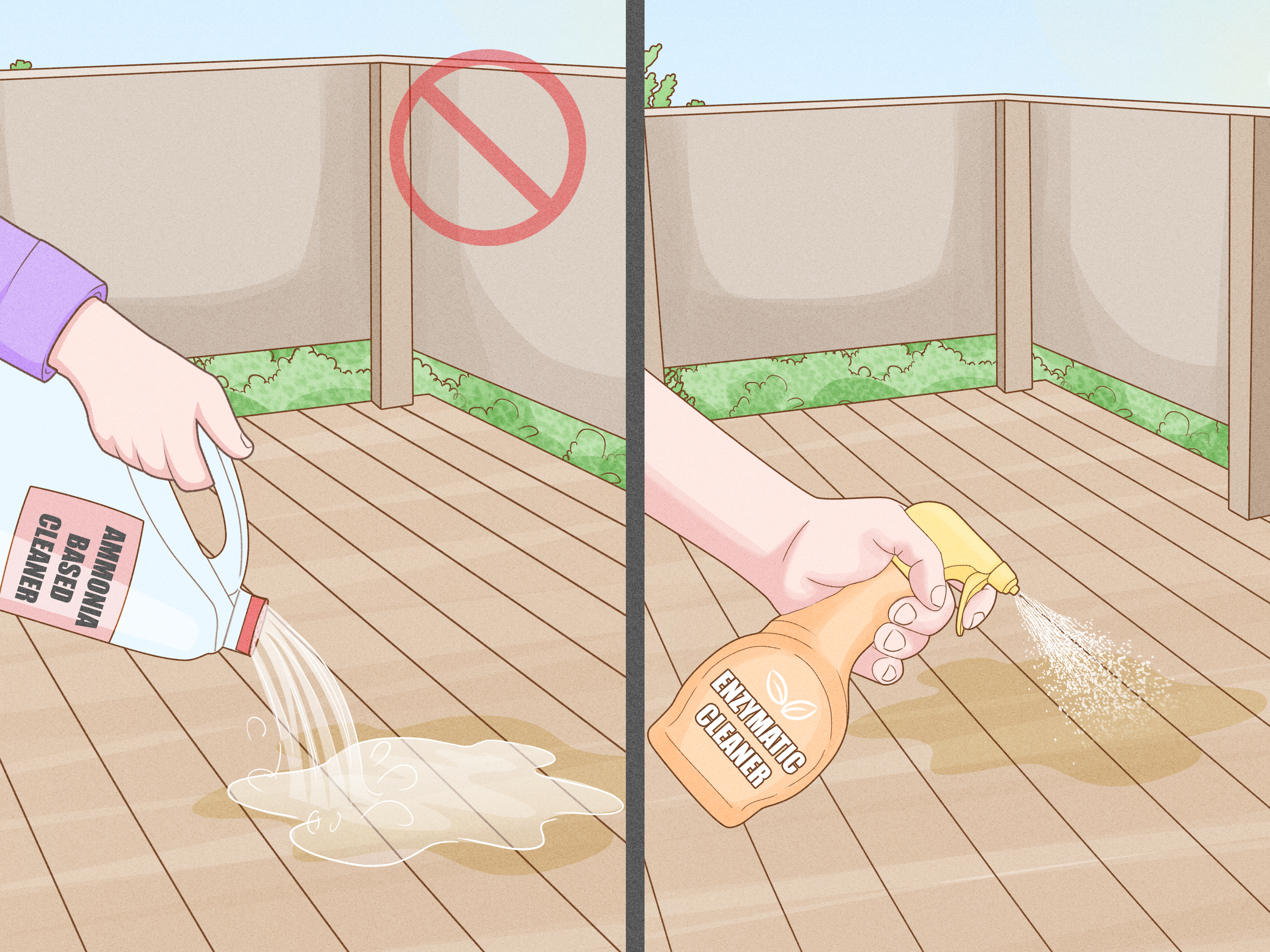
- Apply an enzyme cleaner or pet-safe odor remover. This step matters most when the smell has settled in or the same spot gets used over and over.
- Let it sit long enough. Follow the label directions. Many people lose patience too early and then blame the product, when really the product barely had time to unpack.
- Rinse again if the surface requires it. Some outdoor products work best when lightly rinsed after dwell time, while others should air dry. Always follow the instructions.
If the odor is old, do not panic. You may just need a few treatment cycles instead of one.
The Best Ways to Remove Pet Urine Odor by Surface
1. Grass and Lawn
For a lawn, your goal is twofold: reduce the smell and limit turf damage. Start by soaking the affected area with water. This helps dilute concentrated urine before it continues to stress the grass. If the smell is lingering, use a pet-safe outdoor odor eliminator designed for yards. Avoid treating living grass like a kitchen floor. Products that are too harsh can hurt the lawn or irritate your pet’s paws.
If the grass is already brown, dead blades will not magically revive. Rake out the damaged patch, loosen the soil, and reseed or patch with sod if needed. If your pet keeps using the same spot, consider making that area the official bathroom zone rather than trying to defend a losing war in the middle of your best-looking grass.
Helpful tip: A quick rinse right after your dog pees can make a noticeable difference over time. It sounds almost too simple, but sometimes the humble hose is the unsung hero of the yard.
2. Concrete, Pavers, Brick, and Patios
Hard surfaces may look easy to clean, but they often trap urine in pores, seams, and surface texture. Start by rinsing thoroughly. Then apply an enzyme cleaner or hydrogen peroxide-based cleaner that is safe for the material. Let it dwell according to directions, scrub with a stiff brush if needed, and rinse again.
If the odor keeps returning, the urine may be sitting deeper in cracks or grout lines. In that case, repeat the treatment and consider using a pressure washer after the odor remover has had time to work. Pressure alone can spread urine residue around if you do it first, so break down the odor before blasting the area like you are interrogating the patio.
3. Wooden Decks and Fences
Wood is porous, which means urine can sink in and hold on tight. Rinse the area, then use an enzyme cleaner approved for outdoor wood surfaces. Scrub gently with the grain and allow proper drying time. If the smell has been there for a long time, you may need multiple treatments.
In severe cases, sanding and resealing may be necessary for old deck boards or fence posts that have become a favorite marking target. If your dog thinks one corner post is the social media feed of the neighborhood, you may also need a behavior plan, not just a cleaning plan.
4. Gravel, Mulch, and Dirt
These surfaces are tricky because there is no neat top layer to wipe clean. Start with a heavy rinse to dilute the urine. Then apply an outdoor enzyme product made for landscaping or kennel-style areas. In mulch or decorative stone beds that smell strongly after repeated use, replacing the top layer may be the fastest solution.
For dirt runs or dog paths, drainage matters. If the area stays damp, odors can stick around longer. Improving drainage, adding fresh gravel, or rotating potty areas can help reduce repeat buildup.
5. Artificial Turf
Artificial grass is convenient, but it can hold urine odor if not maintained. Rinse it regularly, especially in hot weather. For smelly spots, use a pet-safe cleaner made for synthetic turf and brush the area so the product reaches into the fibers and backing. Pay attention to drainage too. If the base is not draining well, odor problems can keep returning no matter how much cleaner you use on top.
Think of artificial turf like a reusable coffee filter. It works beautifully until residue builds up. Then it starts telling on you.
What Actually Works Best for Outdoor Pet Odor
The most effective long-term solutions usually include:
- Enzyme cleaners: Best for breaking down urine residue and discouraging repeat marking.
- Prompt rinsing with water: Especially helpful for grass, artificial turf, concrete, and gravel.
- Outdoor pet odor eliminators: Good for large yard areas, kennels, fences, and deck zones.
- Targeted patch repair: Useful when the grass is already damaged and holding odor in dead areas.
- Routine maintenance: Small cleanups done often beat giant rescue missions done once in a panic.
What Not to Do
Sometimes odor problems get worse because the cleanup method is wrong. Here are the biggest mistakes to avoid:
- Do not mix bleach with ammonia or other cleaners. That can create dangerous fumes.
- Do not rely only on fragrance sprays. If the urine remains, the odor usually comes back.
- Do not assume rain solves everything. Rain may dilute some surface odor, but it often does not fully remove residue from porous materials.
- Do not overuse harsh chemicals around pets. Some cleaners can irritate paws, skin, or airways.
- Do not ignore repeat marking. If the same spot keeps getting hit, cleaning alone may not fix the problem.
And yes, household DIY methods like baking soda or mild peroxide can help in some situations, especially on hard surfaces. But they are usually supporting actors, not the star of the show. If the smell is intense or keeps returning, an enzyme-based pet odor remover is generally the better choice.
How to Stop the Smell from Coming Back
Create a Designated Potty Area
This is one of the smartest outdoor odor strategies. Pick a low-traffic section of the yard and train your pet to use it consistently. Gravel, mulch, or a small dog run can be easier to clean than your main lawn. If your dog already has a favorite corner, congratulations, they may have chosen the designated potty area for you.
Rinse High-Use Areas Regularly
For dogs who always go in the same place, a quick hose-down once or twice a day can reduce buildup. On artificial turf or concrete, routine rinsing can dramatically reduce that “hit you in the face the moment you open the back door” smell.
Reduce Repeat Marking
If a pet keeps marking the same fence post, planter, or patio leg, clean the area thoroughly and make it less attractive. You can temporarily block access, change the setup, or supervise outdoor time more closely. For some pets, spaying or neutering and behavior support may help reduce marking behavior.
Improve Drainage
Standing water and soggy soil are odor’s best friends. Good drainage helps outdoor areas dry properly and reduces the chance that urine residue hangs around in the surface layer.
When the Odor Might Mean Something More
If your yard suddenly smells much stronger than usual, or your pet is urinating more often, straining, having accidents, or showing behavior changes, it may be time for a veterinary checkup. Strong-smelling urine can sometimes go along with dehydration, diet changes, urinary issues, or infection. Also, if outdoor areas are contaminated by urine from wildlife or stray animals, be cautious around puddles and wet soil, especially if pets drink from standing water.
Translation: if the smell seems off, do not just wage war on the patio. Look at the pet too.
Real-Life Experiences and Practical Lessons From Dealing With Outdoor Pet Urine Odor
People usually discover outdoor pet urine odor in one of three ways. First, they step outside with coffee in hand, take one heroic sip, and immediately regret every life choice that led them to the back door. Second, they host guests and suddenly become deeply aware that the side yard smells like a forgotten gas station restroom. Third, summer arrives, the temperature climbs, and every surface starts reheating old urine residue like a terrible scented candle.
In real homes, the problem often is not one giant accident. It is repetition. One dog always uses the same patch by the gate. One cat sprays the planter near the porch. One stretch of artificial turf quietly collects odor for weeks because it looks clean, so nobody realizes it is not actually clean. That is why the most successful fixes tend to be boringly practical rather than dramatic.
For many homeowners, the first breakthrough is realizing that water matters more than they expected. A quick rinse after bathroom breaks sounds almost laughably simple, yet it often makes a huge difference on lawns, concrete, and turf. It does not solve everything, but it keeps odor from concentrating. Think of it as brushing your teeth for the yard. Not glamorous, very effective.
The second breakthrough is giving up on the idea that strong fragrance equals deep cleaning. Plenty of people try citrus sprays, heavily scented cleaners, or random “odor bombs” meant for general outdoor funk. The result is often a backyard that smells like lemony pee instead of plain pee, which is not exactly the transformation anyone hoped for. The product that usually changes the game is an enzyme cleaner or a pet-safe odor eliminator designed for urine. Once the source gets broken down, the smell starts losing the fight.
Another common experience is discovering that surface type changes everything. Grass can recover with dilution, reseeding, and time. Concrete might need soaking and scrubbing. Mulch may need replacement. Artificial turf may need a rinse schedule, brushing, and occasional deep treatment. One-size-fits-all advice usually falls apart fast because a deck board and a lawn patch do not behave the same way, even if both smell equally offensive on a hot afternoon.
Many pet owners also find that prevention becomes easier once they stop trying to make the whole yard smell perfect and start managing one spot really well. A designated potty zone can save the rest of the yard from constant damage and make cleanup faster. Some people use gravel, some use mulch, and some simply accept that one corner of the yard is now the official bathroom district. That acceptance can be oddly liberating.
Perhaps the biggest lesson is that odor control is usually a routine, not a one-time miracle. The households that get the best results are not necessarily using fancy products. They are rinsing regularly, treating trouble spots early, cleaning deeply when needed, and adjusting pet habits before the smell becomes permanent. In other words, the secret is not wizardry. It is consistency. Slightly less exciting than wizardry, but much better for the patio furniture.
Conclusion
Getting rid of pet urine odor outside is completely doable when you treat the source instead of just masking the smell. Start with quick rinsing, use an enzyme-based or pet-safe outdoor odor remover, and match your method to the surface. For lawns, dilution and repair help. For patios, decks, and turf, deep cleaning and routine maintenance matter most. And if the same area keeps smelling like trouble, prevention is your best friend: train for a designated potty spot, reduce repeat marking, and keep high-use areas clean on a schedule.
Your yard does not have to smell like a public complaint. With the right approach, it can go back to smelling like fresh air, cut grass, and maybe a burger on the grill, which is a much more respectable résumé for an outdoor space.