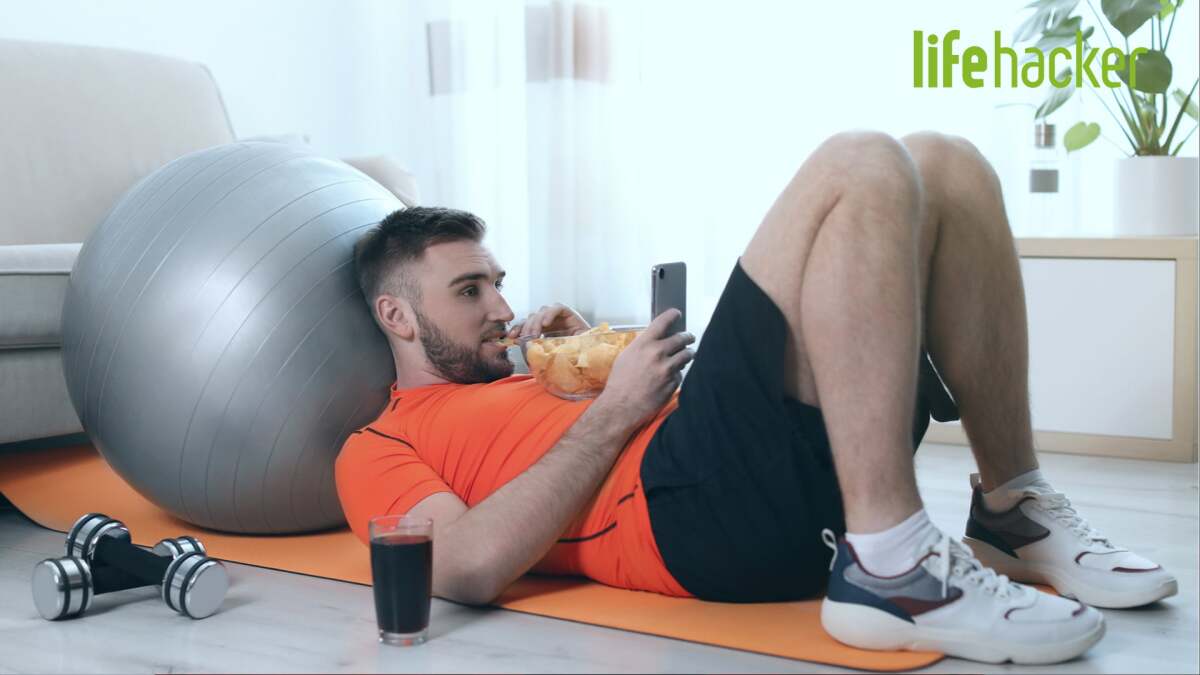
Quarantine has a sneaky superpower: it can turn perfectly motivated humans into professional couch auditors.
One minute you’re thinking, “I’ll reorganize my entire life,” and the next you’re three episodes deep, wearing
the same “day pajamas” you wore yesterday. If that sounds familiar, you’re not brokenyou’re human.
The good news: you don’t need to become a productivity robot to avoid quarantine laziness. You just need a
plan that works with your brain (and your limited willpower), not against it. Below are practical,
research-backed strategiesplus real-life-style experiencesto help you stay active, focused, and
surprisingly functional, even when your world shrinks to a few rooms.
Why Quarantine Makes You Feel Lazy (Even If You’re Not)
1) Your brain hates uncertainty and loves energy-saving mode
Stress and uncertainty don’t just make you feel tensethey can make everyday decisions feel heavier, too.
When your mind is busy scanning for danger (“What’s next? How long will this last?”), it has less fuel for
planning, focusing, and doing. That “I can’t even decide what to eat” feeling is real, and it’s common.
2) Your environment stopped giving you built-in momentum
Pre-quarantine, your day had “automatic movement”: walking to the car, school, work, errands, meetings,
and casual social stuff. In quarantine, the commute might be… from bed to chair. When those external
cues disappear, your energy can dipand it’s easy to confuse that with laziness.
3) Motivation is unreliablestructure is dependable
Motivation is like a cat: it shows up when it wants to, not when you call it. Quarantine exposes that truth.
The fix isn’t “try harder.” The fix is building simple structure and using small actions to kick-start
motivation.
The Anti-Lazy Quarantine Blueprint
Step 1: Build a “Good-Enough” Daily Routine (Not a Perfect One)
A routine doesn’t need to be fancy. It needs to be repeatable. Many mental health and public
health resources emphasize keeping regular patterns for sleep, meals, movement, and wind-down timebecause
routines reduce decision fatigue and help your body’s internal clock stay stable.
Try this simple daily framework (adjust times however you want):
- Anchor 1 (Morning): Wake up, light exposure, water, quick movement.
- Anchor 2 (Midday): Food + a short walk/stretch + one meaningful task.
- Anchor 3 (Evening): Dinner, connection (text/call), wind-down routine, consistent bedtime.
If you only do one thing today: pick a consistent wake-up time. Everything else gets easier when your sleep
schedule stops playing musical chairs.
Step 2: Use “Action First” Psychology (Behavioral Activation)
When people feel stuck, waiting to “feel like it” can become a trap. A practical therapy-based idea called
behavioral activation flips the script: you schedule small, doable actions that create a sense
of progress and reward. The punchline is that motivation often shows up after you start, not before.
Use the “Pleasure + Mastery” method:
- Pleasure: something enjoyable (music, drawing, gaming with a friend, cooking).
- Mastery: something that builds competence (cleaning one surface, a 10-minute workout, a short study block).
Example: “At 2:00 pm, I’ll do 8 minutes of cleaning (mastery) and then make iced tea and sit by the window for 10 minutes (pleasure).”
Small wins count. In quarantine, small wins are basically currency.
Step 3: Make Movement Non-Negotiable (But Keep It Ridiculously Easy)
Health guidelines commonly recommend about 150 minutes of moderate activity per week (plus
muscle-strengthening on 2+ days). That sounds like a lot until you translate it into “about 20–30 minutes most
days,” and even that can be broken into smaller chunks.
Your quarantine-friendly goal: move a little, often.
- The 3×10 plan: 10 minutes of movement, 3 times a day (walk in place, stairs, dancing, stretching).
- Movement snacks: 60 seconds of squats, wall push-ups, or marching every hour.
- “Commercial break cardio”: during a show, move during intros or breaks.
Want a simple no-equipment strength circuit (10–12 minutes)?
- Chair squats – 10 reps
- Wall or counter push-ups – 8–12 reps
- Hip hinge (good morning) – 10 reps
- Plank (knees or full) – 20 seconds
- Repeat 2–3 rounds
The secret isn’t intensityit’s consistency. Your body doesn’t care if it’s a “real workout.” It cares that you
stopped being furniture.
Step 4: Design Your Space So Doing the Right Thing Is the Easy Thing
Quarantine laziness often isn’t about character. It’s about friction. The more steps something
takes, the less likely you’ll do it. So reduce steps for good habits and add steps for time-sink habits.
- Make movement visible: leave a yoga mat or resistance band where you’ll trip over it (gently).
- Make work obvious: set up a “start spot” (laptop, notebook, water) ready the night before.
- Make doomscrolling harder: log out, remove the app from your home screen, or set a timer.
- Use a “transition cue”: a specific song, a candle, or making tea = “now we start.”
Tiny environment tweaks can do more than giant motivational speeches. Your room is either a teammate or a
chaos gremlintrain it accordingly.
Step 5: Set Micro-Goals That Are Too Small to Fail
Big goals can backfire in quarantine because your energy and mood can swing day to day. Micro-goals keep you
moving even on low-energy days.
Use this formula: When X happens, I will do Y for Z minutes.
- When I finish breakfast, I will stretch for 3 minutes.
- When I sit at my desk, I will work for 10 minutes before checking my phone.
- When I feel stuck, I will do one “reset task” (trash, dishes, laundry) for 5 minutes.
If you can do more, great. If not, you still kept the habit alive. That’s how you avoid the “all-or-nothing”
spiral.
Step 6: Protect Your Sleep Like It’s Your Job
Quarantine can wreck sleeplate-night screens, weird naps, no daylight cues. But sleep affects everything:
mood, appetite, focus, and the ability to resist the siren call of doing absolutely nothing.
Practical sleep habits that help:
- Keep a consistent wake time (yes, even weekendsbe gentle, but consistent).
- Use a wind-down routine: same steps nightly (wash up, light stretch, reading, calming music).
- Get daylight exposure earlier in the day if possible.
- Don’t “chase” sleep: if you can’t fall asleep, do a calm activity and return when sleepy.
Step 7: Eat for Steady Energy (Not Just “Snack O’Clock”)
In quarantine, the kitchen becomes a social club. Eating well doesn’t mean being perfect; it means supporting
your energy and mood. Nutrition guidance often boils down to the basics: more fruits/vegetables, balanced
meals, and fewer ultra-sugary “crash later” choices.
Try the “simple plate” idea:
- Half: vegetables and fruit
- Quarter: protein (beans, eggs, fish, poultry, tofu)
- Quarter: whole grains or starchy veg
- Plus: water (your brain is not a cactus)
Quarantine pro-tip: plan one “default breakfast” and one “default lunch” you can repeat. Fewer decisions =
less chaos = less “I guess I’ll eat cereal over the sink again.”
Step 8: Manage Stress and Cut the Doomscrolling Loop
During outbreaks, many public health resources recommend staying informedbut also setting limits on how much
news and social media you consume. Constant updates can keep your nervous system stuck in high alert, which
makes it harder to focus and easier to shut down.
A realistic approach:
- Pick 1–2 check-in times for news (e.g., noon and 6 pm).
- Use trustworthy sources, then log off.
- Replace scrolling with a “downshift”: breathing, stretching, music, or a shower.
If your brain is buzzing, start with a 60-second reset: slow inhale, slow exhale, relax your shoulders. It’s
not magicjust biology.
Step 9: Stay Connected (Because Accountability Is Basically Rocket Fuel)
Quarantine can make time feel mushy. Connection adds shape to the day. It also boosts follow-through because
someone else exists to witness your intentions (gently, not judgmentally).
- Buddy system: text a friend your “one win” for the day.
- Co-working: video call while you both study/clean quietly.
- Shared challenge: “7-day step streak” or “10-minute tidy daily.”
You’re not trying to impress anyone. You’re just building a small web of support so quarantine doesn’t turn
into an isolation swamp.
When “Lazy” Might Be Something Else
Sometimes “laziness” is actually stress overload, low mood, burnout, or depression. If you’ve lost interest in
everything, your sleep is consistently off, you feel hopeless, or daily tasks feel impossible for more than a
couple of weeks, it’s worth talking to a healthcare professional or mental health provider. Help isn’t a last
resortit’s a smart tool.
Real-World Quarantine Experiences (The “Yep, That’s Me” Edition)
Below are composite, real-life-style experiences that reflect common quarantine patterns. If you recognize
yourself, take it as confirmation that you’re normaland that small changes really can shift the whole vibe.
Experience 1: The “I’ll Start Tomorrow” Loop
A college student planned to “use quarantine to get ahead” but woke up late, checked the phone, and somehow
it was 3 pm. The day felt ruined, so the brain offered a deal: “Let’s start tomorrow.” Tomorrow became a
chain of tomorrows. What finally helped wasn’t a perfect scheduleit was a rule: one 10-minute start.
Every day, the student had to do 10 minutes of something that counted (reading, laundry, walk, or one
assignment section). Some days the 10 minutes stayed 10. Other days it turned into an hour. The point was
breaking the “all-or-nothing” spell.
Experience 2: The Accidental Night Owl
A remote worker drifted into a 2:30 a.m. bedtime because evenings felt like the only “me time.” Mornings became
foggy, workouts disappeared, and caffeine became a personality trait. The fix was surprisingly boring:
keep the same wake time, get bright light early, and build a wind-down routine that started at a specific time.
The worker also moved “me time” earlier30 minutes after lunchso the brain didn’t need to steal it from sleep.
Within two weeks, energy improved, and the urge to nap at 4 pm dropped.
Experience 3: The Kitchen as a Hobby (and a Trap)
Someone quarantining with family found themselves snacking constantlynot from hunger, but from boredom and
stress. Food became entertainment and comfort, then guilt showed up like an unwanted pop-up ad. The shift came
from adding structure, not restriction: planned snacks, more balanced meals, and a “pause routine” before
grazing (water + 2 minutes of breathing + “What do I actually need right now?”). Often the answer wasn’t food;
it was a break, a chat, or a quick walk around the house. Hunger was still honoredjust not confused with
feelings.
Experience 4: The Motivation Myth Gets Exposed
A high school student kept waiting to “feel motivated” to exercise. It rarely happened. So they tried a
different approach: shoes on at 4:00 pm, every day, no negotiation. The rule was simple: once the shoes were
on, they could do the easiest version possiblewalk in place for 5 minutes, stretch, or do a beginner video.
Most days, starting felt silly… until it didn’t. After a week, it became automatic. After a month, it wasn’t
about motivation at all. It was just “the thing that happens at 4.” That’s the power of routine: it makes
effort optional.
Experience 5: The “My Brain Feels Tired” Problem
A person doing caregiving during quarantine felt mentally exhausted and started quitting tasks halfway through.
They assumed it meant they were weak, but it was actually overload. They started using “decision buffers”:
a short list of default meals, a fixed cleaning routine (two rooms a day), and a daily “brain break” that was
genuinely restorative (music, shower, stretchingno scrolling). They also lowered the bar: not “deep clean,”
just “clear one surface.” The result wasn’t perfectionit was stability. And stability felt like getting life
back.
The big lesson from these experiences: quarantine success isn’t about becoming a new person. It’s about
building small systems that keep you moving when feelings wobble. If you do a little today, you’ll find it
easier to do a little tomorrowand that’s how “lazy quarantine mode” quietly loses its grip.
Conclusion
Quarantine can make anyone feel sluggish, scattered, and stuck. The way out isn’t guiltit’s structure.
Start with a consistent wake time, schedule tiny actions that create momentum, move in short bursts, protect
sleep, and make your environment work for you. Limit stress triggers like nonstop news, stay connected, and
give yourself credit for small wins. In weird seasons, “small wins” are not smallthey’re the whole strategy.