The phrase “heterosexual lifestyle” sounds straightforward, but human sexuality rarely fits into a tidy lifestyle package beside “minimalist,” “outdoorsy,” or “owns too many houseplants.” A person may be gay while appearing heterosexual, remaining celibate, marrying someone of another gender, keeping their orientation private, or delaying coming out for reasons involving safety, family, faith, culture, employment, or financial dependence.
Here is the essential distinction: sexual orientation describes patterns of emotional, romantic, or sexual attraction. Behavior describes what someone does. Identity is the language someone uses for themselves. Public disclosure concerns who knows. These elements can overlap, but they are not interchangeable. Dating a person of another gender does not automatically make a gay person heterosexual, just as avoiding relationships does not erase attraction.
If you are considering living in a way others perceive as straight, the healthiest approach is not to “fix” yourself. It is to understand your motives, protect your well-being, and make choices that do not depend on deceiving or exploiting another person.
Begin With the Real Reason Behind the Question
Before deciding how to live, ask what you are actually trying to accomplish. “I need to stay safe while financially dependent on my family” is very different from “I believe marriage will make me stop being gay.” The first is a safety problem requiring practical planning. The second is a prediction about changing sexual orientationand one unsupported by credible medical evidence.
Common reasons people consider presenting as heterosexual include:
- Fear of family rejection, homelessness, harassment, or violence
- Religious beliefs or pressure from a faith community
- Concern about employment, education, housing, or immigration
- A desire to preserve an existing marriage or family structure
- Uncertainty about whether “gay” is the right identity label
- Internalized shame learned from an unsupportive environment
- A personal decision to remain celibate
Write down the reason without editing it into something socially acceptable. Then ask: Is this choice freely mine, or am I responding to a threat? Does it support my values, or merely reduce someone else’s discomfort? What might it cost me emotionally in one year, five years, or twenty?
Understand What Canand CannotBe Chosen
You can choose behavior, boundaries, and disclosure
You can decide whether to date, have sex, marry, remain single, disclose your orientation, attend a particular religious community, or discuss your personal life at work. You can also change those decisions as your circumstances change. Privacy is not dishonesty simply because other people feel entitled to information about you.
Coming out is not a mandatory ceremony with balloons, a spotlight, and a legally required social-media post. It is a personal process. You may be open with one trusted friend while remaining private with relatives or coworkers. If disclosure could threaten your housing, education, income, physical safety, or access to health care, delaying it may be a reasonable form of self-protection.
You cannot reliably manufacture heterosexual attraction
Major U.S. medical and mental-health organizations agree that homosexuality is not an illness. Efforts designed to convert gay people into heterosexual people lack reliable evidence of effectiveness and may cause serious harm. Changing outward behavior, suppressing feelings, or adopting a straight public identity is not the same as changing sexual orientation.
An ethical therapist may help you explore identity, relationships, faith, grief, or difficult choices without dictating the answer. Be cautious of anyone who guarantees that prayer, discipline, marriage, hypnosis, shame, or a suspiciously expensive weekend seminar will make you straight. Hope is valuable; a sales pitch wearing a lab coat is still a sales pitch.
Do Not Use an Unsuspecting Partner as a Cover
One of the greatest risks in trying to lead a heterosexual-looking life is entering a relationship under false pretenses. A person of another gender is not camouflage. They are a human being who deserves enough information to provide meaningful consent to the relationship.
If you know you are gay and experience little or no attraction to a prospective partner, do not promise that conventional marriage will solve everything. Marriage can create companionship, financial stability, social approval, and children. It cannot guarantee desire, romantic compatibility, or a change in orientation.
Some adults knowingly choose mixed-orientation relationships. These arrangements can take different forms, but their ethical foundation is honest communication. Both partners should understand the situation, freely accept it, and be able to negotiate affection, sex, exclusivity, parenting, finances, and future expectations without coercion.
Before making a commitment, discuss questions such as:
- What does each person know about the other’s orientation and attractions?
- What kind of emotional and sexual intimacy is realistically possible?
- Is either partner secretly expecting the other person to change?
- What does monogamy mean to both people?
- How would the couple respond if secrecy became emotionally unsustainable?
- How might the arrangement affect children or extended family?
If honest answers would immediately end the relationship, that is painful informationbut important information. A postponed truth generally does not become smaller. It tends to collect interest.
If You Are Already in a Heterosexual Marriage
Realizing or acknowledging that you are gay after marrying someone of another gender can produce fear, guilt, grief, and confusion for both partners. Avoid reducing the situation to a villain-and-victim story. Some people understood their orientation only gradually. Others lacked language, support, or permission to examine it. At the same time, the straight spouse’s feelings and right to make informed decisions matter.
A qualified LGBTQ-affirming couples therapist can help the partners communicate without assuming that preserving or ending the marriage is the only respectable outcome. Depending on the couple, possible paths may include remaining together with revised expectations, consensually changing the relationship structure, separating, or divorcing while developing a cooperative parenting plan.
Disclosure should be planned carefully if there is a history of domestic abuse, financial control, threats, or unsafe behavior. In such circumstances, seek confidential professional support and create a safety plan before initiating a confrontation.
Celibacy Is a Possible Choice, Not a Cure
Some gay adults choose celibacy because of faith, personal philosophy, health, life circumstances, or simple preference. Adults have the right to make that decision. The crucial questions are whether the choice is voluntary, sustainable, and connected to a meaningful life rather than enforced through fear and self-hatred.
Celibacy means not engaging in sexual relationships; it does not mean pretending attraction has disappeared. A healthy celibate life still requires friendship, affection, belonging, purpose, recreation, and emotional intimacy. Loneliness is not proof of moral success.
If celibacy brings persistent depression, isolation, compulsive behavior, or resentment, reassess the arrangement with an affirming mental-health professional. Values deserve thoughtful exploration, but so do the psychological effects of trying to live by them.
Create a Practical Safety and Privacy Plan
If appearing heterosexual is temporarily necessary for safety, treat it as a practical strategy rather than evidence that your authentic self is unacceptable.
Identify at least one safe connection
A trusted friend, counselor, support group, relative, or carefully moderated online community can reduce isolation. One honest relationship can provide an emotional room where you do not have to rehearse every sentence before speaking.
Protect sensitive information
Review device passwords, shared accounts, browser notifications, location sharing, photographs, and mailed correspondence. Consider who controls your phone plan, housing documents, tuition, transportation, or bank account. Digital privacy cannot fix an unsafe environment, but accidental notifications have an impressive ability to select the worst possible moment.
Build independence gradually
If disclosure could cost you housing or income, work toward financial reserves, personal identification documents, transportation, education, and alternative accommodation. Keep essential records accessible. A careful exit plan is not cowardice; it is logistics with self-respect.
Address Faith Without Treating Yourself as a Problem
Religious identity and sexual orientation can both be deeply meaningful. When they seem to conflict, some people feel pressured to abandon either their faith or their sexuality immediately. Those are not always the only choices.
You can study different interpretations within your tradition, speak with affirming clergy, visit inclusive congregations, or take time away from a hostile community while preserving private spiritual practices. A counselor familiar with both LGBTQ+ concerns and religious diversity may help you separate personal conviction from fear, family pressure, and teachings absorbed before you could evaluate them.
Be especially cautious when spiritual guidance includes humiliation, forced disclosure, isolation, threats, or promises that obedience will change orientation. Support should expand your capacity to make informed choices, not make you easier to control.
Choose Therapy That Respects Your Autonomy
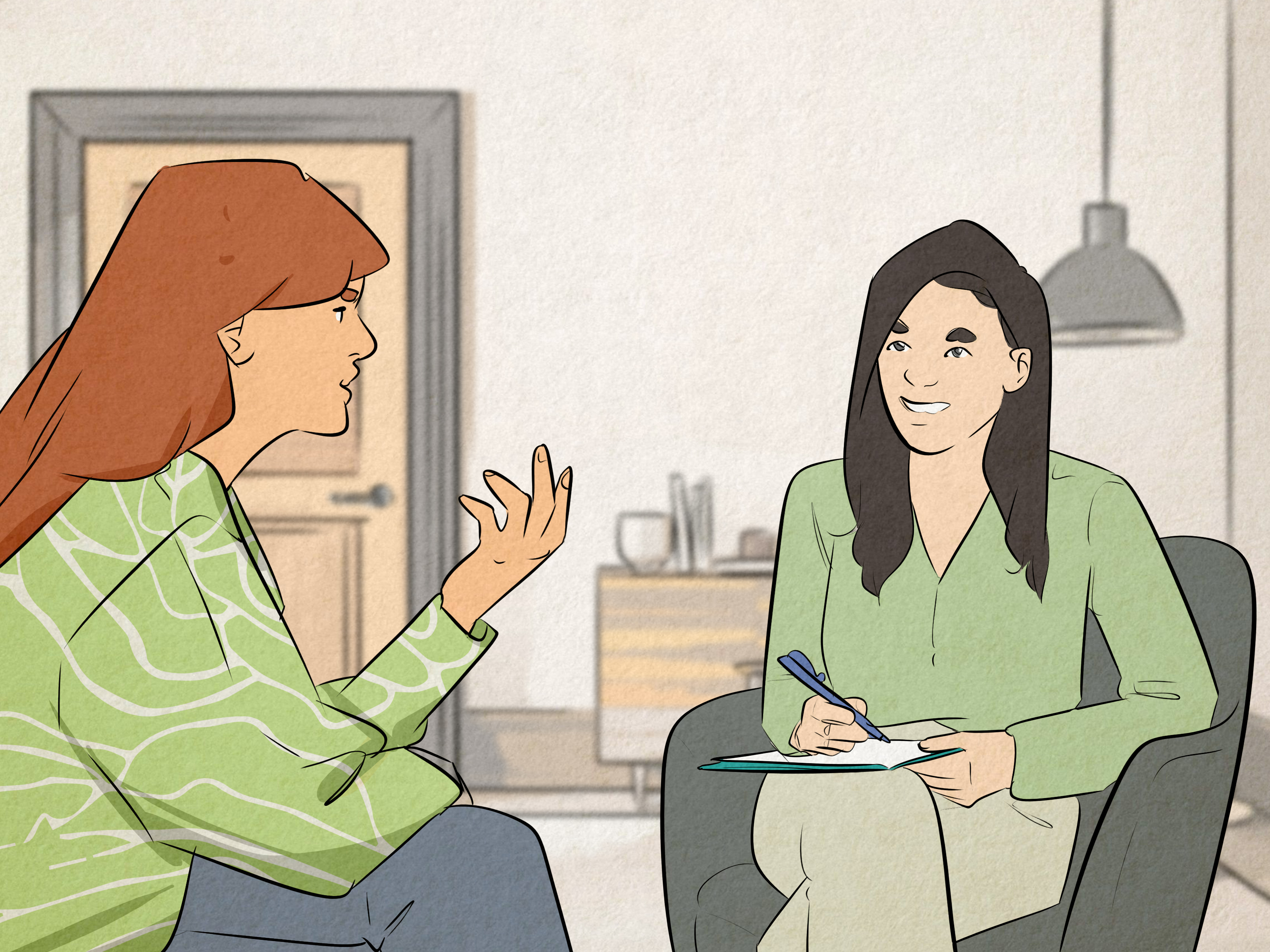
Look for a licensed professional who practices LGBTQ-affirming, client-centered care. Affirming therapy does not mean a therapist will push you to come out, date, leave a marriage, or reject religion. It means the therapist will not begin with the assumption that heterosexuality is the required destination.
Useful therapy goals may include:
- Reducing shame, anxiety, or depression
- Exploring identity without rushing to adopt a label
- Reconciling sexuality with culture or faith
- Planning safe disclosureor deciding not to disclose yet
- Improving communication in a mixed-orientation marriage
- Processing harm caused by conversion efforts
- Building friendships, community, and self-compassion
Ask prospective therapists directly how they work with gay clients experiencing conflicts about identity or religion. If the answer centers on eliminating same-gender attraction, look elsewhere.
Look After Your Physical and Sexual Health
Medical care should be based on actual anatomy, behavior, partners, and health historynot assumptions made from an identity label or public relationship. A person who appears heterosexual may still need testing, vaccinations, contraception, reproductive counseling, or other preventive care relevant to their circumstances.
When possible, choose a clinician with experience providing confidential, culturally competent LGBTQ+ care. Give medically relevant information honestly. Your doctor needs useful health data, not a polished biography designed for the neighborhood barbecue.
Related Experiences: Four Realistic Paths
The following composite scenarios combine commonly reported experiences. They are not accounts of identifiable individuals.
Daniel: Privacy as a temporary safety strategy
Daniel was a gay college student whose housing and tuition depended on parents who frequently threatened to cut off LGBTQ+ family members. He initially believed courage required immediate disclosure. Instead, a counselor helped him distinguish authenticity from exposure. Daniel told one trusted friend, secured copies of his documents, found part-time employment, changed his account passwords, and researched housing options.
For eighteen months, his parents continued assuming he was straight. Daniel did not invent a girlfriend or mock gay people to strengthen the disguise; he simply set boundaries around dating questions. Once financially stable, he disclosed his orientation from a safe location. His parents reacted badly, but their reaction no longer controlled whether he had a bed that night. His temporary privacy had not made him less honest. It had given honesty safer conditions.
Marcus and Elena: The cost of hoping marriage would change everything
Marcus married Elena in his twenties while believing affection, religious commitment, and hard work would eventually create heterosexual attraction. He cared deeply for her, but intimacy became increasingly difficult. Elena interpreted his distance as evidence that she was unattractive. Marcus responded with more secrecy because he thought the truth would destroy her confidence.
Years later, disclosure was painful partly because Elena had been denied information that shaped her marriage. In couples therapy, Marcus took responsibility without declaring their entire history fraudulent. Elena was allowed anger and grief without being asked to become his instant public-relations department. They eventually separated and developed a cooperative parenting arrangement. Their experience illustrates why good intentions cannot replace informed consent.
Andre: Celibacy chosen without self-erasure
Andre decided that celibacy best reflected his religious convictions. Earlier, he had attended a program promising to remove same-gender attraction. When the promised transformation did not occur, he assumed he had failed. An affirming therapist helped him recognize that orientation and behavior were different.
Andre continued choosing celibacy, but he stopped describing himself as broken. He formed close friendships, joined a faith community that did not demand conversion, volunteered, traveled, and became more honest about loneliness when it appeared. His life was not effortless, but the decision became genuinely his rather than a punishment imposed by shame.
Sam: Discovering that uncertainty deserved time
Sam had dated women and experienced strong attraction to men. He assumed the only choices were declaring himself gay immediately or doubling down on a straight identity. Instead, he paused dating and explored his feelings without treating every passing thought as a courtroom exhibit.
Over time, Sam concluded that “bisexual” described him more accurately than “gay.” That outcome will not apply to everyone; some people use bisexuality as a temporary label, while many genuinely experience attraction to more than one gender. The lesson was not which word Sam selected. It was that honest exploration proved more useful than forcing a predetermined answer.
Conclusion
A gay person may choose privacy, celibacy, a mixed-orientation relationship, or a temporary heterosexual presentation. What supports well-being is not how convincingly the life appears straight from the outside. It is whether the choice is informed, voluntary, safe, sustainable, and honest with anyone whose life is directly affected.
You do not have to disclose your orientation before you are ready, and you do not have to submit to attempts to change it. If another person is involved romantically, however, their informed consent matters. Build safety, seek affirming support, examine your values carefully, and leave room for your decisions to evolve. A meaningful life is not produced by performing the correct role flawlessly. It grows from choices made with honesty, responsibility, and compassionincluding compassion for yourself.