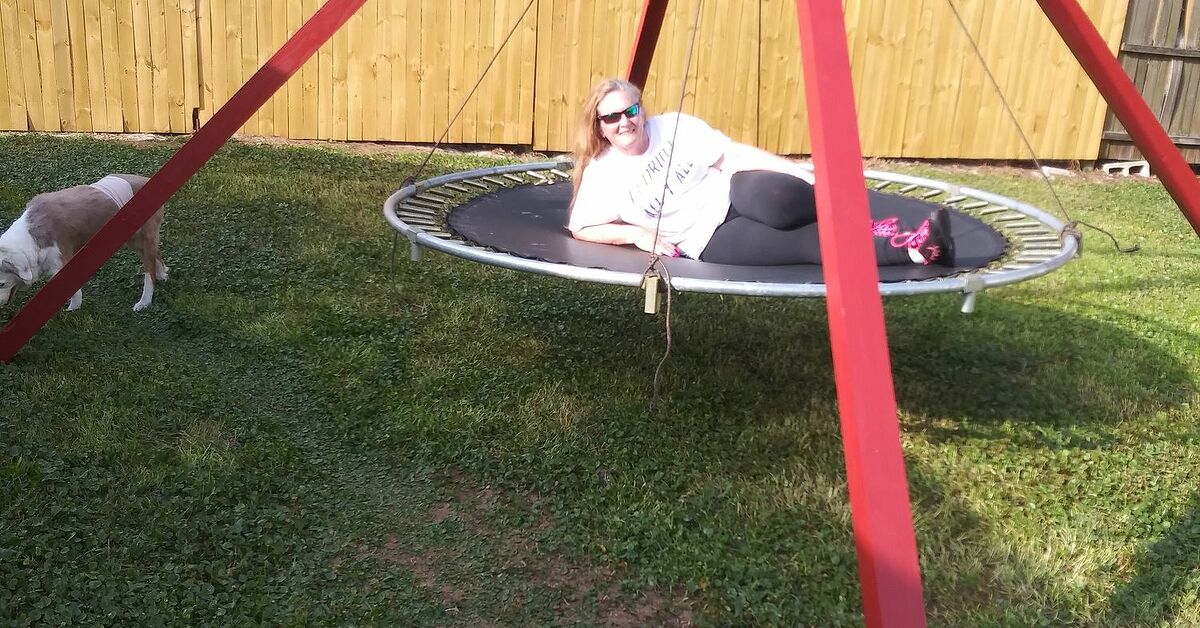
An old trampoline does not have to retire with a sad squeak, a patch of rust, and a reputation for launching socks into neighboring yards. With a little inspection, new hardware, and realistic safety planning, you can turn usable trampoline parts into a stylish recycled trampoline swing for your porch, pergola, sturdy swing frame, or backyard lounge area.
This DIY trampoline swing project is a smart way to reuse a circular trampoline frame or mat while creating a comfortable place to read, nap, chat, or pretend you are on vacation while staring at the same fence you have stared at for six years. The finished result can resemble a hanging daybed, nest swing, or oversized outdoor lounge chair.
The key word is refurbished. You are not simply tying old ropes to a rusty frame and hoping gravity has a good mood. A safe recycled trampoline swing requires careful inspection, new load-rated suspension hardware, even weight distribution, weather-resistant materials, and an overhead structure designed to support a moving load.
Why Turn an Old Trampoline Into a Swing?
A broken trampoline often looks like backyard clutter, but many parts may still have a second life. The circular steel ring can become the frame of a hanging swing bed. The jumping mat can be reused as a flexible seating surface, privacy panel, garden cover, or decorative sling material. Even removable padding can sometimes become cushioning material for outdoor furniture.
Recycling a trampoline is especially appealing because large trampoline frames are awkward to throw away. Their galvanized steel tubes may be recyclable at local scrap facilities, but an upcycling project can give the usable pieces a more memorable purpose before they enter their metal-afterlife.
A refurbished trampoline swing also has a design advantage: its wide, round shape feels more social than a narrow porch swing. It creates a spot where one person can stretch out with a book, two people can sit and talk, or several children can claim it as a pirate ship five minutes after you finish building it.
Important Safety Note Before You Start
Note: A recycled trampoline swing is a custom DIY project, not factory-certified playground equipment. Do not use damaged springs, old bungee cords, frayed rope, bent frame sections, cracked welds, or unknown hardware for suspension. The old trampoline material may be reused for the seat or decorative structure, but the parts that hold people in the air should be new, outdoor-rated, and appropriate for the expected load.
Consumer safety guidance for swings emphasizes secure anchoring, adequate clearance from walls and fences, soft landing surfaces, and regular inspection of moving hardware. A hanging swing also creates dynamic force when people climb in, shift weight, or swing, so the support system must be stronger than what appears necessary when the swing is sitting still.
For the safest version of this project, suspend the trampoline swing from a professionally built porch beam, an engineered pergola, a commercial-rated swing stand, or another structural support that has been evaluated for a moving load. Do not assume that an old trampoline frame, a decorative pergola, or a random tree branch can safely support a hanging bed.
Choose Your Recycled Trampoline Swing Style
Option 1: Circular Trampoline Swing Bed
This is the classic version. You use the round trampoline ring as the outer frame, then create a seating surface inside it with the original trampoline mat, heavy-duty outdoor fabric, rope webbing, or a custom plywood platform topped with cushions. The circular frame is suspended from four or more evenly spaced attachment points.
This style works best as a low-motion lounge swing. Think gentle rocking, not backyard acrobatics. It is ideal for a covered patio, large porch, pergola, or sturdy freestanding frame.
Option 2: Recycled Trampoline Nest Swing
A nest swing is smaller and lighter than a full hanging bed. You can cut down a trampoline mat, stretch it tightly inside a smaller steel ring, and suspend it with rope or chain from four points. This option uses less material and is easier to hang, but it still requires proper load-rated suspension hardware.
A nest-style trampoline swing is useful when you want a casual reading chair, a gentle sensory swing, or a fun outdoor seat without building a full-sized swing bed that looks like it belongs in a boutique hotel.
Option 3: Trampoline Frame Lounge Swing
This version uses the old ring as a visible design feature. Instead of reinstalling the original jumping mat, you create a new seat using outdoor-rated webbing, marine fabric, rope lattice, or a fitted cushion base. The exposed metal ring can be painted, wrapped with outdoor rope, or padded for a softer look.
This is often the most attractive option because it lets you refresh the project completely instead of relying on a weathered trampoline mat that may have already survived too many summers, storms, and mysterious bird-related incidents.
Tools and Materials for a DIY Trampoline Swing
Your exact list depends on the design, but a typical refurbished trampoline swing project may require:
- A structurally sound trampoline ring or a smaller metal ring.
- New outdoor-rated swing hangers, eye bolts, shackles, or quick links.
- New galvanized chain, marine-grade rope, or outdoor-rated polyester rope.
- Heavy-duty webbing, the original trampoline mat, or outdoor fabric for the seat.
- Washers, locking nuts, bolts, and corrosion-resistant fasteners.
- A drill with metal-rated drill bits.
- Wire brush, sandpaper, rust converter, and outdoor metal paint.
- Measuring tape, marker, wrench set, safety glasses, and work gloves.
- Outdoor cushions, foam inserts, pillow covers, or a weather-resistant mattress pad.
When buying suspension hardware, look for products intended for swings, hammocks, porch swings, or outdoor seating. Check the working load rating, not just the dramatic number printed in oversized lettering on the packaging. Hardware should be suitable for outdoor use and installed according to its manufacturer instructions.
Step 1: Inspect the Old Trampoline Parts
Start by taking the trampoline apart completely. Remove the jumping mat, springs, legs, safety net, pads, and frame pieces. Spread everything out so you can inspect it in daylight. This is the part where optimism meets reality.
Examine every metal section for deep corrosion, crushed tubing, cracks around joints, missing bolt holes, sharp edges, or bent connection points. Surface rust can often be cleaned and refinished. Structural damage is different. If the ring is badly bent or cracked, do not use it as a suspended seat frame. Recycle it instead.
Inspect the trampoline mat separately. A mat with small cosmetic discoloration may be suitable for a decorative cover or light-use seat surface. A mat with torn stitching, loose V-rings, brittle fabric, or damaged edges should not carry body weight. The swing may look charming in photos, but photos do not have to explain themselves to gravity.
Step 2: Clean and Refurbish the Metal Frame
Use a wire brush or drill-mounted wire wheel to remove loose rust, flaking paint, dirt, and oxidation. Wipe the frame clean and let it dry fully. If surface rust remains, apply a rust converter or rust-inhibiting primer before painting.
Use outdoor metal paint designed for exterior exposure. Two thin coats generally look better and last longer than one dramatic coat applied with the emotional intensity of a midnight makeover. Let the paint cure completely before assembling the swing.
If you want a softer look, wrap portions of the frame with UV-resistant outdoor rope, fabric sleeves, or foam pipe insulation covered with weatherproof fabric. Do not cover bolt holes, attachment points, or any area that needs frequent safety inspection.
Step 3: Build the Swing Seat Surface
Using the Original Trampoline Mat
If the mat is in excellent condition, reinstall it inside the metal ring using new, compatible connectors. Do not rely on old springs or bungee cords. A safer approach is to use new webbing straps or strong rope loops threaded through reinforced attachment points around the perimeter.
Keep the mat taut enough to support sitting, but avoid creating a high-bounce surface. This project should function like a swing seat, not a trampoline hanging in midair. A low-sag, stable seat is more comfortable and easier to enter.
Using Heavy-Duty Webbing
Outdoor polyester webbing is an excellent alternative when the original mat is worn out. Stretch several straps across the frame in one direction, then weave another layer across them. Fasten the webbing securely with bolts, washers, and locking nuts or with heavy-duty sewing methods appropriate for load-bearing webbing.
Webbing creates a breathable, hammock-like base. It drains rainwater quickly, works well with removable cushions, and gives your trampoline swing a clean modern look.
Using a Plywood Platform
A plywood platform can create a firmer hanging daybed, but it adds weight. Use exterior-grade plywood, round over sharp edges, seal every exposed surface, and secure the platform evenly inside the ring. Add a weather-resistant cushion on top for comfort.
Before choosing this option, confirm that your suspension system and overhead support can safely accommodate the additional weight of the platform, cushions, and users.
Step 4: Add Evenly Spaced Suspension Points
A round trampoline swing should usually hang from at least four evenly spaced points. Four-point suspension helps keep the seat level and reduces the tendency to tip when someone climbs in from one side.
Mark attachment points around the frame at equal intervals. If your trampoline ring has reinforced leg sockets or strong factory connection points, those may be useful locations, provided the metal is sound. Avoid drilling through weak, rusted, or thin sections of tubing.
Use new bolts, washers, locking nuts, and rated connectors. The suspension ropes or chains should rise evenly to a central spreader bar, individual swing hangers, or a stable overhead mounting layout. Check the seat level before adding cushions.
Step 5: Hang the Recycled Trampoline Swing Safely
Mount the swing only from a support designed for the task. A porch beam may need reinforcement. A pergola may look substantial but still be decorative rather than structural. A tree limb may appear heroic until it is asked to hold a moving circular bed full of adults, blankets, snacks, and one very confident dog.
Use outdoor-rated swing hangers, eye bolts, and connectors appropriate for the support material. Keep the attachment points symmetrical so the swing remains balanced. For a lounge swing, leave enough ground clearance that the lowest point of the seat remains comfortably above the surface even when occupied.
Provide open space around the swing. Keep it away from posts, railings, fences, walls, grills, garden statues, and anything else you would rather not meet at low speed. Install soft ground cover below outdoor swings when possible, especially where children may use the area.
Step 6: Perform a Slow, Sensible Load Test
Do not invite the neighborhood over for a grand reveal before testing the swing. First inspect every connector, knot, bolt, and hanger. Then add weight gradually using sandbags, sealed containers of water, or another controlled load.
Watch for shifting hardware, stretching rope, bending metal, uneven suspension, unexpected sounds, or a frame that tilts to one side. Retighten fasteners after the first test. Sit on the swing gently before allowing normal use.
Check the hardware again after the first week, after heavy rain, and at regular intervals throughout the season. Outdoor swings live a hard life: sun, rain, pollen, temperature changes, enthusiastic children, and the occasional adult who claims they are “just testing it.”
Decorating Ideas for a Recycled Trampoline Swing
Once the structure is safe, the fun part begins. Add outdoor cushions in washable covers, a fitted circular mattress pad, throw pillows, or a lightweight canopy. Use string lights only if they are rated for outdoor use and positioned so they cannot tangle with moving hardware.
For a boho trampoline swing, wrap the outer ring with natural-look synthetic rope, add cream-colored cushions, and hang a weatherproof macramé fringe around part of the frame. For a modern look, paint the ring matte black and add charcoal cushions with simple striped pillows.
You can also build a mosquito-net style enclosure for a hanging daybed, but keep it loose enough that it does not interfere with ropes, chains, or entry and exit. Decorative fabric should never hide areas you need to inspect for rust, cracks, or loose fasteners.
Common Mistakes to Avoid
- Using rusty or bent trampoline tubing as if paint can solve structural damage.
- Reusing old trampoline springs, bungees, or worn straps for suspension.
- Hanging the swing from one central rope without stabilizing the seat.
- Installing a large swing under a decorative pergola without confirming structural capacity.
- Using indoor rope, untreated wood, or non-galvanized hardware outdoors.
- Skipping the gradual load test because the swing “looks solid.”
- Allowing jumping, spinning contests, or multiple rough users on a lounge-style swing.
How to Maintain Your DIY Trampoline Swing
Inspect your recycled trampoline swing at least once a month during active use. Check for loose nuts, worn rope fibers, chipped paint, frame corrosion, damaged webbing, and water collecting in cushions. Tighten hardware as needed and replace worn components immediately.
Remove cushions and fabric accessories during harsh weather or long periods of nonuse. If you live in a snowy climate, consider taking down the swing or covering it during winter. A few minutes of seasonal maintenance can prevent your handcrafted backyard retreat from becoming a very expensive bird perch.
Real-World DIY Experiences: What People Learn While Building a Recycled Trampoline Swing
The first lesson most DIY builders learn is that old trampolines are much heavier than they look. A circular frame may seem harmless while it is lying in the grass, but once it is lifted, cleaned, painted, and held overhead during installation, it develops the personality of a small bridge. Planning for a helper is not a sign of weakness. It is a sign that you would like to keep all your fingers and avoid inventing new curse words in front of the neighbors.
Another common experience is discovering that “almost level” is not level enough for a hanging swing. A circular trampoline seat can look perfectly balanced when empty, then tilt dramatically when one person sits down with a drink and a phone. Builders often solve this by adjusting chain links, shortening one rope slightly, or adding a proper spreader bar that keeps the suspension points evenly spaced.
People also learn quickly that cushions matter more than expected. A trampoline mat or webbed seat may be comfortable for a few minutes, but a recycled trampoline swing becomes a true lounge spot only after adding a supportive cushion layer. Outdoor bench cushions, foam camping pads, waterproof mattress covers, and custom circular cushions can all work. The best choice depends on whether the swing lives under a roof or directly under the sky.
Weather is another very honest teacher. A swing that looks perfect on installation day may collect rainwater, fade in direct sun, or develop rusty hardware after a few storms. Builders who choose marine-grade rope, galvanized or stainless hardware, washable covers, and removable cushions usually spend less time repairing their projects later. The fanciest pillow in the world cannot defeat mildew if it is left outside through three thunderstorms and a surprise sprinkler cycle.
Many homeowners also discover that the swing becomes a family magnet. Adults use it for morning coffee. Kids turn it into a spaceship, fort, reading nook, or snack headquarters. Pets assume it was built exclusively for them. The project often becomes more valuable than expected because it creates a comfortable reason to spend time outdoors together.
The final lesson is that restraint makes a DIY swing better. It is tempting to add giant chains, ten pillows, lanterns, a canopy, faux vines, and a side table for beverages. But the most successful recycled trampoline swings usually keep the structure simple, the hardware visible for inspection, and the movement gentle. A clean, well-balanced swing with reliable materials is more relaxing than a complicated masterpiece that requires a pre-flight checklist.
Final Thoughts
A refurbished or recycled trampoline swing DIY project can transform an aging backyard relic into a useful outdoor feature with real personality. The best builds balance creativity with caution: reuse what is still structurally sound, replace anything questionable, use new load-rated hanging hardware, and mount the swing only to a proper support.
Done well, an old trampoline can become more than recycled metal and fabric. It can become your favorite reading nook, nap station, conversation corner, or the one backyard seat everyone suddenly wants when the weather gets nice.