A SodaStream can turn a bottle of ordinary water into crisp, sparkling refreshment in seconds. Add flavor afterward, and you have homemade soda without hauling a twelve-pack home, finding room for it in the refrigerator, or discovering that someone drank the last can and left the empty box behind as a tiny cardboard betrayal.
Although SodaStream Terra, Art, E-Terra, Duo, Fizzi, and other models look different, the basic process is nearly identical: chill the water, fill the correct bottle to its marked line, inject carbon dioxide, release the pressure, and then add flavor. The order matters. Carbonating flavored liquid in a machine designed for water can cause foaming, clogging, excessive pressure, and a spectacularly sticky countertop.
This guide explains how to make soda in a SodaStream machine safely, how Terra and Art controls differ, how to install the right CO2 cylinder, and how to get stronger bubbles without wasting gas.
What You Need to Make Soda with a SodaStream
Gather the following items before starting:
- A compatible SodaStream sparkling water maker
- The correct SodaStream CO2 cylinder
- A compatible carbonating bottle or glass carafe
- Very cold drinking water
- SodaStream drink mix, homemade syrup, or another flavoring
- A clean cap for sealing and gently mixing the finished drink
Most newer machines, including Terra and Art, use the Quick Connect CO2 cylinder identified by its pink valve seal. Many older models use the traditional screw-in cylinder, commonly associated with a blue seal. These systems are not interchangeable simply because both cylinders look tall, silver, and mildly intimidating.
Understand What the Machine Actually Does
A standard SodaStream does not make finished soda inside the machine. It carbonates plain water by forcing carbon dioxide into it under pressure. You turn that sparkling water into soda by adding concentrated flavor after carbonation.
Cold water produces better results because gases dissolve more readily in colder liquids. In practical terms, refrigerator-cold water usually absorbs more CO2, creates livelier bubbles, and stays fizzy longer than lukewarm tap water. Keep one or two filled carbonating bottles in the refrigerator so the next batch is always ready for action.
How to Install a Quick Connect CO2 Cylinder
SodaStream Terra, Art, E-Terra, Enso, and several newer models use the Quick Connect cylinder system. Installation takes less than a minute when everything is aligned correctly.
- Place the machine upright on a flat, stable counter.
- Remove the rear cover or open the cylinder compartment according to your model.
- Raise the cylinder handle completely.
- Remove the plastic seal and protective cap from the new CO2 cylinder.
- Lower the cylinder into the compartment without twisting it.
- Make sure the cylinder sits straight and fully inside the holder.
- Lower the cylinder handle until it locks the cylinder into place.
- Replace or close the rear cover.
Do not force the handle down. If it refuses to close, remove the cylinder and check whether it is tilted, obstructed, or the wrong type. A Quick Connect cylinder clicks into place; it does not screw into the machine.
Installing a Screw-In Cylinder on an Older Model
Older Fizzi, Jet, Genesis, Source, and One Touch machines may use a screw-in cylinder. Remove the back cover, insert the cylinder from below, and rotate it by hand until it is secure. Do not use pliers, a wrench, or the determination normally reserved for opening a stubborn pickle jar. Hand-tight is sufficient.
Model revisions exist, so confirm the cylinder connection shown in your machine’s manual or rear compartment before buying a replacement.
How to Make Soda in a SodaStream Terra
The SodaStream Terra is a manual machine with a large carbonation button on top. It needs no electricity, batteries, app, subscription to a mysterious cloud service, or motivational speech.
Step 1: Chill and Fill the Water
Fill a compatible carbonating bottle with cold water only. Stop at the water fill line printed on the bottle. The space above that line is necessary for safe carbonation and for adding syrup later.
Do not overfill the bottle, add ice, or place fruit slices in the water before carbonation.
Step 2: Pull the Bottle Rest Forward
Tilt the bottle rest toward you until it reaches its forward position. Hold the bottle by its body rather than pulling on the machine’s carbonating tube.
Step 3: Attach the Bottle
Guide the neck of the bottle into the Snap-Lock opening. Push the bottle up and then back toward the machine. It should lock into a vertical position without screwing.
A correctly attached bottle hangs slightly above the base. The small gap is intentional. Do not try to make the bottle sit flat on the machine as though it has arrived early for a meeting.
Step 4: Carbonate the Water
Press the Terra’s carbonation button fully and hold it for about one to two seconds, then release it. Let the mechanism finish venting before pressing again.
- About three firm presses generally create standard carbonation.
- About five presses generally create stronger carbonation.
- Additional presses consume more CO2 and may not improve the drink significantly.
The machine may hiss or make a release sound. That is normally excess pressure venting, not the appliance attempting to communicate with the kitchen.
Step 5: Remove the Bottle
Wait until the pressure-release sound has stopped. Pull the bottle gently toward you until it tilts forward, and then lift it out of the Snap-Lock. Never yank or force out a pressurized bottle.
Step 6: Add Flavor
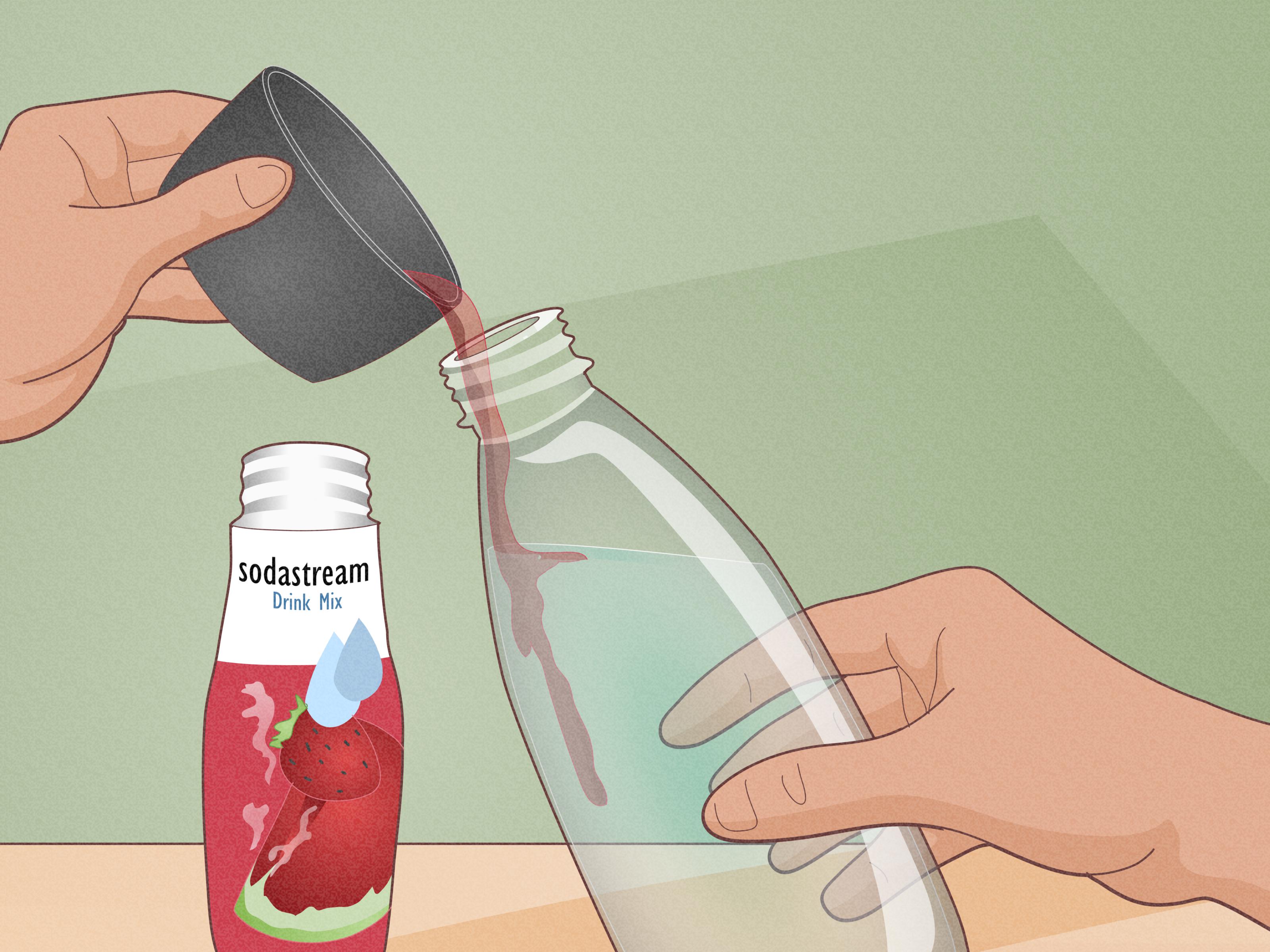
You can drink the carbonated water immediately or turn it into soda. Tilt the bottle slightly and pour the measured flavoring slowly down the inside wall. Seal the bottle and gently roll or invert it once or twice. Vigorous shaking is an excellent method for coating the ceiling, but a poor method for preserving carbonation.
How to Make Soda in a SodaStream Art
The SodaStream Art follows almost the same process as the Terra. Its main difference is the retro-style carbonation lever instead of a top button.
- Fill the compatible bottle with cold water to the marked fill line.
- Pull the bottle rest forward.
- Insert the bottle neck into the Snap-Lock.
- Push the bottle up and back until it hangs vertically.
- Pull the Art’s lever all the way down for about one second.
- Release the lever and allow the machine to vent.
- Repeat approximately three times for standard fizz or five times for stronger fizz.
- Wait for pressure to release, pull the bottle forward, and remove it.
- Add flavor slowly after carbonation.
Avoid slamming or holding the lever down excessively. A complete, controlled pull works better than several frantic half-pulls. The Art’s lever can feel more natural than a push button, especially when making several bottles, but it does not change the basic carbonation chemistry.
How Other SodaStream Models Differ
SodaStream E-Terra
The E-Terra is electric and offers preset carbonation levels. Install the Quick Connect cylinder, connect the power adapter, attach a cold bottle using the Snap-Lock, and select the desired fizz button. The machine controls the carbonation cycle automatically.
Because it is electric, the E-Terra must be positioned near an appropriate outlet. Do not operate it with wet hands or allow water to collect around its power connection.
SodaStream Duo and E-Duo
Duo models use a locking flask system and may accept both compatible plastic bottles and designated glass carafes. Place the filled vessel inside the flask, lower the carbonating head, and lock the mechanism before carbonating. Afterward, wait briefly and unlock it slowly so excess gas can escape safely.
Never attempt to use an ordinary glass bottle. Carbonation requires a vessel specifically designed and approved to withstand pressure.
SodaStream Fizzi, Jet, and Genesis
These older manual models may use a screw-in CO2 cylinder. Some have Snap-Lock bottle attachment, while others require the bottle to be screwed into place. Carbonation is usually controlled with repeated button presses. Since several versions were sold, follow the attachment method built into your particular machine rather than forcing a modern bottle into an older fitting.
SodaStream One Touch
The electric One Touch uses dedicated buttons for light, medium, or strong fizz. Once the bottle and cylinder are installed, press the desired setting and allow the full cycle to finish before removing the bottle.
SodaStream Aqua Fizz
Aqua Fizz machines carbonate water in compatible glass carafes held inside a protective chamber. Different generations may use different cylinder systems, so check whether the rear mechanism accepts a Quick Connect or screw-in cylinder.
How to Add Soda Flavor Without Creating a Foam Volcano
The most important SodaStream rule is simple: carbonate plain water first and add flavor second. Syrup changes the liquid’s behavior and gives bubbles more places to form. If flavored liquid is carbonated in a standard water-only machine, foam may rush into the carbonation tube and internal components.
For commercial SodaStream drink mixes, follow the quantity indicated on the current bottle, cap, or dosing line. Package sizes and dosing systems vary. When experimenting with another syrup, start with less than you think you need. You can add sweetness; removing it requires inventing a time machine.
- Carbonate the cold water to the desired level.
- Remove the bottle from the machine.
- Tilt the bottle approximately 45 degrees.
- Pour syrup slowly down the inner wall.
- Leave enough headspace for mixing.
- Cap the bottle tightly.
- Gently invert or roll it to combine.
- Open carefully over a sink if the drink is highly carbonated.
Easy Homemade Soda Ideas
Fresh Citrus Soda
Add one to two tablespoons of chilled lemon, lime, or orange syrup to a bottle of finished sparkling water. Fresh juice can also work, but strain out seeds and pulp and add it only after the bottle has been removed from the machine.
Ginger-Lime Soda
Combine ginger simple syrup with a squeeze of lime in a glass. Pour freshly carbonated water over the mixture and stir gently. Preparing the flavor in the serving glass helps keep sticky ingredients away from the carbonating bottle.
Berry Vanilla Soda
Add a small amount of strained berry syrup and one or two drops of vanilla extract to sparkling water. Vanilla quickly becomes dominant, so approach it as you would glitter: cautiously and with respect for its ability to appear everywhere.
Light Cola
Use less cola concentrate than the package recommends, taste the mixture, and adjust gradually. This method provides a lighter drink while preserving the familiar cola flavor.
How to Get Stronger, Longer-Lasting Bubbles
- Use colder water: Refrigerator-cold water generally absorbs CO2 more effectively.
- Fill precisely: Carbonation is less efficient when the bottle is significantly above or below its fill line.
- Use complete presses or lever pulls: Weak half-presses may release gas without building adequate pressure.
- Pause between bursts: Give the gas time to dissolve and the machine time to vent.
- Cap the bottle promptly: An open bottle begins losing carbonation immediately.
- Keep the finished drink cold: Warm soda releases dissolved gas more quickly.
- Pour gently: Splashing, aggressive stirring, and rough ice surfaces encourage bubbles to escape.
Common SodaStream Problems and Solutions
The Water Is Barely Fizzy
First, confirm that the water is cold and the bottle is filled to the correct line. Check that the CO2 cylinder is properly installed. If the machine produces only a weak sputter after several correct presses, the cylinder may be nearly empty.
Gas Escapes Around the Bottle
Remove and reinstall the bottle after all pressure has dissipated. Make sure the neck is fully seated, the bottle is compatible, and its rim is clean and undamaged. Inspect the carbonating tube and machine for visible damage. Stop using the appliance if a component appears cracked or broken.
The Bottle Will Not Lock In
Pull the bottle rest fully forward before inserting the bottle. Guide the neck upward into the Snap-Lock, then push it back. Do not twist a Snap-Lock bottle. Also verify that you are not trying to use an incompatible glass carafe or bottle from another model.
The Drink Foams After Adding Syrup
Pour the flavor more slowly, tilt the bottle farther, and use chilled syrup. Extremely strong carbonation may also cause more foam. Let the sparkling water rest for several seconds before flavoring it.
Small Ice Crystals Appear
Very cold water may produce tiny pieces of ice during carbonation because the expanding gas cools the liquid. They should melt naturally. Do not place a sealed plastic carbonating bottle in the freezer to reproduce the effect.
Cleaning and Safety Tips
Rinse the bottle after every use, especially after adding sugary syrup. Some modern plastic bottles are dishwasher-safe, while older bottles are not. Check the markings and care instructions printed on your bottle rather than assuming that all SodaStream bottles share the same heat tolerance.
Hand-wash non-dishwasher-safe bottles with lukewarm water, mild dish soap, and a soft bottle brush. Avoid boiling water, abrasive cleaners, bleach, and sharp tools.
Plastic carbonating bottles have an expiration date because repeated pressurization stresses the material over time. Check the date printed near the neck or base and stop using an expired bottle for carbonation. Replace any bottle that is scratched deeply, warped, cloudy from heat damage, or otherwise deformed, even if the date has not passed.
Keep CO2 cylinders away from high heat and direct sunlight. Never puncture, modify, freeze, burn, or refill a cylinder through an unapproved method. Use only a cylinder type designed for the machine.
A Practical First-Week SodaStream Experience
The first bottle made with a new SodaStream often teaches more than the instruction sheet. A typical beginner fills the bottle with ordinary tap water, attaches it correctly, presses the button three times, and expects a fizzy revelation. The result is carbonated, but perhaps not dramatically so. The machine is blamed. The button is viewed with suspicion. Somewhere, a can of supermarket seltzer feels smug.
The second attempt usually improves once the same water has spent several hours in the refrigerator. The button feels firmer, the release sound becomes familiar, and the bubbles remain in the glass longer. This is often the moment when users realize that water temperature matters nearly as much as the number of carbonation bursts.
Flavoring creates the next learning opportunity. Pouring cola syrup rapidly into aggressively carbonated water can produce a rising foam cap that looks impressive for approximately two seconds and inconvenient for the next ten minutes. Tilting the bottle and pouring slowly prevents most of that drama. Chilling the syrup helps, too.
By the third or fourth day, a routine begins to form. One bottle stays in the refrigerator while another is being used. Standard sparkling water gets three deliberate presses on the Terra or three lever pulls on the Art. A stronger batch gets five. Instead of shaking flavored soda, the bottle is rolled gently between the hands. Cleanup changes from a sticky emergency to a quick rinse.
The most useful discovery is that soda does not have to follow a fixed recipe. A full recommended dose of syrup may taste too sweet to one person and perfect to another. Starting with half or three-quarters of the suggested amount makes customization easier. Citrus peel, mint, cucumber, fruit syrup, ginger concentrate, and bitters can all transform plain sparkling water after carbonation.
Another practical lesson involves the CO2 cylinder. Its advertised capacity is not a promise that every household will produce the same number of bottles. Strong carbonation, repeated extra presses, water temperature, bottle size, and technique all affect gas consumption. Keeping a spare cylinder prevents the uniquely disappointing experience of preparing ice, slicing a lime, pressing the button, and hearing only a tired little puff.
Counter placement also matters more than expected. A manual Terra or Art does not need an outlet, but it needs enough overhead space to operate the button or lever and enough rear clearance to change the cylinder. Placing the machine beneath a low cabinet can turn every refill into an appliance-moving ceremony.
After a week, the best SodaStream habit is not a secret carbonation trick. It is preparation: keep the water cold, use the fill line, attach the bottle correctly, wait for pressure to release, and flavor only after fizzing. Once those actions become automatic, making soda takes less time than debating which canned drink to buy.
Conclusion
Learning how to make soda in a SodaStream Terra, Art, or another model is straightforward once you understand the correct sequence. Install the compatible CO2 cylinder, chill plain water, fill the approved bottle to its line, carbonate with controlled presses or lever pulls, allow the pressure to release, and add flavor only after removing the bottle.
Terra offers simple push-button carbonation, while Art uses a manual lever. Electric models provide preset fizz levels, and Duo-style machines add locking systems for compatible glass or plastic vessels. Regardless of the machine, cold water and careful flavoring produce the best combination of strong bubbles, clean equipment, and soda that stays inside the bottle where it belongs.
Note: Machine generations, cylinders, and bottle compatibility can vary. Follow the safety instructions and model-specific manual supplied with your SodaStream whenever those directions differ from general guidance.