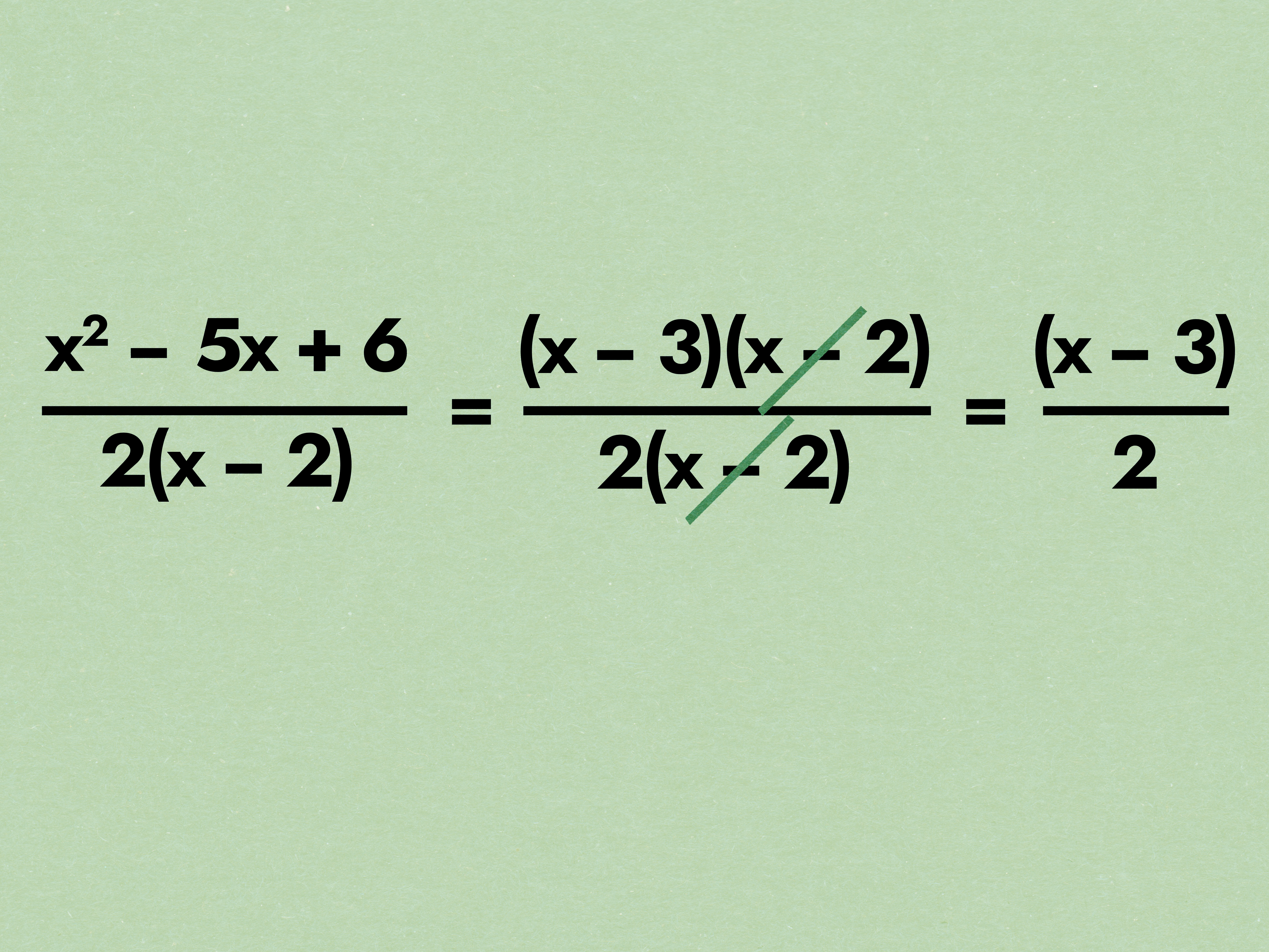
Simplifying math expressions can feel a little like cleaning a messy desk: at first, everything looks scattered, mysterious, and possibly haunted by old homework. But once you know what belongs together, what can be removed, and what should stay exactly where it is, the whole thing becomes much less scary. In math, simplifying means rewriting an expression in a cleaner, shorter, or more useful form without changing its value.
Whether you are working with basic arithmetic, algebraic expressions, fractions, exponents, radicals, or polynomials, the goal is the same: make the expression easier to read, easier to calculate, and easier to use in the next step. A simplified expression is not “different math.” It is the same math wearing a neater outfit.
In this guide, you will learn how to simplify math expressions using practical tips, common rules, and step-by-step examples. We will cover combining like terms, using the distributive property, handling parentheses, reducing fractions, simplifying exponents, working with radicals, and avoiding the classic mistakes that love to sneak into algebra like tiny mathematical raccoons.
What Does It Mean to Simplify a Math Expression?
To simplify a math expression means to perform all possible operations and rewrite the expression in its most efficient form. An expression does not have an equals sign like an equation does. For example, 3x + 5x – 2 is an expression. When simplified, it becomes 8x – 2.
The important rule is this: simplifying must not change the value of the original expression. If the original expression and the simplified expression produce the same result for every valid value of the variable, they are equivalent expressions.
Simple Example
Expression:
Both terms have the same variable, x, so they are like terms. Add the coefficients:
The simplified expression is:
Start with the Order of Operations
Before you simplify anything, remember the order of operations. This rule tells you what to handle first so your answer does not wander off into mathematical chaos.
The common order is:
- Parentheses or grouping symbols
- Exponents
- Multiplication and division from left to right
- Addition and subtraction from left to right
You may know this as PEMDAS: Parentheses, Exponents, Multiplication, Division, Addition, Subtraction. Just remember that multiplication and division are handled together from left to right, and addition and subtraction are also handled together from left to right.
Example: Simplify a Numerical Expression
First, simplify inside the parentheses:
Now the expression becomes:
Next, handle the exponent:
Now multiply:
Finally, add:
The simplified answer is:
Combine Like Terms
Combining like terms is one of the most important skills in simplifying algebraic expressions. Like terms have the same variable part with the same exponents. The coefficients can be different, but the variable part must match exactly.
For example, 3x and 8x are like terms. So are 5a²b and -2a²b. But 4x and 4x² are not like terms because the exponents are different.
Example: Combine Like Terms
Group the like terms:
Simplify each group:
Final answer:
Use the Distributive Property
The distributive property helps you remove parentheses when a number or variable is multiplied by a group. It says:
In plain English: multiply the outside term by every term inside the parentheses. Do not play favorites. Every term gets invited to the multiplication party.
Example: Distribute and Simplify
Multiply 3 by each term inside the parentheses:
Simplify:
Example with Like Terms
First distribute:
Then combine like terms:
Final answer:
Be Careful with Negative Signs
Negative signs are small, but they are powerful. A missing negative sign can turn a correct solution into a math crime scene. When a negative sign appears before parentheses, treat it like multiplying by -1.
Example: Simplify with a Negative Sign
Distribute -1 to both terms:
Example: More Complex Negative Distribution
The minus sign changes the signs inside the parentheses:
Now combine like terms:
Final answer:
Simplify Fractions Before They Grow Teeth
Fractions become simpler when the numerator and denominator share a common factor. To reduce a fraction, divide both the numerator and denominator by their greatest common factor.
Example: Simplify a Numerical Fraction
The greatest common factor of 18 and 24 is 6. Divide both parts by 6:
So:
Example: Simplify an Algebraic Fraction
The greatest common factor of 12 and 18 is 6:
Final answer:
Simplify Expressions with Exponents
Exponents are repeated multiplication. When simplifying expressions with exponents, the rules help you move faster without writing a small novel of repeated factors.
Product Rule
When multiplying powers with the same base, add the exponents:
Quotient Rule
When dividing powers with the same base, subtract the exponents:
Power Rule
When raising a power to another power, multiply the exponents:
Example: Simplify an Exponent Expression
Multiply the coefficients:
Add the exponents on x:
Final answer:
Simplify Radicals
A radical expression contains a root, such as a square root. To simplify square roots, look for perfect square factors. Perfect squares include 4, 9, 16, 25, 36, 49, 64, and so on.
Example: Simplify a Square Root
Break 50 into factors, including a perfect square:
Now simplify:
Final answer:
Factor When It Makes the Expression Cleaner
Factoring means rewriting an expression as a product of simpler factors. It is the opposite of expanding. Sometimes an expression is simpler when expanded; other times it is simpler when factored. The best form depends on what you need to do next.
Example: Factor Out the Greatest Common Factor
The greatest common factor is 6:
Both forms are equivalent. The factored form may be more useful if you are solving an equation or simplifying a fraction.
Example: Factor a Quadratic
Find two numbers that multiply to 6 and add to 5. Those numbers are 2 and 3:
Simplify Rational Expressions
A rational expression is like a fraction, but it may contain variables. To simplify it, factor the numerator and denominator first. Then cancel common factors, not random terms. This is important. Canceling terms incorrectly is one of algebra’s most popular traps.
Example: Simplify a Rational Expression
Factor the numerator:
Now the expression becomes:
Cancel the common factor x + 2:
Final answer:
Note: In the original expression, x cannot equal -2, because that would make the denominator zero.
Use Substitution to Check Your Work
One smart way to check whether your simplified expression is correct is to substitute a number for the variable in both the original expression and the simplified expression. If both give the same result, your simplification is probably correct.
Example: Check by Substitution
Original expression:
Simplified expression:
Let x = 2.
Original:
Simplified:
Both expressions equal 18, so the simplification checks out.
Common Mistakes When Simplifying Math Expressions
1. Combining Unlike Terms
You can combine 3x and 5x, but you cannot combine 3x and 5x². The variable parts must match exactly.
2. Forgetting to Distribute to Every Term
In 4(x + 3), the 4 must multiply both x and 3. The answer is 4x + 12, not 4x + 3.
3. Mishandling Negative Signs
In 7 – (2x – 5), the minus sign changes both terms inside the parentheses. The correct simplification is 7 – 2x + 5, which becomes 12 – 2x.
4. Canceling Terms Instead of Factors
In rational expressions, only common factors can be canceled. Terms connected by addition or subtraction cannot be canceled individually unless they are part of a shared factor.
5. Stopping Too Early
Sometimes students distribute correctly but forget to combine like terms afterward. Simplifying usually takes more than one step, so always scan the final expression before declaring victory.
Quick Tips for Simplifying Math Expressions Faster
- Rewrite messy expressions vertically. It helps you see each step clearly.
- Circle or underline like terms. This prevents accidental combining of unlike terms.
- Handle parentheses first. Parentheses often hide the main action.
- Watch negative signs carefully. Treat subtraction before parentheses as distribution by -1.
- Factor before canceling. Especially with rational expressions.
- Check with substitution. Plug in a simple value like 1, 2, or 3 to test your answer.
- Do not rush the basics. Most errors come from skipping simple steps, not from the hard-looking parts.
More Worked Examples
Example 1: Simplify an Algebraic Expression
Combine the x terms and the constants:
Simplify:
Example 2: Simplify with Distribution
Distribute 5:
Combine like terms:
Example 3: Simplify with Two Parentheses
Distribute both numbers:
Combine like terms:
Example 4: Simplify a Polynomial
Group like terms:
Simplify:
Example 5: Simplify a Radical Expression
Find a perfect square factor:
Simplify:
How to Know When an Expression Is Fully Simplified
An expression is usually considered simplified when there are no more like terms to combine, no unnecessary parentheses, no reducible fractions, no common factors to cancel in rational expressions, and no radicals that can be simplified further. However, “simplest form” can depend on context.
For example, 2(x + 3) and 2x + 6 are equivalent. If you are solving an equation, the expanded form may be more useful. If you are factoring or canceling a rational expression, the factored form may be better. Simplification is not just about making something shorter; it is about making it more useful.
Real-Life Experience: What Simplifying Expressions Teaches You
Learning how to simplify math expressions is not only about getting the right answer on a worksheet. It also teaches a way of thinking that shows up far beyond algebra class. The first time many students see a long expression like 3(x – 4) + 2x – 7 + 5(x + 1), their first reaction is usually something like, “Absolutely not.” That is normal. Long expressions look intimidating because your brain sees everything at once. But simplification teaches you to slow down, separate the expression into smaller parts, and solve one piece at a time.
One helpful experience is learning to treat each term like an item in a backpack. If your backpack has pencils, notebooks, snacks, and one mysterious object you probably should have cleaned out last semester, you would not count them all as the same thing. You would group pencils with pencils, notebooks with notebooks, and snacks with snacks. Algebra works the same way. Terms with x go together. Terms with x² go together. Constants go together. Suddenly, the expression becomes organized instead of overwhelming.
Another useful lesson is that writing down steps is not a sign of weakness. It is a sign that you enjoy correct answers. Many students try to do too much mental math when simplifying expressions, especially when negative signs and parentheses are involved. That is where mistakes breed. A good habit is to write one clean line for each step. Distribute on one line. Combine like terms on the next. Reduce or factor after that. This makes your work easier to check and much easier for a teacher, tutor, or future version of yourself to understand.
Simplifying expressions also builds confidence because the process is repeatable. You do not have to “guess” what to do. You can ask the same questions every time: Are there parentheses? Are there exponents? Are there like terms? Can anything be factored? Can any fraction be reduced? Can I check this by substitution? These questions turn simplification into a checklist instead of a mystery.
In real study sessions, the students who improve fastest are often not the ones who memorize the most rules in one night. They are the ones who notice patterns. They realize that 2x + 6x, 9a – 4a, and 11m + m are all the same type of move: combine coefficients and keep the variable part. They realize that -() means every sign inside must change. They realize that factoring is easier when they first look for the greatest common factor. These small recognitions make bigger problems feel familiar.
The best advice from experience is simple: do not try to look smart by skipping steps. Math is already smart enough; it does not need extra drama. Work carefully, line by line. Use neat handwriting. Leave space between steps. Circle final answers. Check your work with substitution when possible. Over time, simplifying expressions becomes less like decoding a secret message and more like cleaning up a sentence so it says exactly what it needs to say.
Conclusion
Simplifying math expressions is one of the core skills that makes algebra easier, cleaner, and far less stressful. Once you understand how to combine like terms, apply the distributive property, manage negative signs, reduce fractions, simplify exponents, and factor expressions, you can approach bigger math problems with much more confidence.
The key is to move step by step. Do not let a long expression scare you. Break it into smaller parts, organize what matches, simplify what can be simplified, and check your work when possible. With enough practice, simplifying expressions becomes less of a chore and more of a reliable math superpower. Cape optional, pencil required.
Note: This article is written in clean body-only HTML for web publishing and is based on standard algebra concepts commonly taught in U.S. math curricula.