Trying to sing like Michael Jackson is a little like trying to moonwalk on a waxed kitchen floor: thrilling, risky, and very likely to make you respect the original. Still, while nobody can duplicate Michael Jackson’s exact voice, timing, and electricity, you can learn the techniques that made his singing so unforgettable.
This is the smart way to approach it. Don’t aim for a spooky impersonation that sounds like karaoke possessed by a sequined ghost. Aim for the building blocks: breath control, rhythmic precision, falsetto, vocal texture, emotional phrasing, and performance stamina. Michael Jackson wasn’t just “high notes and hee-hees.” He was discipline wrapped in groove.
Below are 10 practical steps to help you sing in a Michael Jackson-inspired style while keeping your own voice healthy, flexible, and intact. That last part matters. Your vocal cords would like to remain employed.
Why Michael Jackson’s Voice Was So Distinct
Michael Jackson’s singing style blended pop, R&B, soul, funk, gospel influence, spoken rhythm, breathy softness, sharp attacks, and laser-focused timing. In one song, he could sound airy and intimate. In the next, he could sound urgent, gritty, playful, and almost percussive. He also treated rhythm like a lead instrument, which is why even a short ad-lib could feel unforgettable.
So when people ask how to sing like Michael Jackson, they usually mean a combination of things: the light upper register, the rhythmic snap, the vocal exclamations, the emotional urgency, the tight groove, and that strange magic where every phrase sounds alive. The good news is that these are trainable habits. The bad news is that you still have to practice them. Repeatedly. Like an adult.
The 10 Steps
1. Start with your natural voice before chasing the Michael sound
The first rule is simple: do not begin by squeezing your throat and trying to “sound famous.” That is how singers end up sounding like a nervous cartoon falcon. Michael Jackson’s voice worked because it came from coordination, not force.
Start by singing comfortably in your own range. Use songs with moderate demands first, such as “Human Nature” or the softer sections of “Rock With You,” before tackling more intense material. When your foundation is stable, you can add stylistic details. If your basic tone is shaky, every extra trick becomes a problem wearing a fedora.
2. Build serious breath control
Michael’s phrasing often sounds effortless, but underneath that smooth delivery is excellent breath management. If you run out of air halfway through a line, you will not sound like the King of Pop. You will sound like a man reading a receipt while jogging uphill.
Practice low, steady inhalations and controlled exhales. Let the breath support the tone instead of pushing from your throat. Try this: inhale for four counts, hiss out for eight, then for 12, then for 16. After that, sing short phrases on one breath while keeping the shoulders relaxed. Breath control is what allows soft lines, crisp accents, and light falsetto to stay connected instead of collapsing.
3. Master light, clean onset instead of yelling the note
One of the secrets in a Michael Jackson-inspired vocal style is that many phrases begin with a precise attack rather than a sloppy shove. He could enter a note softly, sharply, or with a whispery edge, but it felt intentional.
Practice starting notes cleanly on vowels like “ah,” “ee,” and “oo.” Then try short phrases with gentle clarity rather than brute force. Think focused, not loud. A well-placed note has more star power than a note that gets body-checked out of your throat.
4. Train your falsetto and upper mix
You cannot talk about Michael Jackson’s vocal style without talking about the upper register. His light high tones helped define tracks like “Don’t Stop ’Til You Get Enough” and many later pop-R&B performances. But here is the trick: those notes were not random shrieks tossed into the air like confetti. They were musical choices.
Work on moving from chest voice into a lighter coordination without cracking or grabbing. Lip trills, humming, and sliding from low to high notes are useful here. Keep the sound connected, easy, and forward. Don’t force your falsetto to sound bigger than it is. A relaxed light note beats a strangled “power” note every single time.
5. Treat rhythm like it is half the melody
This might be the most important step. Michael Jackson did not just sing notes; he danced inside the beat with his voice. His consonants landed with precision. His syllables bounced, snapped, delayed, or pushed ahead in ways that made the line feel physical.
To practice this, speak the lyrics in rhythm before singing them. Clap the beat. Then clap the subdivisions. Then sing while lightly tapping your foot. Listen for where the accents belong. Many singers miss the Michael Jackson vibe because they are too busy aiming for pitch and forgetting groove. But groove is the style.
If you want the sound, you have to respect the pocket.
6. Use vocal textures, not just one pretty tone
Michael Jackson’s voice could be smooth, breathy, clipped, gritty, playful, whispery, urgent, or bright, often within the same performance. That variety is a huge part of why his vocals never feel flat.
Practice singing one phrase in different textures: clean, breathy, slightly gritty, and spoken. Then decide which version matches the emotion best. A line about longing should not sound like an airport announcement. A line about danger should not sound like you are asking for extra napkins.
The goal is not to become overly dramatic. The goal is to give your voice colors. Michael had a full box of crayons and knew exactly when to use the glitter one.
7. Add the ad-libs and vocal exclamations carefully
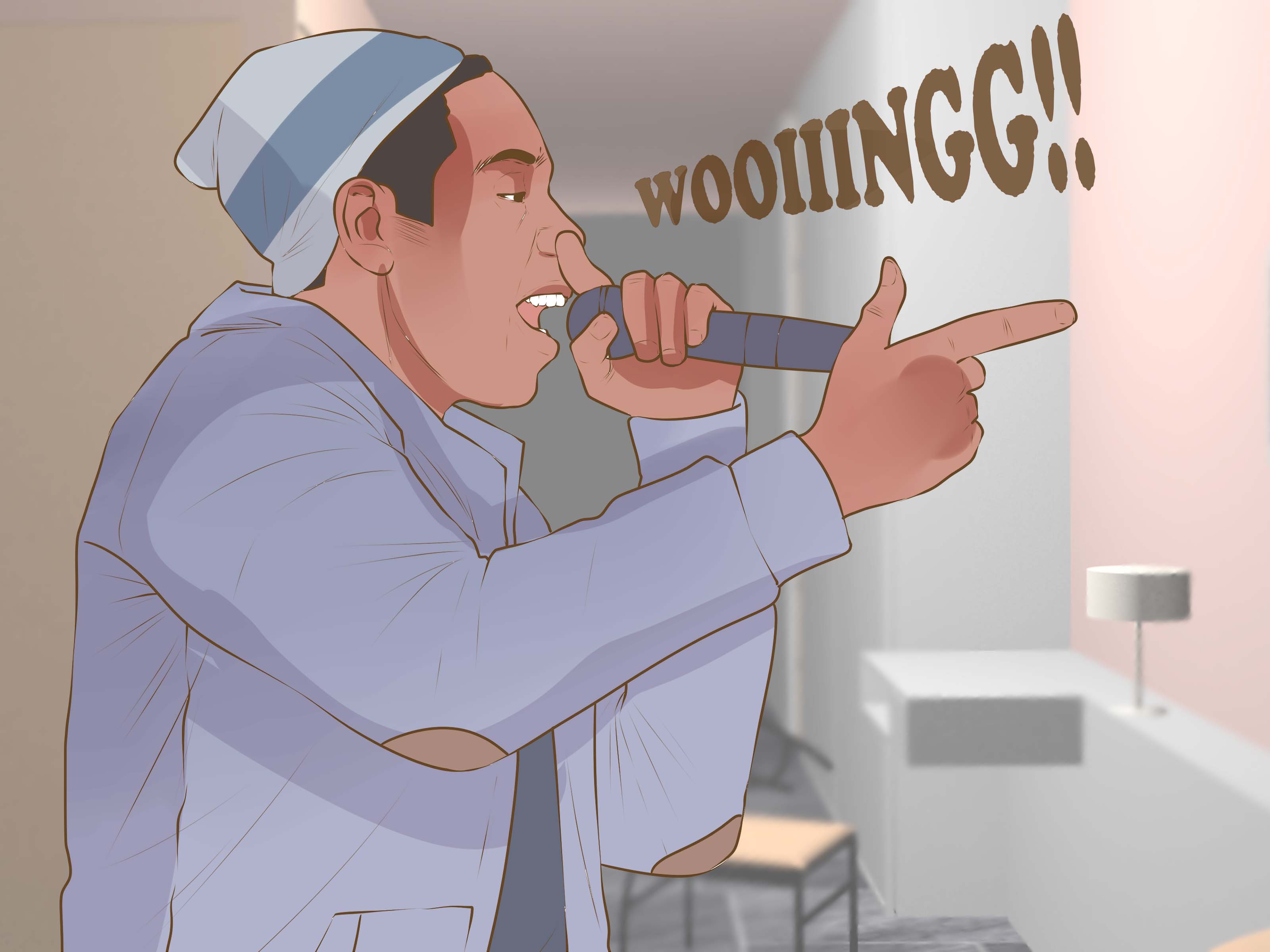
Yes, we have arrived at the famous part: the “hee-hee,” “shamone,” breath pops, cries, grunts, slides, and rhythmic interjections. These are the details people rush toward first, which is hilarious because they only work when the fundamentals already work.
Use ad-libs as seasoning, not soup. Practice them softly before trying them in full tempo. Keep them rhythmic. Place them between phrases, at the end of a thought, or on transitions. If you throw them everywhere, the performance starts sounding like a malfunctioning pinball machine.
A smart Michael Jackson-inspired singer knows restraint. One well-timed exclamation can electrify a phrase. Twenty in a row can make your friends stop making eye contact.
8. Study his phrasing song by song
Michael did not sing every song the same way. “Billie Jean” has a tighter, cooler, more controlled delivery. “Man in the Mirror” opens into a bigger emotional arc. “Bad” leans sharper and more aggressive. “Human Nature” floats. “Dirty Diana” bites. That means your practice should be song-specific.
Choose one track and study these things:
- Where he breathes
- Which words get emphasized
- Where the vowels stay long
- Where the consonants become rhythmic
- Where the tone turns breathy, bright, or gritty
Copy the phrasing first. Then back off slightly and make it your own. That is how you learn style without becoming a tribute act trapped at a county fair.
9. Practice singing while moving
Michael Jackson’s sound cannot be separated from movement. His body, breath, timing, and vocal delivery worked together. Even if you are not planning to moonwalk across your living room, you should practice singing with motion so the groove becomes physical.
Start small. March in place. Step side to side. Add light arm movement. Then sing while keeping the neck, jaw, and shoulders loose. This helps you learn how to maintain breath support under performance conditions. Many singers sound great standing still and suddenly lose three IQ points the second choreography appears.
If you want that live-performance energy, your breath has to survive motion.
10. Protect your voice like a professional
This step is not glamorous, but it is non-negotiable. Drink water. Warm up. Rest your voice when it feels tired. Avoid screaming, whispering for long periods, and forcing the top of your range. Use humidification if the air is dry. If you have reflux symptoms or persistent hoarseness, take them seriously.
Here is the truth nobody loves hearing: sounding great once is easy. Sounding great repeatedly is technique plus vocal health. If your voice is hoarse for weeks, if high notes suddenly disappear, or if singing starts to hurt, stop pretending you are “just pushing through.” Get evaluated by a qualified professional.
Michael Jackson-inspired singing should feel athletic and controlled, not painful and heroic. This is music, not a hostage negotiation.
Common Mistakes People Make When Trying to Sing Like Michael Jackson
The most common mistake is forcing a childlike or ultra-thin tone. Michael’s voice had brightness, but it also had control, body, and rhythm. Another mistake is overdoing the ad-libs while ignoring pitch and phrasing. A third is trying to sing every song in the original key even when it clearly does not suit your voice. Pride is not a vocal technique.
Another big mistake is confusing tension for emotion. Michael could sound urgent without sounding strangled. Emotion came through phrasing, timing, dynamics, and contrast. If your neck veins are filing a complaint, you are not “giving passion.” You are giving your larynx a difficult evening.
A Simple Practice Routine
- Five minutes of breathing and posture work
- Five minutes of humming, lip trills, or straw-style semi-occluded exercises
- Five minutes of slides into upper mix or falsetto
- Ten minutes of speaking lyrics in rhythm
- Ten minutes of singing one Michael Jackson-inspired phrase with multiple textures
- Ten minutes of song study with movement
Do that consistently and you will build the style from the inside out, which is much more useful than buying one fedora and making several dramatic life choices.
What Singers Experience When They Really Try This
Most singers who seriously work on Michael Jackson-inspired material discover something humbling almost immediately: the songs are harder than they sound. On a casual listen, the voice seems light, effortless, and almost playful. But the moment you try to reproduce the timing, the breath placement, and the vocal textures at once, you realize this music is built like a luxury watch. Everything is tiny. Everything matters. One lazy consonant, one extra gulp of air, one tense jaw, and the whole phrase loses that spark.
At first, the biggest surprise is usually rhythm. Many singers expect the challenge to be range, but the real problem is often groove. You may know the melody and still sound completely wrong because the syllables are landing too squarely. Michael Jackson-style singing lives in the little delays, pushes, snaps, and accents that make the line dance. When singers start fixing that, they often have a lightbulb moment: “Oh, this is not just singing. This is musical choreography.” That realization changes everything.
The next common experience is discovering how much restraint is involved. New learners often begin by throwing in every ad-lib they have ever heard, as if the path to greatness is paved with nonstop “hee-hee” energy. Then they listen back and realize they sound less like Michael Jackson and more like a caffeinated parrot in a leather jacket. Over time, they learn that the famous exclamations work because they interrupt the line strategically. They are punctuation, not wallpaper.
Another experience is physical: singers notice that when they relax the throat and support the tone properly, the upper notes get easier. Not easy, exactly. More like “possible without seeing your ancestors for a brief second.” Falsetto starts sounding less disconnected. Breath lasts longer. Phrases stop wobbling. That is usually when confidence grows, because the singer is no longer faking the style from the outside. They are building it with real technique.
There is also an emotional shift. Michael Jackson’s songs ask for commitment. If you sing them timidly, they fall flat. If you oversing them, they become melodrama in sequins. But when a singer finally finds the sweet spot, the material feels incredibly alive. The voice becomes more expressive, more rhythmic, more playful. Many singers say this kind of practice improves not only their MJ-inspired performances but also their overall pop and R&B singing. Their phrasing sharpens. Their breath becomes smarter. Their confidence grows. Their neighbors, ideally, become more forgiving.
That may be the best experience of all: realizing that studying Michael Jackson does not just help you imitate a legend. It helps you become a more complete singer. And that is a far better prize than sounding like a copy.
Final Thoughts
If you want to sing like Michael Jackson, don’t chase the costume first. Chase the craft. Learn breath support. Build a clean upper register. Respect rhythm. Study phrasing. Use textures with intention. Move while you sing. Protect your voice. Most of all, remember that Michael Jackson’s brilliance was never just the sound of his throat. It was the total command of timing, emotion, discipline, and style.
So yes, practice the sparkle. Practice the snap. Practice the famous little vocal fireworks. But build them on real technique. That is how you honor the influence without wrecking your instrument. And honestly, your vocal cords deserve that kind of respect. They are doing a lot. They did not sign up for chaos.