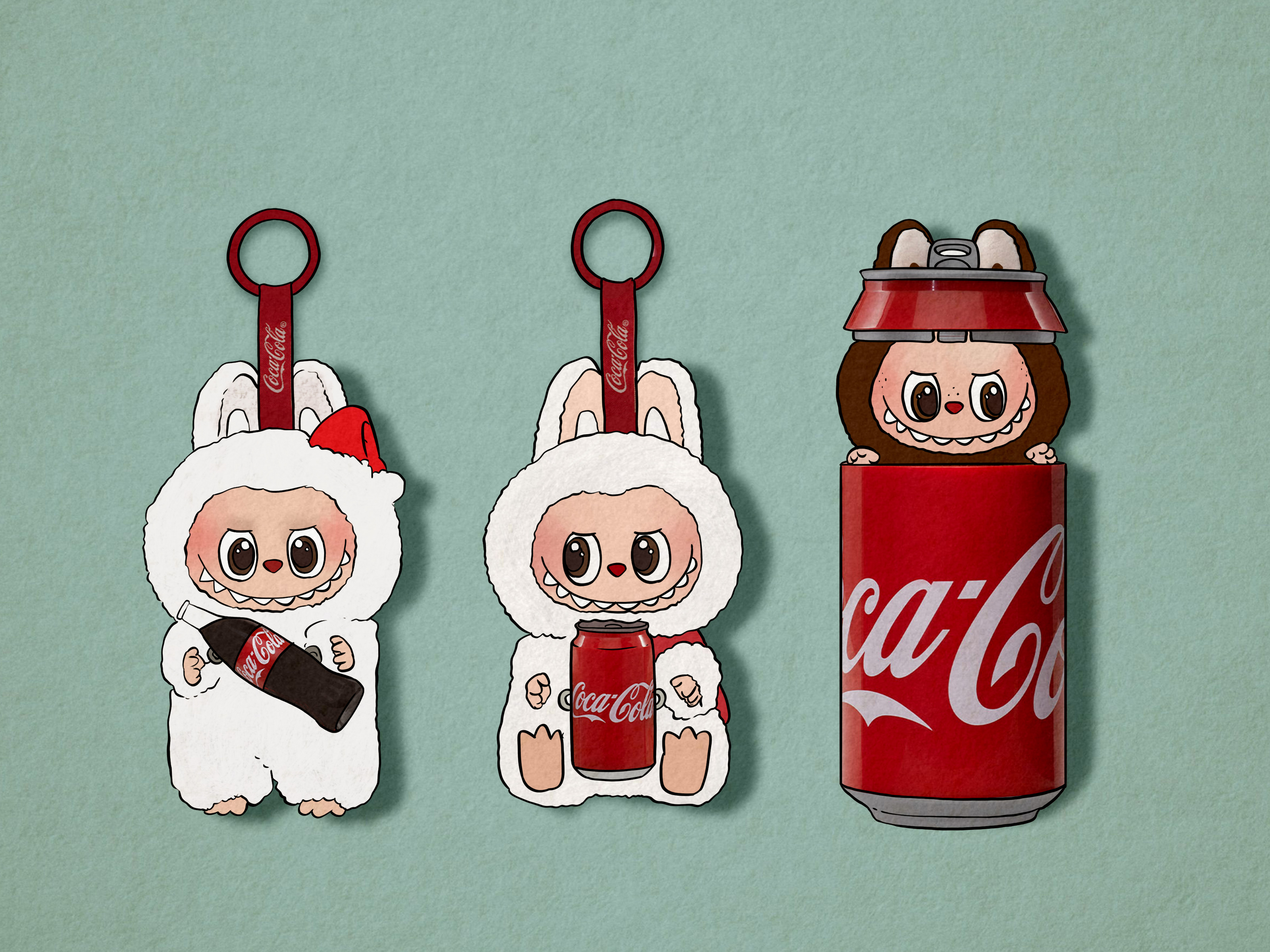
If you recently bought a Labubu Coca-Cola figure and now you are squinting at the box like a detective in a toy aisle crime drama, welcome. You are not overthinking it. Labubu is wildly popular, the Coca-Cola collaboration is especially collectible, and that combination has created the perfect storm for counterfeits, misleading listings, and “trust me, bro, it’s authentic” sellers who deserve a dramatic side-eye.
The good news is that verifying a real Labubu Coca-Cola is not magic. It is a process. A genuine piece usually passes several checkpoints at once: the official anti-counterfeit code, correct blind-box details, strong print quality, clean paint and sculpt work, realistic retail pricing, and a seller history that does not scream “I found this in a mysterious warehouse behind the moon.”
This guide focuses on POP MART’s THE MONSTERS Coca-Cola Series Figures, the small figure blind boxes most collectors mean when they say “Labubu Coca-Cola.” We will break down how to authenticate one step by step, what red flags to watch for, and what real buyers often learn the hard way.
What Is a Real Labubu Coca-Cola Supposed to Be?
Before you can spot a fake, you need a clean mental picture of the real thing. POP MART’s official THE MONSTERS Coca-Cola Series Figures is a blind-box release made from PVC/ABS, with figures roughly 7.7 cm to 10.7 cm tall. The official whole set contains 10 non-repeating blind boxes. That detail matters more than people think. If someone is selling you a “factory sealed full case” of 12 for this particular figures release, that is not a tiny typo. That is a marching-band-sized red flag.
Authentic Labubu design language is also pretty consistent. Labubu is known for pointed ears, a mischievous smile, and nine sharp teeth. Even when dressed up in the Coca-Cola collaboration style, the character should still look like Labubu, not like an off-brand gremlin who had a stressful morning in a low-budget printer.
One more important note: packaging and anti-counterfeit placement can vary slightly by batch, market, and specific release. So never rely on one clue alone. The smartest collectors verify the product the way you would verify a good diamond or a bad first date: look at everything.
Why Fake Labubu Coca-Cola Figures Keep Showing Up
Fakes are common because the demand is real, the drops are limited, and resale prices can climb fast. That creates a profitable lane for counterfeiters. Some fake Labubu products are laughably bad. Others are convincing enough to fool buyers in a hurry. In fact, one of the biggest mistakes collectors make is assuming that nice-looking packaging equals authenticity. It does not. A fake can come in packaging that looks surprisingly close to the original.
That is why your goal is not just to ask, “Does the box look okay?” Your goal is to ask, “Does everything line up with what an authentic POP MART Coca-Cola series figure should look like, from code to box to figure to seller?”
Step 1: Verify the Anti-Counterfeit Code First
This is the smartest place to begin. POP MART provides an official authenticity check flow, including manual code verification and QR-based verification. If your Labubu Coca-Cola has an anti-counterfeit label or scannable code, use the official POP MART verification page or QR verify path. Do not trust a random website printed on a seller card. Do not trust a QR code that redirects to a sketchy page with too many pop-ups and not enough credibility. And definitely do not trust a seller who says, “No need to check the code, I already did it for you.” That is not reassuring. That is suspicious theater.
When you verify the code, the result should connect cleanly to POP MART’s official system. If the code fails, redirects incorrectly, or looks tampered with, pause immediately. A genuine result is not your only checkpoint, but an invalid result is a major warning sign.
Also, keep the packaging, proof of purchase, and anti-counterfeit information. POP MART’s own support guidance references original purchase proof and the anti-counterfeiting code for certain after-sales requests. In other words, that little sticker is not decorative. Treat it like the toy equivalent of a passport.
Step 2: Inspect the Box Like a Collector, Not a Casual Browser
A real blind box usually gets the basics right. The cardboard should feel sturdy, the color printing should be crisp, and the branding should look consistent across all sides. On many fake boxes, the first warning signs are boring but important: blurry text, uneven color, weak contrast, thin cardboard, misaligned logos, or fonts that look almost right in the same way a fake mustache is almost subtle.
Packaging details to check
- Series name: Make sure the box clearly matches the official Coca-Cola series wording.
- Material and size info: These details should look professionally printed, not fuzzy or off-center.
- Blind-box format: The release is sold as blind boxes, and a full set contains 10 non-repeating boxes.
- Factory sealing: Look for clean seals, not sloppy re-taping, wrinkled plastic, or suspicious residue.
- Holographic security elements: On authentic Labubu products, collectors and toy coverage commonly reference a holographic POP MART sticker and scannable QR code.
If the sticker is missing, badly applied, or looks cheap and flat, do not brush it off as “probably a packaging update.” Counterfeit sellers love buyers who are willing to explain away every problem for them.
Step 3: Check the Figure’s Face, Teeth, Ears, and Paint
Once you open the box, the figure itself should do most of the talking. Real Labubu figures usually have much better sculpt consistency than fakes. The ears should be symmetrical and cleanly shaped. The facial expression should look intentional. The teeth should be sharp, clear, and neatly painted. If the mouth looks muddy, the eyes look uneven, or the face seems weirdly compressed or stretched, pay attention.
Collectors often notice these fake tells first:
- Misprinted or uneven teeth
- Lopsided or poorly placed eyes
- Messy paint edges around the mouth or cheeks
- Visible glue or rough seams
- Plastic that feels unusually light, brittle, or cheap
- Colors that look dull, muddy, or simply wrong
For many authentic Labubu releases, the nine teeth detail is a strong clue. It should not be your only test, but it is a useful one. If your Coca-Cola figure has a smile that looks like it lost a bar fight with a glue gun, you may be looking at a fake.
Step 4: Compare the Figure to Official Product Images
This step is underrated and incredibly effective. Pull up the official product images from POP MART and compare your figure carefully. Do not just glance at the color and say, “Yep, red enough.” Look at the shape of the Coca-Cola props, the character pose, the proportions of the head and body, and the expression.
Authentic figures are manufactured to match official promotional images closely. Small production variation is normal. A completely different expression, poorly proportioned can accessory, off-tone red, or clumsy sculpt is not normal.
This matters even more in collaborations because the licensing elements have to be right. Coca-Cola branding tends to be reproduced cleanly on authentic items. On counterfeits, tiny details often go off the rails: muddy white lettering, crooked label graphics, or red tones that drift from iconic Coca-Cola red into “close enough, maybe under candlelight” territory.
Step 5: Evaluate the Seller Before You Evaluate Their Excuses
A product can look good and still be fake. That is why seller behavior matters. If you bought from POP MART directly, a verified POP MART store, or a trusted retailer with a solid reputation, your risk drops dramatically. If you bought from a random third-party seller offering a collectible at a huge discount and speaking in all-caps urgency, your risk rises just as dramatically.
Seller red flags
- Price is far below normal retail or current market range
- No original receipt, no proof of purchase, no box details
- Photos are blurry, recycled, or suspiciously generic
- The seller avoids showing the anti-counterfeit label
- They use phrases like “same factory,” “1:1,” or “looks authentic”
- They have lots of hot collectible listings but weak feedback history
Resale marketplaces are not automatically bad, but they require more caution. If you are buying secondhand, ask for photos of the front, back, bottom of the box, the security label, the sealed packaging, and the figure itself if opened. A trustworthy seller usually understands why you are asking. A shady one usually gets offended with Olympic-level speed.
Step 6: Watch the Price, Because Price Tells a Story
Price alone does not prove authenticity, but it absolutely sets the tone. If a Coca-Cola series Labubu is priced way below normal retail or common resale value, ask why. Counterfeit sellers often hook buyers with the exact emotional formula that has ruined many budgets: rarity plus urgency plus discount. That combo makes smart people move fast and think later.
On the other hand, an expensive item is not automatically real either. Plenty of fakes are overpriced to appear legitimate. The lesson is simple: use price as context, not proof.
Step 7: Look for Small Authenticity Signals That Fakes Miss
Some newer authentic Labubu items have been noted to include subtle security details such as a UV stamp on one foot. That kind of detail may vary by edition, so do not panic if you are comparing across different releases. But if your seller claims a figure is brand-new and premium, yet the figure misses multiple known authenticity markers at once, it is time to trust your instincts.
A real item usually passes several tests together:
- The code verifies through POP MART
- The box quality is crisp and consistent
- The branding and series details match official specs
- The sculpt and paint quality look clean
- The figure resembles official images closely
- The seller and pricing make sense
A fake usually fails in clusters. Maybe the QR works oddly, the sticker looks cheap, the teeth are messy, the print is soft, and the seller insists everything is “super original.” When multiple little things feel off, believe the pattern.
What to Do If You Still Are Not Sure
If you are on the fence, stop before reselling, gifting, or bragging. Compare the item side by side with official product photos. Recheck the code through POP MART. Review the seller’s listing and messages. Save screenshots. Keep the original box and receipt. If you purchased on a marketplace, use the platform’s buyer protection options quickly instead of waiting until your suspicion becomes a sad little certainty.
And if you are shopping in the future, the best prevention strategy is still the boring one: buy from POP MART directly or from reputable sellers with clear proof of authenticity. Collector heartbreak is expensive. Prevention is cheaper.
Collector Experiences: What Real Buyers Usually Learn the Hard Way
One of the most common experiences with Labubu Coca-Cola authentication starts with confidence and ends with zooming in on packaging photos at midnight. A buyer sees a listing that looks perfect: sealed box, good lighting, cheerful seller, maybe even the word “authentic” repeated five times for emotional support. The price is just low enough to feel like a lucky break but not so low that it screams scam. That is the sweet spot where many people get trapped.
Then the box arrives. At first glance, everything seems fine. The colors look decent. The figure is cute. Your brain wants to celebrate because no one enjoys admitting they may have paid real money for a fake monster holding tiny branded happiness. But then the strange details start lining up. The smile looks slightly off. The teeth are uneven. The red on the Coca-Cola element looks a little muddy. The QR code takes a strange detour. Suddenly, you are not unboxing joy. You are conducting an investigation.
Another common experience happens with “too good to be true” bulk deals. A seller offers multiple sealed Coca-Cola series boxes, claims they came from a restock, and says they are “all from the same official source.” Buyers love this because it feels efficient. One purchase, multiple chances, maybe even a full set. But once collectors learn that the official figures release is sold as a whole set of 10 non-repeating blind boxes, weird listings begin to stand out. If someone is offering a suspicious configuration, the buyer starts realizing the product story does not match the product itself.
Some collectors only learn the lesson after comparing a questionable purchase with a confirmed authentic one. That side-by-side moment is brutal and educational. A real figure tends to look cleaner, sharper, and more balanced. The fake may not seem terrible on its own, but next to the real thing it suddenly resembles a cousin who made several poor life choices. The face may be slightly warped. The paint may be thicker. The material may feel cheaper. The box print may look softer. It is usually not one gigantic flaw. It is death by a thousand tiny weird decisions.
There are also buyers who accidentally purchase a fake, then later buy an authentic Labubu Coca-Cola from a trusted source and realize how much better the real product feels in hand. That comparison often changes the way they shop forever. They stop chasing miracle deals. They start asking for receipts, label photos, and close-ups of the anti-counterfeit sticker. They get pickier, slower, and much harder to fool. In other words, they evolve into collectors instead of hopeful gamblers.
And yes, there are people who knowingly buy fakes for laughs, curiosity, or chaos. That is a separate category entirely. But if your goal is to own a real Labubu Coca-Cola figure, authenticity is not about one dramatic clue. It is about patience, pattern recognition, and refusing to let hype outrun common sense. The best buying experience is not just getting the figure you want. It is opening the box without that tiny sinking feeling in your stomach.
Final Thoughts
If you want the simplest answer to the question “How do I verify if a Labubu Coca-Cola is real?” here it is: check the official POP MART anti-counterfeit system, compare the box to official release details, inspect the figure’s sculpt and paint quality, and evaluate the seller as carefully as the toy. Real collectibles usually make sense from every angle. Fakes usually ask you to ignore something.
So trust the process, not the hype. The real Labubu Coca-Cola should feel collectible, polished, and consistent. If the box is wrong, the code is strange, the teeth are messy, and the price feels like a miracle from the bargain gods, it probably is not a miracle. It is probably a warning.