Note: This is an original, SEO-friendly article inspired by the topic and based on real pet photography, Photoshop compositing, and responsible animal-handling practices.
Some people take cute photos of their pets sleeping in sunbeams. Others capture a dog mid-zoomie, looking like a furry comet with emotional problems. And then there are artists who look at a cat sitting on a chair and think, “Yes, but what if this cat were steering a tiny boat through a teacup ocean?” Welcome to the wonderfully odd world of surreal pet photography, where ordinary pets become tiny heroes, dramatic explorers, cloud-riding philosophers, or suspiciously confident rulers of impossible kingdoms.
The title “I Create Surreal Photos Of My Pets Using Photoshop (Part 2)” immediately promises two things: pets and delightful chaos. It suggests an artist who does not simply photograph animals but builds little visual stories around them. A dog is no longer just a dog; he is a mountain climber, a moon traveler, or a noble beast standing in a field of giant strawberries. A cat is not merely judging you from the windowsill; she is a mysterious forest queen judging you from inside a glowing mushroom palace.
At its best, surreal pet photo art is not random weirdness pasted together for internet applause. It works because the pet’s personality remains at the center. Photoshop may provide the wings, storm clouds, floating furniture, and glowing portals, but the true magic is still in the animal’s eyes, posture, expression, and attitude. The edit succeeds when viewers think, “That is impossible,” immediately followed by, “That is exactly something this pet would do.”
What Makes Surreal Pet Photography So Addictive?
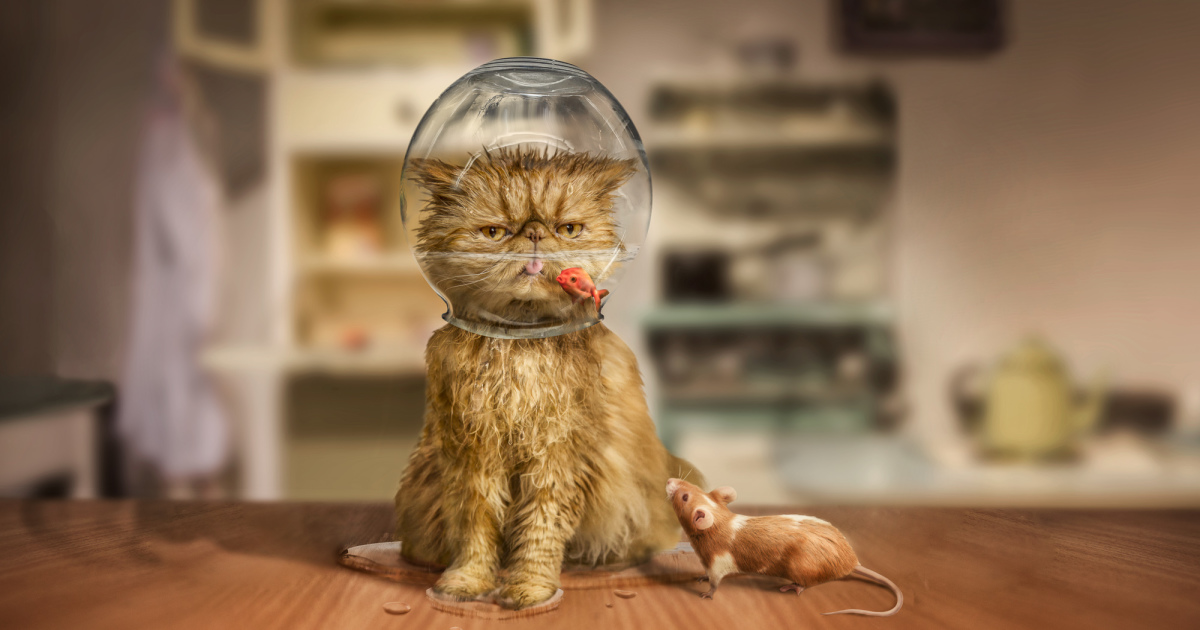
Surreal pet photography combines the sweetness of animal portraits with the imagination of fantasy art. It takes a familiar subject and places it somewhere unexpected. A rabbit becomes a giant in a miniature town. A dog naps on a floating island. A cat sits beside a teacup the size of a bathtub, because cats already believe the universe exists for their convenience.
The reason these images work so well online is simple: people love pets, and people love visual surprises. A normal pet portrait may earn a smile, but a surreal pet composite invites viewers to pause, zoom in, and inspect the details. They notice the shadows, the scale, the props, the background, and the tiny jokes hidden in the scene. That extra time spent looking is gold for storytelling, social sharing, and SEO performance.
The Real Artist Behind the Original Idea
The well-known “I Create Surreal Photos Of My Pets Using Photoshop” concept is associated with photographer and digital artist Tracy Willis, who described creating imaginative artwork from many different shots taken with cameras and phones. Her approach reflects a core truth about composite photography: a finished fantasy image often begins with ordinary fragments. A photo of a pet, a chair, a field, a cloud, a toy, a doorway, and a strange object found during a walk can eventually become one complete visual story.
That is the secret ingredient behind memorable Photoshop art. The final picture may look spontaneous, but it is usually built from patient collecting. A good surreal pet artist becomes a hunter of textures, skies, props, backgrounds, and odd little details. Friends and family may wonder why the artist is taking pictures of rusty hinges, puddles, curtains, or a lonely spoon on a picnic table. The answer is always the same: “I might need it later.” This is how normal camera rolls become digital junk drawers of future masterpieces.
Photoshop Is the Stage, but the Pet Is the Star
Photoshop offers powerful tools for compositing images, blending backgrounds, masking subjects, adjusting color, and creating impossible scenes. Still, the software should never overpower the animal. A surreal pet photo fails when the edit screams louder than the pet’s personality. The goal is not to prove how many layers you can stack before your laptop starts sounding like a leaf blower. The goal is to make the viewer believe, emotionally if not literally, that the pet belongs in that strange little world.
One of the most useful techniques is non-destructive editing with layer masks. Instead of permanently erasing parts of an image, a mask lets the editor hide or reveal areas with flexibility. This matters because pet fur is tricky. Whiskers, fluffy tails, ears, and feathered edges do not enjoy being cut out like paper dolls. A soft brush, careful masking, and patient edge refinement can make the difference between “magical forest dog” and “dog sticker slapped on a wallpaper sample.”
Planning the Surreal Scene Before Opening Photoshop
A strong surreal pet image usually starts before the editing begins. The artist needs a concept. Not a 47-page screenplay, thankfully, but a clear idea: What is happening? Where is the pet? Why is the scene funny, charming, dreamy, or strange? A good prompt might be, “My cat is a tiny librarian guarding forbidden books,” or “My dog is fishing from the crescent moon.” Once the concept exists, every visual choice becomes easier.
Start With the Pet’s Natural Personality
The best surreal edits grow from what the pet already does. A sleepy dog might become a giant guardian dozing beside a village. A curious cat might become an explorer peeking through a glowing portal. A dramatic parrot could become a royal messenger delivering news nobody asked for. When the idea matches the animal, the image feels playful rather than forced.
Collect Backgrounds and Props Like a Visual Squirrel
Surreal pet composites often require many source photos. Backgrounds, skies, leaves, furniture, toys, baskets, clouds, water, and textures can all become useful. The more original photos an artist captures personally, the more unique the final artwork feels. Stock images can help, but personal photography gives the scene a more consistent visual fingerprint.
How to Photograph Pets for Surreal Photoshop Art
A fantasy edit is only as strong as the base pet photo. If the pet is blurry, poorly lit, or uncomfortable, even the most dramatic background will not save it. Good pet photography begins with patience. Animals do not care about your artistic deadline. They care about snacks, naps, smells, squirrels, and the mysterious sound behind the refrigerator.
Natural light is often the safest and most flattering choice. A window, shaded porch, cloudy afternoon, or golden-hour outdoor session can create soft shadows and clear details. Direct flash can startle animals and may cause harsh reflections or red-eye, so it is usually better to avoid it when possible. The goal is to keep the pet relaxed enough to act naturally.
Fast shutter speeds are helpful because pets move suddenly. One second your dog is posing like a professional model; the next second he is licking his shoulder with the confidence of a Renaissance statue. Burst mode can capture a series of expressions quickly, giving the editor more choices later. Continuous focus can also help when photographing active animals.
Focus on the Eyes
In animal photography, sharp eyes create connection. Even in a surreal scene full of floating planets and oversized mushrooms, the viewer’s attention will usually land on the pet’s face first. If the eyes are clear and expressive, the fantasy feels alive. If they are soft or dull, the entire image loses emotional impact.
Keep the Pet Comfortable
No image is worth stressing an animal. Use treats, toys, breaks, and calm handling. Let the pet explore the area before shooting. Keep sessions short. If a pet looks anxious, tired, overheated, or annoyed, stop. Photoshop can create a dragon cloud, but it cannot ethically justify making a dog miserable for the sake of a dragon cloud.
Building a Believable Surreal Composite
The biggest challenge in surreal Photoshop art is making impossible things feel visually connected. The scene can be absurd, but the lighting, shadows, color, scale, and perspective need to agree with each other. A tiny dog riding a spoon through space can look believable if the shadows and highlights make sense. A normal dog standing in a normal yard can look fake if the cutout edges are sloppy.
Match the Light Direction
Before combining images, ask where the light is coming from. If the pet is lit from the left but the background is lit from the right, the viewer may not know exactly what is wrong, but they will feel it. Matching light direction helps different elements sit inside the same world.
Use Shadows Like Glue
Shadows are the glue of compositing. They anchor the pet to the ground, table, moon, boat, teacup, or whatever suspicious object has been chosen as today’s stage. Without shadows, the pet floats unintentionally. With the right shadows, even a completely impossible scene can feel oddly convincing.
Color Grade Everything Together
After the main pieces are assembled, color grading helps unify the image. A cool blue tone can make a moonlit scene feel dreamy. Warm oranges can create a storybook sunset. Slight contrast adjustments, haze, highlights, and texture can make separate photos feel like they were captured in the same atmosphere.
Creative Ideas for Surreal Pet Photos
Surreal pet photography works beautifully because pets already look like they are keeping secrets. Here are a few concept directions that can turn a simple animal portrait into a memorable digital artwork.
1. The Tiny Adventure
Shrink the pet into a miniature world. A dog can sit inside a coffee cup. A cat can nap in a matchbox. A hamster can become the captain of a walnut-shell boat. This type of image plays with scale and humor, making everyday objects feel enormous.
2. The Giant Guardian
Make the pet huge and place it beside a tiny house, village, forest path, or toy city. This works especially well for calm, noble-looking animals. A giant golden retriever watching over a small town sounds like a public safety improvement, honestly.
3. The Magical Portal
Use doors, windows, mirrors, puddles, or glowing circles as portals. A pet can step from a living room into a jungle or from a backyard into outer space. The contrast between familiar and impossible creates instant visual interest.
4. The Classic Portrait Twist
Turn the pet into royalty, an explorer, a scholar, or a mysterious old-world character. Costumes do not have to be physically placed on the animal. Digital clothing, painted textures, and careful compositing can create the effect without making the pet wear anything uncomfortable.
Why Photoshop Still Matters in the Age of AI Pet Portraits
AI image tools can quickly generate fantasy-style pet portraits, and they can be fun for brainstorming. However, Photoshop compositing still offers a level of control that many artists value. When working with real photos of real pets, the artist can preserve the animal’s actual expression, markings, fur pattern, and personality. That authenticity matters, especially when the pet is beloved family rather than a generic “cute dog” prompt.
Photoshop also allows transparent, step-by-step creative decision-making. Artists can use their own source images, organize layers, adjust masks, control color, and export versions for web, print, or social media. Content transparency tools, such as Content Credentials, can also help creators communicate how an image was made and preserve attribution as artwork travels online.
SEO Value of Surreal Pet Photography Content
From an SEO perspective, surreal pet photography is a strong topic because it blends multiple search interests: pet photography, Photoshop editing, digital art, creative pet portraits, photo manipulation, and social media inspiration. Readers may arrive because they love animals, want Photoshop ideas, need pet photography tips, or simply enjoy looking at weirdly charming images that make Monday feel less like Monday.
To optimize this kind of content for Google and Bing, the article should use natural keyword placement rather than repeating the same phrase until the paragraph needs a veterinarian. Strong headings, descriptive image alt text, compressed images, original commentary, and useful editing tips can all improve user experience. If the post includes a gallery, each image should have a short caption explaining the idea, technique, or funny story behind it.
Common Mistakes to Avoid
The first mistake is over-editing. Surreal does not mean every inch of the image needs sparkles, fog, lightning, butterflies, planets, and a mysterious glowing orb named Kevin. A clean concept is often stronger than visual clutter. Let the pet remain the hero.
The second mistake is ignoring edges. Fur, whiskers, feathers, and ears need careful masking. Hard cutout lines can ruin the illusion quickly. Zoom in, refine the mask, and take breaks so your eyes do not start accepting chaos as “probably fine.”
The third mistake is forgetting animal welfare. If a scene requires a dangerous pose, stressful costume, unsafe location, or uncomfortable handling, redesign the concept. The beauty of Photoshop is that the fantasy can be created digitally. Your pet does not need to stand on a ladder, sit inside a real teacup, or audition for a pirate movie in the bathtub.
My Experience With Creating Surreal Photos Of Pets Using Photoshop
Working on surreal pet images teaches patience faster than almost any other creative project. Pets are honest collaborators. They do not pretend to enjoy bad lighting. They do not respect your carefully planned shot list. They will sit beautifully for ten minutes while you adjust the camera, then leave the exact second you press the shutter. At first, this feels like sabotage. Later, you realize it is part of the charm.
One of the biggest lessons is to photograph more than you think you need. A single surreal composite might require one good pet portrait, three background options, several texture shots, extra photos for paws or tails, and a clean plate of the scene without the animal. The “clean plate” is especially useful when removing leashes, hands, toys, or distracting objects. It is not glamorous, but it saves the edit later.
Another practical lesson is that simple ideas often produce the strongest images. Early on, it is tempting to create a massive fantasy scene with waterfalls, castles, planets, flying fish, and a dog wearing goggles. That can work, but only if every piece supports the story. A quieter image, such as a cat staring into a glowing cupboard or a dog sleeping on a tiny island, may feel more memorable because the viewer understands it immediately.
I have also learned that humor matters. Surreal pet art does not need to be serious to be beautiful. A dramatic cat in a stormy landscape is funny because cats already behave like misunderstood monarchs. A tiny dog standing on a stack of pancakes is funny because dogs would absolutely consider that a reasonable career goal. The joke should feel affectionate, never mocking. The best images celebrate the animal’s quirks.
Editing fur remains one of the most humbling experiences in Photoshop. Smooth objects are easy. Fluffy pets are tiny edge-detail disasters wearing cute faces. A good mask often takes multiple passes: one for the general shape, one for soft fur, one for whiskers, and one final pass after the background is in place. The background color affects how convincing the fur looks, so it is smart to test the cutout against the actual scene early.
Finally, surreal pet photography has reminded me that creativity often begins with paying closer attention. A cardboard box becomes a spaceship. A puddle becomes a portal. A bored-looking dog becomes the mayor of a miniature town. Photoshop is powerful, but the real skill is noticing the story hiding inside ordinary moments. Pets give us those moments daily. We just have to be ready when the cat decides the laundry basket is a throne.
Conclusion
“I Create Surreal Photos Of My Pets Using Photoshop (Part 2)” is more than a catchy title. It represents a playful style of digital storytelling where pets become the center of impossible, funny, and emotionally charming worlds. The strongest surreal pet photos combine good photography, humane handling, smart Photoshop technique, and a clear creative idea. Whether the final image shows a dog sailing across the moon or a cat ruling a mushroom kingdom, the heart of the artwork is always the same: a real animal with a real personality, transformed by imagination.
For artists, pet lovers, bloggers, and digital creators, this topic offers endless inspiration. It is accessible, shareable, visually rich, and surprisingly meaningful. After all, our pets already make everyday life feel a little surreal. Photoshop simply gives them the scenery they deserve.