Research note: This original article was informed by geographic, cultural, conservation, travel-safety, and photography guidance from UNESCO World Heritage Centre, NASA Earth Observatory, National Geographic, the U.S. Department of State, CDC Yellow Book, Smithsonian Magazine, Adobe Photography, Lonely Planet, Condé Nast Traveler, IUCN, Snow Leopard Conservancy, and Patagonia. Geographic grounding: Travel and health grounding: Photography and wildlife grounding:
The Pamir Mountains do not ease visitors into their beauty. They arrive all at once: enormous walls of stone, dazzling snowfields, turquoise lakes, restless rivers, and roads that appear to have been sketched by a goat with questionable judgment.
I traveled through eastern Tajikistan with a camera, several memory cards, too many batteries, and the optimistic belief that mountain dust would respect expensive electronics. It did not. Still, every rough mile delivered another landscape that seemed larger than the previous one.
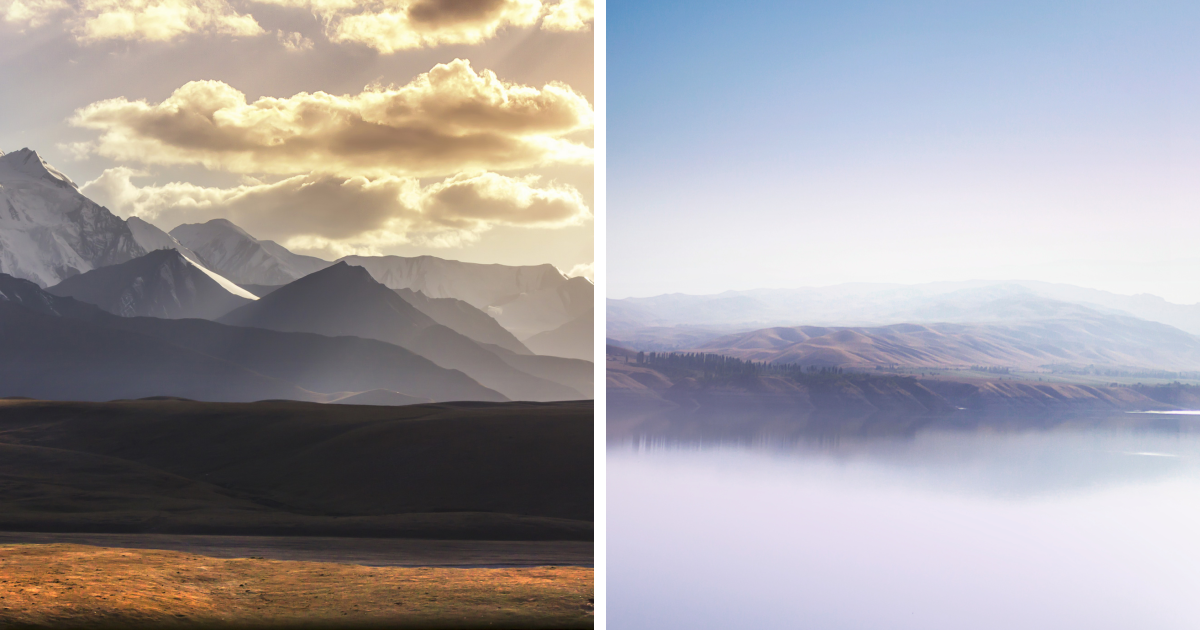
This collection of 10 Pamir Mountains photos follows the journey from the deep valleys beside the Panj River to the high plateaus near Murghab and Karakul Lake. The images reveal not only dramatic scenery but also isolated villages, working roads, family homes, and small signs of life in one of Central Asia’s most imposing regions.
Why the Pamir Mountains Feel Like Another Planet
The Pamirs sit at the center of the so-called Pamir Knot, where several of Eurasia’s great mountain systems converge. Much of the Tajik portion lies within Gorno-Badakhshan, an immense and sparsely populated autonomous region covering the country’s east.
Tajik National Park protects more than 2.6 million hectares of this high-altitude wilderness. UNESCO describes it as the world’s third-highest mountain ecosystem after the Himalayas and Karakoram. Its landscape ranges from jagged western summits to broad, dry eastern plateaus where the horizon can appear almost perfectly empty.
“Empty,” however, is not the same as lifeless. The Pamirs support Marco Polo sheep, Siberian ibex, marmots, golden eagles, bearded vultures, and elusive snow leopards. Families raise livestock on high pastures, cultivate narrow green fields beside rivers, and maintain settlements in locations where a grocery run may involve several hours of creative suspension testing.
For a photographer, the difficulty is not finding a beautiful subject. The difficulty is deciding where to point the camera when nearly every direction looks like the cover of an adventure book.
10 Photos From My Journey Through the Pamirs
Photo 1: Following the Panj River Into the Mountains

My first lasting impression of the Pamirs came from the road running beside the Panj River. The water forms part of the boundary between Tajikistan and Afghanistan, with mountains rising steeply on both sides. From some viewpoints, Afghan villages appeared close enough to reach with a determined stone throwalthough I wisely kept my stones and international diplomacy to myself.
I used the road as a leading line, allowing it to pull the viewer through the image toward the distant peaks. The composition also shows the scale of the valley. Without the road and tiny vehicle, the surrounding cliffs might seem merely large rather than “please reconsider your personal importance” large.
Photo 2: Morning Light in the Wakhan Valley

The Wakhan Valley is one of those places where waking before sunrise feels less like discipline and more like receiving privileged information. I stepped outside while the villages were still quiet and watched pale light move slowly across the mountains. Fields near the river glowed green and gold against slopes of gray, brown, and rust.
The contrast explains much about life here. Water creates thin, fertile ribbons in an otherwise arid landscape. Poplar trees, gardens, and cultivated plots cluster around settlements, producing pockets of color so vivid that they almost look added in post-processing. They were not. Nature had already moved the saturation slider.
Photo 3: The Hindu Kush Across the Border

From the Tajik side of the valley, I photographed the snow-covered Hindu Kush beyond the river. The scene contained several layers: gravel in the foreground, braided water channels, cultivated land, dry foothills, and white summits fading into the clouds.
Layering is especially useful in mountain photography because it turns a flat rectangle into a visual journey. The foreground gives the eye somewhere to enter, while overlapping ridges create depth. In this frame, each layer also represents a different environment, from riverside agriculture to permanent snow.
Photo 4: A Fortress Above the Wakhan

High above the valley, old fortress walls stand against a vast mountain backdrop. Their weathered surfaces almost blend into the earth, which is useful for defense but mildly inconvenient for a photographer trying to separate architecture from geology.
The ruins are reminders that the Pamirs were never simply an isolated wilderness. Routes through these valleys connected communities and formed part of wider networks of trade and movement across Central Asia. Photographing the fortress at a slight angle allowed the wall to lead toward the river and distant peaks, connecting human history with the landscape that shaped it.
Photo 5: A Village Built Around Water

From a hillside above one village, the logic of settlement became immediately visible. Houses, fruit trees, fields, and irrigation channels gathered close to a dependable water source. Beyond them, the land returned quickly to rock and dust.
I waited until a person walked between two fields before pressing the shutter. That small human figure became essential to the photograph. It provided scale, but it also prevented the village from becoming an abstract arrangement of rooftops. The Pamirs may look empty from a distance, yet people have built resilient communities here for generations.
Photo 6: Wind, Water, and Silence at Bulunkul

Near Bulunkul, the landscape opened into a broad high-altitude basin of water, grass, and distant mountains. The lake shifted from silver to blue as clouds crossed overhead. The wind, meanwhile, attempted to remove my hat, tripod, and possibly my eyebrows.
Rather than photographing only the lake, I placed stones and dry grass in the foreground. These details emphasize the harshness of the terrain and create depth. A slower, more deliberate composition worked better than chasing every change in the clouds. In places this quiet, patience becomes part of the equipment.
Photo 7: Life on the High Plateau Near Murghab

Murghab sits within the eastern Pamirs, where the scenery changes from tight valleys to open, elevated plateaus. Mountains remain everywhere, but they stand farther apart. The result is a landscape dominated by sky.
I photographed low buildings beneath a huge bank of clouds, deliberately giving the sky most of the frame. Conventional composition advice often warns against placing the horizon too low without a good reason. Here, the reason was floating directly above me, looking dramatic and slightly judgmental.
Murghab also showed me that remoteness does not eliminate daily life. People shop, repair vehicles, attend school, prepare meals, and exchange news. The setting is extraordinary; the routines are wonderfully ordinary.
Photo 8: Crossing the Stark Landscape of Ak-Baital

Around Ak-Baital Pass, the environment becomes almost monochrome. Pale roads cut through slopes of charcoal, brown, and beige, while patches of snow cling to shaded ground. Vegetation is scarce, and the thin air turns even a short walk with camera equipment into an athletic event.
High-altitude travel deserves respect. Reduced air pressure can cause headaches, fatigue, nausea, poor sleep, and more serious illness when travelers ascend too quickly. I moved slowly, drank water, and resisted the urge to sprint dramatically toward every viewpoint. There is nothing cinematic about gasping beside a camera bag while your driver watches with polite concern.
Photo 9: Karakul Lake Beneath Snowy Peaks

Karakul Lake provided one of the journey’s most spacious views. The lake occupies a vast basin formed by an ancient meteorite impact, surrounded by barren ridges and snowy peaks. Depending on the wind and light, its surface changes from deep blue to metallic gray.
I arrived when the water was calm enough to catch broken reflections of the clouds. Instead of placing the horizon in the center, I lowered it slightly to emphasize the sky. A circular polarizing filter helped control glare, although rotating it too far made the blue uneven. Filters, like spices, are useful until enthusiasm takes over.
Photo 10: A Pamir Night Filled With Stars

My final photograph was taken outside a village guesthouse after dinner. With little artificial light nearby, the stars appeared in astonishing numbers. The mountains were reduced to dark silhouettes, while one warm window gave the frame a human center.
I placed the camera on a tripod, focused manually, and used a wide aperture with a relatively short exposure to keep the stars from turning into noticeable trails. The cold drained the battery quickly, but a spare had been warming inside my jacket. This is either sensible photography preparation or an unusually expensive way to accessorize an inner pocket.
The image became my favorite because it combined everything I wanted to remember: wilderness, shelter, distance, and hospitality beneath an enormous sky.
What Makes Pamir Mountains Photography So Challenging?
The scale of the Pamirs can be surprisingly difficult to translate into photographs. Wide-angle lenses capture the sweep of a valley, but they can make distant peaks appear disappointingly small. Telephoto lenses compress ridges and reveal patterns in the rock, yet they may remove the sense of space that makes the region special.
I frequently switched between a wide-angle lens for environmental scenes and a moderate telephoto lens for layered mountains, villages, animals, and distant details. Including roads, people, buildings, livestock, or vehicles helped communicate scale more effectively than an empty panorama.
Light was another challenge. Clear high-altitude air can create intense contrast at midday, with brilliant snow beside nearly black shadows. Morning and evening usually offered softer illumination, but clouds could transform a scene within seconds. Checking the histogram was more reliable than trusting a camera screen under bright sunlight.
Dust also became a daily companion. I changed lenses inside the vehicle whenever possible, used a blower before wiping glass, and stored equipment in closed bags. The landscape is beautifully dramatic; the dirt is merely dramatic.
Extended Field Notes: What Photographing the Pamirs Taught Me
My strongest memories are not limited to famous viewpoints. I remember stopping beside an unnamed ridge because the afternoon light had turned its folds purple. I remember a child waving from a doorway while I tried to remove dust from a lens. I remember bowls of soup arriving at precisely the moment my hands had become too cold to operate with dignity.
Travel in the Pamirs forced me to slow down. Distances that looked modest on a map consumed entire days because roads were rough, passes were high, and unexpected stops were common. At first, delays felt like obstacles between me and the next photograph. Eventually, I realized the delays were often where the most meaningful images appeared.
One afternoon, our vehicle stopped near a group of grazing animals. While the driver inspected a tire, I walked a short distance from the road and noticed that clouds were casting enormous moving shadows across the plateau. There was no landmark, viewpoint sign, or famous composition. Yet the changing light created one of the most atmospheric frames of the trip.
The experience also changed the way I photographed people. In a place where visitors are noticeable, raising a camera without permission can feel intrusive. I learned to begin with conversation, gestures, or a simple greeting. Some people declined to be photographed, and that answer was complete. Others agreed, then stood so seriously that I wondered whether smiling had been temporarily prohibited.
Showing the finished image on the camera screen often broke the formality. Faces relaxed, relatives gathered, and someone usually suggested another portrait. These moments reminded me that travel photography should be an exchange rather than a collection exercise.
Hospitality became another defining part of the journey. Guesthouses were often simple, but meals were generous and rooms were warm. Tea appeared constantly. Just when I believed a teapot was empty, it returned full, proving that the most reliable renewable resource in the Pamirs may be hospitality.
The altitude encouraged humility. Carrying equipment up a small slope could leave me breathing as though I had personally climbed the entire mountain range. Moving slowly was not a creative choice; it was a negotiation with my lungs. That slower pace, however, improved my photography. I studied scenes longer, noticed smaller details, and waited for subjects to align naturally.
I also became more selective. The first days produced hundreds of images because every mountain demanded attention. Later, I photographed less and observed more. I began asking what each frame was actually about: scale, isolation, work, weather, movement, or human connection. Once the answer was clear, the composition usually followed.
Travelers planning a similar journey should remember that conditions, permits, routes, and security guidance can change. Much of the Tajik Pamir region lies within Gorno-Badakhshan, where official authorization is generally required. A reliable local operator or driver, appropriate insurance, gradual acclimatization, backup supplies, and current government travel information are more important than carrying one additional lens.
Most of all, the Pamirs taught me that spectacular landscapes do not need exaggerated editing. Their colors can be subtle, their villages small, and their weather imperfect. The goal is not to make the mountains look unreal. They already seem unreal. The goal is to photograph them honestly enough that viewers can feel the wind, distance, silence, and warmth that exist beyond the frame.