Note: This article is publication-ready and contains no source-link placeholders or citation artifacts.
Some people keep journals. Some people make scrapbooks. I take ordinary photos and draw strange little things all over them until my life looks like it was directed by a cheerful cartoonist with too much coffee and access to a stylus.
Welcome to Part 2 of my illustrated photography adventure: the ongoing project where everyday snapshots become tiny visual stories. A boring walk to the grocery store can become an expedition across Mars. A sleepy dog can become a cloud-powered superhero. A rainy afternoon can suddenly feature sea monsters, flying umbrellas, or a suspiciously dramatic pigeon.
This is photo sketching at its most personal: not polished advertising art, not a perfectly filtered influencer moment, and definitely not a museum guard asking you to step away from the exhibit. It is simply a visual diary with doodles, humor, memories, and just enough creative chaos to make ordinary days feel worth remembering.
Why I Keep Drawing on My Photos
Photography captures what happened. Illustration captures how it felt.
A photo can show a plate of pancakes on a Sunday morning. A sketch can show those pancakes wearing tiny crowns because, frankly, they earned them. A photo can show a packed train platform. A drawing can add a small paper airplane escaping from the crowd, which is exactly what my brain wanted to do at 8:12 a.m.
That little difference is why illustrated photography has become one of my favorite creative habits. I am not trying to replace reality. Reality is already doing an impressive job of being weird. I am adding a second layer: the imagination, emotion, absurdity, memory, and occasional internal screaming that the camera did not capture.
Drawing on photos turns everyday images into visual storytelling. It gives a snapshot a voice. Sometimes that voice is thoughtful. Sometimes it is ridiculous. Sometimes it is a tiny illustrated ghost saying, “You forgot to reply to that email.”
The Magic of Photo Sketching
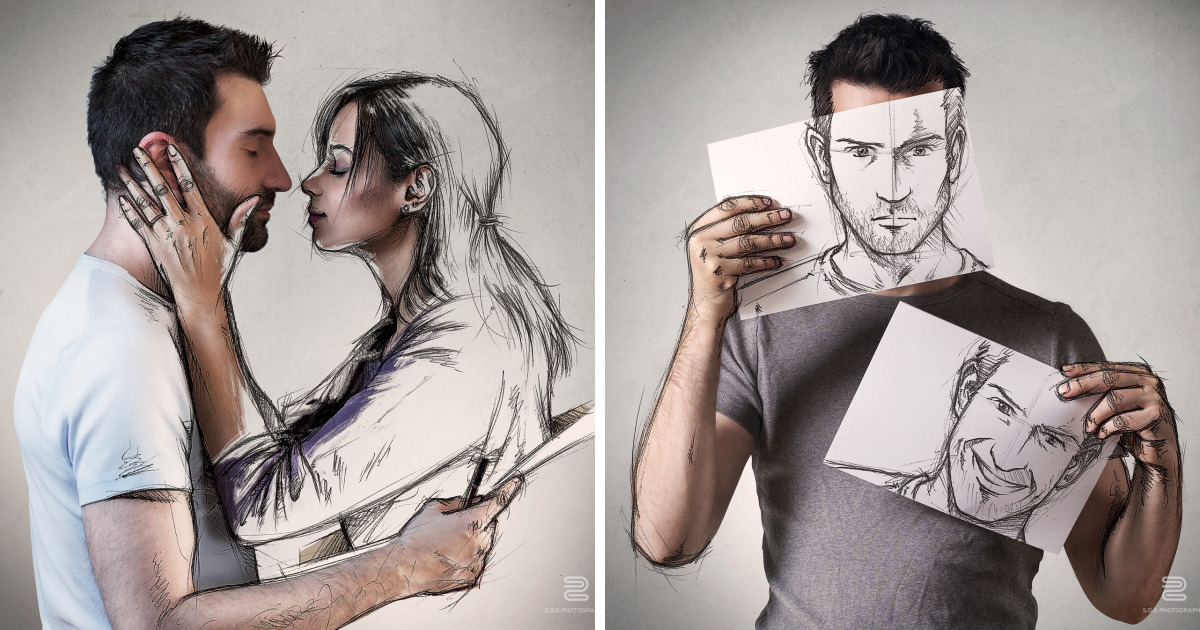
Photo sketching is the art of combining photography and illustration. The photo provides the setting, light, texture, and real-world detail. The drawing adds a new narrative. Together, they create something that lives somewhere between a memory, a comic strip, and a dream you had after eating spicy noodles too late at night.
A Photo Becomes a Scene
When I look at a photograph now, I do not only ask, “Is this a good photo?” I ask, “What is hiding in here?”
A staircase becomes a mountain trail. A puddle becomes a portal. A parked bicycle becomes the transportation system for a very small astronaut. A stack of laundry becomes a sleeping monster that has clearly been avoiding responsibility for several days.
The goal is not to force every picture into a fantasy world. Some photos are already complete. But when an image feels ordinary, a simple sketch can reveal the emotional side of the moment. It can turn a forgotten snapshot into something that makes people stop scrolling.
The Drawing Does Not Need to Be Perfect
This is important because perfection is often the fastest way to make creativity hide under the couch.
My drawings are not always graceful. Some of my cats look like potatoes with ears. Some clouds resemble spilled toothpaste. One attempt at a bird looked so confused that I had to decide it was an artistic choice.
But imperfect lines have personality. A slightly wobbly doodle can feel warmer than something overly polished. It says a real person made this, probably while sitting on the floor, listening to a playlist, and wondering why every charger in the house has disappeared.
How I Choose Photos to Illustrate
Not every photo needs a digital doodle. Some photos deserve to stay quiet. A meaningful portrait, a beautiful sunset, or a family memory may need nothing more than a little editing and a good caption.
But some images practically beg for a sketch.
Photos With Empty Space
Blank sky, plain walls, open sidewalks, tabletops, windows, and empty corners are perfect places for illustrated details. They give the doodle room to breathe without fighting the main subject.
A person standing beside a plain wall might get a painted doorway behind them. A cup of tea on a table might get a tiny boat sailing through the steam. A photo of someone staring out a window might become a scene where the clouds are carrying handwritten notes across the sky.
Photos With Unexpected Expressions
Facial expressions are gold. A friend caught mid-laugh can become a character launching confetti from their mouth. A sleepy face can receive a tiny illustrated moon floating above their head. A confused expression can become the captain of a spaceship that has clearly taken a wrong turn near Jupiter.
The best photo illustration ideas often come from what is already there. I do not need to invent a whole universe every time. I just notice the visual clue and follow it.
Photos That Carry a Memory
Some images are not technically impressive, but they matter anyway. A blurry photo from a road trip. A coffee shop table where an important conversation happened. A muddy pair of shoes after a long walk. A photo of a friend holding a birthday cake that tilted dangerously to one side.
These are ideal visual diary moments. The drawing can add the feeling that stayed with me long after the photo was taken.
My Favorite Illustrated Photography Ideas
1. Give Everyday Objects a Secret Life
I love drawing faces on inanimate objects because it makes the world feel like it has been waiting for its turn to talk.
A toaster can look nervous before breakfast. A houseplant can wear sunglasses. A backpack can grow tiny legs and attempt to leave before Monday morning. A coffee mug can have a speech bubble that says, “We have work to do, and unfortunately I mean both of us.”
2. Turn Nature Into a Character
Clouds, trees, leaves, puddles, shadows, and flowers are fantastic collaborators. They already have interesting shapes, so I only need to add a little imagination.
A tree branch becomes an arm waving hello. A puddle turns into an ocean with a tiny whale. A leaf becomes a parachute for a cartoon character. A row of streetlights becomes a group of long-necked creatures discussing the weather.
3. Add Tiny Adventures
My favorite photo illustrations often involve small characters doing very serious things in very ordinary places.
A tiny explorer climbs a stack of books. A miniature camper builds a tent inside a bowl of cereal. A cartoon fish swims through the reflection in a mirror. A little astronaut walks across a pizza box, bravely exploring the unexplored territory near the extra cheese.
4. Draw the Invisible Emotion
Some moments are easier to explain with a doodle than with words. When I feel overwhelmed, I might draw a storm cloud over my head. When I feel hopeful, I might add paper birds flying out of a notebook. When I am tired, I may draw a tiny battery icon hovering beside my coffee.
Illustrated photography can become emotional shorthand. It gives shape to feelings that are hard to describe in a caption.
The Simple Process Behind My Photo Illustrations
People sometimes assume photo illustration requires expensive tools, advanced design software, and a studio that looks like a spaceship. It does not.
You can start with a phone, a tablet, a basic drawing app, or a desktop editor with layers. The main thing is to keep the drawing separate from the photo whenever possible. A separate layer gives you room to experiment without permanently turning your original image into a digital crime scene.
Step 1: Start With a Strong Photo
The photo does not need to be perfect, but it should have a clear focal point. Good light, an interesting subject, and a little breathing room make the drawing easier to place.
I usually adjust brightness, contrast, cropping, and color before I begin sketching. A small edit can make the illustration feel more intentional instead of looking like it wandered into the photo uninvited.
Step 2: Decide What the Story Is
Before drawing, I ask one simple question: what is happening beyond the frame?
Maybe the person in the photo is not waiting for a bus. Maybe they are waiting for a dragon taxi. Maybe the empty sidewalk is not empty; maybe tiny illustrated footprints are leading toward a mystery. Maybe the rainy window is actually the front page of an underwater world.
Step 3: Use One Main Idea
One of the easiest mistakes in digital doodle art is adding too much. I have made this mistake. Suddenly, there are stars, balloons, fish, mushrooms, a rocket, three cats, and a motivational quote fighting for attention in the same image.
Now I try to choose one main idea and let it lead. A single well-placed sketch is usually more memorable than a full visual traffic jam.
Step 4: Match the Mood
The line style and color palette should support the photo. A soft, nostalgic image may work best with gentle pencil lines and muted colors. A bright summer photo can handle bold doodles, cheerful lettering, or playful cartoon details.
When the illustration respects the photo’s mood, the final image feels connected. When it does not, it can look like two strangers trapped in the same elevator.
What Photo Illustration Has Taught Me About Everyday Life
Sketching on photos has changed the way I look at ordinary days. I pay more attention now. I notice the shape of shadows on sidewalks. I notice strange reflections in windows. I notice how a pile of oranges can look like a tiny orange planet if you are in the right mood.
Creative photography makes routine life more interesting because it trains the mind to search for possibility. The world does not have to become more dramatic. Sometimes you only need to look at it differently.
That is the best part of this project. I am not waiting for a vacation, a major life event, or a perfect photo shoot. I can create something playful from a walk to the store, a quiet afternoon at home, or a meal that looked much better before I tried to photograph it.
Respecting People, Privacy, and Original Work
As fun as photo sketching can be, it still comes with a few common-sense rules. When I draw over photos of friends or family, I make sure they are comfortable with the result before sharing it publicly. Not everyone wants to become a cartoon character with laser-beam eyes, no matter how funny I think it is.
I also use my own photos whenever possible. Original photographs and original illustrations are creative work, and creators deserve credit and control over how their images are used. Borrowing someone else’s photo and doodling on it does not automatically make it yours.
The best illustrated photography projects come from genuine moments, personal images, and respectful collaboration. The goal is to make people smile, not make anyone regret agreeing to brunch.
Part 2: More Sketches, More Memories, More Tiny Chaos
This second chapter of my photo sketching project feels less like a collection of edits and more like a growing map of my life. Each image holds a real place, a real moment, or a real mood. The drawings simply give those memories a louder voice.
There is a photo of a rainy street where I added tiny paper boats floating through the puddles. There is a photo of my breakfast where a cartoon avocado appears to be giving a motivational speech. There is a photo of a friend walking ahead of me on a trail, and I gave them a cape because they were carrying the snacks, which is heroic behavior by any reasonable standard.
These images are small, but they make ordinary life feel bigger. They remind me that imagination is not a separate place I visit when I have free time. It is something I can bring into the day, even when the day includes traffic, laundry, deadlines, and the mysterious disappearance of all clean socks.
500 More Words From My Illustrated Life
One of my favorite photo sketching experiences happened on a completely unremarkable Tuesday. I was walking home with a grocery bag in one hand and a phone in the other, attempting the advanced modern skill of not dropping either. The sky was gray, the street was wet, and everyone looked like they had been personally inconvenienced by the existence of weather. I took a quick photo of a puddle reflecting a row of apartment buildings. At the time, it looked like nothing special.
Later that night, I opened the photo and noticed how the reflection made the buildings look upside down. Suddenly, the puddle was not a puddle anymore. It was a doorway to a tiny upside-down city. I sketched miniature people walking on the reflected sidewalks, hanging laundry from the clouds, and riding bicycles across the surface of the water. I added one tiny character holding an umbrella while standing under the puddle, which made absolutely no sense physically but felt correct emotionally. That image became one of my favorites because it turned a dull commute into a tiny world with its own laws.
Another photo came from a family dinner. Everyone was busy eating, talking, reaching for dishes, and pretending not to fight over the last piece of dessert. I took a candid photo of the table after the meal: empty glasses, folded napkins, crumbs, and a single lemon slice sitting on a plate like it had survived a dramatic battle. It was not a glamorous photo. No one would have called it elegant. But it felt familiar.
I illustrated the lemon as a tiny king wearing a crown. The forks became swords. The napkins became flags. The crumbs became little villagers celebrating after a great feast. Suddenly, the messy table became a kingdom after a banquet. When I showed the image to my family, everyone laughed, mostly because the lemon somehow looked more confident than any of us.
These are the moments I love most: the ones that would normally disappear. A rainy sidewalk. A cluttered dinner table. A sleepy morning. A crowded bus stop. They are not the big events people usually frame or post with dramatic captions. But they are still life. They are still mine.
Photo illustration helps me honor those small moments without pretending they are something they are not. I do not need every day to be extraordinary. I only need to remember that ordinary days contain details worth noticing. The shadow of a chair can become a monster. A cup of coffee can become a planet. A forgotten jacket on a sofa can become a sleeping animal waiting for its next adventure.
Part 2 has taught me to trust small ideas. Sometimes the best sketch is not the most complicated one. It is the tiny line that changes the whole meaning of the image: a pair of wings, a speech bubble, a cartoon moon, a trail of stars, or a little character peeking around the corner of reality.
That is why I keep sketching on my photos. Not because every image needs to become art, but because every so often, a photo whispers that there is more to the story. And I am happy to hand it a pencil.
Conclusion: A Little Drawing Can Change Everything
Illustrated photography is a reminder that creativity does not always require a huge idea, a perfect camera, or a dramatic destination. Sometimes it starts with one photo, one strange thought, and one tiny doodle in the corner of the screen.
Whether you are creating a visual diary, building a personal art project, sharing photo sketches on social media, or simply trying to make daily life feel more playful, drawing on photos can help you see familiar moments in a completely new way.
So take the photo. Look at it longer. Find the tiny story hiding inside it. Then sketch something weird, sweet, thoughtful, or completely unnecessary. The world has enough plain pictures. Give yours a little imagination.