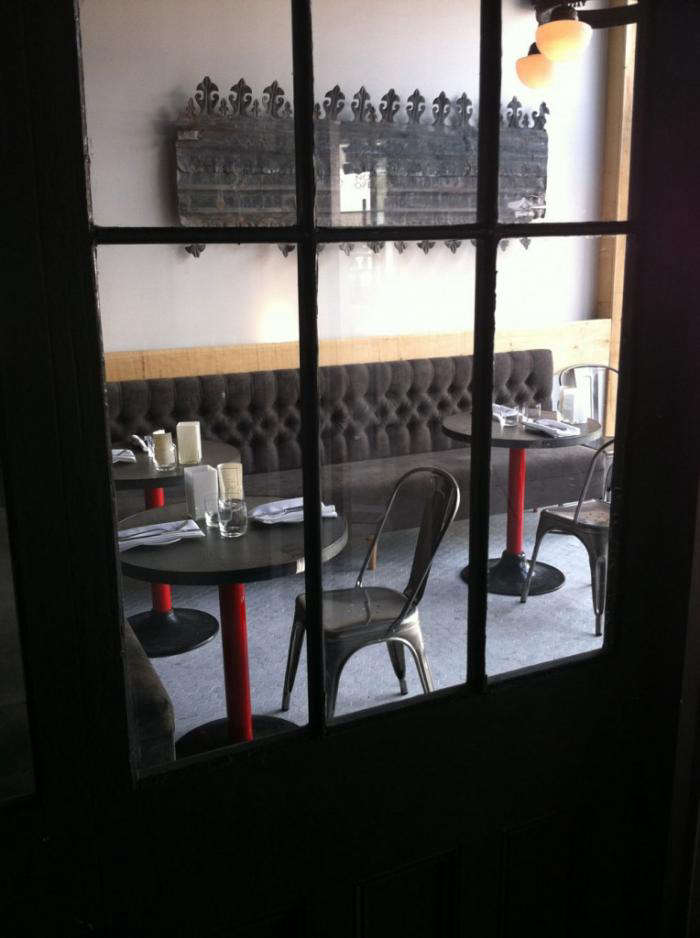
Editor’s note: Quince Bistro is discussed here as a historical Toronto design and dining case study. The restaurant was a real Midtown Toronto destination, but it is not presented as a currently bookable restaurant.
Some restaurants serve dinner. A smaller, more memorable group serves a point of view. Quince Bistro, once tucked into Midtown Toronto at 2110 Yonge Street near Eglinton, belonged to the second group. It was not the kind of place that shouted for attention with velvet ropes, celebrity nonsense, or a chandelier large enough to qualify as a weather event. Instead, Quince built its charm through a quieter design language: white-painted brick, marble tile, antiqued mirrors, copper pots, red chairs, natural light, and a few rough-edged details that made the room feel lived-in rather than staged.
That is the magic of industrial luxe. It is not cold factory cosplay. It is not a warehouse with chairs. Done well, it combines raw texture with warmth, utility with polish, and a little grit with just enough glamor to make guests sit up straighter. Quince Bistro became a useful example of how a neighborhood restaurant could feel stylish without becoming stiff, refined without becoming precious, and urban without looking like it was trying too hard.
What Made Quince Bistro Stand Out?
Quince was known as a modern bistro with Mediterranean influences, house-made food, and a preference for locally sourced ingredients whenever possible. That culinary identity mattered because the room did not fight the food. The space felt honest, practical, and ingredient-driven, much like the cooking style people associated with the restaurant. In a city packed with glossy dining rooms and moody lounges, Quince found its personality in the middle ground: polished enough for dinner, relaxed enough for lunch, and interesting enough for design people to lean in and say, “Wait, is that a row of copper pots being used like wall art?”
Yes. Yes, it was.
The redesign, overseen by Toronto design firm Commute Home, gave Quince an understated industrial-luxe identity. The look included natural finishes, warm tones, antiqued mirrors, ornate architectural fragments, subtle graffiti touches, red-painted furniture accents, and kitchen objects turned into decor. It was bistro design with a wink. Nothing felt overly decorated, but nothing felt accidental either.
The Industrial Luxe Formula: Raw Meets Refined
Industrial restaurant design often leans on familiar elements: exposed brick, metal, concrete, wood, pendant lights, open layouts, and visible signs of structure. The danger is that these ingredients can become predictable. Add one Edison bulb, two metal stools, and suddenly every restaurant looks like it was assembled from the same “urban authenticity” starter kit.
Quince avoided that trap by softening the industrial vocabulary. The white-painted brick created texture without making the room feel heavy. Marble tiles added elegance underfoot. Antiqued mirrors brought depth, reflection, and a little old-world romance. Copper pots added warmth and culinary symbolism. The red chairs and table bases created little pops of personality, like lipstick on a chef who also knows how to use a bandsaw.
White Brick as a Bright Backdrop
One of the smartest choices in the Quince Bistro interior was the use of light-toned brick. Exposed brick often reads as rustic, masculine, or loft-like. Painted white, it becomes more flexible. It still gives texture, but it reflects light and makes the room feel cleaner, brighter, and more open. For a bistro with large front windows facing Yonge Street, that brightness mattered. Daylight could move across the room and bounce off reflective surfaces instead of being swallowed by dark materials.
Copper Pots as Culinary Sculpture
Rows of copper pots served as a visual anchor inside Quince. This was not decor pretending to be meaningful; it was meaningful decor. Copper belongs to kitchens. It carries associations with heat, craft, sauce-making, and old-school cooking. In an industrial-luxe space, copper also performs a design trick: it warms up harder materials. Brick, concrete, steel, and stone can feel chilly on their own. Add copper, and the room suddenly has a pulse.
Antiqued Mirrors and the Illusion of Depth
Mirrors are a classic restaurant tool because they expand space, reflect movement, and make a dining room feel livelier. Antiqued mirrors go one step further. They add patina. Instead of giving the sharp, perfect reflection of a modern bathroom mirror, they blur the room slightly, softening edges and making everything feel more atmospheric. At Quince, mirrored surfaces helped balance the rawness of brick and metal with a touch of faded glamor.
Why the Design Worked for a Midtown Toronto Bistro
Midtown Toronto is not the same design environment as a downtown hotel dining room or a warehouse conversion in the Distillery District. A restaurant near Yonge and Eglinton has to serve real neighborhood life: lunch meetings, after-work dinners, date nights, small celebrations, and spontaneous “I refuse to cook tonight” meals. Quince’s interior worked because it had enough visual interest to feel special but enough comfort to feel usable.
The room had glass frontage, natural light, visible kitchen activity, and space for private dining. These details helped the restaurant feel connected, not sealed off. Guests could see the city outside, sense the kitchen inside, and move between casual and polished moods depending on the occasion. That is a key lesson for restaurant interior design: a room should not have only one emotional setting. The best bistros can feel brisk at lunch, intimate at dinner, and celebratory when a bottle of wine appears on the table with suspicious speed.
Design Lessons from Quince Bistro
1. Use Functional Objects as Decor
Quince showed how kitchen tools, preserves, bread displays, and vintage implements can become part of the visual story. This works especially well for restaurants because guests want proof of craft. A sterile room says, “We hired a decorator.” A room with carefully displayed culinary objects says, “Food is made here, and the kitchen has a memory.”
2. Add Color in Small, Confident Doses
The red chairs and red-painted table bases at Quince were not overwhelming, but they were memorable. Small color accents can do more than a full wall of trendy paint. They guide the eye, create rhythm, and give guests something to remember. In a neutral industrial space, one confident color can act like punctuation.
3. Balance Rough Surfaces with Reflective Ones
Industrial design becomes luxe when contrast is handled well. Brick needs mirror. Concrete needs copper. Metal needs wood. Raw surfaces need warmth. Quince’s room worked because it did not stop at “unfinished.” It layered unfinished with polished, practical with decorative, and old with contemporary.
4. Let the Kitchen Be Part of the Experience
Guests respond to visible energy. A kitchen glimpse gives a restaurant motion and credibility. At Quince, the visible kitchen helped add depth to the room and supported the bistro’s handmade, seasonal identity. It suggested that the restaurant was not merely serving plates; it was making things in real time.
The Food and the Room Spoke the Same Language
Quince’s food identity included Mediterranean-leaning dishes, house-made pastas, seasonal menus, and simple ingredients treated with care. That approach matched the interior beautifully. The room did not feel like a palace serving foam sculptures on silent plates. It felt like a place where bread, pasta, pickles, preserved ingredients, vegetables, wine, and conversation could all coexist naturally.
Historical diner accounts described dishes such as house-made pasta, soups, pâté with pickles, mushroom pasta, and hearty lunch plates. The recurring impression was not flash for flash’s sake, but honest cooking with good technique. That matters because restaurant design should amplify the food rather than distract from it. A room full of marble and mirrors can quickly become silly if the food feels generic. At Quince, the industrial-luxe interior made sense because the kitchen had a similar respect for craft.
Industrial Luxe vs. Industrial Chic: What Is the Difference?
Industrial chic often celebrates rawness: brick walls, blackened steel, exposed ducts, reclaimed wood, and open ceilings. Industrial luxe takes those elements and gives them manners. It adds reflective surfaces, warmer metals, better lighting, softer seating, and a more curated sense of composition. Think less “abandoned factory,” more “handsome bistro that knows where the good olive oil is kept.”
Quince landed in that second category. It was not rough for the sake of roughness. It had texture, but it also had polish. It had utilitarian references, but it also had decorative surprise. That balance is why the design still feels worth discussing years later. Trends fade, but a well-balanced room remains instructive.
Why Quince Still Matters as a Toronto Design Case Study
Quince eventually closed, with its owners moving toward new restaurant concepts, including the Dutch-Indonesian direction that became part of their broader Toronto story. But a restaurant does not need to be permanent to be influential. Many memorable hospitality spaces live on as examples: how to use a narrow room, how to soften industrial materials, how to create identity on a neighborhood scale, how to turn ordinary tools into atmosphere.
For designers, Quince offers a lesson in restraint. For restaurateurs, it offers a lesson in coherence. For diners, it offers a memory of a place that understood the pleasure of being both casual and considered. And for anyone trying to explain industrial luxe without reaching for a mood board the size of a garage door, Quince remains a compact, useful case study.
How to Recreate the Quince Bistro Feeling
You do not need to own a restaurant in Toronto to borrow ideas from Quince. The same principles work in a home kitchen, cafe, wine bar, or small dining room. Start with a simple background: white brick, limewash, plaster, or a textured neutral wall. Add one warm metal, such as copper or aged brass. Bring in wood with visible grain. Use mirrors to create depth, but choose antiqued or softly framed versions if you want atmosphere rather than glare.
Then add something imperfect. That might be a vintage cutting board, a framed architectural fragment, a shelf of preserves, a ceramic vessel, or a slightly odd piece of art. Industrial luxe becomes boring when everything is too perfect. The charm comes from the conversation between rough and refined. The room should look curated, not embalmed.
Experience Add-On: What Industrial Luxe at Quince Bistro Feels Like
Imagine arriving at Quince on a cool Toronto evening when Yonge Street is doing what Yonge Street does best: glowing, honking, rushing, and pretending it is not slightly chaotic. Through the glass front, the room looks warm but not sleepy. You see the red chairs first, then the pale brick, then the copper pots catching the light like they have been waiting all day for their close-up. The room does not scream luxury. It murmurs it, which is much more persuasive.
You step inside and the mood changes. The street is still there, but it softens behind you. The front windows keep the city in view while the interior pulls your attention inward. There is texture everywhere, but nothing feels cluttered. The mirrors make the room feel deeper than expected. The brick gives it backbone. The marble underfoot adds polish. The copper brings warmth. Even before a menu appears, the design has already told you what kind of meal this wants to be: relaxed, thoughtful, and just a little more stylish than your average Tuesday.
The best seat would be one with a partial view of the kitchen. Not too close, because nobody wants to make intense eye contact with a sauté pan, but close enough to catch motion: a plate passing, bread being handled, a cook turning toward the heat. That visible activity gives the bistro energy. It reminds you that restaurants are not static showrooms. They are small theaters of timing, appetite, and controlled panic. When the room is designed well, that backstage rhythm becomes part of the pleasure.
Food in a space like this tastes different because the environment primes you for craft. A bowl of soup feels more comforting against brick. House-made pasta feels more believable when the decor includes kitchen tools and pantry references. A glass of wine feels more generous when the lighting is warm and the mirrors double the glow. This is not magic, exactly, but it is close enough that designers should be allowed to wear capes.
The industrial-luxe experience is also social. It gives people something to talk about without forcing conversation. Someone notices the copper pots. Someone else points out the red chairs. A design-minded guest studies the antique mirror. A hungry guest studies the bread. Everyone wins. The room becomes a companion to the meal rather than a background file your brain deletes.
What Quince captured so well was the feeling of approachable sophistication. It was not a temple of fine dining where you feared using the wrong fork and accidentally triggering an alarm. It was a neighborhood bistro with character, warmth, and visual confidence. That is why its design remains interesting. It understood that luxury does not always need velvet, crystal, or dramatic lighting that makes everyone look like they are being interrogated in a noir film. Sometimes luxury is a well-worn surface, a warm metal, a bright window, a good chair, and a room that makes dinner feel like an event without making the guest feel underdressed for life.
Conclusion
Industrial luxe in Toronto found a memorable expression at Quince Bistro. The restaurant combined Midtown practicality with design intelligence, pairing exposed textures with warm metals, vintage objects, red accents, mirrors, marble, and an active bistro spirit. Its appeal came from balance. It was stylish but not icy, casual but not careless, and urban but not generic.
For anyone studying Toronto restaurant design, Quince is a reminder that atmosphere is not decoration sprinkled on at the end. It is part of the meal. The room shapes expectations, supports the food, and gives guests a reason to remember where they were when the pasta arrived. That is the enduring lesson of Quince Bistro: industrial luxe works best when the rough edges have a heart.