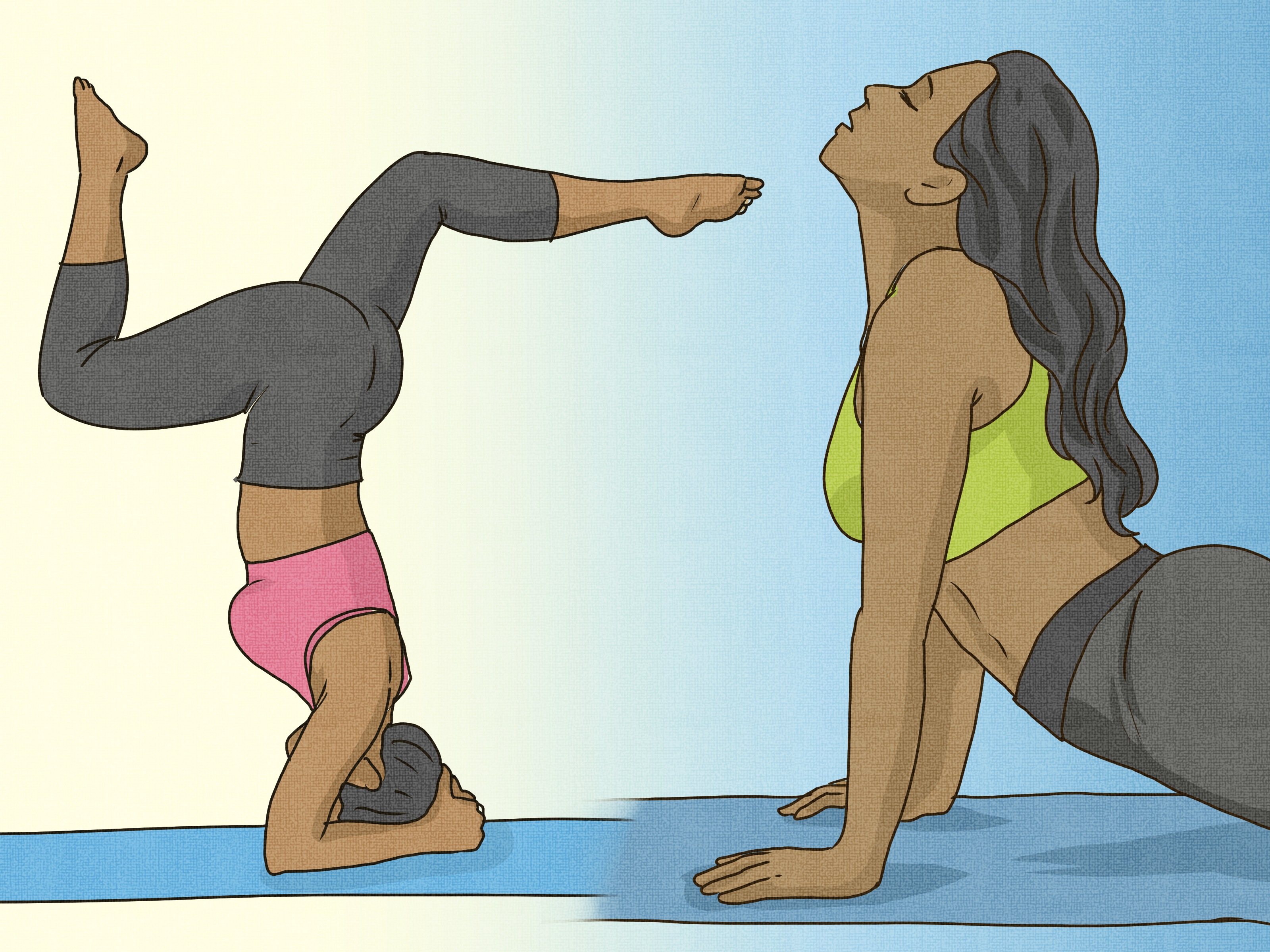
Is yoga a sin? That question has stretched more Christians than a beginner’s hamstrings in downward dog. Some believers see yoga as harmless exercise, somewhere between Pilates and “I should probably drink more water.” Others hear the word yoga and immediately think of Hindu spirituality, chanting, mantras, and theological red flags waving like a church picnic tablecloth in a thunderstorm.
The honest answer is not as simple as “all yoga is evil” or “all yoga is totally fine.” The Bible does not mention yoga by name, but it gives Christians strong principles for evaluating spiritual practices, physical habits, worship, conscience, idolatry, and love for others. So instead of grabbing a megaphone and shouting at everyone in stretchy pants, let’s slow down and examine the issue biblically, thoughtfully, and with a little grace.
This article explores Christianity and yoga from a biblical perspective. We will look at what yoga is, why Christians disagree about it, what Scripture says about spiritual discernment, and how believers can make wise decisions without turning every stretching mat into a theological courtroom.
What Is Yoga, Really?
In modern American culture, yoga often means a class built around stretching, balance, breathing, posture, relaxation, and flexibility. Many people attend yoga classes for health reasons: less stress, better mobility, improved posture, or a few peaceful minutes away from email notifications and laundry that somehow reproduces overnight.
Historically, however, yoga is more than exercise. Traditional yoga developed within Indian religious and philosophical systems, especially Hindu traditions. Classical yoga includes physical postures, breathing practices, meditation, moral disciplines, concentration, and spiritual goals. In many traditional forms, yoga is connected to union, liberation, self-realization, or spiritual enlightenment.
That distinction matters. A Christian asking “Is yoga a sin?” should first ask, “What kind of yoga are we talking about?” A gentle stretching routine at a community center is not the same as a spiritually guided class built around mantras, chakra work, kundalini energy, or devotional ideas that conflict with Christian worship.
Why Some Christians Believe Yoga Is Sinful
Many Christians who avoid yoga do so because they are concerned about its spiritual roots. Their concern is not usually about stretching itself. Nobody reads the Bible and concludes, “Thou shalt not touch thy toes.” The concern is that yoga may carry religious meanings, spiritual assumptions, or meditative practices that pull the heart away from Christ.
1. Yoga Can Be Connected to Non-Christian Spirituality
Some yoga classes include chanting, devotional language, meditations on inner divinity, or concepts of union with an impersonal absolute. These ideas do not fit Christian theology. Christianity teaches that God is personal, holy, Creator, distinct from creation, and revealed supremely through Jesus Christ. Humans do not discover salvation by awakening to their own inner godhood; they receive grace through faith in Christ.
That is why some pastors and theologians warn Christians to be careful. They argue that practices are not always spiritually neutral, especially when they are packaged with ideas about the self, the body, salvation, and divine reality. In this view, yoga is not just a workout; it is a spiritual system wearing gym clothes.
2. The Bible Warns Against Idolatry
Scripture repeatedly calls God’s people to worship the Lord alone. The first commandment is not vague: God’s people are to have no other gods before Him. The New Testament also warns believers to flee idolatry and to avoid spiritual practices that compromise loyalty to Christ.
If a yoga class includes worship of another deity, spiritual surrender to a non-Christian power, invocation of divine energy, or religious rituals contrary to biblical faith, Christians have strong reason to walk away. In that context, the issue is not fitness. The issue is worship.
3. Christian Meditation Is Different from Emptying the Mind
The Bible speaks positively about meditation, but biblical meditation is not spiritual blankness. It means filling the mind with God’s Word, reflecting on His works, praying with understanding, and delighting in His truth. Psalm 1 describes the blessed person as one who meditates on the law of the Lord day and night. Christian meditation is not about dissolving the self into the universe; it is about knowing, loving, and obeying the living God.
So if a yoga practice encourages emptying the mind in a way that makes a person spiritually passive, detached from biblical truth, or open to undefined spiritual forces, Christians should be cautious. A peaceful mind is good. A spiritually unguarded mind is not the goal.
Why Other Christians Believe Yoga Can Be Practiced Carefully
On the other side, many Christians argue that physical movement can be separated from non-Christian spirituality. They say that stretching, breathing, balance, and exercise are not automatically sinful just because similar movements appear in a religious tradition. After all, Christians eat food, wear clothing, use calendars, practice medicine, and enjoy art forms that may have complicated cultural histories.
This view often appeals to biblical principles about conscience and Christian freedom. In 1 Corinthians 8–10 and Romans 14, Paul discusses food associated with idols. His teaching is careful and nuanced. He does not say every object connected to pagan culture automatically contaminates the believer. But he does warn Christians to avoid idolatry, honor conscience, and love weaker brothers and sisters.
1. Physical Exercise Is Not Sinful
The human body is not an embarrassing extra feature God forgot to uninstall. Christianity teaches that the body matters. Believers are called to honor God with their bodies, care for their health, and use their strength in service to Him. Stretching, mobility work, balance training, and breathing exercises can be part of wise bodily stewardship.
A Christian who uses a yoga-style stretching routine simply to loosen tight muscles, recover from sitting too long, or improve flexibility is not necessarily committing sin. The key question is whether the practice includes spiritual meanings or commitments that compete with faith in Christ.
2. Intention and Context Matter
If someone says, “I do yoga to worship Hindu gods,” then a Christian answer is clear: that is incompatible with biblical worship. If someone says, “I do a stretching video that avoids spiritual language and helps my back,” the answer requires more discernment.
Context matters. A class that includes “open yourself to the divine within” is different from a class where the instructor says, “Breathe slowly and don’t fall over.” One is making spiritual claims. The other is reminding you that gravity has opinions.
3. Christian Liberty Is Not Permission to Ignore Wisdom
Christian freedom is real, but it is not a hall pass for spiritual laziness. Paul’s teaching on conscience shows that believers should ask more than “Can I technically do this?” Better questions include: Does this draw me closer to Christ? Does it confuse my worship? Does it trouble my conscience? Could it lead another believer into something harmful? Am I seeking peace from God, or am I outsourcing my soul to a trendy wellness brand?
A mature Christian does not need to panic over every cultural practice, but neither should a believer be naive. Discernment is not fear. Discernment is love with its eyes open.
Is Yoga a Sin According to the Bible?
The Bible does not give a direct verse saying, “Yoga is a sin” or “Yoga is always acceptable.” Instead, Scripture gives categories. Based on biblical teaching, yoga becomes sinful when it involves idolatry, worship of other gods, spiritual practices contrary to the gospel, or a violation of conscience.
Yoga may not be sinful when it is limited to physical stretching, breathing for relaxation, and exercise, with no participation in non-Christian worship or spirituality. However, even then, Christians should remain thoughtful. Some believers may decide to avoid yoga entirely because of its religious history. Others may choose modified, secular, or Christian alternatives. Both groups should avoid turning their personal conclusion into a weapon.
A Biblical Discernment Checklist for Christians Considering Yoga
Before joining a class or following a video, Christians can ask several practical questions. These questions are not designed to create paranoia. They are designed to keep faith in Christ at the center.
1. What Is Being Taught?
Listen carefully to the instructor’s words. Are they simply guiding movement and breathing? Or are they teaching spiritual concepts about energy, divine selfhood, karma, chakras, or enlightenment? Words matter. A class can move from fitness to theology faster than you can say “Namaste” with uncertain pronunciation.
2. What Am I Participating In?
Some practices may look physical but function spiritually. Chanting, mantras, ritual gestures, guided visualizations, or invocations may carry meanings that conflict with Christian worship. If you do not understand what something means, pause before joining in.
3. What Is Happening in My Heart?
A practice can be externally harmless but internally unhelpful. Ask yourself: Am I becoming more prayerful, grateful, and faithful to Christ? Or am I drifting into spiritual confusion? Do I feel pressure to blend Christianity with beliefs that deny the uniqueness of Jesus?
4. Does This Violate My Conscience?
Romans 14 teaches that conscience matters. If you cannot practice yoga in faith, do not do it. A troubled conscience is not something to bulldoze with motivational quotes. God cares about the heart, not just the hamstrings.
5. Could This Harm Another Believer?
Christian love considers the spiritual well-being of others. You may feel free to do a stretching routine, but flaunting that freedom in front of someone who associates yoga with former spiritual bondage may be unloving. Freedom should serve love, not perform acrobatics over it.
Christian Alternatives to Traditional Yoga
Some believers prefer to avoid yoga entirely and choose alternatives. That can be a wise decision, especially for Christians who feel spiritually uneasy or who have a background in non-Christian spiritual practices.
Good alternatives include basic stretching, mobility training, physical therapy exercises, Pilates, strength training, walking, swimming, or Christian fitness programs. Some Christian groups offer stretching classes that include Scripture meditation and prayer instead of Eastern spiritual concepts. The point is not that every exercise must have a hymn playing in the background. The point is that Christians can care for the body without confusing the soul.
What About “Christian Yoga”?
“Christian yoga” is a debated term. Some believers use it to describe stretching and movement combined with Scripture, prayer, and worship of Christ. Others dislike the phrase because they believe yoga cannot be separated from its original spiritual framework.
A helpful approach is to examine the actual practice rather than only the label. If a class is truly Christian in content, centered on Scripture, and avoids non-Christian spirituality, many believers may see it as acceptable. If it merely adds a Bible verse to practices rooted in contradictory spiritual ideas, concerns remain.
The label does not automatically sanctify the practice. Slapping the word “Christian” on something does not make it spiritually healthy. “Christian gossip” is still gossip. “Christian greed” is still greed. And “Christian yoga” still needs biblical discernment.
So, Should Christians Do Yoga?
Here is the balanced conclusion: Christians should not participate in yoga as worship, spiritual enlightenment, or religious practice rooted in beliefs contrary to Christianity. But Christians may, in good conscience, use certain yoga-like stretches or exercise routines if those practices are separated from non-Christian spirituality and done for physical health.
Some Christians should avoid yoga because it violates their conscience, exposes them to confusing spiritual teaching, or tempts them toward syncretism. Others may be able to practice a carefully selected, exercise-only version without spiritual compromise. The issue is not solved by slogans. It requires Scripture, prayer, wisdom, and sometimes a conversation with a trusted pastor.
If you are unsure, choose the safer path. You will not lose your salvation because you skipped a yoga class. Your shoulders may complain, but they are not the final judge. There are many ways to stretch, breathe, exercise, and reduce stress while keeping your mind fixed on Christ.
Real-Life Experiences: How Christians Navigate Yoga in Everyday Life
Many Christians wrestle with this question not in a seminary classroom but in ordinary life. A friend invites them to a yoga class. A doctor recommends gentle movement for back pain. A workplace wellness program offers free sessions. A YouTube video promises better flexibility in ten minutes, which sounds great until the instructor starts talking about awakening inner divinity. Suddenly, what looked like exercise becomes a spiritual decision.
One common experience is the Christian who attends a yoga class expecting simple stretching and leaves uncomfortable. The room is calm, the lights are low, and the first half feels like ordinary movement. Then the instructor begins using language about universal energy, surrendering to the divine within, or chanting words the student does not understand. The Christian may not panic, but something feels off. That discomfort can be a helpful signal. It does not mean the believer is judgmental; it may mean the conscience is paying attention.
Another experience is different. A believer recovering from an injury may follow a physical therapy-style routine labeled “yoga” but containing no spiritual teaching at all. The movements are slow, careful, and focused on flexibility. The person prays before beginning, avoids mantras, and treats the session as exercise. For that Christian, the practice may feel no different from stretching after a walk. The key is that the believer is not using yoga as a spiritual path, a substitute for prayer, or a doorway into another worldview.
Parents may face the issue when schools, sports teams, or community programs include yoga for children or teens. In that case, it is wise to ask what will actually be taught. A few minutes of breathing and stretching before a test is different from guided spiritual meditation. Parents do not need to overreact, but they should not be asleep at the wheel either. Loving supervision is better than suspicious panic or careless approval.
Church communities also handle the topic differently. In some congregations, yoga is viewed as spiritually dangerous in any form. In others, modified stretching classes are accepted as long as they avoid non-Christian spirituality. Problems arise when Christians mock one another. The person who avoids yoga should not be treated as fearful or legalistic. The person who does careful stretching should not automatically be accused of abandoning the faith. Romans 14 reminds believers that disputable matters require humility, not online comment-section sword fighting.
A practical example may help. Imagine Sarah, a Christian office worker with neck pain from spending too much time at a computer. Her coworker recommends a yoga studio. Sarah checks the class description and sees references to chakra balancing and spiritual awakening. She decides not to attend. Instead, she finds a mobility class at a local gym and uses Scripture meditation during cool-down. That is discernment.
Now imagine Mark, a Christian runner with tight hips. He follows a short stretching routine online. The instructor gives simple physical cues: breathe slowly, keep the spine long, relax the shoulders. There is no chanting, no spiritual teaching, and no religious framework. Mark treats it as exercise, thanks God for his body, and moves on with his day. That may also be discernment.
The point is not that every Christian must make the exact same decision. The point is that every Christian should make the decision faithfully. Ask questions. Know what you are joining. Guard your worship. Respect your conscience. Love other believers. And remember that peace ultimately comes from Christ, not from the perfect pose.
Conclusion: Is Yoga a Sin for Christians?
Yoga is not a simple yes-or-no issue because the word can describe very different practices. As a spiritual path rooted in beliefs that conflict with Christianity, yoga is not appropriate for Christians. As a set of physical stretches separated from non-Christian worship and practiced with a clear conscience, some believers may consider it permissible. The wisest answer is not panic, pride, or pressure. The wisest answer is biblical discernment.
Christians should evaluate yoga by asking whether it honors Christ, avoids idolatry, respects conscience, and strengthens rather than weakens faith. When in doubt, choose clarity. There are many ways to care for your body without compromising your worship. The goal is not to win an argument about yoga. The goal is to love God with heart, soul, mind, and strengtheven if your hamstrings remain a long-term prayer request.