A guest room is supposed to be one of the least controversial spaces in a home. It contains a bed, a lamp, perhaps three decorative pillows nobody knows how to use, and enough closet space for a weekend bag. It should not require international peace negotiations.
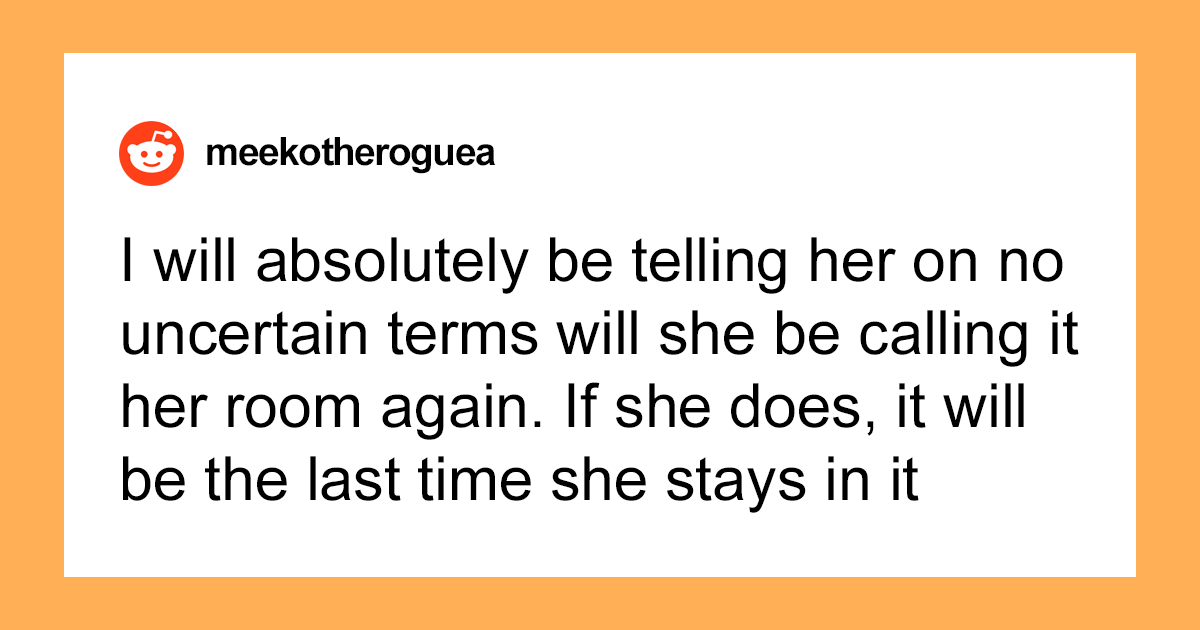
Yet one mother-daughter disagreement turned an ordinary spare bedroom into a surprisingly complicated symbol of ownership, privacy, and changing family roles. According to an account shared online, a mother who had stayed in her adult daughter’s guest room only a few times began referring to it as “my room.” When her daughter corrected her, the mother apparently refused to accept that the room remained a shared guest space rather than her private territory.
On the surface, the argument may sound like a debate over three harmless words. Underneath, however, it raises a much larger question: When children grow up and establish homes of their own, can their parents accept that the old hierarchy has changed?
How a Guest Room Became a Family Power Struggle
The story first gained attention after a woman described her mother’s behavior in an online community devoted to difficult or entitled family members. The original post has since been deleted, but archived reporting and the surviving discussion preserve its central details.
The daughter explained that her mother occasionally visited and slept in the spare bedroom. That arrangement was not itself a problem. The tension began when the mother repeatedly called the space “my room,” as though it had been permanently assigned to her.
She also reportedly wanted to know whether anyone else had slept there. During one visit, the daughter discovered that her mother had opened a closet in the room. When questioned about it, the mother openly admitted that she had been snooping.
The daughter emphasized that this was a guest room inside the home she shared with her spouse. Other relatives or friends could use it. The couple could convert it into an office, gym, storage area, craft room, or highly ambitious laundry-folding headquarters. Hosting someone did not transfer ownership of the space.
The mother nevertheless held on to the “my room” description and reportedly became upset when challenged. Suddenly, the problem was not where she slept. It was whether she could claim a permanent piece of her daughter’s home without being invited to do so.
Why the Phrase “My Room” Felt So Significant
Language Can Quietly Establish Ownership
People often use possessive language casually. A hotel guest might say, “I’m going back to my room,” without attempting to seize the property from Marriott. Some readers therefore viewed the mother’s wording as harmless shorthand for “the room where I usually stay.”
Context changes the meaning, however. If the homeowner says, “This is our guest room,” and a visitor repeatedly answers, “No, it is my room,” the language stops being merely convenient. It becomes a claim.
The insistence matters more than the original phrase. A reasonable guest can say, “I didn’t mean that literally.” A person engaged in a power struggle may pout, argue, or keep repeating the claim until everyone else gives up. That is when a tiny sentence begins carrying the emotional weight of a moving truck.
The Parent-Child Hierarchy May Not Have Updated
Parents spend years making decisions for their children. They choose bedrooms, establish curfews, inspect questionable closets, and announce household rules with the confidence of a small but determined government.
When those children become independent adults, the relationship must evolve. Parents may still offer advice and support, but they no longer automatically control the setting. Inside an adult daughter’s home, the daughter is not a child borrowing space from her mother. She is the host and homeowner.
That role reversal can feel uncomfortable. A parent who once said, “My house, my rules,” may be startled to discover that the sentence has completed a full orbit and returned wearing the child’s name tag.
Was the Daughter Overreacting?
The online response was divided. Some commenters believed the daughter was attaching too much importance to casual wording. Because the mother usually occupied that particular room during visits, they saw nothing strange about her calling it hers temporarily.
That interpretation is worth considering. Healthy family relationships require proportion. Not every annoying phrase represents manipulation, and turning minor misunderstandings into psychological crime documentaries rarely improves Thanksgiving dinner.
Other readers focused on the wider pattern. The daughter described an ongoing power struggle rather than an isolated vocabulary dispute. The mother’s questions about other guests, her exploration of the closet, and her refusal to accept a simple correction suggested that she felt unusually entitled to the space.
The snooping is especially important. A guest may reasonably open a closet after the host says, “Feel free to hang your clothes in there.” Searching through stored belongings without permission is different. Proudly admitting to snooping makes the privacy violation difficult to dismiss as confusion.
The fairest conclusion is that saying “my room” once would not be a serious offense. Repeatedly asserting ownership while ignoring the homeowner’s wishes is the real issue. The conflict is not about grammar. It is about whether “no, this room is not exclusively yours” will be respected.
Healthy Boundaries Do Not Make a Family Less Loving
Boundaries are often misunderstood as punishments, emotional walls, or dramatic declarations delivered while standing in a doorway. In practice, a boundary is simply a clear limit describing what a person will accept and how that person will respond if the limit is ignored.
For this daughter, a reasonable boundary could be: “The spare bedroom is available to different guests. Please do not call it your permanent room or open our storage areas without asking.”
That statement does not prevent the mother from visiting. It does not insult her, diagnose her, or accuse her of plotting a hostile bedroom takeover. It identifies the behavior and establishes the household rule.
Assertive communication differs from aggression. Aggression tries to dominate another person. Assertiveness communicates a need clearly while respecting both sides. The daughter can remain calm, avoid personal attacks, and still be firm about her home.
Consistency is crucial. If the daughter explains the rule but abandons it whenever her mother becomes offended, the mother learns that resistance works. A boundary without follow-through is merely a suggestion wearing business-casual clothing.
How the Daughter Could Address the Conflict
1. Discuss the Issue Before the Next Visit
The best time to establish a rule is not at midnight while someone is standing in the hallway holding a suitcase. A calm conversation before the next overnight stay gives both sides time to understand the arrangement.
The daughter might say:
“Mom, we enjoy having you visit, but I want to clarify something before your next stay. The spare bedroom is our guest room, and different guests may use it. Please stop referring to it as your permanent room, and ask before opening closets or looking through stored belongings.”
The wording is direct, specific, and focused on future behavior. It avoids an exhausting courtroom replay of every past incident.
2. Define What Guests May Use
Unspoken expectations invite confusion. The homeowners can explain which drawers are empty, whether closet space is available, and which cabinets contain private belongings.
This does not excuse snooping. It simply removes ambiguity. A guest should not have to conduct an archaeological expedition to find a spare blanket, and a host should not discover that the visitor has cataloged every box in the closet.
3. Establish a Consequence
A consequence should be practical rather than theatrical. If the mother continues searching through private areas, future visits may become daytime visits. If she cannot accept that the room is shared, she may need to stay in a hotel.
The daughter does not need to remove the bed, install gym equipment around it, or replace the mattress with something last seen at summer camp. Those suggestions may be entertaining online, but clear communication usually creates less collateral damage.
4. Avoid Debating the Boundary Repeatedly
After the rule has been explained, endless justification can turn a decision into a negotiation. The daughter can acknowledge her mother’s disappointment without surrendering control:
“I understand that you feel attached to the room. It is still a shared guest room, and the rule is not changing.”
That response validates the emotion without validating the ownership claim.
What Might Be Driving the Mother’s Behavior?
It is impossible to diagnose someone from a secondhand online story. The mother’s behavior could reflect several ordinary emotional concerns rather than a calculated plan.
She may associate the room with comfort and belonging. Claiming it could help her feel included in her daughter’s new household. She may also struggle with the transition from being the central authority in her child’s life to becoming an invited visitor.
Some parents worry about aging, loneliness, or where they will live if their circumstances change. Commenters speculated that the mother might be mentally reserving the room for a future move. There is no proof that this was her intention, but the possibility illustrates why families should discuss long-term expectations directly instead of communicating through bedroom nicknames.
Anxiety may also encourage controlling behavior. When people feel uncertain, they sometimes try to create security by controlling spaces, schedules, or other people. Understanding that fear can create empathy, but empathy does not require handing over the closet key.
Guest Etiquette in an Adult Child’s Home
Parents visiting grown children face a subtle adjustment. They are still family, but they are also guests in someone else’s household.
A considerate parent asks before arriving, confirms how long the visit will last, follows the household routine, and respects closed doors and private storage. The parent does not rearrange furniture, criticize the refrigerator, inspect paperwork, or assume that previous access creates permanent rights.
Parents should also avoid treating an adult child’s spouse as an intruder. The home belongs to the couple, not to the visiting parent and biological child as a separate team. Decisions about rooms, visitors, keys, and overnight arrangements should be respected as joint household decisions.
Meanwhile, adult children can make visits easier by communicating expectations clearly and creating reasonable comfort. Respect works in both directions. “You are welcome here” and “you do not own this room” can peacefully exist in the same sentence.
A Spare Bedroom Can Have More Than One Purpose
Modern homes often ask one room to perform six jobs. A spare bedroom may also serve as an office, exercise area, storage space, reading room, or place where unopened packages gather to discuss their future.
Calling it a guest room does not mean it must remain untouched between parental visits. Homeowners are allowed to let friends sleep there, work there, redecorate it, or convert it completely. Hospitality provides temporary access, not permanent possession.
Families can avoid confusion by using accurate language. “The guest room,” “the room you use when visiting,” or “the spare bedroom” makes the arrangement clear without making a loved one feel unwelcome.
Repairing the Relationship After the Argument
Family conflict is normal. The quality of the relationship often depends less on avoiding disagreement than on repairing it afterward.
The mother could help by acknowledging the daughter’s authority over her home: “I became attached to that room, but I understand that it is not mine. I should not have gone through the closet.” A straightforward apology would probably accomplish more than a fifty-message debate over what the word “my” technically means.
The daughter can also lower the temperature by making clear that the boundary is not rejection: “I want you to visit. I also need you to respect our privacy and household decisions.”
When both people stop fighting for the title of Most Correct Family Member and begin listening, the room can return to its natural role: holding guests and far too many decorative pillows.
Related Experiences: When Family Visits Start Feeling Like Moving In
Conflicts like this one are common because long-term ownership rarely begins with a formal announcement. It develops through small assumptions that seem harmless individually.
The Toiletry Expansion
One frequent experience begins with a parent leaving a toothbrush for convenience. During the next visit, shampoo appears. Then come slippers, medication, a robe, spare clothing, and a preferred coffee mug.
None of these objects is alarming by itself. Together, however, they can create the feeling that the guest is establishing permanent residency without discussing it. The adult child may hesitate to object because every individual item seems too small to justify a confrontation.
The practical solution is to address the pattern early: “You can leave a small toiletry bag, but we need the drawers and closet available for other guests.” That prevents a future argument involving six sweaters and a mysterious slow cooker.
The Visit Without an End Date
Another common problem occurs when a relative asks to visit but never clearly states when the visit will end. The host assumes three nights. The guest packs as though preparing to witness several seasons change.
Open-ended visits can strain routines, finances, privacy, and relationships between partners. Hosts may begin resenting ordinary behaviors because they do not know when their home will return to normal.
Specific dates prevent this tension. “We would love to host you from Friday through Monday” is warmer and clearer than “Come whenever.” Hospitality works best when everyone knows the checkout date, even when the front desk is a family group chat.
The Parent Who Still Acts Like the Homeowner
Some adult children report that visiting parents rearrange kitchens, reorganize closets, correct housekeeping choices, or invite additional relatives without permission. The parent may believe that helping is an expression of love. The adult child experiences it as criticism and loss of control.
One useful distinction is between offered help and assumed authority. Washing dishes after dinner may be generous. Moving every dish to a “better” cabinet and announcing a new kitchen system is a management takeover.
Adult children can redirect the energy by offering specific tasks: “Could you help prepare the salad?” This allows the parent to contribute without becoming an unpaid and unrequested home renovation consultant.
The Permanent Key Problem
Giving a parent an emergency key can also become complicated. An emergency key is intended for locked-out homeowners, urgent repairs, or genuine safety concerns. It is not a subscription allowing surprise entry whenever someone happens to be nearby.
If a parent begins entering without notice, the adult child should restate the purpose of the key. If the behavior continues, reclaiming it or changing the lock is not cruel. Access to a home depends on trust.
These experiences share one lesson: assumptions grow in silence. The longer a family avoids discussing expectations, the more emotionally loaded the eventual conversation becomes. Addressing a toothbrush, visit length, closet, or key early is easier than untangling years of resentment later.
Conclusion
The argument over the daughter’s guest room was never really about a bed. It was about whether a mother could recognize her daughter as an autonomous adult with authority over her own home.
The mother was not wrong to feel comfortable or welcome in the room. She crossed a line when comfort became a claim that the homeowner was expected to accept. The daughter, in turn, had every right to clarify the room’s purpose and protect her privacy.
Strong boundaries do not reduce love. They prevent affection from becoming obligation, hospitality from becoming entitlement, and an innocent guest room from requiring its own constitutional convention.
Note: This article analyzes a publicly shared family dispute and general relationship principles. The online account represents one person’s perspective, and speculation about either party’s motives should not be treated as a clinical assessment.