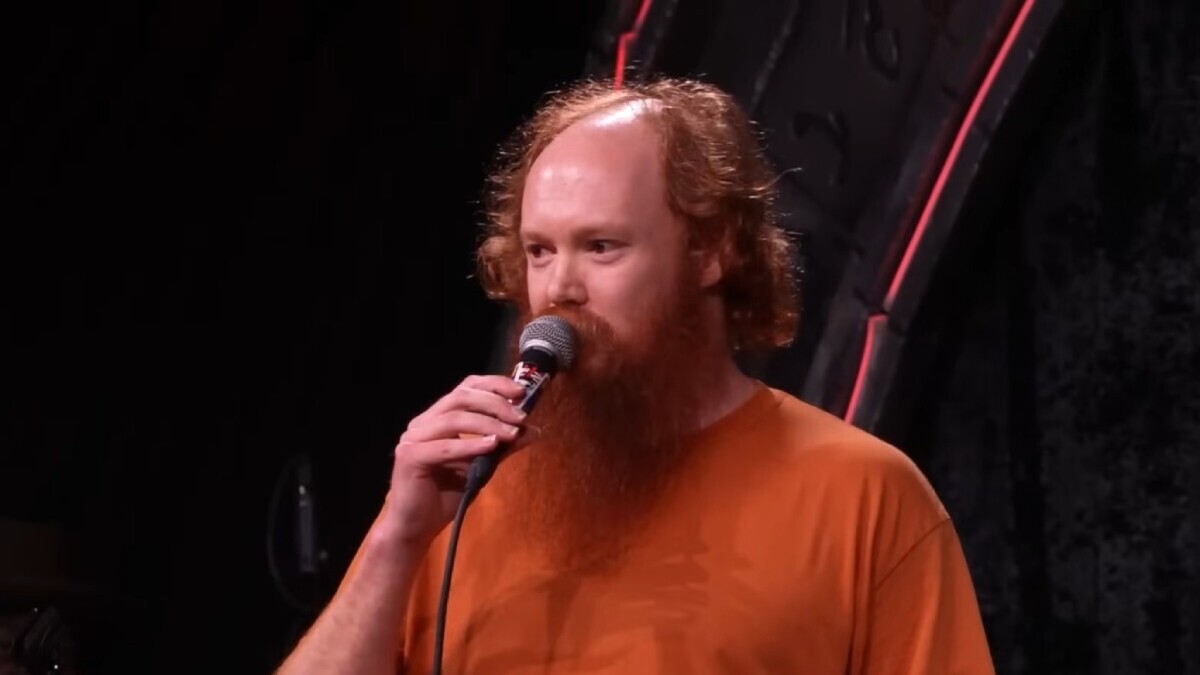
Stand-up comedy has always sold itself as danger with a microphone. One comic, one crowd, one tiny stretch of time where everything can go gloriously right or collapse like a folding chair at a backyard barbecue. And when a performer becomes famous for thriving in chaos, audiences start to assume chaos is part of the brand. That assumption works beautifully right up until the night the chaos stops being funny.
That is why the viral William Montgomery meltdown hit so hard online. Montgomery, a familiar face to Kill Tony fans and a comedian known for loud, unpredictable bursts of absurdity, reportedly had a brutal set at Austin’s Still Standing Comedy Festival. Instead of the usual controlled weirdness his fans expect, the clips that spread online showed something rougher: jokes falling flat, boos swelling up, and a comic appearing to turn on the room when the room refused to turn with him.
In internet terms, this was catnip. In comedy terms, it was a reminder that bombing is not just possible for everybody. It is practically the tax you pay for stepping onstage. But when a performer built for short, explosive moments gets trapped in a longer, colder, less forgiving set, the bomb can feel less like a stumble and more like a live demolition.
What Happened During William Montgomery’s Viral Set?
The reports and clips surrounding the incident paint a pretty ugly picture. Montgomery, who is closely associated with Tony Hinchcliffe’s Kill Tony universe, was scheduled for a longer performance during the Still Standing Comedy Festival in Austin. Instead of settling into a groove, he reportedly hit immediate resistance from the crowd. Jokes about celebrity deaths, including material involving Aaliyah and Paul Walker, were described as landing badly, and the audience response grew increasingly hostile.
Then came the part that turned an ordinary bad set into a shareable meltdown. Montgomery did not simply eat the silence and move on. In the clips that circulated, he appeared to shout at audience members, insist certain jokes were good, and push harder into confrontation. That almost never ends well. A comic can sometimes save a set by leaning into tension. But once the audience starts feeling like it is being scolded for not laughing, the night usually turns from comedy show to hostage situation with a spotlight.
According to local reporting, the set ended early after the backlash intensified. Fans online immediately split into familiar camps. One side argued that Montgomery was misunderstood, that his style thrives in sharp one-minute bursts and in rooms that already understand his cadence. The other side said the set exposed a bigger truth: that a persona built on shouting, abrasion, and anti-comedy bravado can look a lot less magical when the crowd is not already in on the joke.
Why This Story Went Viral So Fast
There are bad comedy sets every night in America. Most of them disappear into the sticky floorboards of a club and are never heard from again. This one blew up because it had the three ingredients the internet loves most: a recognizable name, visible audience rejection, and video clips short enough to turn discomfort into a spectator sport.
Montgomery is not some random open-mic comic having the worst Tuesday of his life. He is part of the Kill Tony ecosystem, a comedy machine that has become famous by turning pressure into content. The show’s whole appeal is that aspiring comics get one minute to impress Tony Hinchcliffe and a panel before being roasted, questioned, and sometimes humiliated. It is comedy with a game-show engine and a slight whiff of gladiator combat. When one of that world’s own stars gets publicly rejected, people do not just see a bad set. They see irony in neon lights.
The viral nature of the clip also came from how legible it was. You did not need deep knowledge of the Austin comedy scene to understand what was happening. A comic says a joke. Silence. Booing. Comic gets louder. Crowd gets colder. End scene. The translation across platforms was instant. TikTok understood it. Reddit understood it. X understood it. The group chat absolutely understood it.
William Montgomery’s Style Was Built for Short Bursts
To understand why this moment landed with such force, it helps to understand what William Montgomery actually does well. His reputation inside the Kill Tony fan base was not built on polished half-hour storytelling sets with careful emotional arcs. It was built on concentrated doses of oddball aggression, bizarre premises, sudden detours, and a delivery style that feels like a panic attack wearing boots.
That can be hilarious in the right format. In one-minute sets, high volume and unpredictability can feel electric. There is no time for the act to wear thin. A comic barrels in, detonates something strange, and gets out before the audience can fully process what just happened. It is comedy by ambush. Montgomery has long benefited from that compressed format, and Kill Tony practically industrialized it.
But short-form brilliance does not always expand neatly into a longer stand-up performance. What kills in sixty seconds can wilt in twenty minutes. Repetition becomes obvious. The voice that seemed wild now seems one-note. The insult energy that once felt charmingly unhinged starts feeling exhausting. It is the comedic equivalent of realizing your favorite hot sauce is amazing on tacos and absolutely terrible as a beverage.
That does not make Montgomery talentless. It means different comedic ecosystems reward different muscles. Some comics are sprinters. Some are marathoners. Some are elite relay-race weirdos who only work when other performers are handing them momentum. The viral meltdown suggested that Montgomery, at least on that night, looked trapped in the wrong event with the wrong runway.
The Bigger Kill Tony Problem: Fame Changes the Room
Part of what makes this incident fascinating is that it reflects a broader tension around Kill Tony itself. The show started as a rough, hungry, live-podcast format built on risk, discovery, and ruthless critique. Over time, it became a much larger cultural product. It grew a massive online following, expanded its brand, and moved into even bigger entertainment territory. Once that happens, every performer orbiting the show carries more baggage into the room.
Fans no longer see a comic as just a comic. They see a symbol. A faction. A vibe. A representative of Tony Hinchcliffe’s wider comedy empire. So when Montgomery bombs, people are not merely reacting to William Montgomery. They are reacting to what they think Kill Tony, Austin comedy, roast culture, and edge-lord stand-up have become. One bad set suddenly feels like a referendum.
That makes the backlash bigger, but it also makes the defense louder. Supporters of Montgomery were quick to argue that the crowd simply was not his crowd. That is possible. Comedy depends on context more than almost any other art form. A joke that gets a club crowd howling at midnight can die in a theater crowd at 8 p.m. just because the room’s temperature is different. Still, that defense has limits. Great comics may prefer certain audiences, but they also know how to read a room before trying to win a fistfight with it.
When Crowd Work Becomes Crowd Warfare
There is a thin line between commanding a room and declaring war on it. Confident comics sometimes bark at a crowd as part of the act. The audience senses control, laughs at the tension, and everyone has a good time. But if the comic sounds genuinely angry, panicked, or offended by the audience’s existence, the spell breaks.
That appears to be what happened here. The problem was not only that the jokes reportedly missed. It was that the energy after the miss curdled. Once the performer starts insisting the audience should have laughed, the audience stops judging the joke and starts judging the person. That is a much harder contest to win. People will forgive a swing and a miss. They are far less forgiving when the comic starts acting like a furious substitute teacher with a microphone.
And once that mood sets in, every next line feels worse. The room is no longer listening for punchlines. It is listening for permission to reject you again. The comic, in turn, begins performing against the audience rather than for it. At that point, even an actually decent joke can die because the social contract has already been shredded.
Why Audiences Are Less Patient With Shock Comedy Now
The William Montgomery meltdown also landed in a moment when audiences are more selective about what they consider “edgy” versus what they consider stale. That distinction matters. For years, some comics could rely on the mere fact of offensiveness to generate energy. But shock without freshness ages fast. A joke can be dark, tasteless, and still work if it feels surprising, precise, or genuinely inventive. When it feels lazy, dusty, or too pleased with itself, audiences do not hear danger. They hear a rerun in a leather jacket.
That is partly why the reported celebrity-death material became such a focal point. Even people who enjoy mean comedy often want it to feel sharp, current, or at least purposeful. If it sounds dated, the crowd starts wondering what exactly they are supposed to admire here. The result is not scandalized laughter. It is boredom with extra side-eye.
This matters even more in the podcast era, where fans consume so much content from comedians offstage. The mystique is gone. Audiences now know how comics talk in interviews, on podcasts, on livestreams, and in backstage clips. That means the act itself has to do more work. A comic cannot simply swagger onstage and assume the old formula still glows in the dark.
What This Means for William Montgomery
Internet meltdowns have a funny half-life. They look career-ending for about six hours, then morph into lore. For Montgomery, this could become either a cautionary tale or a strangely useful plot twist. Comedy fans have short attention spans, and plenty of performers have survived public bombs, ugly clips, and nights they would absolutely erase from history if given the chance and a moderately functional time machine.
The key question is whether he learns anything from it. If the lesson becomes “the audience was too soft,” then the clip will keep functioning as evidence against him. If the lesson becomes “my material and pacing did not translate to that room,” then this could eventually read as a necessary humiliation. Stand-up is full of those. The difference between a comic who grows and a comic who calcifies is often the ability to admit, privately at least, that the room was not wrong every single time.
It also raises practical questions about format. Does Montgomery work better in smaller doses? Is he strongest in ensemble settings where his unpredictability plays off a host or panel? Does a longer solo set need different architecture, more variety, and better modulation? Those are not insults. They are craft questions, and every comic who lasts long enough has to answer them.
What This Says About Kill Tony and Modern Comedy Culture
The most interesting thing about the viral William Montgomery moment is that it says less about one disastrous set and more about the entertainment system around it. Kill Tony helped build a comedy environment where volatility is not a side effect. It is the product. The audience shows up for risk. The clips circulate because risk becomes content. Careers rise on the back of one-minute explosions, instant judgments, and public discomfort.
That system can create stars fast. It can also expose their weaknesses faster. A comic who looks unstoppable in a tightly framed, high-adrenaline format may look very different in a conventional live setting where the crowd owes them nothing and the clock keeps ticking. The audience at a festival is not the same as a fandom online. It is not even the same as a loyal room in Austin. And a viral clip does not care about your usual batting average. It only cares that you struck out in front of a camera.
So yes, William Montgomery bombed. Yes, the audience turned. Yes, the internet feasted. But the bigger takeaway is this: in the age of algorithmic comedy, the very machinery that manufactures cult fame can also magnify a public collapse into a cultural Rorschach test. Some people saw proof he was never funny. Some saw proof that his style needs the right room. Others saw a broader indictment of a comedy scene that often mistakes abrasion for originality.
All of them, in their own way, were reacting to the same old stand-up truth. A microphone does not care about your mythology. Eventually, every comic has to face a room alone. And when the room decides it is not buying what you are selling, fame does not protect you. Sometimes it just makes the crash louder.
Experiences Around Viral Comedy Bombs: What It Feels Like in the Room and Online
Anyone who has spent time in live comedy spaces knows that a bomb does not arrive all at once. It creeps in. First there is the polite laugh drought, that weird little stretch where a room stops sounding alive and starts sounding like people are carefully opening cough drops. Then comes the chair-shifting. Then the side glances. Then the audience begins to develop a kind of collective consciousness, as if everyone silently agreed, at the exact same moment, that something has gone very wrong and nobody knows whether to feel bad, annoyed, or fascinated.
That is what makes viral bomb clips so compelling. They recreate a universal live-show experience: secondhand embarrassment with a front-row seat. Plenty of audience members are not even angry at first. They are hopeful. They want the comic to recover. People often root for a comeback more than they root for a destruction. But once the performer starts arguing with the crowd, the emotional weather changes. Sympathy drains out of the room. Curiosity takes over. Suddenly the audience is no longer participating in a set; it is witnessing an unraveling.
There is also a huge difference between how a bomb feels in person and how it feels online. In the room, tension has texture. Maybe the comic had a good opener before the clip started. Maybe there were hecklers. Maybe the audience for the headliner was never going to connect with the opener. Maybe the pauses felt longer, sadder, stranger. Online, none of that nuance survives unless someone uploads the whole set, and even then most people will only watch the thirty seconds where everything catches fire. Social media does not reward context. It rewards combustion.
Fans also bring their own experiences to moments like this. People who love rough, abrasive comedy may watch the same clip and think, That crowd was too stiff. People who already dislike the whole podcast-comedy scene may see it as proof that hype has outrun talent. That is why these incidents never stay small. They become identity tests. Which side are you on? The comic? The crowd? The genre? The scene? The algorithm is thrilled either way.
And yet, there is something almost old-fashioned about the whole spectacle. For all the new-media noise, this is still the ancient drama of live performance. One person takes the stage. A crowd decides whether to go along. Sometimes the comic wins. Sometimes the audience does. Sometimes everybody loses and TikTok gets a week of content. That may be the most modern part of all: even a terrible night can be repackaged as a viral career chapter, dissected, memed, defended, and monetized before the adrenaline has even left the building.