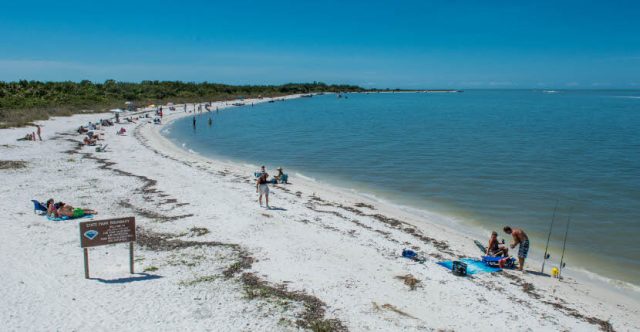
Some beaches are perfect for a quick stroll. Others are ideal for a lazy afternoon, a sunset selfie, and a dramatic promise to “come back here every year.” Then there is Praia do Cassino in southern Brazil, a beach so long that your flip-flops may consider unionizing halfway through. Frequently described as the longest beach in the world, Praia do Cassino stretches along the Atlantic coast of Rio Grande do Sul for roughly 254 kilometers, or about 158 miles, depending on how the coastline is measured.
That is not a beach walk. That is a side quest with snacks, sunscreen, and possibly a support vehicle.
Located near the city of Rio Grande and running south toward the border with Uruguay, Praia do Cassino is not just a strip of sand. It is a geographic oddity, a local lifestyle, a road in places, a wildlife corridor, a historical resort, and a very good reminder that the ocean has no interest in fitting neatly into your travel itinerary.
So, What Is the Longest Beach in the World?
The title most commonly goes to Praia do Cassino, also called Cassino Beach, in Brazil. It begins near the Molhes da Barra, the massive breakwaters at the entrance to the Port of Rio Grande, and continues south toward Chuí, near Brazil’s border with Uruguay.
Many tourism and geography references list Praia do Cassino at around 254 kilometers. Some sources give a shorter figure, around 212 kilometers. This is not because the beach is secretly shrinking when nobody is looking. It is because coastlines are famously tricky to measure. Do you follow every tiny bend, tidal curve, sandbar, and natural indentation? Do you measure the beach at low tide, high tide, or from a satellite image? Congratulations, you have now entered the coastline paradox, where the closer you measure, the longer everything gets. Geography: fun at parties, terrifying in spreadsheets.
Still, even using conservative measurements, Praia do Cassino is enormous. To put it in everyday terms, it is longer than many drives people make between cities. It is longer than a binge-watch session that begins “just one episode” and ends with birds chirping outside. It is long enough that calling it “a beach” almost feels like calling the Grand Canyon “a ditch with ambition.”
Why Praia do Cassino Wins the Beach-Length Debate
When people search for the longest beach in the world, they often find multiple contenders. Cox’s Bazar in Bangladesh is famous for its long natural sea beach, often cited at around 120 kilometers. Ninety Mile Beach in New Zealand sounds like it should dominate the competition, although it is actually about 88 kilometers long. Padre Island National Seashore in Texas protects 66 miles of wild coastline and is the longest stretch of undeveloped barrier island in the United States.
These places are impressive, beautiful, and absolutely worth knowing about. But Praia do Cassino is in a different size class. Its continuous sandy shoreline gives it the strongest claim as the world’s longest sea beach, especially in popular geography and travel writing.
Longest Beach vs. Longest Natural Beach vs. Longest Barrier Island
Here is where things get slightly nerdy, but in a useful way. “Longest beach” can mean different things depending on the category. A beach can be continuous but developed. Another can be undeveloped but shorter. A third can be part of a barrier island rather than a continental shoreline. This is why titles like “longest beach in the world” need a little context.
Praia do Cassino is best understood as the longest continuous sea beach commonly recognized in global travel and geography references. It is not necessarily the most tropical, the most remote, or the most polished. But when it comes to sheer sandy mileage, it is the heavyweight champion wearing sunglasses.
Where Is Praia do Cassino?
Praia do Cassino sits in Rio Grande do Sul, Brazil’s southernmost state. This is not the postcard Brazil of coconut palms, carnival feathers, and beaches packed shoulder-to-shoulder with Rio de Janeiro energy. Southern Brazil has a different personality: cooler winds, wide skies, gaucho culture, strong regional identity, and Atlantic coastlines that feel more rugged than tropical.
The nearest major city is Rio Grande, one of Brazil’s oldest port cities. From there, visitors can reach the Cassino district and the beach area by road. The northern section near Molhes da Barra is the most accessible and developed, with restaurants, lodging, beach services, and local life. As the beach continues south, it becomes wilder, emptier, and more dramatic.
In other words, you can choose your own adventure: casual beach day with snacks and people-watching, or long-distance coastal exploration where your phone battery starts writing goodbye letters.
What Makes the Longest Beach in the World So Interesting?
1. It Is a Beach You Can Drive On
One of the first things visitors notice is that vehicles are common on parts of Praia do Cassino. Cars, motorcycles, and beachgoers share the sand in a way that can surprise travelers used to boardwalks and roped-off dunes. For locals, beach driving is part of the culture. For first-time visitors, it can feel like someone accidentally merged a seaside vacation with a parking lot and a road trip.
That does not mean visitors should drive casually without preparation. Conditions change with tides, weather, and sand firmness. Local rules and restricted areas should always be respected, especially near dunes, wildlife zones, and crowded sections.
2. It Has a Shipwreck
About 16 kilometers from the main Cassino area, the remains of the Altair shipwreck rest on the sand. The ship ran aground in 1976 after a storm and has since become one of the beach’s most recognizable landmarks. Rust, wind, salt, and time have turned it into a haunting photo stop. It is the kind of place that makes travelers lower their voices for no clear reason, as if the ocean might be listening.
3. It Has Historic Breakwaters and Vagonetas
At the northern end, the Molhes da Barra are massive stone breakwaters built to protect the entrance to the Port of Rio Grande. One of the most unusual experiences here is riding small rail carts known as vagonetas. These simple carts run along tracks over the breakwater and offer views of the ocean, ships, birds, and sometimes marine animals. It is part engineering curiosity, part coastal sightseeing, and part “I did not expect this at the beach, but I’m delighted.”
4. It Has a Surprising Space Connection
Praia do Cassino is not only about sand and surf. In 1966, scientific rocket launches connected to eclipse research took place from the Cassino area, making the beach part of space-science history. This is a fun detail because most beaches give you seashells. Praia do Cassino gives you seashells and a NASA-adjacent trivia fact. Overachiever behavior, honestly.
5. It Is Part of a Bigger Coastal Ecosystem
The beach is tied to dunes, wetlands, marine life, migratory birds, and the wider ecological systems of southern Brazil. The region can host sea lions, seals, shorebirds, and other coastal wildlife. Visitors should admire animals from a respectful distance, avoid disturbing nesting or resting areas, and never treat the beach like an all-you-can-litter buffet. Nature is not your hotel room, and even hotel rooms deserve better.
Is Praia do Cassino Beautiful?
Yes, but not in the glossy brochure way people might expect from the word “Brazil.” Praia do Cassino is not all turquoise lagoons and palm trees posing like influencers. Its beauty is more cinematic: huge horizons, gray-blue Atlantic water, hard-packed sand, moody weather, wind, dunes, fishing culture, and the strange thrill of standing somewhere that seems to go on forever.
It is the kind of beach that impresses you through scale. You do not simply look at it; you feel slightly outnumbered by it. The sand stretches until distance becomes abstract. The ocean keeps repeating itself. The sky seems bigger than usual. Somewhere, your sense of proportion quietly packs a bag and leaves.
How Praia do Cassino Compares With Other Famous Long Beaches
| Beach | Location | Approximate Length | Why It Is Famous |
|---|---|---|---|
| Praia do Cassino | Brazil | About 212–254 km | Widely recognized as the longest continuous sea beach in the world |
| Cox’s Bazar | Bangladesh | About 120 km | Often called one of the longest natural sea beaches |
| Ninety Mile Beach | New Zealand | About 88 km | Famous scenic beach and official highway in parts |
| Padre Island National Seashore | Texas, United States | 66 miles | Longest undeveloped barrier-island coastline in the U.S. |
| Long Beach Peninsula | Washington, United States | About 28 miles | Historic U.S. beach destination with a famous “world’s longest beach” claim |
The comparison makes one thing clear: Praia do Cassino is not just long. It is absurdly long. It is the beach equivalent of someone answering a simple question with a 47-slide presentation.
Best Things to Do at Praia do Cassino
Walk Until You Remember You Need to Walk Back
Walking is the obvious activity, but be realistic. A casual stroll can become a mini-expedition because the landscape encourages “just a little farther” thinking. Bring water, sunscreen, and a sense of humility. The beach will win any distance contest.
Visit the Molhes da Barra
The breakwaters are one of the best starting points. You get ocean views, port activity, local atmosphere, and the chance to ride the vagonetas if available. It is a memorable way to experience the northern end of the beach without committing to a walk that ends in another postal code.
See the Altair Shipwreck
The Altair wreck is a favorite for photographers and travelers who enjoy places with a little drama. Go with local guidance if needed, check access conditions, and avoid climbing on unstable metal. The ship has been sitting in salt air for decades; it is not a jungle gym, no matter what your inner 12-year-old says.
Try Surfing, Fishing, or Beach Barbecue Culture
Depending on conditions, visitors may see surfers, anglers, and families enjoying the wide-open sand. Local beach culture often includes cars parked near groups, food, music, and social gatherings. It feels less like a manicured resort and more like a living public space.
When Is the Best Time to Visit?
Brazil’s summer runs roughly from December through February, which is the busiest beach season. This is when the Cassino area becomes more lively, with more visitors, warmer weather, and stronger vacation energy. If you prefer fewer crowds and do not mind cooler conditions, shoulder months can be pleasant, though wind and weather should always be checked.
Because this is southern Brazil, travelers should not assume year-round tropical heat. Pack layers if visiting outside peak summer. The Atlantic breeze can be enthusiastic. By enthusiastic, we mean it may rearrange your hairstyle and your life priorities.
Travel Tips for Visiting the Longest Beach in the World
- Start near Rio Grande: It is the most practical base for first-time visitors.
- Respect beach-driving rules: Not every sandy area is safe or legal for vehicles.
- Bring sun protection: Long beaches offer long opportunities to become a tomato.
- Check tide and weather conditions: Wind, storms, and tides can change the experience quickly.
- Keep distance from wildlife: Marine animals need rest, not selfies.
- Do not underestimate distance: “It looks close” is the beach’s favorite prank.
- Use local advice: Residents know which sections are safe, scenic, and worth your time.
Why This Beach Belongs on a Curious Traveler’s List
Praia do Cassino is not for travelers who only want luxury loungers and tiny umbrellas in colorful drinks. It is for people who like places with scale, personality, and slightly ridiculous facts. It is for road-trippers, geography nerds, beach walkers, photographers, history lovers, and anyone who enjoys saying, “Technically, I visited the longest beach in the world,” at dinner parties.
It also challenges the usual beach fantasy. A beach does not have to be tropical to be fascinating. It does not have to be crowded with resorts to be memorable. Sometimes the most interesting coastline is the one that feels endless, windswept, and a little untamed.
The Experience: What It Feels Like to Stand on a Beach That Refuses to End
Imagine arriving at Praia do Cassino with the casual confidence of someone who has visited beaches before. You have seen sand. You have met water. You understand the basic agreement: land ends, ocean begins, everyone relaxes. Then Praia do Cassino appears and quietly changes the contract.
At first, it seems normal enough. There is the Atlantic rolling in with steady waves. There are cars on the sand, people chatting, families setting up chairs, and the familiar smell of salt air. You walk a few minutes and look back. The starting point is still visible. Fine. You keep walking. Ten minutes pass. The beach has not changed much. Twenty minutes pass. Still beach. Thirty minutes pass. Your brain begins asking administrative questions: Are we still in the same place? Has the scenery updated? Did someone copy and paste the coastline?
That is the strange magic of the world’s longest beach. It does not overwhelm you with cliffs, neon water, or dramatic rock arches. It overwhelms you with repetition. The horizon stretches so confidently that it starts to feel philosophical. The waves keep arriving like they have a subscription. The sand continues south with the persistence of a person explaining cryptocurrency at a party.
There is humor in the scale. You may open your map app and zoom out, then zoom out again, then realize the beach is still going. Your GPS does not literally get tired, but emotionally, it deserves a chair. This is the kind of place where “walking the beach” needs a disclaimer. On a normal beach, a long walk means you return with sandy ankles. Here, a long walk could become a logistical event involving water, snacks, weather checks, and someone back home asking why your location dot is making a break for Uruguay.
The local rhythm is part of the experience. Seeing vehicles parked on the sand can feel odd at first, especially if you come from places where beach access is carefully separated from traffic. But at Cassino, the beach functions as a broad public stage. People gather, fish, drive, barbecue, sit, watch, and move through the landscape with a familiarity that visitors slowly begin to understand. It is not a delicate postcard. It is a working, social, windswept coastline.
The longer you stay, the more details appear. Tire tracks make temporary patterns in the sand. Birds patrol the waterline with serious little expressions. The wind edits every conversation. The ocean looks cold one moment and silver the next. Clouds move fast. The beach has moods, and because it is so enormous, those moods feel spacious.
A visit to the Molhes da Barra adds another layer. The breakwater reaches into the sea with industrial confidence, and the vagonetas make the outing feel charmingly old-school. It is rare to find a beach attraction that combines maritime engineering, local tradition, and the faint sensation that you have wandered into a very specific regional secret.
Then there is the Altair shipwreck, which gives the beach a ghost-story accent. A stranded ship on a vast coast is already dramatic, but on Praia do Cassino it feels especially fitting. This is a beach big enough to hold a wreck, a resort history, space-science trivia, fishing culture, wildlife, and still have room left over for your confused footprints.
The best way to experience Praia do Cassino is not to rush toward a checklist. Let the scale do its work. Walk a little. Stop. Watch the waves. Notice how far the sand continues. Laugh at the fact that this single beach could swallow several famous beaches and still have room for dessert. Then, before ambition gets silly, turn around. The return walk is waiting, and unlike your GPS, your legs do not come with satellite support.
Conclusion
Praia do Cassino earns its reputation as the longest beach in the world not merely because of a number, but because of the feeling that number creates. Whether you use the 212-kilometer estimate or the commonly cited 254-kilometer figure, the result is the same: this is one of the most extraordinary continuous sandy coastlines on Earth.
It is not the beach for everyone, and that is part of its charm. Praia do Cassino is vast, windy, practical, historic, surprising, and occasionally weird in the best possible way. It has breakwaters, beach driving, a shipwreck, wildlife, local traditions, and enough sand to make your vacation plans feel underprepared. For travelers who love records, unusual destinations, and places that make the planet feel bigger, this Brazilian giant deserves a spot on the map.
Note: This publication-ready article is based on factual geography, tourism, environmental, and historical information from reputable public references. Source links have been intentionally excluded from the body for clean web publishing.