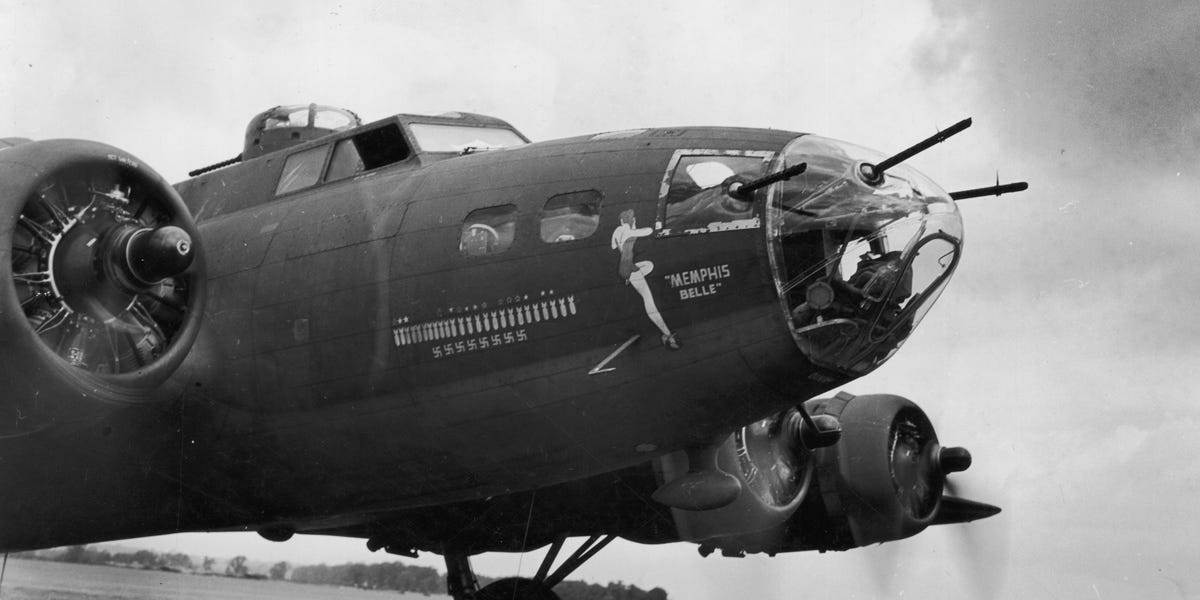
The Memphis Belle B-17 documentary is one of those rare World War II films that still feels alive, even though it was made in 1944, when color combat footage was not exactly something people could casually scroll past while eating cereal. Officially titled Memphis Belle: A Story of a Flying Fortress, the film followed a Boeing B-17F Flying Fortress and its crew through the terrifying world of daylight bombing over Nazi-occupied Europe. Unofficially, it became a legend factory.
But here is the big question: how much of the Memphis Belle documentary is true? Was it a strict record of one mission? Was it propaganda? Was the plane really that famous, or did Hollywood sprinkle extra glitter on a bomber already covered in flak scars? The honest answer is more interesting than a simple yes or no. The documentary is rooted in real danger, real crews, real aircraft, and real combat footage. At the same time, it was edited as a wartime story designed to inspire Americans, sell the importance of the air war, and give one heroic bomber a clean narrative arc. In other words: real history, shaped by wartime storytelling.
The Memphis Belle: More Than a Pretty Name on a Bomber
The Memphis Belle was a Boeing B-17F Flying Fortress, serial number 41-24485, assigned to the U.S. Army Air Forces during World War II. Its pilot, Captain Robert K. Morgan, named the aircraft after Margaret Polk, his sweetheart from Memphis, Tennessee. The name had romance, rhythm, and just enough Southern charm to look good painted on aluminum. If aircraft had publicists, this one would have asked for a raise.
The B-17 itself was not built for glamour. It was designed to carry bombs deep into enemy territory, fly at high altitude, and defend itself with multiple .50-caliber machine guns. The nickname “Flying Fortress” was not poetry; it was marketing with teeth. Crews operated in cramped, freezing, oxygen-thin conditions while German fighters and anti-aircraft guns did their best to turn the sky into a metal blender.
The Memphis Belle became famous because it completed 25 combat missions over Europe and returned to the United States for a highly publicized war bond tour. That number mattered. Early in the air war, 25 missions was considered a full tour for bomber crews. Surviving that many missions was not guaranteed. It was not even politely likely. Every completed mission felt like beating terrible odds with engines coughing, guns firing, and luck hanging by a rivet.
What the 1944 Memphis Belle Documentary Actually Shows
The 1944 film Memphis Belle: A Story of a Flying Fortress was directed by William Wyler, already a major Hollywood filmmaker before joining the U.S. Army Air Forces. Wyler did not make the documentary from a safe office with a map and a dramatic pencil. He and his camera crews went to England, filmed heavy bomber operations, and flew on combat missions. That matters because the film’s power comes from proximity. The camera is not imagining danger; it is sitting inside it.
The documentary presents the Memphis Belle crew preparing for and flying what is described as their 25th and final bombing mission. We see briefing rooms, ground crews, nervous young airmen, takeoff, formation flying, enemy fire, bomb runs, damaged aircraft, and the exhausting relief of returning to base. The film is short by modern documentary standards, but it packs in more tension than many three-hour blockbusters with twice the explosions and half the emotional weight.
However, the key truth is this: the documentary does not function as a perfectly literal, minute-by-minute recording of one uninterrupted flight. Like many wartime documentaries, it assembles footage into a coherent narrative. Some scenes represent the broader experience of B-17 missions rather than a single continuous event. That does not make the film dishonest in the cheap sense. It makes it a documentary shaped by the wartime production methods, technology, and messaging goals of its time.
Was the Memphis Belle Documentary Propaganda?
Yes, but that word needs careful handling. Today, “propaganda” often sounds like “fake news wearing a helmet.” During World War II, government-produced films were openly designed to build morale, explain the war effort, encourage sacrifice, and strengthen public support. The Memphis Belle documentary was part of that environment. It was meant to show Americans why the air war mattered and why bomber crews deserved admiration.
Still, propaganda does not automatically mean fiction. The film contains actual combat footage. The men were real. The aircraft was real. The danger was brutally real. One of Wyler’s cinematographers, Lieutenant Harold J. Tannenbaum, was killed during filming on a mission over St. Nazaire, France. That single fact should end any lazy claim that the documentary was merely staged hero theater. The cameras were in the war, not just looking at it from the sidewalk.
What the film does do is polish reality into a message. It highlights courage, teamwork, duty, and survival. It avoids long discussions of trauma, strategic controversy, civilian bombing casualties, or the psychological aftermath faced by crews. The documentary is not a full moral history of the air war. It is a focused wartime portrait of one aircraft, one crew, and one symbolic victory.
The “First” Claim: What Is True and What Needs Context?
One of the most repeated claims about the Memphis Belle is that it was the first B-17 or first heavy bomber to complete 25 missions. The more precise version is that the Memphis Belle became the first U.S. Army Air Forces heavy bomber to return to the United States after completing 25 combat missions over Europe. That return mattered because it allowed the aircraft and crew to become public symbols on a war bond tour.
Historians have pointed out that other bombers completed 25 missions around the same period, and some claims depend on how “first” is defined: first in a theater, first B-17, first to return home, first to be publicized, or first to become a national icon. The Memphis Belle did not become famous only because of a scoreboard. It became famous because it survived, returned, toured the country, and starred in a major wartime documentary directed by one of Hollywood’s best filmmakers.
That distinction matters. History is often messier than posters. A poster wants one champion. The archive gives you footnotes, competing dates, and a headache with a bibliography. The truth about Memphis Belle is not weaker because it needs nuance. It is stronger because the real story shows how heroism, media, military policy, and public morale came together in 1943 and 1944.
William Wyler and the Danger Behind the Camera
William Wyler’s role is central to understanding why the Memphis Belle documentary still works. Wyler was not a random military cameraman handed a bomber and told, “Try not to drop the lens cap over Germany.” He was an Academy Award-winning filmmaker who understood structure, human faces, suspense, and silence. He knew that the audience needed more than aircraft silhouettes. They needed to see the men inside the machine.
Wyler and his team captured the routines that made the air war possible: the briefing before dawn, the mechanics, the armorers, the waiting, the takeoff, the formation, the tension, and the return. These scenes make the documentary valuable because they preserve the atmosphere of bomber operations. The air war was not only explosions in the clouds. It was also coffee, maps, cold hands, anxious jokes, and the awful knowledge that an empty chair at dinner might not be empty by accident.
The cost of filming was severe. Wyler himself later suffered hearing loss connected to his wartime service, and members of his filming unit faced the same dangers as the crews they documented. The documentary’s visual immediacy came at a human price. That is one reason modern viewers should treat the film not just as a movie, but as a historical artifact created under fire.
Why the B-17 Flying Fortress Became a Symbol
The B-17 became one of the most recognizable bombers of World War II because it embodied the American strategy of daylight precision bombing. The idea was bold: heavily armed bombers flying in formation could strike industrial and military targets in daylight. In practice, the missions were punishing. Before long-range fighter escort became more effective, bomber formations faced devastating losses from German fighters and flak.
The Memphis Belle documentary captures the B-17 as both machine and stage. Inside the aircraft, each crewman had a role: pilot, co-pilot, navigator, bombardier, radio operator, engineers, waist gunners, ball turret gunner, and tail gunner. The plane required teamwork so complete that one weak link could become everyone’s final problem. It was a flying workplace where the dress code included heated suits, oxygen masks, parachutes, and the possibility of being shot at before lunch.
This is why the film resonated with wartime audiences. Viewers could see that victory was not abstract. It was built by very young men doing highly technical, terrifying work inside a loud aluminum tube six miles above Europe.
The 1990 Memphis Belle Movie vs. the 1944 Documentary
Many people confuse the 1944 documentary with the 1990 feature film Memphis Belle. The difference is important. The 1944 documentary is a wartime film using real footage and real personnel. The 1990 movie is a dramatized feature inspired by the same legend, with actors portraying a fictionalized version of a B-17 crew on its final mission.
The 1990 film helped introduce the Memphis Belle story to a new generation, but it takes creative liberties. That is not unusual for Hollywood, where “based on a true story” can sometimes mean “we met history in the hallway and waved.” The dramatic version compresses events, shapes characters, and heightens tension for entertainment. The 1944 documentary is closer to the historical moment, though it too is edited for narrative and morale.
For anyone researching the real Memphis Belle, the best approach is to watch both with different expectations. Watch the 1944 documentary as a wartime artifact. Watch the 1990 film as historical drama. Then compare them to archival records, museum exhibits, veteran accounts, and modern scholarship. That combination gives a fuller picture than any single film can provide.
The Cold Blue and the Rediscovery of Wyler’s Footage
The Memphis Belle story gained new life through The Cold Blue, a modern documentary directed by Erik Nelson. This film used restored footage and outtakes connected to Wyler’s original wartime project. The rediscovered material offered a clearer, more intimate look at the Eighth Air Force and the men who flew B-17 missions over Europe.
The restoration matters because old war footage often suffers from scratches, fading, dust, and damage. Modern restoration allows viewers to see details that earlier audiences may have missed: the color of the sky, the youth of the crews, the cramped interiors, and the unsettling beauty of aircraft moving through deadly airspace. The Cold Blue does not replace the 1944 documentary. It expands the conversation by showing more of the world around it.
In a way, the restored footage makes the truth feel less distant. Black-and-white history can become emotionally abstract. Restored color footage has a different effect. It reminds us that these men did not live in “the past” as a museum label. They lived in the present tense of their own fear, duty, boredom, humor, and hope.
The Restoration of the Actual Memphis Belle
The aircraft itself survived the war and eventually became a museum treasure. After years in Memphis and a long restoration process, the B-17F Memphis Belle was placed on public display at the National Museum of the United States Air Force in Dayton, Ohio, in May 2018. The date was symbolic: 75 years after the crew completed its final combat mission in May 1943.
The restoration was not a casual weekend project with a bucket of polish and a motivational playlist. Restoring a historic aircraft requires deep research, original markings, accurate configuration, structural work, preservation science, and patience measured in years. The goal was not to make the Belle look like a generic shiny bomber. The goal was to preserve the aircraft as a specific historical object tied to a specific moment in World War II.
That restoration also helps correct myths. A museum exhibit can explain what a film simplifies. Visitors can see the size of the aircraft, the tight spaces, the defensive positions, and the physical reality of a bomber that once existed mostly as a legend on screen.
The Real Truth About the Memphis Belle Documentary
The truth about the Memphis Belle B-17 documentary is layered. It is real combat footage, but not a raw surveillance tape. It is a documentary, but also a morale film. It is historically important, but not complete. It honors the crew, but it also turns them into symbols. It shows danger, but it cannot fully communicate what repeated missions did to the minds and bodies of the men who flew them.
That is not a criticism; it is an invitation to watch intelligently. The documentary should not be dismissed because it was shaped by wartime storytelling. It should be understood as part of the war itself. Films like Memphis Belle: A Story of a Flying Fortress helped Americans imagine the air war, support bond drives, and connect emotionally with crews fighting far from home.
The film also reminds us that documentary truth is rarely just “camera equals fact.” Editing, narration, music, selection, and context all shape meaning. The Memphis Belle documentary tells the truth of courage under fire, even if it arranges that truth into a cleaner story than combat usually allows. War is chaos. Film needs structure. Somewhere between those two, the Belle became immortal.
Experiences Related to the Memphis Belle B-17 Documentary
Watching the Memphis Belle documentary today is a different experience from watching a modern war film. There are no digital explosions, no superhero camera moves, and no dramatic slow-motion speeches delivered while everyone’s hair looks suspiciously excellent. Instead, the film has the texture of lived history. The men look young because they were young. Their smiles feel casual, but behind them sits the knowledge that every mission could end in fire, capture, injury, or an empty bunk back at base.
One powerful experience is noticing the contrast between routine and terror. The crews attend briefings, put on gear, check equipment, and climb into the bomber with the practiced rhythm of people doing a job. Yet the job is flying into one of the most dangerous combat environments of the war. That contrast is haunting. It shows how human beings normalize danger when duty demands it. A viewer may begin by admiring the aircraft, but the longer the film runs, the more the people matter.
Another experience comes from seeing the B-17 not as a museum object, but as a working machine. Inside, it feels cramped and vulnerable. The romantic nickname “Flying Fortress” can make the aircraft sound invincible, but the documentary reveals something more complicated. The B-17 was strong, yes, but it was not magic. It depended on engines, formation discipline, gunners, navigation, weather, oxygen systems, and luck. Lots of luck. The film makes you respect the aircraft without turning it into a cartoon tank with wings.
For history lovers, the documentary also creates a useful habit: questioning famous stories without trying to destroy them. The Memphis Belle legend is inspiring, but it becomes even more meaningful when we understand the editing, the war bond tour, the “first” claim, the other crews, and the broader bomber campaign. Nuance does not ruin the story. It gives the story landing gear.
Visiting the restored Memphis Belle in a museum setting adds another layer. Film gives motion, sound, and suspense. The aircraft gives scale. Standing near a B-17, a person can better imagine how ten crewmen squeezed into that machine and crossed hostile skies. The polished exhibit cannot reproduce the cold, noise, fear, or smell of oil and cordite, but it can make the abstract suddenly physical. You stop thinking only about strategy and start thinking about knees, hands, breath, and courage.
The best personal takeaway from the Memphis Belle story is that history is not preserved by one format alone. A documentary preserves movement. A restored aircraft preserves material reality. Archives preserve evidence. Veterans’ memories preserve emotion. Museums preserve context. When all of them are placed together, the Memphis Belle becomes more than a famous bomber. It becomes a doorway into the air war, the power of wartime media, and the fragile line between survival and legend.
Conclusion
The Memphis Belle B-17 documentary remains important because it captures a real wartime experience while revealing how history becomes a public story. William Wyler’s 1944 film was not a casual movie about aviation heroics; it was a dangerous, carefully shaped, emotionally powerful record of bomber crews at war. It used actual combat footage, honored real airmen, supported the Allied cause, and helped turn the Memphis Belle into one of the most famous aircraft of World War II.
The truth is not that every second of the documentary is a literal one-mission record. The truth is that the film condensed and organized real danger into a story Americans could understand. That makes it both a historical source and a wartime message. To appreciate it fully, viewers should see the Memphis Belle not as a myth to swallow whole or a legend to debunk for sport, but as a surviving artifact of courage, cinema, propaganda, memory, and sacrifice.
Note: This article is based on publicly available U.S. archival, museum, aviation history, and documentary film information, including records related to the National Archives, the National Museum of the United States Air Force, the Library of Congress, the National WWII Museum, and modern restoration coverage of Wyler’s original Memphis Belle footage.