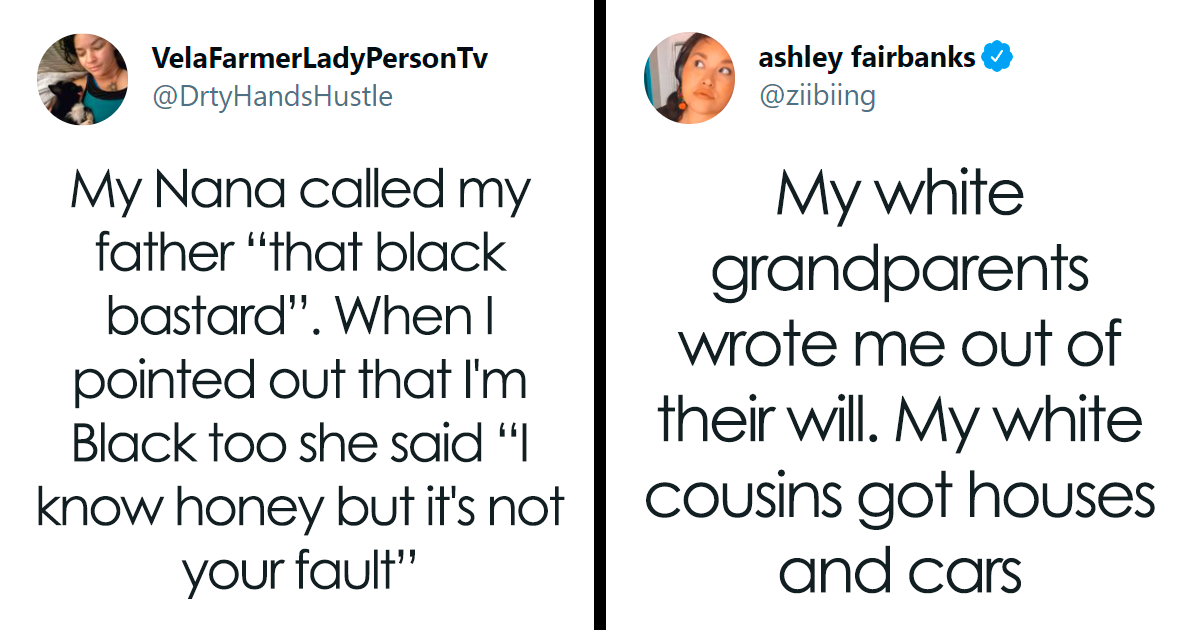
Families are supposed to be the people who know you before the rest of the world gets a vote. They know your childhood nickname, your most embarrassing school photo, and exactly which casserole you quietly avoid at Thanksgiving. But for some mixed-race people, family gatherings have also been the setting for something far more painful: racism directed at them by their own relatives.
Sometimes it arrives loudly, through a racial slur or an openly prejudiced statement. Sometimes it hides behind a joke, a “compliment,” a comment about skin tone, or the familiar command not to be “so sensitive.” The words may be delivered with a smile, but the message can still be brutally clear: part of who you are is considered embarrassing, inferior, suspicious, or simply unwelcome.
That contradiction can be uniquely disorienting. A person may love their family while also recognizing that some relatives hold racist beliefs about one side of their identity. They may be accepted conditionally, pressured to distance themselves from a parent’s culture, or treated differently from siblings and cousins based on appearance.
Editorial note: The 30 situations below are original, anonymized composite summaries of recurring experiences documented in research, reporting, and public discussions about multiracial identity. They are not presented as verbatim quotations from specific individuals. The gallery-style format is designed to examine common patterns without inventing personal testimony.
Why Racism From Family Can Hurt Differently
Racial discrimination from a stranger can be frightening, insulting, or exhausting. When prejudice comes from a relative, however, it can strike at a person’s basic sense of belonging. The person making the comment may be a grandparent whose approval matters, an aunt who helped raise them, a sibling who shares their childhood memories, or even a parent who has never fully examined their own biases.
The United States is increasingly multiracial. The 2020 Census counted 33.8 million people who reported two or more races, although changes in census questions and data processing contributed to the large increase from 2010. Research also shows that multiracial identity is not a single, uniform experience. How people identify can be shaped by appearance, family upbringing, community, ancestry, and how others classify them.
That complexity is precisely why family support matters. A mixed-race child should not have to become a tiny public-relations department for their own existence. Yet many forms of family racism effectively demand exactly that: explain yourself, defend your parent, laugh at the joke, prove you belong, and please do it before dessert.
30 Horrible Moments That Capture Family Racism Toward Mixed-Race People
1. Being Told They Are “Not Really” Part of the Family
One of the cruelest forms of exclusion is also one of the simplest: a relative treats a mixed-race child as less authentic than everyone else. The child may share the same grandparents, traditions, and family history, yet still hear that they are not “really” Asian, Black, Latino, Native, White, or part of another community because they have another racial background too.
2. Hearing a Relative Use a Slur About Their Own Heritage
A family member may casually use a racial slur, then suddenly remember that someone at the table belongs to the group being insulted. The awkward silence afterward says plenty. Even worse is the excuse: “You know I don’t mean you.” Racism does not become harmless because the speaker hands one person an imaginary exemption card.
3. Being Called “One of the Good Ones”
This is prejudice wearing a cheap disguise and hoping nobody notices the zipper. A relative praises the mixed-race family member as unusually intelligent, polite, attractive, or successful while insulting the broader racial group they belong to. The supposed compliment depends entirely on a racist stereotype.
4. Watching a Parent’s Race Become the Family Punchline
Sometimes the racism is aimed at a parent but lands squarely on the child. Relatives may mock an accent, food, country of origin, hair texture, religion, or cultural tradition. A mixed-race child listening nearby can easily understand the hidden equation: if half of my family is ridiculous to you, what does that make half of me?
5. Being Warned Not to “Get Too Dark”
Colorism can appear in casual comments about avoiding the sun, praising lighter skin, or treating darker relatives as less attractive. In multiracial families, siblings and cousins may receive very different treatment based on skin tone. What adults dismiss as beauty advice can teach children a painful hierarchy before they are old enough to name it.
6. Having Natural Hair Treated Like a Problem
Curly, coily, or textured hair may become a target of constant criticism. A child might hear that their hair is “wild,” “messy,” or needs to be fixed before family photos. When relatives repeatedly celebrate features associated with one side of the family while criticizing features associated with another, grooming becomes something much bigger than grooming.
7. Being Asked to Pick a Side
“But what are you really?” is irritating from strangers. From family, it can feel like an eviction notice. Some mixed-race people are pressured to choose one identity and minimize another, as though heritage were a reality show in which only one contestant gets the final rose.
8. Being Told They Are “Too Sensitive” About Racist Jokes
A relative makes a racial joke. The mixed-race family member objects. Suddenly, according to everyone else, the real problem is not the racism but the uncomfortable atmosphere created by mentioning the racism. This reversal protects the joke teller while pressuring the target to keep the peace.
9. Seeing Siblings Treated Differently Because They Look Different
Mixed-race siblings can have noticeably different skin tones, hair textures, and facial features. In biased families, those differences may affect who is praised, photographed, trusted, disciplined, or described as beautiful. Few things expose prejudice more clearly than two children receiving different versions of the same family because of how they look.
10. Hearing That Their Parents Should Never Have Married
For a child, criticism of an interracial relationship can become criticism of their own existence. Hearing that a mother or father “should have stayed with their own kind” does not remain an abstract opinion about dating. The child is the living result of the relationship being condemned.
11. Being Hidden From Certain Relatives
Some families attempt to conceal interracial relationships, mixed-race children, or culturally inconvenient branches of the family tree from older or more prejudiced relatives. The message is devastating: family unity matters, apparently, but only when the child is kept conveniently offstage.
12. Being Treated Like an Exotic Curiosity
Not every harmful comment sounds hostile. Relatives may obsess over how “exotic” a child looks or treat their racial mixture like a fascinating recipe. Constantly analyzing a person’s eyes, skin, or ancestry can make them feel less like a family member and more like a limited-edition collectible.
13. Having Their Identity Debated in Front of Them
Adults may argue about which race a child “counts as,” often while the child is sitting right there. The discussion can sound strangely administrative, as though everyone has formed a committee to determine the child’s official humanity category.
14. Being Praised for Looking Less Like One Side of the Family
Comments such as “Luckily, you got your mother’s features” or “At least you don’t look too much like your father’s side” reveal a racial ranking disguised as genetic commentary. The child quickly learns which parts of their appearance are considered acceptable and which are supposedly unfortunate.
15. Hearing Anti-Blackness Inside a Non-Black Family
Mixed-race people with Black heritage may encounter anti-Black stereotypes from relatives who identify with another racial or ethnic community. Research on multiracial identity has documented how rejection of Blackness within families and communities can contribute to feelings of inferiority and not belonging.
16. Being Told Their Racism Experience “Doesn’t Count”
A light-skinned or racially ambiguous person may be told they cannot experience discrimination because they are not perceived the same way in every situation. Privilege and discrimination can both be complicated, but complexity does not justify erasing someone’s experiences.
17. Being Accused of Rejecting the Family for Exploring Another Culture
Learning a language, attending cultural events, changing a hairstyle, or connecting with relatives from another branch of the family can trigger accusations of betrayal. Instead of encouraging curiosity, some relatives interpret cultural exploration as choosing “them” over “us.”
18. Having a Family Member Touch or Inspect Their Hair
Family familiarity does not erase boundaries. A mixed-race person may grow up with relatives constantly grabbing their curls, discussing texture, or comparing them with siblings. When hair becomes a permanent family exhibit, the person attached to it can feel strangely invisible.
19. Being Used as Proof That a Relative Cannot Be Racist
“I can’t be racist. My niece is mixed.” Congratulations: racism has not, in fact, been defeated by the existence of one relative. Treating a family member as a human shield against accountability places another burden on the very person supposedly proving the speaker’s tolerance.
20. Being Expected to Translate Racism for Everyone Else
Mixed-race people are sometimes expected to explain every controversy involving race, mediate family arguments, or patiently educate relatives who could easily do some learning themselves. Being multiracial does not automatically make someone the unpaid director of diversity training at Thanksgiving.
21. Watching Relatives Become Suspicious of One Side of the Family
One branch of a family may be described as dangerous, uneducated, foreign, dishonest, or culturally backward. Even when relatives insist they are discussing “those people” generally, the mixed-race family member knows that those people include grandparents, cousins, and perhaps themselves.
22. Being Told to Keep Quiet So an Older Relative Will Not Be Upset
Families often protect prejudiced relatives through phrases such as “That’s just how Grandpa is.” The younger person is expected to absorb the harm because challenging racism might make the person causing it uncomfortable. Apparently, maintaining peace sometimes means assigning all the discomfort to the same person.
23. Being Fetishized Instead of Insulted
Racial fetishization can sound positive while still reducing a person to stereotypes. Comments about mixed-race babies being automatically beautiful, superior, or “the perfect combination” may seem flattering, but they still treat human beings as products created by combining desirable physical traits.
24. Having Their Language Skills Mocked
A mixed-race person may be criticized for not speaking a heritage language fluently or mocked when trying to learn it. This creates an impossible trap: they are considered insufficiently authentic if they cannot speak the language and ridiculous if they try.
25. Being Told They Look “Better” Than Other Members of Their Race
Comparative compliments are often insults carrying a tiny party hat. Telling someone they are attractive “for” a racial group or prettier because they are mixed turns beauty into a racial ranking system.
26. Having Their Experience Dismissed Because the Family Is Interracial
An interracial family is not automatically an anti-racist family. Loving or marrying someone from another racial background does not magically erase bias, stereotypes, colorism, or ignorance. Research and expert guidance emphasize the importance of direct conversations about race rather than assuming diversity within a household makes such conversations unnecessary.
27. Being Compared With a “More Acceptable” Mixed-Race Relative
Families may compare cousins or siblings based on skin color, hair, cultural behavior, or which racial identity they emphasize. One child becomes the “easy” one while another is treated as difficult for openly embracing a heritage the family would rather ignore.
28. Discovering That Family Love Has Conditions
Some mixed-race people are embraced as long as they do not discuss racism, identify too strongly with a marginalized community, or challenge prejudiced relatives. That is not full acceptance. It is acceptance with an aggressively long terms-and-conditions page.
29. Realizing the Family Has Been Rewriting Their Identity for Years
Relatives may consistently describe a person as only one race, correct the labels they choose for themselves, or introduce them differently depending on the audience. Over time, this can make identity feel less like something personal and more like something other people keep trying to edit.
30. Finally Setting a Boundary and Being Called the Problem
After years of comments, jokes, and dismissals, a person may stop attending gatherings, confront a relative, or refuse to participate in certain conversations. The family then labels them divisive. Yet boundaries do not create the original wound. They are often what happens when pretending everything is fine becomes more painful than admitting it is not.
What These Experiences Have in Common
The details differ, but several patterns repeat. Mixed-race people may experience identity invalidation, stereotyping, colorism, rejection, fetishization, or pressure to prove loyalty to one side of the family. Some report changing how they speak, dress, identify, or behave depending on the social environment. Research on multiracial experiences increasingly recognizes that discrimination can take forms that do not fit neatly into older, one-dimensional models of racial prejudice.
Another recurring feature is ambiguity. A screaming racial slur is easy to identify. A grandmother repeatedly praising the lightest grandchild while criticizing the darkest one may be explained away as preference. A parent refusing to discuss race may call themselves colorblind. A relative may insist that an offensive remark was “just a joke.”
Ambiguity does not necessarily make the impact disappear. It may instead force the person experiencing the behavior to perform extra emotional labor: Was that racist? Am I overreacting? Should I say something? Will anyone believe me? Will confronting it destroy the relationship?
Research has connected racial discrimination with psychological distress and other mental-health challenges, while positive multiracial identity, supportive racial socialization, and pride may help strengthen well-being and resilience. No single study describes every mixed-race person, but the broader lesson is straightforward: being supported in one’s identity is very different from being pressured to defend it.
Why “I Don’t See Color” Is Not Always the Comfort People Think It Is
Some relatives respond to discussions about family racism by announcing that they do not see color. The intention may be kind. The practical result can be less helpful.
A mixed-race person may want their whole identity recognized, not politely erased. Race can influence how someone is perceived, how they are treated, which family traditions shape them, and what experiences they encounter. Refusing to acknowledge those realities does not automatically create equality.
Children also notice racial differences earlier than many adults assume. Guidance from psychologists, pediatric experts, and educational organizations generally favors honest, age-appropriate conversations about race over silence. The goal is not to make every family dinner a graduate seminar. It is simply to create enough openness that children can ask questions, describe discrimination, and explore their heritage without being shushed.
What Supportive Families Can Do Instead
Listen Before Defending Intentions
When someone says a comment hurt them, immediately explaining why the speaker “didn’t mean it that way” can shut down the conversation. Intent matters, but impact matters too. Listening first does not require agreeing with every interpretation. It simply shows that the relationship is more important than winning the argument in record time.
Let People Name Their Own Identity
Mixed-race identity can be personal and sometimes fluid. A person may identify with multiple groups, emphasize different aspects of their heritage in different contexts, or use a label that relatives did not expect. Families can support that process without turning identity into a courtroom cross-examination.
Challenge Racism Even When the Target Is Not Present
Waiting until a mixed-race relative enters the room before objecting to racist comments sends the wrong message. Anti-racism is more meaningful when relatives challenge prejudice because it is wrong, not merely because someone nearby might overhear it.
Make Space for Every Branch of the Family Tree
Food, language, stories, holidays, music, community, and family history can all help children develop a fuller understanding of their backgrounds. No one should have to treat part of their ancestry like a forbidden browser tab.
Extended Experiences: What Happens After the Racist Moment?
The cruel comment itself may last five seconds. Its consequences can linger for years.
Many mixed-race people describe becoming highly alert to the emotional temperature of family gatherings. They learn which uncle will make the joke, which grandparent will comment on skin tone, and which parent will quietly signal that it is better not to respond. Before entering a room, they may already be calculating how much of themselves is safe to bring inside.
That kind of vigilance can shape everyday decisions. Someone might straighten their hair before visiting relatives because they are tired of hearing comments. Another person may avoid mentioning a new partner because they already know the racial questions that will follow. Some stop speaking a heritage language around family members who mock their pronunciation. Others deliberately learn that language more seriously because reclaiming what was ridiculed becomes a form of self-respect.
There can also be grief. A person may realize that a beloved relative is capable of genuine affection and genuine prejudice at the same time. Human relationships are annoyingly complicated that way. Recognizing racism does not automatically switch off love, childhood memories, loyalty, or longing. Sometimes the hardest question is not, “Was that racist?” but, “What do I do now that I know it was?”
Some people confront relatives directly. The results vary. A family member may apologize, become defensive, insist they were misunderstood, or launch into the traditional speech beginning with “I treat everyone the same.” Others respond more thoughtfully. They ask questions. They read. They stop making the joke. They correct themselves. Imperfect change is still change.
For others, boundaries become necessary. That may mean leaving a gathering when slurs begin, refusing conversations about a child’s skin tone, limiting contact, or telling relatives that certain comments will no longer be tolerated. Boundaries are sometimes portrayed as punishment, but they can also be instructions for continuing a relationship: this is what needs to stop if we are going to remain close.
Mixed-race people may also find support beyond relatives who refuse to understand. Friends, siblings, partners, mentors, cultural organizations, community groups, and therapists familiar with racial identity can provide spaces where complicated experiences do not require a 40-minute introductory presentation.
Perhaps most importantly, many people eventually reject the idea that they must prove they are “enough.” Enough of one race. Enough of another culture. Dark enough. Light enough. Fluent enough. Traditional enough. Politically acceptable enough. Identity is not a customer-loyalty program, and nobody should have to collect points before being allowed to belong.
The positive side of multiracial experience should not be lost in a discussion about racism. Research and personal narratives also describe pride, broader cultural connections, greater openness to different backgrounds, and strong identities built from multiple heritages. The problem is not being mixed-race. The problem is the prejudice that tells people their complexity must be reduced, ranked, hidden, or explained.
For children growing up in multiracial families, supportive adults can make an enormous difference. A caregiver who learns how to care for a child’s hair, protects them from racist comments, talks honestly about discrimination, celebrates all sides of their heritage, and believes them when they describe bias is doing more than avoiding harm. That caregiver is helping build a home where identity does not have to be defended before it can be loved.
Conclusion: Family Should Be a Place Where Identity Is Safe
The most painful stories about family racism are not shocking because racism exists. They are shocking because of where it appears: at birthday parties, holiday tables, weddings, childhood homes, and conversations with people who say they love the person they are hurting.
Mixed-race people should not have to shrink part of themselves to keep relatives comfortable. They should not have to laugh at racist jokes, accept colorism as tradition, choose one parent’s heritage over another, or serve as living evidence that a prejudiced family member is secretly tolerant.
Families can change, but change begins with honesty. That means recognizing that affection does not automatically eliminate bias. It means listening when someone describes harm, challenging racism instead of protecting the person who caused it, and allowing mixed-race relatives to define their own identities.
A family tree can have many branches. None of them should require a person to cut off part of themselves just to earn a seat at the table.
Research note: This article synthesizes findings and perspectives from research and educational material published by organizations including the U.S. Census Bureau, Pew Research Center, the American Psychological Association, the American Academy of Pediatrics, HealthyChildren.org, NIH-indexed and PubMed Central research, Child Trends, the Smithsonian National Museum of African American History and Culture, Harvard University, Stanford University, and PBS NewsHour. The article uses original wording and composite examples rather than reproducing individual testimonies.