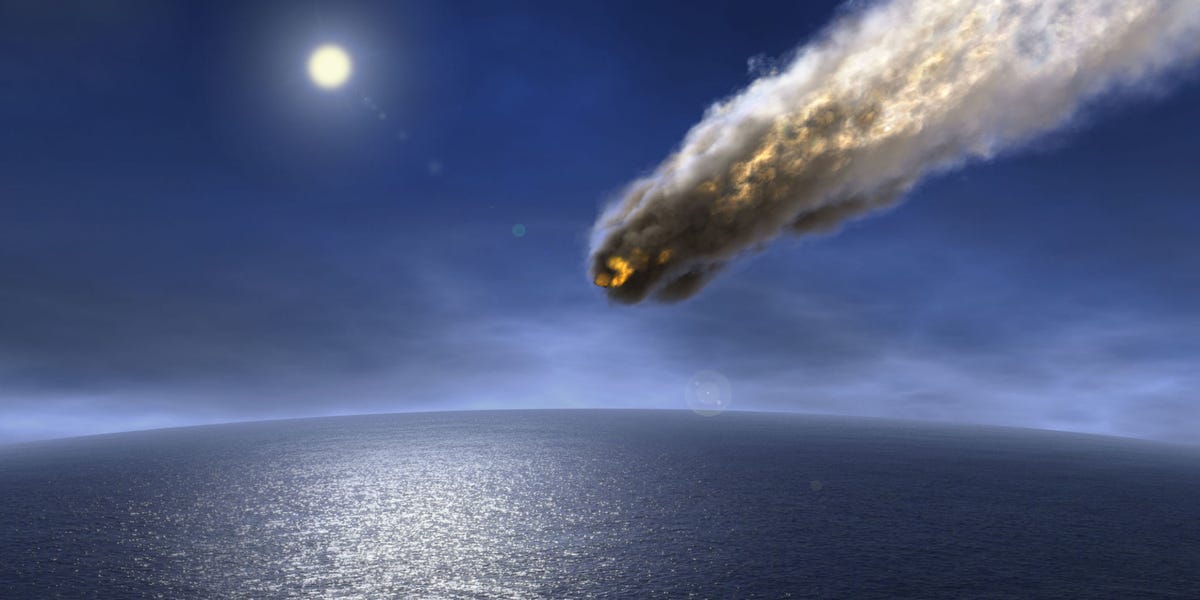
It sounds like the plot of a summer blockbuster: a giant asteroid is barreling toward Earth, world leaders are sweating through their suits, and someone in a NASA briefing room quietly says, “Well, there is the nuclear option.” Cue dramatic music, heroic astronauts, and at least one slow-motion shot of a coffee cup trembling on a desk.
But behind the Hollywood glitter is a real scientific conversation. NASA and its planetary defense partners are seriously studying how humanity could respond if a dangerous near-Earth object were discovered on a collision course with our planet. The good news is that no known large asteroid is currently expected to hit Earth in the next century. The slightly less relaxing news is that not every dangerous asteroid has been found yet, and if one appeared with limited warning, scientists might need more than one trick in the cosmic toolbox.
That is where the phrase “nuke killer asteroids” enters the chat. NASA is not saying we should casually toss nuclear devices around space like confetti at a parade. Rather, planetary defense experts are examining nuclear deflection as a possible last-resort tool for extreme scenarios: large objects, short warning times, or cases where gentler methods may not provide enough force quickly enough.
What NASA Actually Means by “Nuking” an Asteroid
When people hear “nuke an asteroid,” many imagine blasting a space rock into a thousand dramatic pieces. In real planetary defense planning, the idea is more careful and much less cinematic. The preferred concept is often not to drill into an asteroid or detonate something inside it. Instead, scientists study the possibility of detonating a nuclear device near the asteroid’s surface so radiation heats and vaporizes a thin layer of material. That material blasts outward, creating a push in the opposite direction.
Think of it like an extremely intense, very expensive, and internationally complicated cosmic shove. The goal would be to alter the asteroid’s path just enough that, years later, it misses Earth. In planetary defense, a tiny change made early can become a huge miss distance later. Space is polite that way: it rewards punctuality.
This distinction matters. Nuclear deflection is not the same as reckless destruction. If an asteroid were broken into fragments incorrectly, some pieces could still threaten Earth. Experts must understand the asteroid’s size, shape, composition, spin, orbit, and internal structure before choosing any response. Is it solid metal? A rubble pile held together by weak gravity? A dark carbon-rich object that absorbs sunlight like a charcoal briquette? Each answer changes the plan.
Why Nuclear Deflection Is Even Being Discussed
NASA’s planetary defense strategy begins with detection. The earlier we find a threatening near-Earth object, the easier it is to prevent a disaster. With decades of warning, a spacecraft might be able to nudge an asteroid using a kinetic impactor, gravity tractor, or another non-nuclear method. With only a few years, months, or weeks, the physics becomes less forgiving.
The nuclear option is being studied because nuclear devices have extremely high energy density compared with other technologies. In plain English: a relatively small mass can deliver an enormous amount of energy. For a large asteroid or a late discovery, that could make the difference between “we can move it” and “we should have started this meeting 20 years ago.”
Lawrence Livermore National Laboratory and other U.S. research partners have developed advanced simulations to model how nuclear energy might interact with asteroid surfaces. These studies help scientists estimate whether a nuclear standoff burst could deflect an object safely, disrupt it into fragments that miss Earth, or create new risks. The work is not about building a space weapon for fun. It is about understanding whether a last-resort planetary defense tool could work before humanity ever needs it.
The DART Mission Proved We Can Change an Asteroid’s Motion
The biggest real-world planetary defense success so far is NASA’s Double Asteroid Redirection Test, better known as DART. In 2022, NASA intentionally slammed a spacecraft into Dimorphos, a small moonlet orbiting the larger asteroid Didymos. Neither object threatened Earth. They were selected because the pair offered a clean way to measure whether a spacecraft impact could alter an asteroid’s motion.
DART worked. The collision changed Dimorphos’ orbit around Didymos by more than expected, proving that a kinetic impactor can move an asteroid under the right conditions. It was humanity’s first successful demonstration of intentionally changing the motion of a celestial object. That sentence deserves a moment. For most of history, humans looked up at the sky and worried about what it might throw at us. Now we have proven we can throw something backscientifically, responsibly, and with excellent aim.
However, DART also showed why planetary defense is complicated. Dimorphos appears to be a rubble-pile object, meaning it is not a single solid boulder but a loose collection of material. The impact kicked debris into space, and that escaping debris helped amplify the momentum change. A denser or more solid asteroid might respond differently. One successful punch does not mean every asteroid will politely move aside.
NASA’s Tabletop Exercises: Practicing for the Worst Day Ever
NASA and FEMA have run planetary defense tabletop exercises to test how agencies might respond to a hypothetical asteroid threat. These are not predictions. They are disaster-planning simulations, like fire drills for civilization, except the fire is coming from space and nobody gets to stand in a parking lot holding a clipboard.
In a 2024 interagency exercise, participants studied a fictional scenario involving a newly discovered asteroid with a significant chance of Earth impact many years in the future. The scenario included major uncertainties about the object’s size, impact location, and possible damage. The exercise highlighted several gaps: decision-making timelines, international coordination, public communication, disaster planning, and readiness to launch space missions quickly.
One key lesson was that only one asteroid impact prevention methodkinetic impacthas been demonstrated in flight. Other methods, including additional impactors, ion-beam concepts, reconnaissance spacecraft, and nuclear explosive devices, remain less mature or legally complicated. Nuclear options raise serious international, legal, and proliferation concerns. In other words, even if the physics works, the diplomacy could still need a helmet.
Why Finding Asteroids Early Is Still the Best Defense
The most powerful planetary defense tool is not a nuclear device. It is time. Give scientists enough warning, and they may only need a small change in an asteroid’s velocity to make it miss Earth. Discover the same asteroid late, and the required intervention becomes much more difficult.
That is why NASA’s Near-Earth Object Surveyor mission is so important. NEO Surveyor is an infrared space telescope designed specifically to find asteroids and comets that could pose hazards to Earth. Infrared detection is valuable because many asteroids are dark and difficult to see in visible light. They may not reflect much sunlight, but they still glow in infrared as the Sun warms them.
NEO Surveyor is expected to improve our ability to find objects that approach from difficult angles, including directions near the Sun where ground-based telescopes struggle. This is a big deal. A killer asteroid is much less scary when it is found decades in advance. It becomes less “surprise apocalypse” and more “engineering project with meetings.” Meetings may be boring, but boring is exactly what we want from planetary defense.
How Big Does an Asteroid Have to Be to Matter?
Not all asteroids are planet-killers. Small objects enter Earth’s atmosphere frequently and usually burn up. Sometimes fragments reach the ground as meteorites. Larger objects are rarer but far more dangerous. A rock tens of meters wide could cause regional airburst damage, as seen in the 2013 Chelyabinsk event over Russia. An asteroid around 140 meters wide could cause severe regional destruction. Kilometer-scale objects could have global consequences.
This is why NASA and international partners focus heavily on potentially hazardous asteroids. These are objects large enough and close enough in orbital terms to deserve extra attention. Most near-Earth objects do not threaten Earth, but a small subset requires careful tracking. NASA’s Center for Near Earth Object Studies continuously calculates asteroid orbits, monitors close approaches, and assesses potential impact risks.
The encouraging part is that the largest near-Earth asteroids are mostly known. The harder challenge is finding smaller but still dangerous objects, especially those in tricky orbits or with dark surfaces. Planetary defense is a numbers game: discover more objects, refine more orbits, reduce uncertainty, and avoid dramatic surprises.
Could a Nuclear Blast Make Things Worse?
Yes, if used poorly. That is one reason scientists are cautious. A bad deflection attempt could break an asteroid into dangerous fragments, fail to move it enough, or create confusing new trajectories. The popular image of “just blow it up” is too simple. Asteroids are not identical billiard balls. They are ancient, irregular, spinning, cratered leftovers from solar system construction, which is a polite way of saying they are cosmic junk drawers.
A nuclear standoff detonation might be useful if carefully modeled and timed. But it would require detailed knowledge of the target. A reconnaissance mission might be needed first to measure the asteroid’s mass, shape, rotation, and structure. The response plan would also depend on warning time. With many years available, multiple kinetic impactors might be safer. With little time, disruption might be considered if deflection is no longer feasible.
Decision-makers would also need to weigh political and legal issues. Nuclear devices in space are subject to international concern for obvious reasons. Even if the mission were purely defensive, the world would need transparency, cooperation, and trust. Planetary defense is not just astronomy and engineering; it is also public policy, emergency management, diplomacy, and communication.
The International Side of Saving Earth
An asteroid impact would not be a local inconvenience. Even a regional strike could have global economic, political, and humanitarian effects. A predicted impact corridor might cross multiple countries. Evacuation decisions, infrastructure protection, food supply planning, and public messaging would require coordination across borders.
NASA works with international groups such as the International Asteroid Warning Network and the Space Mission Planning Advisory Group. These organizations help coordinate observation data, warnings, and possible mission planning. The United Nations also plays a role in supporting international cooperation on peaceful uses of outer space.
This matters because no single agency can solve the entire asteroid problem alone. NASA may detect and model an object. FEMA may plan emergency response. The State Department may coordinate diplomacy. National laboratories may simulate deflection physics. International space agencies may contribute spacecraft, telescopes, or scientific expertise. Planetary defense is a team sport, and the opponent is a rock that does not care about national borders.
So, Are We Safe Right Now?
Based on current tracking, there is no known large asteroid on a confirmed collision course with Earth in the near future. That should be stated clearly, loudly, and preferably without ominous background music. The public does not need to panic. But the absence of a known threat is not the same as the absence of all risk.
NASA’s work is about reducing uncertainty before a crisis arrives. The agency is improving detection, testing deflection, running exercises, developing models, and coordinating with other organizations. This is exactly how a mature civilization should handle low-probability, high-consequence risks. We do not ignore house fires just because most houses are not burning today. We install alarms, train firefighters, and try not to store fireworks next to the toaster.
What Would Happen If a Real Killer Asteroid Were Found?
The first step would be confirmation. Astronomers would collect more observations to refine the asteroid’s orbit. Many early impact probabilities shrink or disappear once more data becomes available. This has happened before with objects that briefly looked concerning but were later ruled out as threats.
If the risk remained serious, scientists would estimate the asteroid’s size, mass, composition, and impact corridor. Space agencies might send a reconnaissance spacecraft. Governments would evaluate mission options: kinetic impact, gravity tractor, nuclear deflection, disruption, evacuation, or some combination. The choice would depend heavily on warning time.
With decades of warning, the solution might be elegant and relatively calm: nudge the asteroid slightly and monitor the result. With shorter warning, the response could become more aggressive. Nuclear deflection would likely remain a last-resort option for scenarios where other methods cannot deliver enough change in time.
Experiences and Reflections: Living With the Asteroid Question
The idea of a killer asteroid has a strange effect on people. It is terrifying, yes, but also oddly unifying. Most disasters divide attention by region, politics, or personal experience. Asteroids do not care about your zip code, your favorite sports team, or whether you remembered to cancel a free trial subscription. A serious impact threat would instantly become a shared human problem.
For readers, the most useful experience is not panic but perspective. When NASA discusses nuclear options, it is not issuing a doomsday announcement. It is doing what emergency planners do: thinking through unpleasant possibilities before they become urgent. Hospitals run mass-casualty drills. Coastal cities plan for hurricanes. Engineers design bridges for rare but serious stresses. Planetary defense is the same mindset applied upward.
There is also something inspiring in the progress already made. A few decades ago, asteroid defense was mostly science fiction. Today, astronomers catalog near-Earth objects every night. NASA has a dedicated Planetary Defense Coordination Office. CNEOS calculates impact probabilities. DART proved that a spacecraft can alter an asteroid’s motion. NEO Surveyor is being developed to find more hidden hazards. Scientists at national laboratories are modeling nuclear deflection not as fantasy, but as physics.
For anyone who grew up watching asteroid movies, the real version may feel less explosive, but it is far more impressive. There is no single hero sprinting across a launchpad while dramatic music plays. Instead, there are analysts refining orbital models, engineers testing spacecraft systems, telescope teams collecting faint points of light, emergency managers drafting response plans, and international groups arguing over procedures. It is not as flashy as Hollywood, but it is how civilization actually survives things.
The topic also teaches a useful lesson about risk. A low probability does not always mean a risk should be ignored. The chance of a major asteroid impact in any given year is very small, but the consequences could be enormous. That combination requires calm preparation. We do not need fear. We need funding, observation, research, cooperation, and public communication that does not turn every close approach into clickbait with a countdown clock.
And yes, the phrase “NASA may have to nuke killer asteroids” will always grab attention. It sounds wild because it is wild. But beneath the headline is a responsible scientific reality: humanity is learning how to protect Earth from a natural hazard that has shaped our planet’s history before. The dinosaurs did not have infrared telescopes, orbital models, DART, or international tabletop exercises. We do. That is a pretty good upgrade.
Conclusion: The Nuclear Option Is a Backup Plan, Not a Panic Button
NASA’s discussion of nuclear deflection should not be read as a warning that an asteroid strike is imminent. It is a sign that planetary defense has grown up. Scientists are no longer asking only, “Could this happen?” They are asking, “What would we do, who would decide, how fast could we act, and which tools would work best?”
The safest asteroid is the one discovered early. That is why detection missions, global telescope networks, and orbit-monitoring systems matter so much. DART showed that kinetic impact can work. NEO Surveyor aims to find more hidden objects before they become urgent. Nuclear deflection remains a serious but complicated possibility for the hardest cases.
In the end, the real story is not that NASA wants to nuke space rocks. The real story is that humanity is building a defense plan for Earth. It involves science, engineering, diplomacy, emergency planning, and a healthy respect for ancient rocks moving very fast. If a killer asteroid ever does show up, we want the response to be boringly competentnot a last-minute movie sequel.