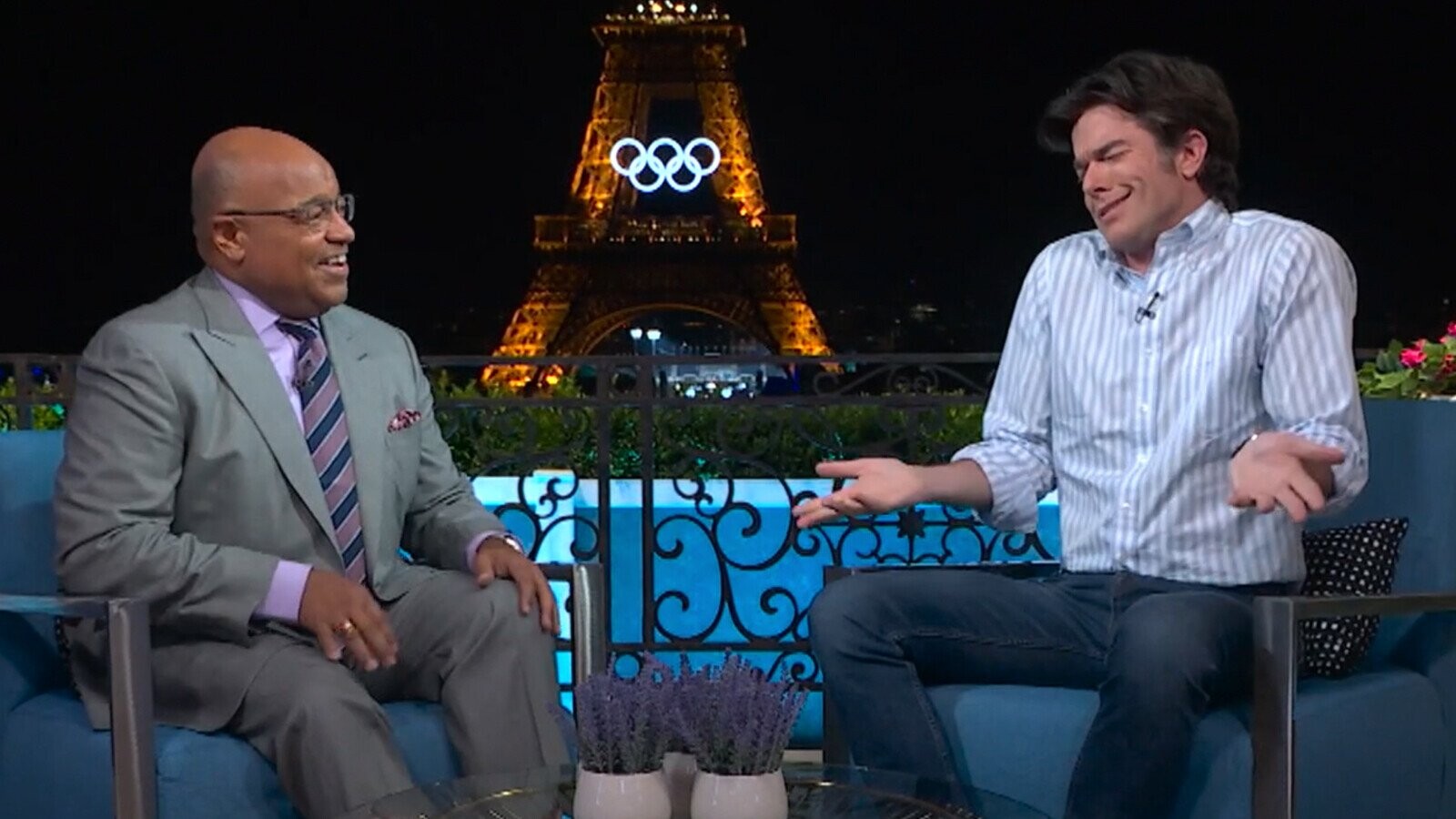
There are few television events bigger than the Olympics. Every four years, viewers show up for the drama: the gold medals, the heartbreak, the impossible landings, the photo finishes, and the occasional athlete who suddenly becomes America’s favorite person because they wore glasses while solving gymnastics like a physics problem. But during NBC’s 2024 Paris Olympics coverage, many viewers noticed another event trying very hard to climb onto the podium: Saturday Night Live.
NBC’s Olympic broadcast did not simply promote SNL 50, the landmark 50th anniversary celebration of the long-running sketch show. It wrapped parts of the Games in a warm, slightly chaotic blanket of NBCUniversal synergy. SNL stars appeared in Olympic-related roles, comedy segments were mixed into sports programming, and promos for the coming anniversary season and special popped up while viewers were trying to watch athletes do things most of us cannot do without pulling a hamstring while getting off the couch.
On paper, the strategy makes sense. NBC owns the U.S. Olympic broadcast rights. NBC also owns one of the most famous comedy brands in television history. The Paris Games gave the network a massive audience, and SNL 50 was a once-in-a-generation entertainment milestone. Why not use one big cultural tentpole to sell another?
The problem is that viewers do not always enjoy being reminded that they are inside a corporate marketing plan. When people tune in for Olympic surfing, gymnastics, swimming, or the opening ceremony, they generally want the spotlight to stay on athletes, nations, and competition. When celebrities and sketch-show crossovers start feeling louder than the sports, audiences can get grumpy fast. And Olympic viewers, as history has repeatedly shown, do not save their grumpiness for later. They post immediately.
Why NBC Connected the Olympics and SNL 50
NBC’s decision to use the Olympics as a promotional runway for SNL 50 was not random. The 2024 Paris Olympics arrived at a perfect moment for NBCUniversal. The network was rebuilding Olympic excitement after the pandemic-disrupted Tokyo Games and the Beijing Winter Olympics, both of which faced unusual challenges. Paris, by contrast, offered a friendlier time zone for U.S. viewers, a visually stunning host city, and a chance to make Peacock feel essential rather than optional.
At the same time, Saturday Night Live was entering its 50th season, with NBC planning a major anniversary rollout. The three-hour SNL50: The Anniversary Special was scheduled for February 16, 2025, on NBC and Peacock. NBC had every reason to treat it as a crown jewel, because few shows survive five decades, fewer remain culturally relevant, and almost none can claim a cast-and-host alumni universe that includes comedy legends, movie stars, musicians, politicians, athletes, and the occasional celebrity who shows up mainly because Lorne Michaels probably has their number written on a napkin somewhere.
The Olympics, meanwhile, delivered a massive platform. NBCUniversal said the Paris Games averaged 30.6 million viewers across NBC, Peacock, and other platforms, up sharply from Tokyo. The opening ceremony alone drew 28.6 million U.S. viewers, the biggest Summer Olympics opening audience since London 2012. That kind of reach is advertising gold. If NBC wanted millions of people to know that SNL 50 was coming, the Olympics were the loudest megaphone available.
The SNL Talent Was Everywhere
The most visible SNL-Olympics crossover was Colin Jost, the Weekend Update co-anchor, who was sent to Teahupo’o, Tahiti, to cover Olympic surfing. NBC described Jost as an avid surfer and framed the assignment as a fun way to bring personality to a far-flung Olympic venue. Surfing was being held nearly 10,000 miles from Paris, so a recognizable comedic correspondent may have seemed like an easy way to keep casual viewers interested.
But the experiment was divisive. Some viewers found the idea charming: a comedy writer, surrounded by monster waves, trying to translate surf culture for a mainstream audience. Others felt surfing deserved more serious attention and that Jost’s presence made the sport feel like a side quest in NBC’s larger entertainment campaign. His later injury saga, involving a reef cut and infections, turned into its own strange subplot. It was funny in the way vacation disasters are funny when they are happening to someone else, but it also raised the question: was this helping viewers understand Olympic surfing, or just giving NBC another celebrity bit?
Kenan Thompson also became part of NBC’s Olympics entertainment push through Olympic Highlights with Kevin Hart and Kenan Thompson, a Peacock series built around comedic recaps of the Paris Games. This made more natural sense. It was clearly labeled as a comedy highlights show, not traditional event coverage. Viewers who wanted jokes could seek it out, while viewers who wanted live competition could stay with the sports feed. That kind of separation matters. Audiences are more forgiving when comedy is invited into the room, not when it wanders across the floor exercise carrying a promotional sandwich board.
Still, the broader Olympic broadcast included enough celebrity appearances, cutaways, and cross-promotional energy that some viewers began to see a pattern. Snoop Dogg, Jimmy Fallon, Peyton Manning, Kelly Clarkson, Leslie Jones, Alex Cooper, Sesame Street characters, and SNL-connected personalities all became part of NBC’s effort to make the Games feel bigger than sports. For casual viewers, that may have made the Olympics more approachable. For purists, it sometimes felt like trying to watch a world-class athletic event through a revolving door of famous people.
Why Viewers Got Annoyed
The backlash was not simply about SNL. It was about interruption. Olympic audiences are unusually sensitive because the Games already come with time delays, commercial breaks, split-screen coverage, streaming confusion, and emotional stakes. When a gymnast is about to attempt a routine, nobody wants to feel as if the network is tapping them on the shoulder to say, “Speaking of balance beams, have you remembered our comedy anniversary special?”
Several complaints centered on NBC’s opening ceremony coverage, where the mix of commentary, commercials, and celebrity hosting drew criticism. Kelly Clarkson and Peyton Manning were brought in alongside Mike Tirico to help present the Paris ceremony. The idea may have sounded fresh in a conference room: a beloved singer, a famous quarterback, and a veteran sports broadcaster walk into a historic river parade. In practice, many viewers felt the commentary did not add enough context about the athletes, countries, or cultural performances.
The criticism reveals a larger issue with celebrity-led Olympics coverage. Celebrities can help if they bring insight, enthusiasm, or authentic connection. Snoop Dogg, for example, became one of the surprise stars of NBC’s Paris coverage because his curiosity and humor felt relaxed rather than forced. He was not pretending to be a technical analyst. He was being Snoop Dogg at the Olympics, which is apparently a valid television genre.
But when the celebrity presence feels disconnected from the competition, viewers read it as corporate filler. That is where the SNL 50 promotion became irritating for some fans. The Olympics are already a giant advertising ecosystem, but viewers still want the illusion that the Games themselves are the main product. When NBC used Olympic attention to boost another NBC property, the curtain lifted a little too high. Suddenly the broadcast felt less like a celebration of international sport and more like a very expensive company newsletter with medals.
Brand Synergy Is Smart Business, But Risky Television
From a business perspective, NBC’s strategy was logical. The company paid billions for Olympic rights through 2032, and the Games are one of its most valuable tools for promoting the rest of its ecosystem. Peacock needs subscribers. NBC needs prime-time events. Advertisers want scale. A legendary comedy franchise turning 50 needs maximum awareness. Put all those ingredients together and you get exactly what viewers saw: sports, streaming, celebrity, comedy, nostalgia, and promos blended into one giant media smoothie.
The trouble is that viewers can taste when the smoothie has too much brand synergy. The modern audience is not naïve. People understand that broadcasts are commercial products. They know networks cross-promote. They know celebrities do not magically appear in Paris because the Olympic torch whispered their name. But there is a difference between promotion that feels natural and promotion that feels stapled to the screen.
The Olympics are particularly delicate because the event carries a sense of public importance. Viewers are not only watching entertainment; they are watching athletes represent countries, families, years of training, and personal sacrifice. That emotional seriousness does not mean coverage must be humorless. In fact, the Olympics often benefit from levity. But the humor has to serve the moment. If the joke points back to the network more than the athlete, audiences notice.
Did the Promotion Work Anyway?
Even if some viewers complained, NBC’s broader strategy appears to have worked in the most important corporate sense: people watched. The Paris Olympics were a major ratings success for NBCUniversal. Peacock set Olympic streaming records, and NBC reported huge multiplatform engagement. Then, in February 2025, SNL50: The Anniversary Special attracted 14.8 million viewers across NBC and Peacock, making it NBC’s most-watched prime-time entertainment telecast in five years.
That does not prove every Olympic promo helped, but it does suggest NBC’s long runway did its job. By the time SNL50 arrived, the anniversary did not feel like a random special. It felt like a major television event, surrounded by months of reminders, nostalgia, interviews, and cross-platform buildup. The special itself featured a deep bench of stars, including legendary alumni, major hosts, musical guests, and surprise cameos. It was less a single broadcast than a reunion, a museum exhibit, a comedy marathon, and a celebrity traffic jam in Studio 8H.
In that sense, NBC’s Olympics-to-SNL promotion shows the gap between viewer irritation and business success. Audiences may complain about corporate synergy while still watching the promoted event. They may roll their eyes at a promo, then set a reminder. They may say, “Enough with SNL already,” and then spend three and a half hours watching Steve Martin, Eddie Murphy, Tina Fey, Amy Poehler, Adam Sandler, Paul Simon, Paul McCartney, and half of Hollywood walk through the same building.
What NBC Could Learn From the Backlash
The lesson is not that NBC should keep celebrities away from the Olympics. That would be unrealistic and, frankly, less fun. The Games have always attracted famous fans, and pop culture can help bring new viewers to sports they might otherwise ignore. A smart celebrity segment can introduce an athlete, explain a rule, or capture the joy of discovery. The Olympics should be allowed to breathe, laugh, and occasionally become weird.
The lesson is about balance. Viewers want the network to remember why they came. If the event is gymnastics, show the gymnastics. If the event is surfing, respect the surfers. If the ceremony is designed to showcase France, give viewers cultural context instead of filling every quiet second with chatter. And if NBC wants to promote SNL 50, do it with a little elegance. A sharp promo in the right break works better than making viewers feel like they are trapped in a sketch called “Corporation Tries to Be Chill.”
NBC also needs to distinguish between personality and distraction. Snoop Dogg worked because his segments often felt additive. He brought humor, but he also radiated genuine wonder. Kenan Thompson and Kevin Hart made sense in a separate highlights format. Colin Jost was more complicated because he was placed directly inside Olympic coverage, where viewers expected expertise. That does not mean Jost failed; it means the assignment carried built-in tension. Comedy can frame sports, but it cannot replace sports knowledge when viewers want substance.
The Bigger Trend: Sports Broadcasts Are Becoming Entertainment Universes
NBC is not alone. Across television and streaming, sports broadcasts are becoming entertainment ecosystems. The NFL has alternate broadcasts. The NBA leans into celebrity courtside culture. ESPN experiments with personality-driven formats. Streamers want watch parties, influencers, behind-the-scenes content, and interactive features. The old model of one broadcast for everyone is fading. Networks now want every event to generate clips, memes, subscriptions, and companion programming.
The Olympics are a perfect laboratory for this trend because they contain hundreds of events and many types of viewers. Some fans want technical analysis of fencing footwork. Others want Simone Biles, Katie Ledecky, Noah Lyles, or Team USA basketball. Some want emotional athlete profiles. Others want highlights with jokes. NBC’s challenge is not creating enough content; it is putting the right content in the right lane.
That is why the SNL 50 push became such an interesting case study. It showed both the power and the danger of modern media integration. NBC successfully turned the Olympics into a promotional engine for one of its biggest entertainment anniversaries. But it also reminded viewers how quickly celebration can become clutter. When every broadcast moment becomes an opportunity to promote another broadcast moment, the original moment starts fighting for oxygen.
Experience Section: Watching the Olympics While NBC Keeps Nudging SNL 50
Watching NBC’s Olympics coverage during the SNL 50 promotional push felt a little like attending a beautiful wedding where one guest keeps reminding everyone about their birthday party next February. You are happy for them. Fifty years is impressive. The cake will probably be excellent. But right now, someone is walking down the aisle, and maybe we can let that happen.
The experience depended heavily on what kind of viewer you were. If you are a casual fan who enjoys celebrities, NBC’s approach may have made the Paris Olympics feel more accessible. Seeing familiar faces can reduce the intimidation factor of sports you only watch every four years. A comedian cracking jokes about an obscure event may help someone stick around long enough to appreciate the athletes. In that sense, the strategy had real value. Not everyone arrives at the Olympics with a spreadsheet of qualification scores and a working knowledge of canoe slalom penalties.
But if you are the kind of viewer who waits years to see these athletes get their rare mainstream spotlight, the celebrity layering could feel exhausting. Olympic athletes already fight for attention in a crowded media world. Many become famous for about twelve minutes, even after spending twelve years training. So when coverage shifts from their accomplishments to a famous NBC personality promoting another NBC show, it can feel unfair. The athletes did the work. The comedians got the cutaway.
The most frustrating moments were not necessarily the promos themselves. Promos are expected. The frustration came when the broadcast seemed uncertain about its own priorities. Was this a sports presentation, a Peacock sales pitch, a celebrity variety show, or a warm-up act for SNL 50? Sometimes it was all four, and the result could feel crowded. Viewers can handle commercials. They can handle comedy. They can even handle a little corporate self-congratulation. What they dislike is feeling that the main event has become background scenery.
There is also a strange emotional whiplash in mixing Olympic intensity with network nostalgia. One minute you are watching an athlete cry after a career-defining performance. The next minute you are reminded that a sketch show is turning 50. Both things can matter, but they do not carry the same weight in the moment. The Olympics produce raw, unscripted drama. SNL produces scripted chaos. Each is great in its own lane. NBC’s coverage occasionally made the lanes feel like they had been designed by someone who spilled coffee on the programming grid.
Still, the annoyance does not mean the strategy was a total miss. The conversation itself became part of the campaign. Viewers complained, critics analyzed, social media reacted, and the phrase SNL 50 stayed visible. That is the tricky genius of modern promotion: even backlash can keep the brand alive. NBC probably would have preferred universal applause, but awareness is awareness. By the time the anniversary special aired, audiences knew it was coming. Many watched. The numbers were strong. The marketing machine may have squeaked loudly, but it moved.
The better future version of this strategy would be more thoughtful. Put comedy where comedy belongs. Let alternate shows carry the celebrity energy. Keep live competition clean, informative, and athlete-centered. Use promos, but do not let promos become the personality of the broadcast. Give viewers the Olympics first, then invite them to the anniversary party. Nobody hates a good party invitation. They just do not want it read aloud during the final rotation.
Conclusion
NBC’s use of the Olympics to hype SNL 50 was a classic example of smart corporate strategy colliding with viewer patience. The network had every reason to promote one of television’s biggest comedy milestones during one of television’s biggest sports events. The Paris Olympics delivered massive audiences, Peacock momentum, and cultural attention. SNL 50 needed exactly that kind of spotlight.
But viewers are not just data points in a marketing funnel. They care about tone, timing, and respect for the event they came to watch. Celebrity cameos and comedy segments can make Olympic coverage more entertaining, but only when they support the Games rather than compete with them. NBC’s challenge going forward is simple: promote boldly, but let the athletes remain the stars. After all, SNL has had 50 years in the spotlight. Most Olympians only get one perfect moment.