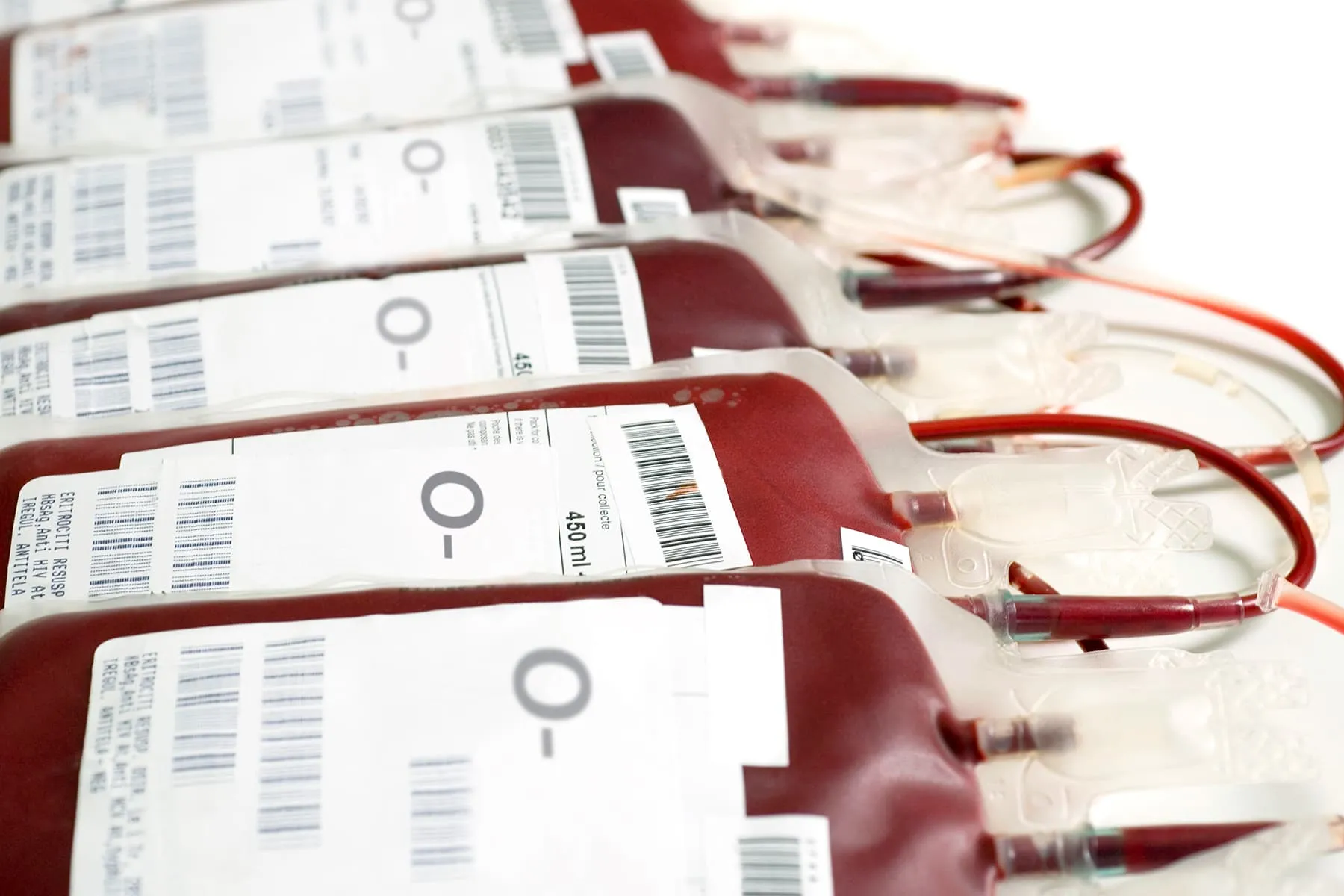
For decades, blood donation rules in the United States treated gay and bisexual men like they had shown up to a potluck carrying a mystery casserole nobody trusted. That approach came from a very real public health crisis during the early years of HIV/AIDS, when testing was weaker, scientific knowledge was incomplete, and the blood supply needed urgent protection. But science has changed, blood screening has improved, and public policy has finally stopped wearing shoulder pads from the 1980s.
Today, a newer federal policy permits more blood donations from gay and bisexual men by shifting away from sexual-orientation-based restrictions and toward an individual donor assessment. In plain English: the rules now focus more on a person’s recent behavior and less on broad identity labels. That is a major change in blood donation policy, one that expands access, reduces stigma, and still keeps blood safety front and center.
This matters for more than politics or public messaging. It matters for patients waiting for surgery, trauma victims in emergency rooms, people undergoing cancer treatment, and hospitals that need a stable blood supply every single day. It also matters for gay and bisexual men who spent years hearing, in one form or another, “Thanks for caring, but not you.”
The new policy is not a perfect ending wrapped in a bow. Some advocates still argue that parts of the screening process remain too restrictive, especially for people taking HIV prevention medication. But the policy is undeniably a historic shift. It opens the door to more donors, treats people more equally than older rules did, and reflects the reality that modern blood safety depends on layered screening, not outdated assumptions.
What Changed in the New Blood Donation Policy?
From blanket restrictions to individual assessment
The biggest change is simple: gay and bisexual men are no longer screened out based on sexual orientation alone. Instead, blood centers now use a gender-neutral, individual risk-based questionnaire for all donors. That means everyone is asked the same kinds of questions about recent sexual behavior and other possible HIV risk factors.
Under this approach, a donor may be asked to wait three months before donating if they had a new sexual partner or more than one sexual partner in the past three months and also had anal sex during that same period. That standard applies across the board. In other words, the screening question is aimed at a specific recent risk profile, not a sexual orientation category.
That may sound like a technical tweak, but it is really a philosophical overhaul. The old model worked like a giant “Do Not Enter” sign posted over an entire group of people. The new model says, “Let’s actually ask the relevant questions and assess the person in front of us.” That is a much more evidence-based way to run a blood donation system in 21st-century America.
Who can donate now?
The new policy means that many gay and bisexual men in monogamous relationships, or men who do not meet the current deferral criteria, may now be eligible to donate blood. For many, that is the first time in decades they can participate without being told that their identity itself is the problem.
At the same time, the rule does not mean every previously deferred donor automatically becomes eligible. Some people will still be asked to wait depending on recent sexual activity, medication use, or other health and safety factors. Anyone who has ever tested positive for HIV remains ineligible to donate blood, and people taking medication to treat HIV are also permanently deferred.
There is also an important caveat involving PrEP and PEP, medications used to prevent HIV infection. People who have taken oral PrEP or PEP are generally asked to wait three months after their last dose before donating, while people who have received injectable HIV prevention medication face a longer wait. That detail has become one of the most debated parts of the updated blood donation guidance.
Why the FDA Changed the Rules
Science moved forward, and policy had to catch up
The history here matters. In the mid-1980s, federal regulators recommended an indefinite deferral for men who had sex with men because the HIV/AIDS crisis was unfolding rapidly and blood screening technology was far less advanced. The policy was born out of emergency conditions, not subtlety. It was a broad response to a terrifying moment in public health.
Over time, that policy began to change. The lifetime ban gave way to a 12-month abstinence requirement, and later to a 3-month abstinence period. But critics argued those updates still treated gay and bisexual men as a category of risk rather than evaluating actual behavior. In other words, the rules changed outfits but kept the same old script.
That script became harder to defend as blood screening and infectious disease testing improved. Modern blood donation safety involves multiple layers: donor education, a health history questionnaire, deferrals when appropriate, laboratory testing after donation, and quarantine of donated blood until it is cleared. The science no longer supported relying so heavily on sexual orientation as a shortcut.
Research helped pave the way
The FDA’s updated approach did not appear out of thin air like a magician pulling a policy memo from a hat. It was informed by research, including studies designed to examine whether individual behavior-based screening could better identify actual risk while allowing more low-risk donors to give blood.
One important contribution came from the ADVANCE study, which helped support the idea that some gay and bisexual men at low risk of HIV infection could donate safely under a more individualized screening system. Research partners and blood collection organizations also examined how blood safety could be maintained while moving away from blanket restrictions.
That is the key point: the change was not a political free-for-all or a symbolic gesture untethered from data. It was a policy update shaped by evidence, modeling, and the reality that modern blood safety is stronger when screening asks the right questions of everybody instead of the same old questions of only some people.
Why This New Blood Donation Policy Matters
It expands the donor pool
The United States always needs blood. That sentence never goes out of style. Blood is required for surgeries, childbirth complications, cancer care, chronic illnesses, accident victims, and a long list of medical emergencies that do not politely wait for the calendar to cooperate.
Expanding the number of eligible donors matters because blood is a perishable resource. Red blood cells do not last forever. Platelets have an even shorter shelf life. So when policy changes make it possible for more healthy, low-risk people to donate, that is not just socially meaningful. It can also be medically useful.
The American Red Cross has noted that it provides a large share of the nation’s blood supply, while only a small percentage of age-eligible people donate each year. That means every newly eligible donor is not just a nice headline. It is a practical addition to a system that runs on generosity, logistics, and a constant race against expiration dates.
It reduces stigma
The social meaning of the policy shift is just as important as the operational one. For years, many gay and bisexual men felt the old rules sent a blunt message: your blood is suspect because of who you are. Even when the policy softened from lifetime ban to time-based deferral, it still left many people feeling singled out rather than fairly assessed.
The updated framework does not erase that history, but it does represent a more respectful approach. It says blood donation should be based on individual risk, not broad identity categories. That matters for trust. It matters for inclusion. And frankly, it matters for basic dignity.
Public health works better when people believe the system sees them clearly. A policy that treats potential donors more fairly is not just good ethics. It can also improve participation over time, especially in communities that were once asked to contribute compassion but were denied the chance to contribute blood.
What the New Rules Still Get Criticized For
Progress is real, but not complete
Here is where the conversation gets more complicated, because the new blood donation policy is more inclusive without being fully uncontroversial. Some LGBTQ advocates and health experts argue that the continued deferral tied to recent anal sex can still fall unevenly on gay and bisexual men, even if the wording is now gender-neutral.
That criticism is not hard to understand. A rule can be written in neutral language and still feel more burdensome in practice for specific groups. The Red Cross itself has acknowledged that some people may feel the anal-sex-related deferral still unfairly targets gay and bisexual men. So while the policy has moved forward, it has not made the debate vanish into thin air like a polite ghost.
The PrEP issue remains a flashpoint
Another major concern is the continued wait period for people taking HIV prevention medication. On one hand, the FDA’s reasoning is tied to testing concerns: PrEP and PEP can affect how quickly HIV becomes detectable through current blood screening methods. On the other hand, critics point out the irony that people who are proactively protecting their health may still be deferred from donating.
That tension captures the larger challenge in blood policy. Regulators are trying to balance inclusion with an extremely low tolerance for transfusion-related infection risk. Blood safety is the kind of field where “probably fine” is not exactly a comforting slogan. Even so, many experts expect the conversation to continue as testing technology evolves and more data emerge.
What Potential Donors Should Expect at the Blood Center
A more uniform questionnaire
For donors, the practical experience is now more standardized. Blood centers using the updated guidance ask all prospective donors the same core types of questions related to recent sexual behavior, medications, travel, medical history, tattoos, piercings, and other possible risk factors. The goal is to assess donor eligibility using consistent criteria rather than identity-based shortcuts.
That means many gay and bisexual men who were previously deferred may now find that the process looks much more like what everyone else has long experienced: answer the questions honestly, get screened, and find out whether you are eligible based on your current circumstances.
It also means honesty matters more than ever. Blood donation systems depend on truthful self-reporting, not superhero mind-reading. The policy is more inclusive, but it still relies on donors answering carefully and responsibly so the blood supply remains safe for the people who need it.
Safety still has layers
One of the biggest misconceptions about blood donation policy is that everything depends on the questionnaire alone. It does not. The questionnaire is one layer. Donated blood is also tested for infectious diseases, and units are held until screening requirements are met. That layered approach is exactly why many experts believe a more individualized policy can expand eligibility without abandoning safety.
So no, the updated policy is not regulators tossing the keys to the blood bank into the air and yelling, “Good luck, everybody!” It is a structured change inside a system that still uses multiple safeguards. That distinction matters, especially when public discussion gets oversimplified.
Real-World Experiences After the Policy Change
Policy stories can sound abstract until they meet actual people, and this one did not take long to become personal. Soon after the updated guidance began rolling out, blood centers reported hearing from donors who were excited, relieved, and sometimes emotional about finally being able to participate.
One widely reported example involved Doug Anderson and Daniel Bennet, a married couple in Virginia who donated through the American Red Cross after the updated eligibility rules took effect. Their experience captured the tone of the moment: not outrage, not spectacle, just a deeply human sense of being included in an ordinary act of civic generosity. They were not trying to make blood donation glamorous. They simply wanted to support patients and represent their community in a space that had not always welcomed them.
Another reported story centered on Dylan Smith, a donor services supervisor at Bloodworks Northwest. For years, he worked in a setting devoted to collecting lifesaving blood while being unable to donate under the old rules himself. That kind of irony could make a statue roll its stone eyes. Under the new policy, he was finally able to donate, and the experience carried obvious emotional weight. It was not just about the blood bag. It was about being allowed to stand beside coworkers and friends as an equal participant.
Blood center staff also described seeing people walk in with a sense of long-postponed purpose. In the New York area, Red Cross leaders said they encountered donors who were thrilled to finally give blood after years of waiting. That wordwaitingdoes a lot of work here. Waiting to become eligible. Waiting for science to be acknowledged. Waiting for policy to catch up. Waiting to be told, at long last, that altruism was welcome from them too.
At the same time, these experiences also revealed a less cheerful truth: distrust does not evaporate just because a policy changes on paper. Blood collection leaders have openly said that education and outreach are still needed to rebuild trust with communities that spent years feeling excluded or judged. Some donors may return quickly. Others may take time. And some may decide that being welcomed only after decades of restriction is a little like being invited to the party after the cake is gone. Understandable.
Still, the emotional through-line is hard to miss. For many newly eligible donors, giving blood is not merely a medical transaction. It is a public affirmation that they can help save lives in the same way others have long been allowed to do. The act itself is small: a chair, a needle, a few questions, a snack afterward that somehow always tastes 30% better because it is free. But the meaning can be huge. It signals belonging, trust, and shared responsibility.
That is why the policy change resonates beyond technical guidance documents. It touches identity, fairness, history, and the quiet dignity of being allowed to contribute. And that, more than any bureaucratic phrase, explains why the new blood donation policy matters so much to so many people.
Final Thoughts
The new policy permitting more blood donations from gay and bisexual men is a major shift in U.S. blood donation rules. It replaces a long-criticized orientation-based approach with an individual risk-based system designed to protect the blood supply while allowing more healthy people to donate.
That is meaningful progress. It reflects better science, more respectful screening, and a broader understanding of what fair public health policy should look like. It also expands the potential donor pool at a time when blood remains a constant medical need.
But the story is not finished. Questions remain about PrEP-related deferrals, about whether the current criteria are fully equitable, and about how quickly blood centers can rebuild trust with communities that were excluded for years. So this is not the final chapter. It is an important, overdue rewrite.
And for many donors who have been waiting a very long time to roll up their sleeves, overdue still feels pretty good.