Non-small cell lung cancer, usually shortened to NSCLC, is the heavyweight of the lung cancer worldnot because anyone invited it to compete, but because it accounts for roughly four out of every five lung cancers. It can develop quietly, cause symptoms that resemble less serious respiratory problems, and behave very differently from one patient to another.
The encouraging news is that the NSCLC story is changing. Low-dose CT screening is finding some tumors earlier, molecular testing can uncover weaknesses inside cancer cells, and newer targeted therapies and immunotherapies are helping selected patients live longer. Still, stage at diagnosis remains one of the strongest predictors of survival.
NSCLC at a Glance
- How common is it? NSCLC represents approximately four-fifths of lung cancer cases.
- Main subtypes: Adenocarcinoma, squamous cell carcinoma, and large cell carcinoma.
- Leading risk factor: Cigarette smoking, although people who have never smoked can also develop the disease.
- Current five-year relative survival: About 67% for localized disease, 40% for regional disease, and 12% for distant disease.
- Why early detection matters: A tumor confined to the lung is generally easier to treat than one that has reached lymph nodes or distant organs.
These figures describe large populations, not individual destinies. Cancer statistics are useful road signs, but they are not fortune cookies with your personal future printed inside.
What Is Non-Small Cell Lung Cancer?
NSCLC begins when cells in lung tissue acquire changes that allow them to grow, divide, and survive when healthy cells would normally stop. These abnormal cells may form a tumor, invade nearby structures, enter lymphatic channels, or travel through the bloodstream to other organs.
Adenocarcinoma
Adenocarcinoma is the most common NSCLC subtype. It often begins in cells near the outer portions of the lungs that produce mucus or line the tiny air sacs. It occurs in people who smoke, former smokers, and people who have never smoked. Because of its location, it may sometimes be detected as a peripheral lung nodule on a CT scan obtained for another reason.
Squamous Cell Carcinoma
Squamous cell carcinoma usually develops in the flatter cells lining the central airways. It has a particularly strong association with tobacco exposure and may grow near a major bronchus, where it can contribute to coughing, bleeding, airway obstruction, or repeated infections.
Large Cell Carcinoma and Less Common Forms
Large cell carcinoma can appear in different parts of the lung and may grow relatively quickly. Other uncommon NSCLC variants include adenosquamous and sarcomatoid carcinomas. Identifying the exact subtype matters because tumor behavior, molecular testing, and treatment choices can differ.
How Prevalent Is NSCLC in the United States?
The word prevalence is frequently used to mean “how common,” although epidemiologists distinguish it from incidence. Incidence counts newly diagnosed cases during a particular period. Prevalence counts everyone living with a diagnosis, including people diagnosed years earlier.
The American Cancer Society estimates that the United States will record approximately 229,410 new lung cancer cases and 124,990 lung cancer deaths in 2026. Lung cancer remains the leading cause of cancer death nationally and accounts for about one in five cancer deaths.
Public statistics often combine NSCLC and small cell lung cancer. Using the American Cancer Society estimate that approximately 77% of lung cancers are NSCLC, a rough calculation suggests that about 176,600 of the expected 2026 cases may be NSCLC. That is an approximation rather than a separate official case forecast because classifications and reporting methods vary.
Lung cancer primarily affects older adults. Most diagnoses occur at age 65 or later, and the average age at diagnosis is about 70. Incidence and mortality have declined as smoking rates have fallen and detection and treatment have improved. Nevertheless, the total burden remains substantial because lung cancer is common, frequently diagnosed after it has spread, and associated with serious complications.
Major Risk Factors for Non-Small Cell Lung Cancer
Cigarette Smoking
Cigarette smoking is the dominant preventable lung cancer risk factor. The CDC reports that smoking is associated with about 80% of lung cancer deaths in the United States. People who smoke cigarettes are approximately 15 to 30 times more likely to develop or die from lung cancer than people who do not smoke.
Risk generally rises with the number of cigarettes smoked per day and the number of years a person has smoked. Occasional or light smoking is not harmless, and switching to cigars or pipes does not hand the lungs a magical exemption certificate. Quitting reduces risk over time, even after many years of smoking.
Secondhand Smoke
People do not have to purchase cigarettes to be exposed to carcinogens from them. Regular exposure to smoke from other people’s cigarettes, cigars, or pipes increases lung cancer risk. Homes, vehicles, workplaces, and social spaces can all become important exposure settings.
Radon
Radon is an invisible, odorless radioactive gas produced naturally when uranium breaks down in soil and rock. It can enter buildings through openings in foundations and accumulate indoors. The Environmental Protection Agency identifies radon as the second-leading cause of lung cancer overall and the leading cause among people who have never smoked. EPA estimates attribute approximately 21,000 U.S. lung cancer deaths annually to radon.
Testing is the only reliable way to know whether a home has elevated radon. A house cannot smell clean enough, look expensive enough, or own enough decorative pillows to prove that it is radon-free.
Workplace Exposures
Long-term exposure to asbestos, arsenic, diesel exhaust, silica, chromium, nickel, beryllium, soot, and certain other substances can raise lung cancer risk. Construction workers, miners, industrial workers, mechanics, shipyard workers, and military veterans may have relevant exposure histories. Smoking can multiply the danger associated with some occupational carcinogens.
Air Pollution
Long-term exposure to polluted outdoor air is associated with increased lung cancer risk. The risk to an individual is generally smaller than the risk from cigarette smoking, but it becomes important across large populations because nearly everyone breatheswhich remains a stubbornly popular daily activity.
Age, Family History, and Previous Health Conditions
Risk increases with age. A personal or family history of lung cancer may also indicate greater susceptibility because relatives can share genes, smoking patterns, workplaces, homes, or environmental exposures. Previous radiation therapy to the chest, HIV infection, and certain chronic lung diseases may further increase risk.
Can People Who Never Smoked Develop NSCLC?
Yes. In the United States, approximately 10% to 20% of lung cancers occur in people who have never smoked or have smoked fewer than 100 cigarettes during their lifetime. That represents an estimated 20,000 to 40,000 diagnoses per year.
Among never-smokers, adenocarcinoma is especially common. Contributing factors can include radon, secondhand smoke, workplace carcinogens, outdoor air pollution, inherited susceptibility, and acquired molecular changes inside the tumor. Some patients have no clearly identifiable cause.
This matters because the idea that lung cancer is exclusively a “smoker’s disease” creates stigma. Stigma can discourage people from reporting symptoms, seeking support, or discussing their diagnosis openly. Cancer is a medical condition, not a courtroom verdict on someone’s past choices.
Symptoms That Should Not Be Ignored
Early NSCLC may cause no symptoms. When symptoms do appear, they can resemble infections, asthma, chronic obstructive pulmonary disease, or ordinary aging. Possible warning signs include:
- A new cough that does not go away
- A long-standing cough that changes or worsens
- Coughing up blood or blood-streaked mucus
- Shortness of breath, wheezing, or reduced exercise tolerance
- Persistent chest, shoulder, or back pain
- Hoarseness or trouble swallowing
- Unexplained weight loss or loss of appetite
- Ongoing fatigue
- Repeated pneumonia or bronchitis
- Swelling of the face, neck, or upper chest
These symptoms do not automatically mean lung cancer. They do justify medical evaluation, particularly when they persist, worsen, or occur in someone with significant smoking or occupational exposure.
Screening and Early Detection
Screening is intended for people at elevated risk who do not yet have symptoms. It is different from diagnostic testing, which investigates an existing symptom or abnormal finding.
The U.S. Preventive Services Task Force recommends annual low-dose computed tomography for adults who meet all of these criteria:
- They are 50 to 80 years old.
- They have at least a 20 pack-year smoking history.
- They currently smoke or quit within the past 15 years.
One pack-year equals smoking an average of one pack per day for one year. Someone who smoked one pack daily for 20 years has 20 pack-years, as does someone who smoked two packs daily for 10 years.
Screening has potential harms, including false-positive findings, anxiety, incidental abnormalities, radiation exposure, and procedures for nodules that are not cancer. Shared decision-making helps patients understand both the benefits and limitations.
How NSCLC Is Diagnosed and Staged
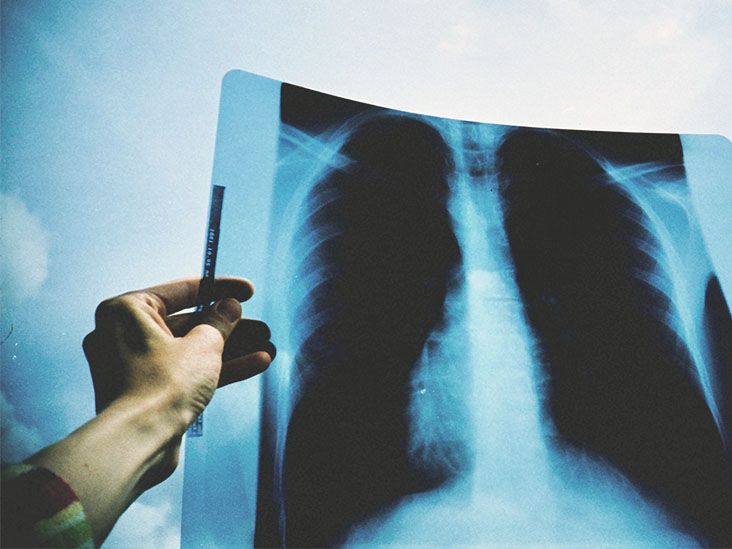
A chest X-ray may reveal an abnormality, but CT imaging provides more detailed information about a suspicious nodule or mass. PET/CT can help determine whether metabolically active disease appears in lymph nodes or distant areas. MRI is commonly used when doctors need detailed imaging of the brain or spinal structures.
Imaging can suggest cancer, but a definitive diagnosis usually requires cells or tissue. Samples may be obtained through bronchoscopy, needle biopsy, lymph-node sampling, fluid drainage, or surgery. A pathologist determines the cancer type, while laboratory testing may look for proteins and genetic changes that influence treatment.
NSCLC is commonly staged from 0 through IV using the TNM system:
- T: The size and local extent of the primary tumor
- N: Whether regional lymph nodes contain cancer
- M: Whether cancer has spread to distant organs
Stage I generally describes disease confined to the lung. Stage II may involve a larger tumor, nearby structures, or certain lymph nodes. Stage III includes more extensive local or regional disease. Stage IV indicates distant spread, commonly to the other lung, bones, brain, liver, or adrenal glands.
NSCLC Survival Rates by Stage
The most recently published American Cancer Society figures based on people diagnosed from 2015 through 2021 report the following five-year relative survival rates:
| SEER Stage | Description | Five-Year Relative Survival |
|---|---|---|
| Localized | Cancer remains confined to the lung | 67% |
| Regional | Cancer has reached nearby tissues or lymph nodes | 40% |
| Distant | Cancer has spread to distant parts of the body | 12% |
| All stages combined | All NSCLC cases in the dataset | 32% |
A five-year relative survival rate compares people with NSCLC to similar people in the general population. A localized survival rate of 67% does not mean that every patient has a 67% personal chance of living five years. It means that, as a group, people with localized NSCLC were about 67% as likely to survive for at least five years as comparable people without that cancer.
These statistics look backward because researchers must follow patients for years before calculating them. Someone diagnosed today may benefit from treatments introduced after the patients in the dataset began therapy.
What Influences an Individual Patient’s Outlook?
Stage is crucial, but it is not the only factor. Prognosis can also be affected by tumor subtype, lymph-node involvement, tumor size, location, molecular characteristics, overall lung function, physical fitness, other medical conditions, response to treatment, and whether the disease can be completely removed or controlled.
Molecular testing has become particularly important in advanced NSCLC. Doctors may examine tumor tissue or blood for changes involving genes such as EGFR, ALK, ROS1, KRAS, BRAF, RET, and MET. Testing for PD-L1 and other biomarkers can help determine whether targeted therapy, immunotherapy, chemotherapy, or a combination is most appropriate.
Access to experienced specialists also matters. Thoracic surgeons, radiation oncologists, medical oncologists, pulmonologists, radiologists, pathologists, nurses, pharmacists, rehabilitation professionals, social workers, and palliative-care teams may all contribute to treatment.
How Treatment Has Changed the NSCLC Landscape
Early-stage NSCLC may be treated with surgery, including wedge resection, segmentectomy, lobectomy, orin selected casesremoval of an entire lung. Stereotactic body radiation therapy can provide a potentially curative option for some patients who cannot undergo surgery.
For stage II and selected stage III cancers, treatment may combine surgery with chemotherapy, immunotherapy, targeted therapy, or radiation. Unresectable stage III disease is often treated with chemotherapy and radiation, followed in eligible patients by immunotherapy or biomarker-directed treatment.
Stage IV treatment is increasingly personalized. A tumor with a targetable genetic alteration may respond to a matching targeted medicine. Other tumors may respond to immune checkpoint inhibitors, chemotherapy, or combined regimens. Local radiation or surgery may occasionally be used to control a limited number of metastatic sites.
Palliative care can be introduced at any stage. It is not synonymous with surrendering. It focuses on pain, breathing difficulty, fatigue, appetite, sleep, emotional stress, communication, and quality of life while patients continue cancer-directed therapy when appropriate.
Reducing Risk Without Pretending Risk Can Reach Zero
- Do not start smoking, and seek evidence-based help to quit if you currently smoke.
- Avoid secondhand smoke whenever possible.
- Test homes for radon and use professional mitigation when levels are elevated.
- Follow workplace safety procedures involving asbestos, silica, diesel exhaust, and other carcinogens.
- Discuss low-dose CT screening with a clinician if you meet high-risk criteria.
- Report persistent respiratory symptoms instead of waiting for them to become dramatic.
- Maintain follow-up appointments after treatment because NSCLC can recur or a second lung cancer can develop.
No diet, vitamin, herbal product, breathing exercise, or “detox” can guarantee protection from lung cancer. Healthy habits may support cardiovascular fitness, treatment tolerance, and general well-being, but they should not replace screening, diagnostic evaluation, or oncology care.
Practical Experiences Patients and Families Commonly Encounter
The following experience-based lessons reflect patterns commonly described during NSCLC diagnosis and treatment. They are not fictional promises, universal timelines, or substitutes for advice from a patient’s medical team.
1. The Diagnosis Often Begins With an Ordinary Complaint
A patient may first visit a clinic because a cough has lingered for several weeks, climbing stairs suddenly feels harder, or a minor respiratory infection never seems to clear. Another person may have no symptoms at all and learn about a lung nodule after imaging for back pain or a routine preoperative evaluation. The initial finding is rarely the entire answer. It begins a chain of CT scans, specialist visits, biopsies, and staging tests. The waiting between these steps can feel longer than the appointments themselves.
2. The First Survival Statistic Can Be Emotionally Misleading
Many patients immediately search for a stage and survival percentage. The number can land like a judge’s gavel, even though it represents thousands of people treated years earlier. A productive oncology conversation goes beyond that percentage. Doctors consider whether the tumor is operable, how many sites are involved, whether the patient remains active, and whether biomarker testing reveals a treatment target. Families often feel better after replacing one frightening population statistic with a list of concrete next steps.
3. Waiting for Molecular Results Can Be Worthwhile
In advanced NSCLC, patients may be eager to begin treatment the day after diagnosis. That reaction is understandable: cancer has arrived uninvited and nobody wants to offer it a comfortable chair. However, molecular and PD-L1 results can substantially change the recommended first treatment. Starting an unsuitable regimen too quickly may complicate later decisions. Unless urgent symptoms require immediate intervention, the oncology team may explain why obtaining enough tissue and completing comprehensive testing is important.
4. Treatment Side Effects Rarely Follow a Perfect Schedule
One patient may experience fatigue several days after chemotherapy, while another develops skin changes or diarrhea during targeted therapy. Immunotherapy may produce few early symptoms or cause inflammation requiring rapid attention. Keeping a written symptom log can help identify patterns. Patients learn to report new breathing problems, fever, severe diarrhea, confusion, chest pain, rash, or unusual weakness promptly instead of saving everything for the next appointment. Oncology clinics prefer an early phone call to a preventable emergency.
5. Caregivers Need Defined Jobs, Not Vague Instructions
“Let me know how I can help” is kind, but an overwhelmed patient may not know what to request. Practical help is easier to accept: driving to radiation, organizing medication lists, preparing freezer meals, attending appointments, taking notes, managing insurance calls, or updating relatives. Caregivers should also protect their own sleep, health, and emotional support. Exhaustion does not prove devotion. A rested caregiver is usually more useful than a heroic caregiver running on coffee fumes and three hours of sleep.
6. Life Becomes More Than Scan Results
After treatment begins, calendars can become crowded with laboratory tests, infusions, scans, and follow-ups. Patients often find that preserving ordinary routines matters: breakfast with a spouse, a short walk, watching a grandchild’s game, gardening, prayer, work, music, or simply having one afternoon without discussing cancer. These activities do not deny the diagnosis. They prevent the diagnosis from occupying every available room in a person’s identity. Supportive and palliative care can help make those meaningful activities more possible.
Conclusion
Non-small cell lung cancer is the most common form of lung cancer and remains a major cause of cancer-related illness and death in the United States. Smoking is its strongest preventable risk factor, but radon, secondhand smoke, occupational exposures, air pollution, previous radiation, age, family history, and tumor biology also contribute. Importantly, NSCLC can occur in people who have never smoked.
Survival varies dramatically by stage. Current population data show a five-year relative survival rate of approximately 67% for localized NSCLC, compared with 12% after distant spread. Those numbers reinforce the value of screening eligible high-risk adults and evaluating persistent symptoms promptly.
They also do not tell the whole story. Biomarker testing, targeted therapy, immunotherapy, improved radiation techniques, better surgery, and comprehensive supportive care continue to reshape the outlook. The most useful prognosis is therefore not pulled from a single online percentage. It comes from a medical team that understands the stage, pathology, biomarkers, treatment response, overall health, and personal goals of the individual patient.
Note: This article is for general educational purposes and does not provide a diagnosis, personalized survival estimate, or treatment recommendation. Anyone with possible lung cancer symptoms, an abnormal scan, significant exposure history, or questions about screening should consult a qualified healthcare professional. Statistics were checked against current information from the American Cancer Society, National Cancer Institute, CDC, SEER, USPSTF, EPA, American Lung Association, Cleveland Clinic, FDA, and NIH resources.