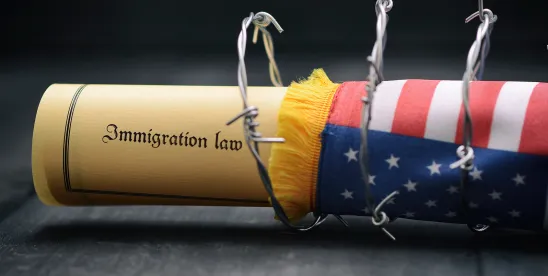
For employers, the immigration story under OBBBA is not just about border politics or cable-news shouting matches. It is about budgets, onboarding, payroll planning, workforce continuity, and that humble little form that nobody throws a party for: the Form I-9. The One Big Beautiful Bill Act may sound like a slogan that escaped from a campaign rally, but its real-world effect is much more practical. It raises immigration costs, pours money into enforcement, and turns sloppy hiring paperwork from “we should fix that someday” into “we should fix that before breakfast.”
That matters because OBBBA does not fundamentally rewrite the core mechanics of Form I-9 compliance. Employers still verify identity and work authorization the old-fashioned way. Employees still choose which acceptable documents to present. Section 1 still has to be completed on time. Section 2 still has to be done within three business days. In other words, the rules are familiar. The environment is what changed. And when enforcement money goes up while filing fees climb and work authorization timelines get tighter, familiar mistakes start getting expensive.
This article breaks down what OBBBA changes, why employers should care, where the biggest I-9 risks now live, and what smart HR and legal teams should do before an audit notice lands like an uninvited guest.
What OBBBA Actually Changed
OBBBA is best understood as a pressure multiplier. It adds or raises immigration-related fees, increases federal resources for detention and enforcement, and creates a tougher operating environment for employers that hire, sponsor, or simply employ noncitizen workers. The law’s immigration provisions are not theoretical. They have already affected filing costs, visa-related expenses, and employer compliance planning.
For businesses, the biggest practical takeaway is this: immigration compliance now costs more on the front end and can hurt more on the back end. On the front end, visa issuance, work authorization, parole, and certain humanitarian processes have become more expensive. On the back end, more enforcement funding means more capacity for investigations, inspections, and worksite actions. That combination is the compliance equivalent of bad weather plus bald tires.
Fee increases changed the math
Several new or expanded fees matter directly or indirectly to employers, even when the employee is technically the applicant. Why? Because companies often reimburse costs, gross up benefits, or absorb delays when workers cannot file or renew on time.
- Visa Integrity Fee: A new fee attached to issuance of a nonimmigrant visa. The headline number is $250, and it is layered on top of existing visa costs.
- Initial employment authorization fees: New fee structures hit certain asylum applicants, parolees, and Temporary Protected Status applicants seeking work authorization.
- Renewal and extension fees: Renewing work authorization in some humanitarian categories now carries an added cost too, which means payroll continuity can depend on whether an employee can navigate not just paperwork, but also price increases.
- Parole and TPS-related costs: These increases matter for employers with workforces that rely on humanitarian protection pathways.
- Form I-94 land-border fees: The fee structure for land-border I-94 issuance changed, and CBP also implemented related fee adjustments affecting travel and entry processing.
That may sound like somebody else’s problem until you realize how often business operations depend on “somebody else” successfully maintaining work authorization. A missed fee can trigger a rejected filing. A rejected filing can trigger a lapse. A lapse can trigger reverification trouble. And suddenly the problem has made itself very much at home in HR.
Enforcement funding changed the mood
OBBBA also committed huge sums to immigration enforcement. That matters because more funding usually means more staffing, more operational capacity, and more follow-through. Employers should not read that as “every business is about to get raided tomorrow morning.” They should read it as: the odds of scrutiny are higher, the government has more resources, and weak compliance systems are less likely to hide in the crowd.
In plain English, the law did not turn every employer into a target. It did make it riskier to assume that bad forms, inconsistent reverification, or undocumented hiring practices will stay invisible forever.
Why Employers Feel the Impact Even When They Are Not Filing the Forms
One of the most common mistakes companies make is thinking immigration fees are an issue only for immigration counsel or for the worker paying the invoice. That is a tidy theory. Reality is messier.
When costs rise, employees often ask whether the company will reimburse them. When a renewal becomes more expensive, some workers delay filing. When a case is rejected for the wrong fee, start dates move. When a visa issuance gets pricier, travel budgets change. When work authorization becomes harder to maintain, turnover risk goes up. This is why OBBBA is not just an immigration story. It is a workforce planning story.
Consider a manufacturer employing workers with TPS-based work authorization. A higher filing-cost environment may not change the lawfulness of employment overnight, but it can increase the risk of renewal gaps, administrative confusion, and last-minute document problems. Or take a professional services firm onboarding remote hires across several states. The company may feel far away from border enforcement policy, yet it could still end up in trouble if its remote I-9 practices are loose, inconsistent, or based on bad assumptions about E-Verify.
In short, OBBBA reaches employers through three doors at once: cost, timing, and enforcement.
OBBBA Did Not Rewrite Form I-9, but It Raised Form I-9 Stakes
This is the section HR teams should print, save, and maybe tape to the metaphorical fridge.
Form I-9 compliance is still governed by familiar rules. Employees complete Section 1 no later than their first day of employment. Employers complete Section 2 within three business days of the start date. Employers review documents that reasonably appear genuine and relate to the employee. Employers retain the form for the required period. None of that is new.
What is new is the business risk of getting those basics wrong in an environment with more enforcement muscle and more work-authorization volatility.
Risk #1: Timing errors
A surprising number of I-9 problems are boring. They are not forged passports or undercover investigations. They are dates. Missing signatures. Late completions. Supplement B confusion. The sort of clerical mistakes that look harmless until an auditor stacks them in neat rows and starts counting.
If your onboarding process depends on one busy manager remembering to finish Section 2 after three back-to-back meetings and a lunch that somehow became another meeting, you do not have a compliance system. You have a hope-based lifestyle.
Risk #2: Reverification mistakes
Reverification is where many employers accidentally wander into trouble. They either forget to reverify temporary work authorization when required, or they reverify documents they were never supposed to reverify in the first place.
That second mistake matters. Employers should not reverify U.S. citizens or lawful permanent residents who presented an unexpired Permanent Resident Card. They also should not demand that a worker show a specific DHS document just because the worker is not a U.S. citizen. The employee gets to choose from the acceptable documents. Once a company starts saying, “Bring me your green card and only your green card,” it is no longer being careful. It is creating discrimination risk.
Risk #3: Remote-hire shortcuts
Remote hiring is convenient. It is also where bad compliance habits breed like rabbits in a vegetable garden. The DHS-authorized alternative procedure for remote document examination is available only for qualified employers participating in E-Verify in good standing at E-Verify hiring sites. That does not mean every employer can casually review a photo on a phone screen and call it a day.
Employers that do not qualify for the alternative procedure still need in-person document review, whether through internal staff or a properly designated authorized representative. And here is the part people forget: the employer remains liable for mistakes made by that authorized representative. Handing the task to someone else does not magically transfer the legal headache.
Risk #4: Treating E-Verify like a replacement for Form I-9
E-Verify is a tool, not a force field. Employers still must complete and retain Form I-9. They also must avoid using E-Verify in discriminatory ways, such as screening only certain workers, delaying case creation selectively, or creating cases before hire. In compliance terms, E-Verify is a helpful assistant. It is not the designated driver for the entire legal analysis.
Risk #5: Poor retention and messy corrections
Employers must keep Form I-9 for the longer of three years after hire or one year after employment ends. That sounds simple until you discover half your forms live in an HRIS, some live in email, a few live in a PDF folder called “misc final final really final,” and one appears to have been stored in the spiritual realm.
Corrections must also be handled carefully. Employers cannot rewrite history with white-out and optimism. When an employee made a Section 1 error, the employee should correct it. When the employer made a Section 2 or Supplement B error, the employer should correct it properly, transparently, and consistently. A clean correction helps. A suspiciously perfect retroactive makeover does not.
Specific Examples of How OBBBA Raises I-9 Risk
Example 1: The sponsored worker whose costs quietly balloon
A U.S. technology company sends an employee abroad for visa stamping. The employee now faces an added visa integrity fee on top of regular visa costs. Finance assumes the increase is minor. The employee assumes the company will reimburse it. Payroll assumes Legal is handling it. Legal assumes everybody read the memo. Nobody is technically lying, but nobody is exactly steering either. OBBBA raises the odds of this kind of administrative confusion, and confusion is fertile soil for delays.
Example 2: The employer with a humanitarian workforce
A hospitality employer has several workers whose employment authorization depends on TPS or parole-based processes. Higher initial or renewal costs do not automatically make those employees unauthorized, but they do increase the chance of late filings, rejected packages, and stressful reverification timelines. HR needs a calendar, a communication plan, and a process that treats expiration tracking like a real compliance function, not a sticky note on somebody’s monitor.
Example 3: The remote company that winged it
A fast-growing startup hires employees in seven states. Recruiters tell new hires to email scans of documents. Sometimes HR reviews them by video. Sometimes managers do it. Sometimes nobody can remember. If the company is not properly using the DHS-authorized alternative procedure through E-Verify, those forms may have been completed incorrectly from the start. Under a more aggressive enforcement climate, that is not a charming startup quirk. That is exposure.
What Smart Employers Should Do Now
The goal is not panic. The goal is disciplined preparation.
- Run an internal I-9 audit. Find timing errors, missing data, retention gaps, and reverification problems before the government does.
- Map your workforce. Identify employees whose work authorization depends on renewal-sensitive categories so you can plan early instead of improvising late.
- Update budgets. Immigration fees are no longer a rounding error for many employers.
- Train hiring teams. Focus on document acceptance, anti-discrimination rules, remote-hire procedures, and reverification basics.
- Standardize remote onboarding. Decide exactly who may complete Section 2, when authorized representatives may be used, and whether your company qualifies for the E-Verify alternative procedure.
- Create an inspection response plan. If ICE serves a Notice of Inspection, your team should already know who receives it, who escalates it, who gathers records, and who communicates with counsel.
- Separate payroll requests from I-9 requests. Asking for a Social Security card for payroll is one thing; making it look like an I-9 document demand is another. Clarity prevents trouble.
The companies that handle OBBBA best will not necessarily be the biggest or richest. They will be the ones with repeatable systems, trained staff, and enough humility to realize that “we have always done it this way” is not a legal defense.
What This Looks Like in Real Life: of Employer Experience
Across HR departments, in-house legal teams, immigration counsel, and affected employees, the lived experience of OBBBA has a very particular flavor. It feels less like one giant policy earthquake and more like a hundred smaller tremors hitting all at once. Nobody walks into the office saying, “Today I will contemplate Title X, Subtitle A, Part I.” What they say is, “Why did this filing get rejected?” “Why is this visa suddenly more expensive?” “Why are we nervous about an I-9 we completed two years ago?” That is the real texture of it.
For HR teams, the experience is often frustration mixed with urgency. They are already juggling recruiting, onboarding, leave issues, and employee relations. Then immigration compliance gets sharper teeth. A form that used to feel procedural now feels strategic. One missing signature is no longer just a paperwork annoyance. It is a possible audit problem. One missed reverification date is no longer just a reminder gone wrong. It is a potential unlawful employment issue. The emotional shift is real: immigration compliance moves from the side desk to the front desk.
For employees, especially those relying on humanitarian categories or international travel, the experience can feel expensive and deeply personal. A new fee may look modest in a government notice, but for an individual worker supporting a family, it can hit hard. Add inflation, deadlines, processing times, and uncertainty, and the stress multiplies. Some workers start asking whether the company will help. Others stay quiet because they do not want to appear difficult. That silence can be dangerous. Employers often discover the problem only when a document is about to expire or a case has already gone sideways.
For managers, the experience is confusion. They want to hire good people and keep operations moving. But managers are rarely experts in Form I-9 rules, document abuse, or the difference between remote hiring convenience and a lawful DHS-authorized alternative procedure. Without training, they improvise. Improvisation in immigration compliance is how you end up asking the wrong employee for the wrong document at the wrong time while sounding very confident about it.
For immigration counsel and compliance professionals, OBBBA creates a familiar but intensified pattern: more questions, faster timelines, and less tolerance for sloppy systems. The conversations become more practical. Which fees changed? Who pays? Which groups are most exposed to renewal gaps? Are our authorized representatives trained? If ICE showed up with a Notice of Inspection, could we produce clean I-9s in three business days without turning the office into a panic-themed escape room?
And that may be the clearest real-world experience of all: OBBBA has made preparedness feel different. Employers who once treated immigration as a niche issue are starting to see that fees, enforcement, and I-9 risk are tied together. It is not glamorous work. Nobody gets a trophy for a beautifully retained I-9 file. But in this environment, boring competence is a superpower.
Final Takeaway
OBBBA reshapes immigration in a way employers can feel immediately. It raises fees, increases the government’s enforcement capacity, and makes Form I-9 compliance more consequential without dramatically changing the basic rules. That is why this moment is tricky. The checklist may look familiar, but the risk behind it is not.
The smartest response is not fear. It is discipline. Budget for higher immigration costs. Review vulnerable employee populations. Tighten reverification practices. Train hiring teams to avoid document abuse. Confirm whether your remote-review process actually complies with DHS rules. And build an inspection response plan before you need one.
Because in the OBBBA era, immigration compliance is no longer a back-office chore. It is an operational risk issue, a workforce continuity issue, and, for many employers, a test of whether the company’s systems are real or just very enthusiastic guesses in business-casual clothing.